

Discover 34 churches on the Costa da Morte, two per municipality, with Romanesque and Baroque heritage and links to help plan your visit.
A carved doorway, a bell tower above the rooftops, a forecourt that remains a meeting place. The churches of the Costa da Morte belong to both its landscape and the history of its communities. Visiting them introduces the stonemasons who shaped their architecture, the influence of former monasteries and the people who have cared for these buildings over generations.
This selection brings together 34 churches in Galicia, all on the Costa da Morte: two in each of its 17 municipalities. It includes Romanesque and Baroque churches, buildings associated with manor houses and examples of contemporary architecture. Where an interactive-map entry is available, you can follow it to learn more and plan your visit.
A guide to 17 municipalities
From Romanesque churches to seaside sanctuaries: choose an area and discover two churches per municipality. Each stop offers an architectural detail to look for and, where available, a link to its interactive-map entry.
Municipalities: A Laracha · Carballo · Malpica de Bergantiños · Ponteceso · Cabana de Bergantiños · Laxe · Coristanco · Zas · Vimianzo · Camariñas · Muxía · Dumbría · Cee · Corcubión · Fisterra · Mazaricos · Carnota
Not every church keeps regular visitor hours. Ask the parish or tourist office before planning an interior visit; the exterior and heritage setting are also part of the experience.
A Laracha
1. San Pedro de Soandres
Soandres preserves the memory of a Benedictine monastery that played an important role in Bergantiños for centuries. Its parish church brings that history into the rural landscape of A Laracha. Walk around the exterior before heading towards the coast: it is a rewarding start to this journey through local heritage.

2. Nosa Señora do Socorro de Caión
In Caión’s main square, the church of Nosa Señora do Socorro de Caión connects religious architecture with the life of a fishing town. Take a closer look at its northern Plateresque doorway. Its former connection to the Augustinian convent adds another layer of history to a stop that pairs well with a walk around the harbour.
After Soandres and Caión, follow the Anllóns riverside paths or visit Caión’s seafront. For more local heritage and ideas for your journey, explore A Laracha.
Carballo
3. Santa María de Rus
In Casal de Perros, Santa María de Rus stands out for its scale and hillside setting. Baroque architecture predominates, although its long construction introduced elements of other styles. Step back from the façade to appreciate the relationship between this substantial church and the surrounding landscape.
4. San Xoán Bautista de Carballo
This selection also includes contemporary architecture. San Xoán Bautista, designed by José Manuel Rey Pichel, represents a different chapter in Carballo’s parish life. In its forecourt, the stone cross brought from Cernide preserves a visible connection with the earlier church and the town’s history.

The churches of Rus and San Xoán Bautista are a starting point for discovering Carballo’s street art, markets and the Razo-Baldaio coastline. To plan the rest of your visit, discover Carballo.
Malpica de Bergantiños
5. Santiago de Mens
View the church of Santiago de Mens from more than one angle. Its three apses and southern doorway preserve the Romanesque character of a building linked to a former monastery. The later alterations to its façade show how these churches evolved alongside the communities that used them.

6. Santo Estevo de Buño
The entrance steps and bell gable give Santo Estevo de Buño its distinctive character. This modestly sized church has side chapels and stone walls that reward close attention. Pair the visit with Buño’s pottery tradition to discover two different expressions of the village’s heritage.
Mens and Buño reveal the inland heritage of Malpica, while its pottery tradition and views towards the Sisargas Islands tell a different coastal story. For more places to explore, visit the Malpica municipality guide.
Ponteceso
7. San Martiño de Cores
San Martiño de Cores combines medieval origins with eighteenth-century alterations. Its Baroque façade and bell tower reveal those successive building phases. The discovery of a reused Roman altar in the sacristy adds an intriguing detail to the history of this rural church.
8. San Fins de Anllóns
At San Fins de Anllóns, Baroque alterations coexist with elements of an earlier Romanesque church. The doorway and corbels provide clues to that medieval past. Take time to examine the stonework and add this parish landmark to your visit to Ponteceso.

Ponteceso’s churches are part of a wider landscape shaped by the Anllóns estuary, the fishing village of Corme and poet Eduardo Pondal. To discover the area beyond its religious heritage, explore Ponteceso.
Cabana de Bergantiños
9. San Martiño de Riobó
Also known as Capela de Riobó, this church retains Romanesque elements within a largely Baroque building. If the interior is accessible, look closely at the arch leading into the chancel and its capitals. Its connection with the house of A Penela adds context to Cabana’s historic heritage.
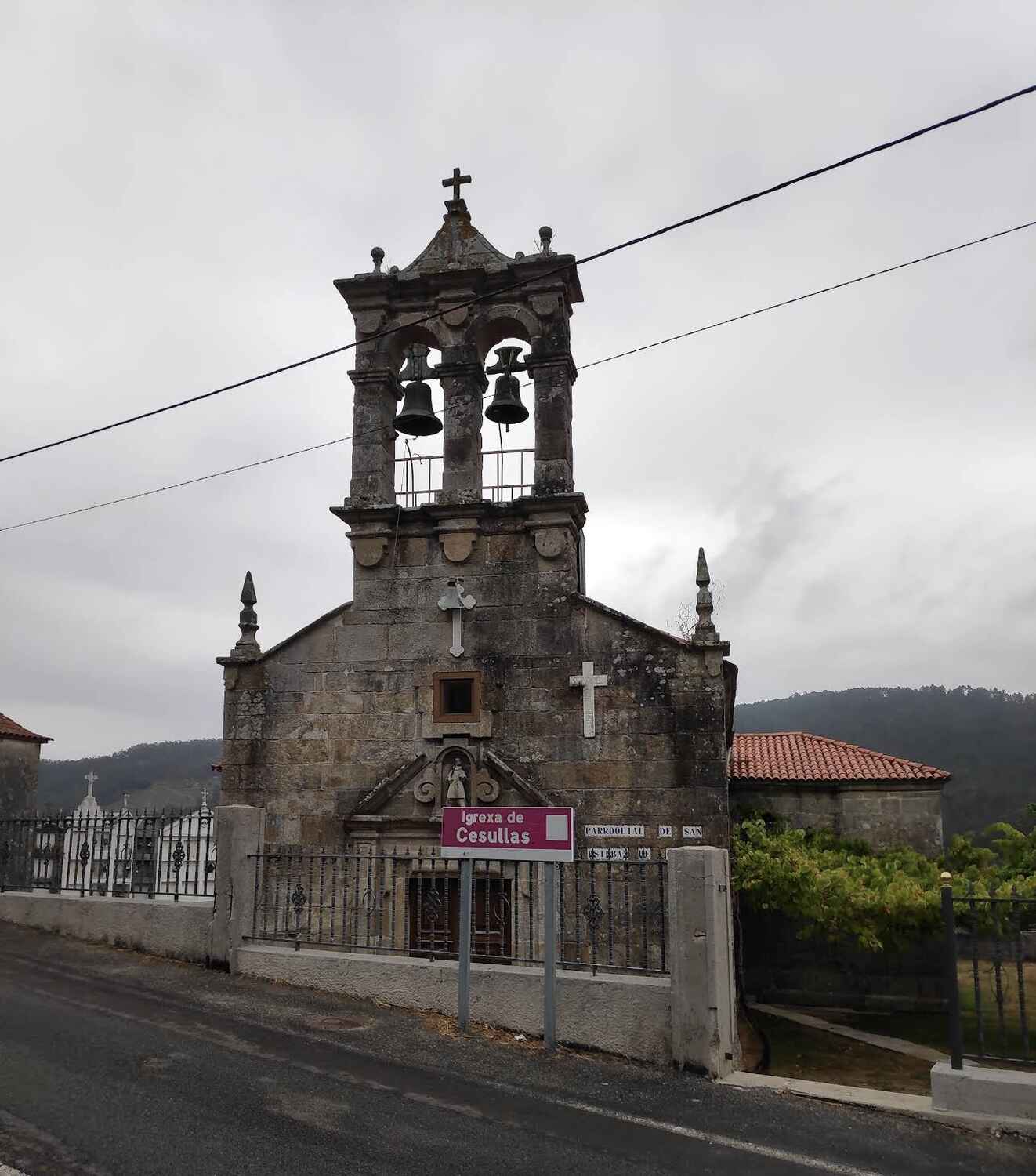
10. Santo Estevo de Cesullas
At Cesullas, view the church of Santo Estevo de Cesullas together with the Santo Estevo fountain and the Sacramento stone cross. The ensemble introduces a parish associated with the priest and folklorist Saturnino Cuíñas. Spend a little time in its surroundings, where the community’s history extends beyond the church walls. The main altarpiece dates to 1783, while the nearby Cruceiro do Sacramento is one of the most distinctive landmarks in Cesullas.
After exploring Cabana’s churches, you can travel much further back in time at the Dombate dolmen and the Borneiro hillfort. For a fuller itinerary through the municipality’s heritage, discover Cabana de Bergantiños.
Laxe
11. Santa María da Atalaia
Above Laxe’s harbour, Santa María da Atalaia provides a striking connection between a church and its maritime setting. Its elevated position explains its name and prominence within the town. Approach through the old streets, then continue your walk towards the waterfront.
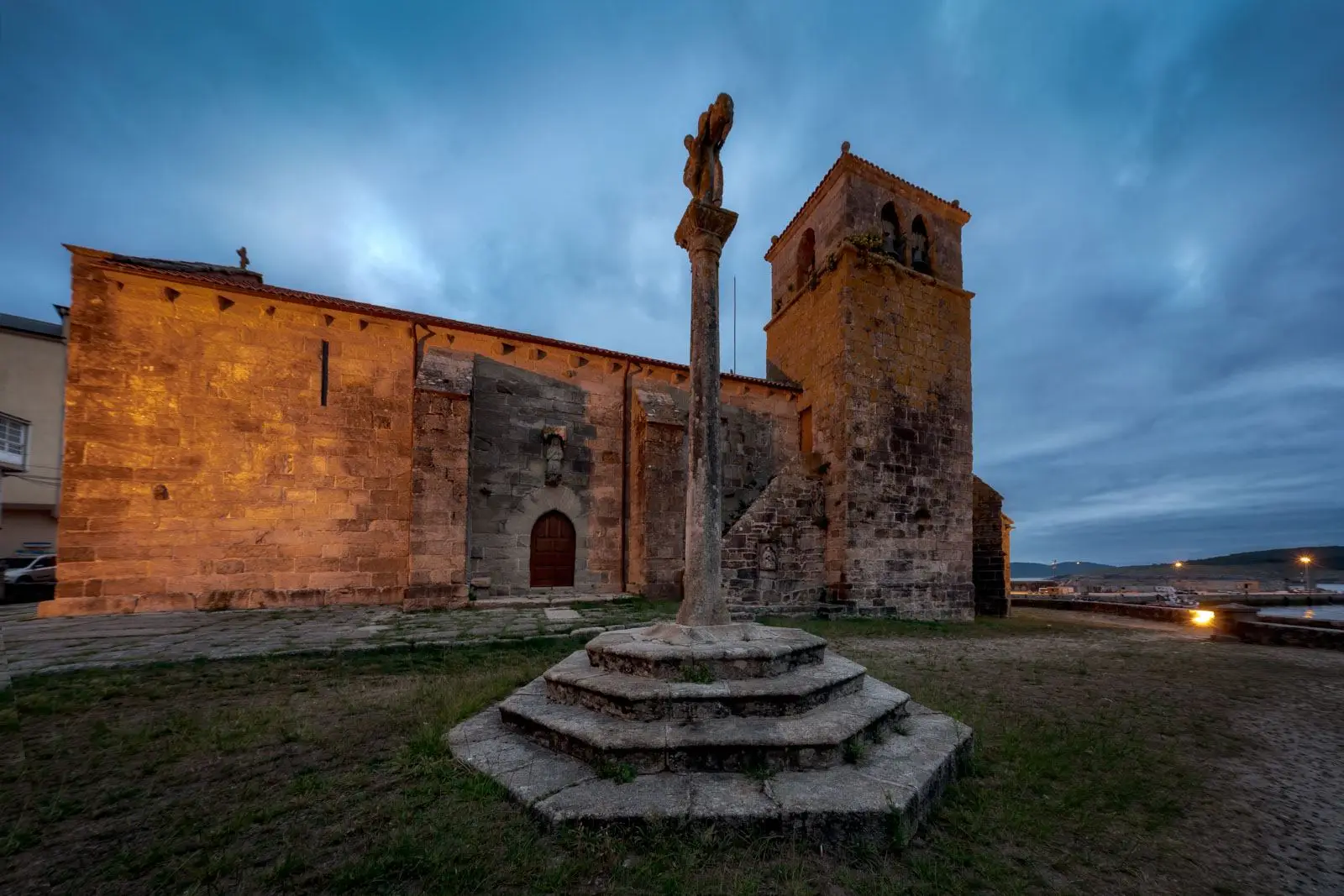
12. Santiago de Traba
Santiago de Traba combines a Romanesque structure with a façade altered in the Baroque period. Walk around the building rather than concentrating only on its main entrance. This stop adds a historic dimension to a visit to Traba, also known for its beach and lagoon.
Santa María da Atalaia and Santiago de Traba reveal both the maritime and rural sides of Laxe. Add the old harbour streets, the town beach or Traba lagoon to your itinerary: find more to see in Laxe.
Coristanco
13. San Mamede de Seavia
San Mamede de Seavia preserves the memory of a former Benedictine monastic centre. Later alterations and the main altarpiece reveal different chapters in the history of the church. Its monastic origins should not be confused with the age of the present building, largely rebuilt in the early twentieth century.
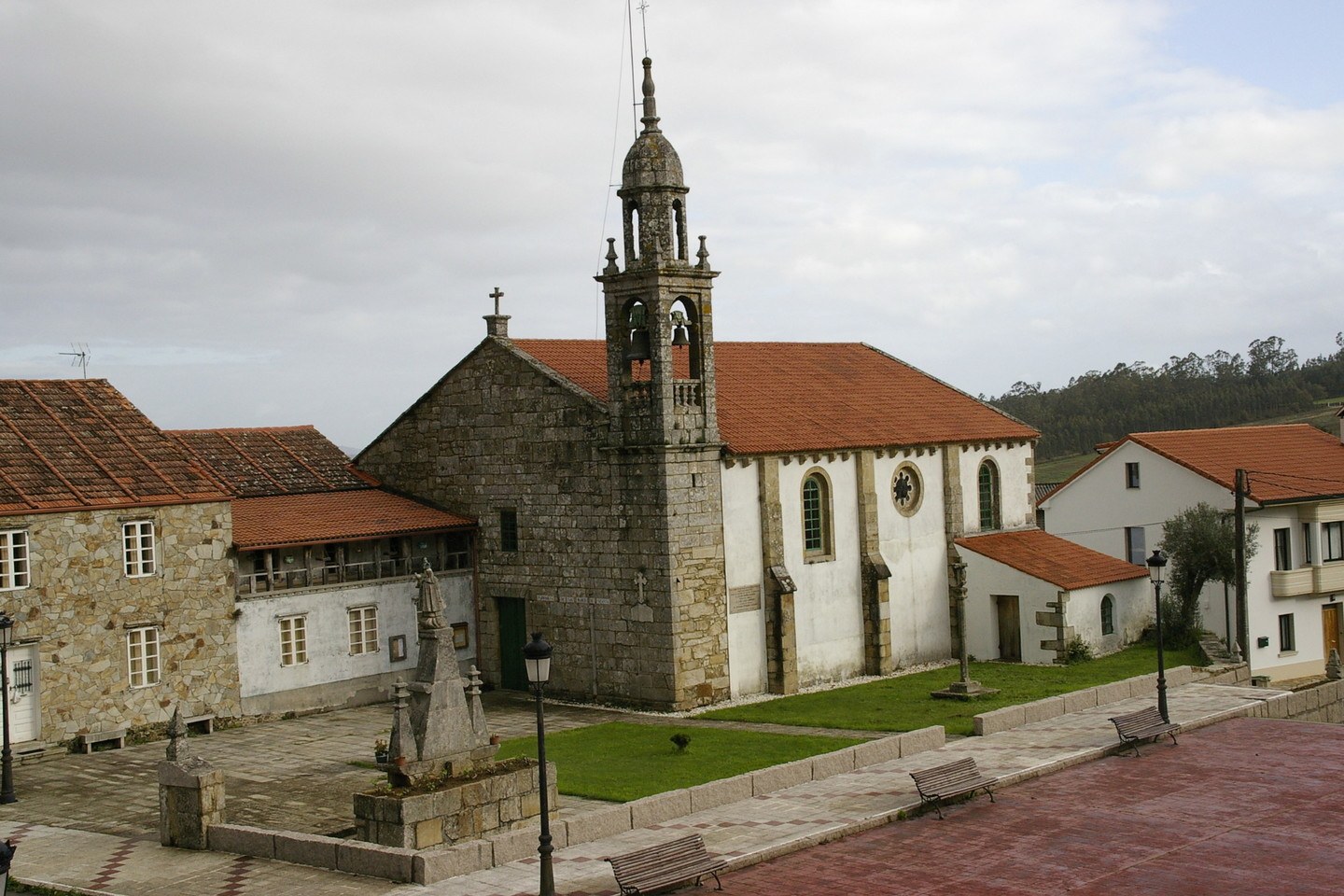
14. San Paio de Coristanco
Built in the early twentieth century, San Paio retained an earlier main altarpiece attributed to the workshop of Antonio de Meis. Look for that continuity between the building and its older religious art. The present building was constructed between 1900 and 1903.
From Seavia to San Paio, Coristanco’s churches tell stories of monastic life and changing parish communities. Its farmland and rural traditions add another perspective. To plan a longer visit, explore Coristanco.
Zas
15. San Pedro do Allo
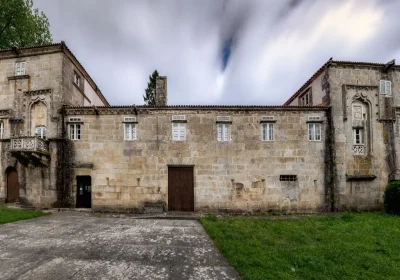
Beside Torres do Allo, San Pedro do Allo church forms the religious part of the historic estate. Pause at its Renaissance doorway, with figures of Adam and Eve. The proximity of the manor house helps explain the relationship between secular and ecclesiastical power in this part of Zas.
16. San Andrés de Zas
The slender tower of San Andrés is a landmark in Zas. Commissioned by Álvaro Núñez de Lamas, the church preserves tombs connected with the founder’s family. This family history offers another way to understand the building: its architecture preserves personal memory as well as religious heritage. The family tombs help tell the story of the people who commissioned the church.
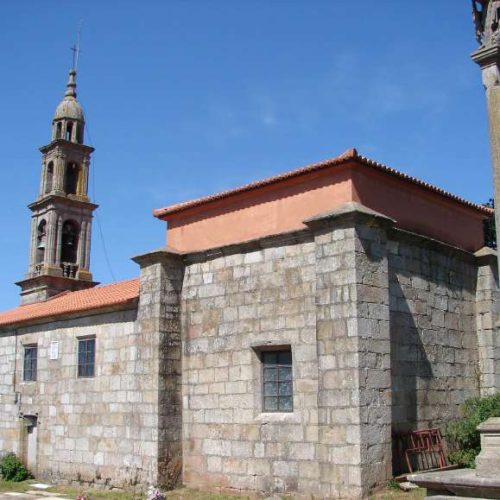
San Pedro do Allo and San Andrés introduce Zas’s religious and manor-house heritage. The Torres do Allo estate and its riverside walks make rewarding next stops: discover more of Zas.
Vimianzo
17. Santiago de Cereixo
At the church of Santiago de Cereixo, the southern doorway deserves particular attention. Its tympanum depicts the Traslatio, the transport of the Apostle James’s body to Galicia according to Jacobean tradition. This carved scene reveals how a Romanesque church could tell a story through stone.

18. Santa Eulalia de Tines
Santa Eulalia de Tines combines a Romanesque church with significant archaeological discoveries in its surroundings. The Victorino funerary stele, found here and now held in A Coruña’s Archaeological Museum, adds depth to the site’s history. The visit encourages you to consider what preceded the present church.
The churches of Cereixo and Tines are just two chapters in Vimianzo’s long history. Its castle and megalithic monuments add further layers to the journey: explore the Vimianzo visitor guide.
Camariñas
19. San Xurxo de Camariñas
San Xurxo brings Baroque architecture into a walk through Camariñas. Its stone façade and altarpieces are worth exploring, along with the story of its funding by an emigrant in Mexico. The visit connects religious art with the history of emigration from Galicia.

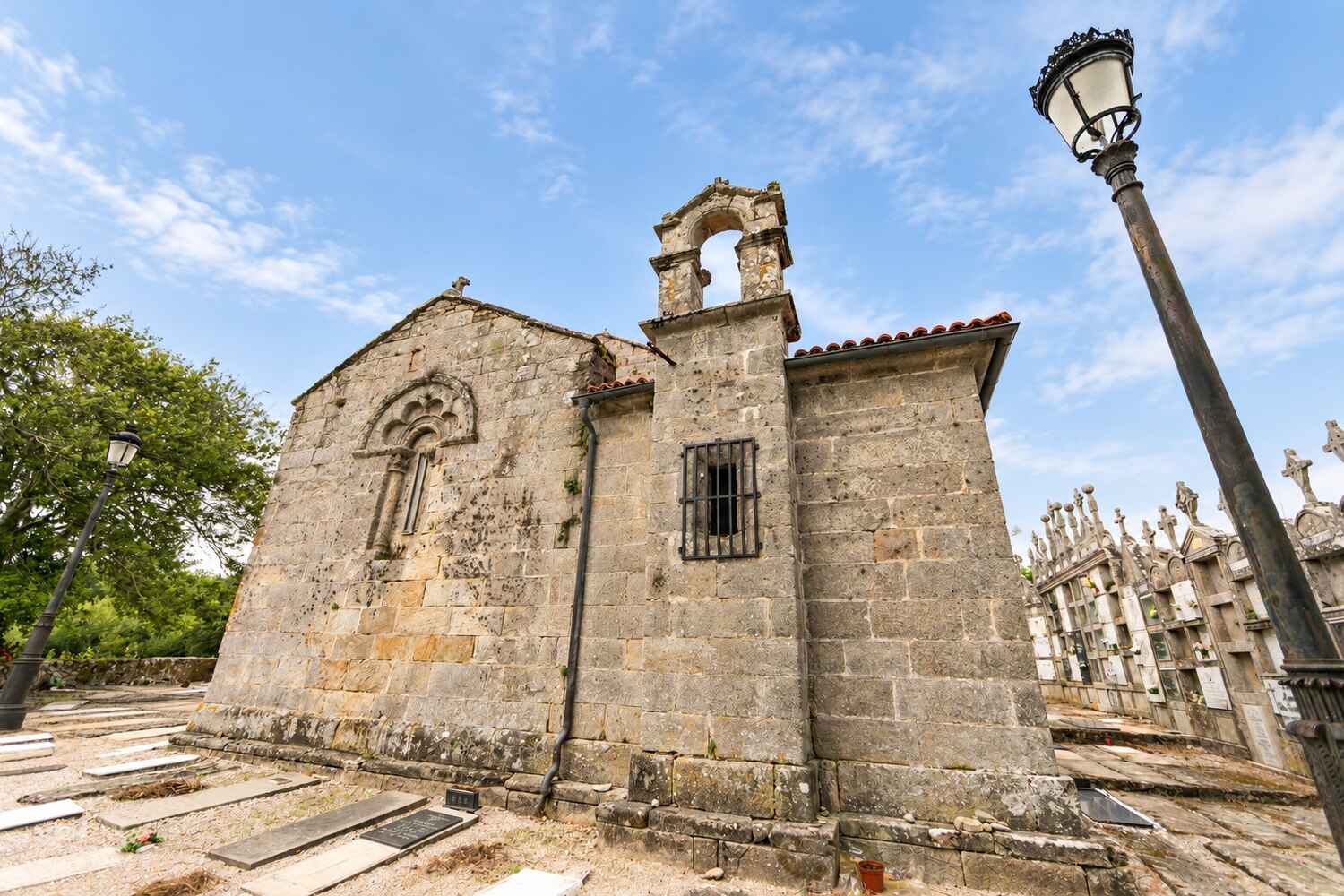
20. Santa María de Xaviña
Santa María de Xaviña offers an introduction to rural Romanesque architecture in Camariñas. Its nave and apse form a compact building with details connected to artistic traditions from Santiago. Add it to a day by the estuary and take time to look closely at its architecture. Look for the Romanesque triumphal arch and the apse window, whose decoration recalls Romanesque sculpture in Santiago de Compostela.
Camariñas pairs its parish churches with a coastline of lighthouses, shipwreck stories and traditional lace-making. Faro Vilán and Camelle offer fascinating next stops: discover Camariñas.
Muxía
21. San Xulián de Moraime
San Xulián de Moraime is one of the most historically rewarding stops in this selection. Its Romanesque church has sculpted doorways and surviving Gothic wall paintings inside. The former monastery exerted considerable influence over the surrounding territory, offering another perspective on the history of Muxía.
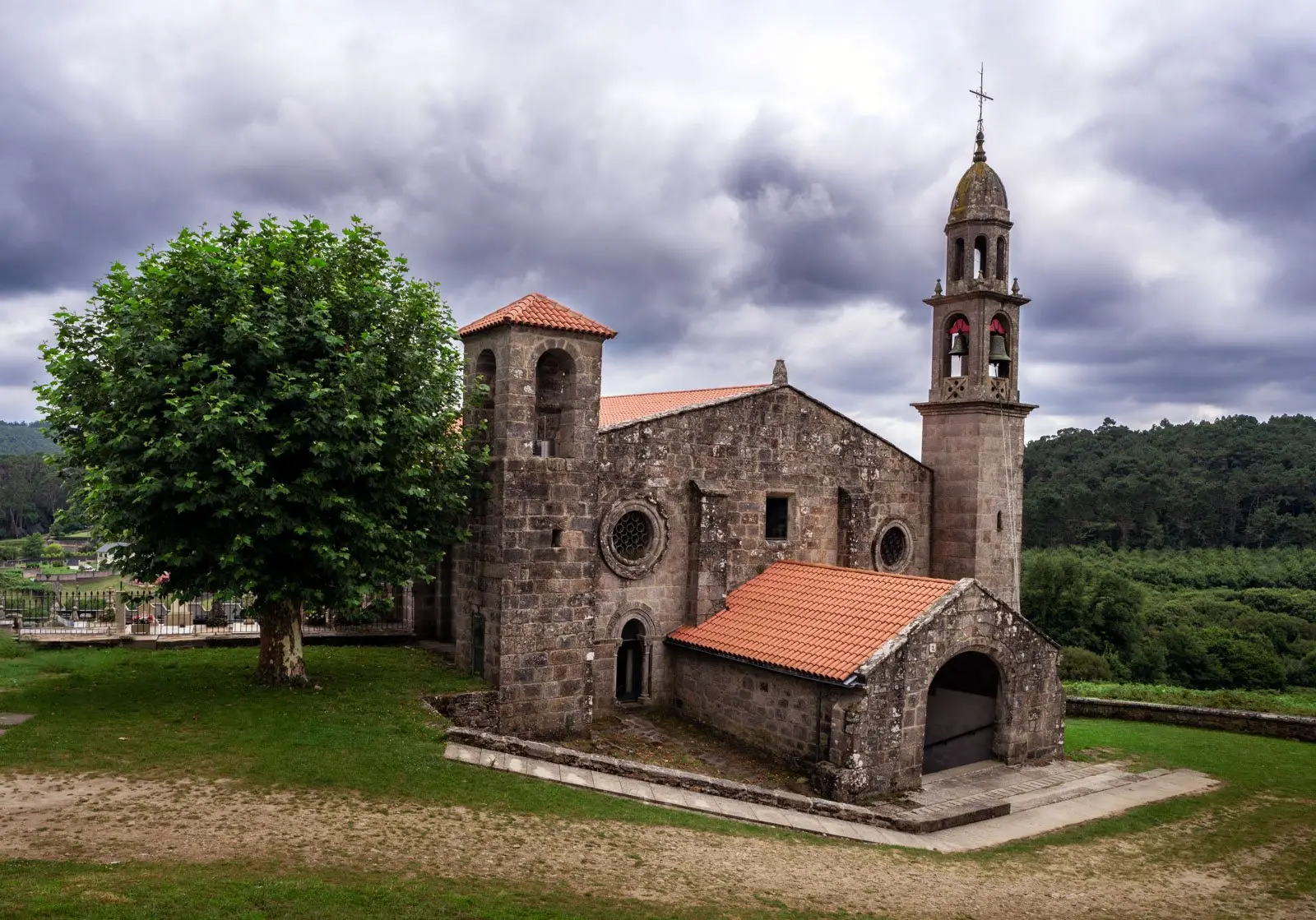
22. Santuario da Virxe da Barca
The Santuario da Virxe da Barca is one of the best-known landmarks of Muxía and the Costa da Morte. It stands at Punta da Barca, facing the Atlantic, beside the Pedra de Abalar and Pedra dos Cadrís, stones associated with the legend of the Virgin appearing to encourage the apostle Saint James. Here, religious architecture, seafaring traditions and the Camino de Santiago come together in a remarkable coastal setting. The Abalar and Cadrís stones are part of the sanctuary’s folk traditions; these legends should be understood as stories rather than documented events.

Moraime and the Virxe da Barca sanctuary connect monastic heritage, pilgrimage and maritime devotion. Beyond them lie coastal paths, beaches and viewpoints: plan more of your visit to Muxía.
Dumbría
23. San Martiño de Olveira
San Martiño de Olveira preserves an example of rural Romanesque architecture in inland Dumbría. The chancel and the arch leading into it reveal the church’s origins beneath later alterations. Its modest scale shows how medieval artistic traditions reached small parishes as well as larger religious centres.
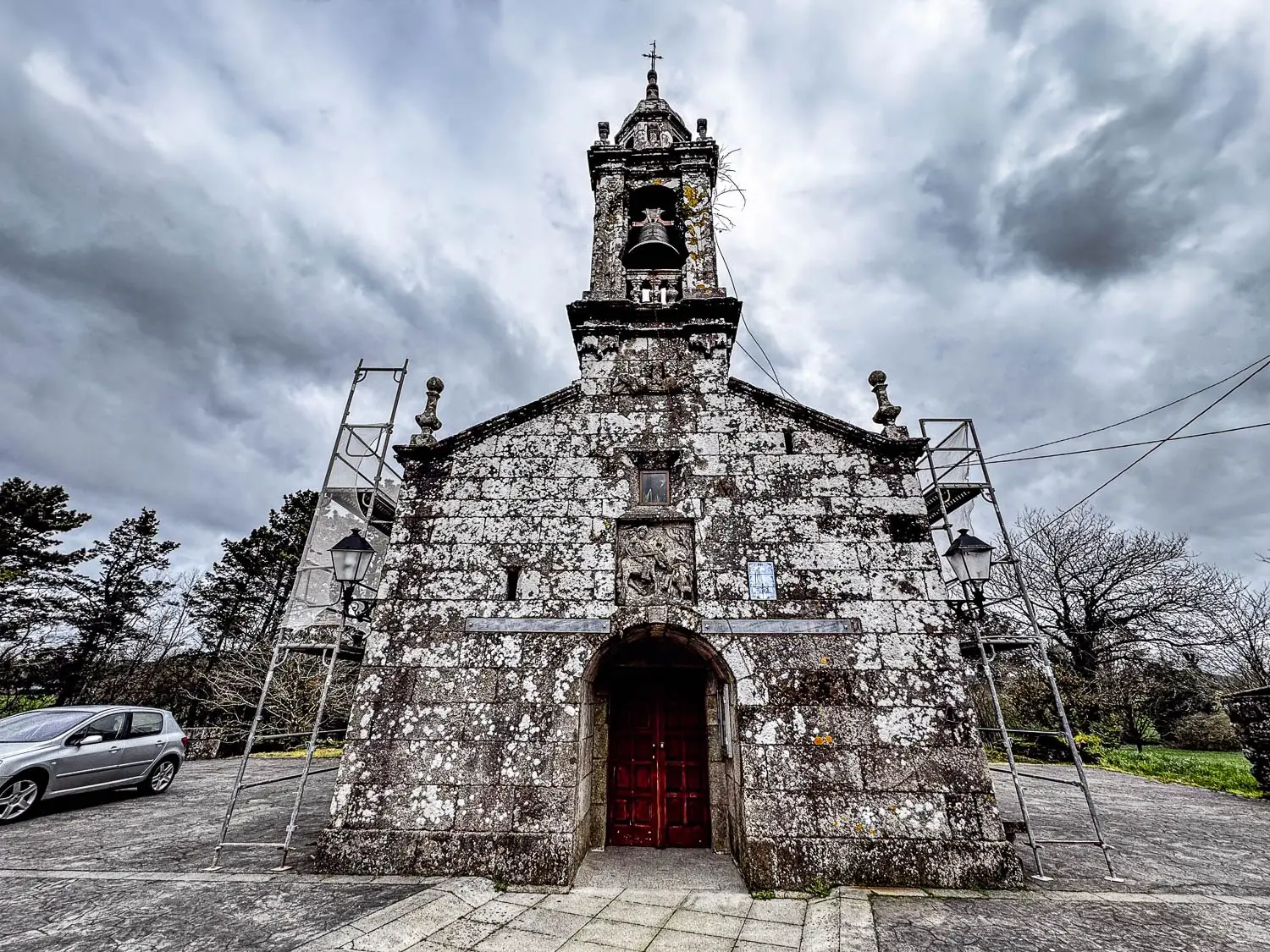
24. Santa Baia de Dumbría
In A Grixa, Santa Baia provides a Baroque stop beside the Fisterra and Muxía Camino. The spacious chancel and the altarpiece dedicated to the patron saint define its interior. Combine an interest in heritage with the pilgrimage landscape while respecting the church’s everyday use.
Dumbría’s parish churches offer a quieter introduction to the area before heading towards the Ézaro waterfall and the landscapes of the Xallas River. To explore further, discover Dumbría.
Cee
25. Santa María da Xunqueira
Santa María da Xunqueira is part of Cee’s identity and religious tradition. The present sanctuary preserves the memory of an earlier church burned during the Peninsular War. The story of an image discovered among reeds belongs to local legend and accompanies the documented history of the sanctuary.

26. San Adrián de Toba
San Adrián de Toba retains elements of its Romanesque origins despite later alterations. Look for the presbytery and triumphal arch. The nearby Caamaño granary and mills offer a way to extend the stop and explore the rural heritage surrounding the church.
After visiting Cee’s churches, make time for its lively town centre and the parishes around the estuary. For more ideas beyond the religious buildings, explore Cee.
Corcubión
27. San Marcos de Corcubión
At San Marcos, Romanesque remains coexist with a largely Gothic building. A landmark within the town, the church houses the image of San Marcos da Cadeira. Include it in a walk through Corcubión to understand its relationship with the streets, houses and waterfront.

28. San Pedro da Redonda
San Pedro da Redonda offers a contrast with San Marcos: a small church of Romanesque origin in rural Corcubión. The visit takes you beyond the town centre into the parish heritage of the Quenxe peninsula. This is a place to slow down and appreciate a quieter setting.
Corcubión’s churches are best enjoyed alongside a gentle walk through its historic streets and the Quenxe area. Look for the connections between the harbour and the old town: explore Corcubión.
Fisterra
29. Santa María das Areas
Before continuing to the lighthouse, give Santa María das Areas its own stop. The church brings together several architectural periods and houses the Santo Cristo de Fisterra, associated with devotion and pilgrimage. Its history helps explain the spiritual significance of the journey to Fisterra. Documents mention the church as early as 1199, while the Santo Cristo chapel adds another chapter to its long history.
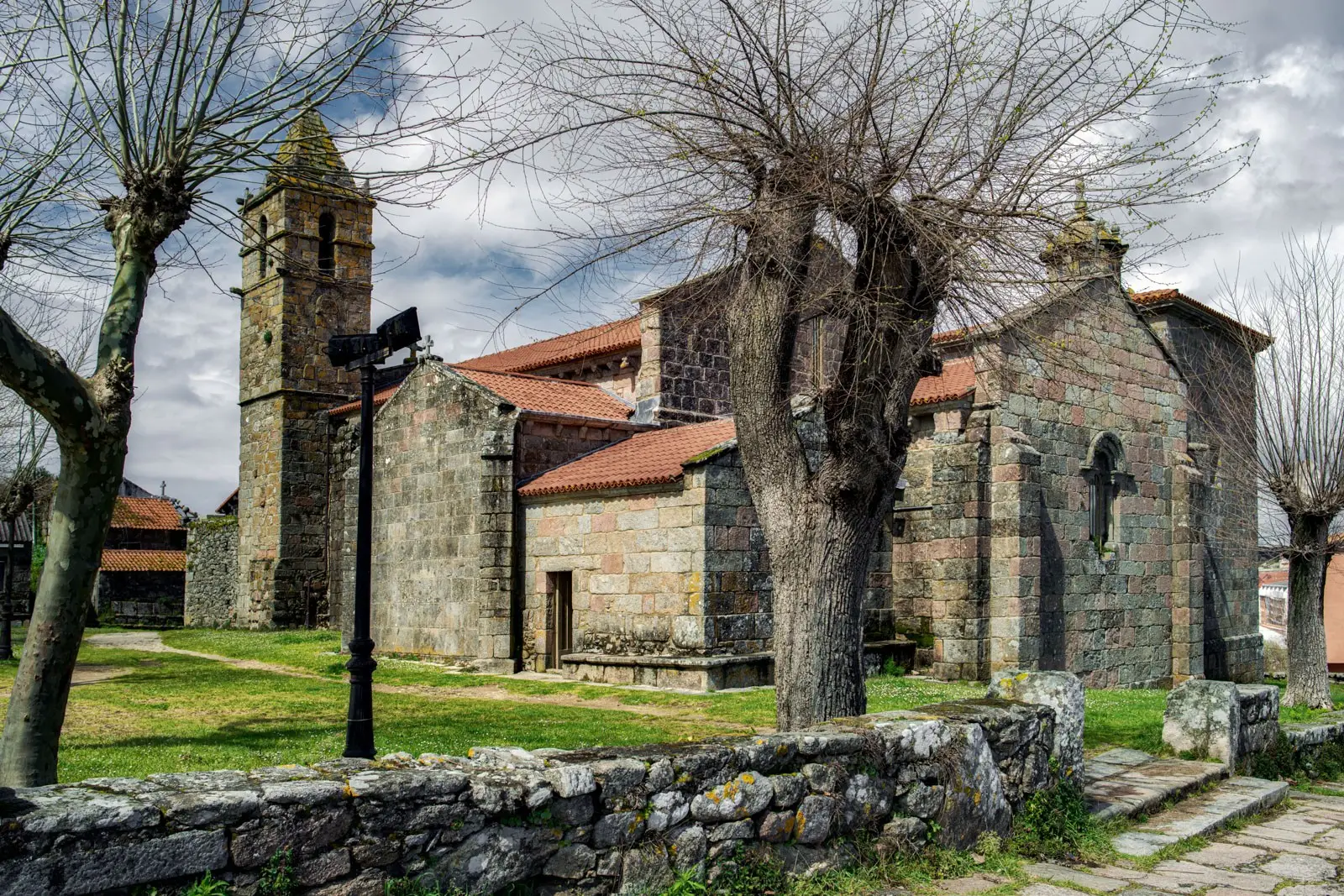
30. San Martiño de Duio
San Martiño de Duio introduces the religious heritage of rural Fisterra. A pentagonal façade and a granite figure of the saint above the entrance give this Baroque church its character. Add it to the usual town and cape itinerary to discover more of the surrounding parishes. Its pentagonal façade and granite figure of Saint Martin are two distinctive features.
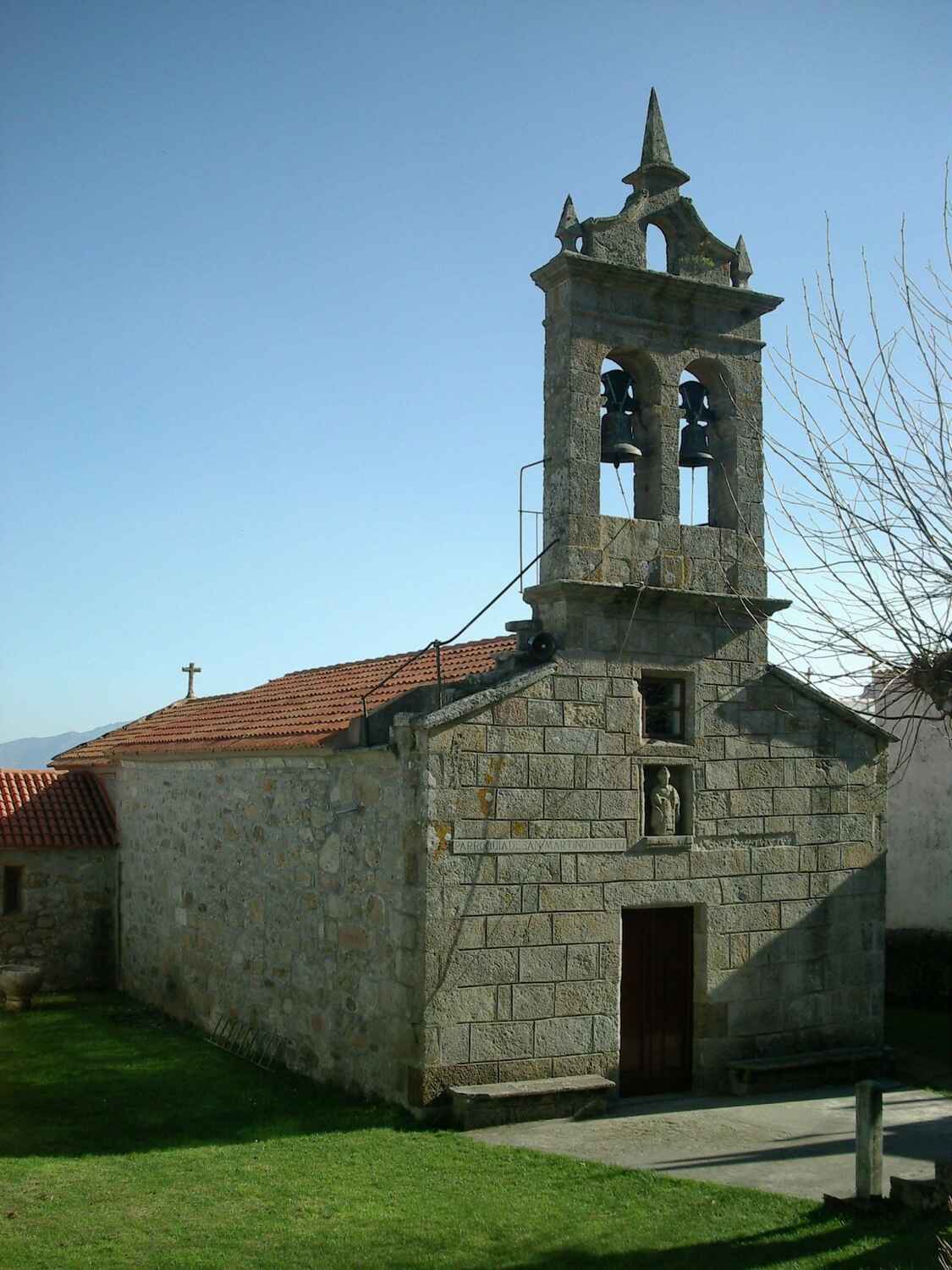
Santa María das Areas and San Martiño de Duio show that Fisterra’s heritage extends well beyond the lighthouse. The town, the Camino and the cape complete the experience: discover what else to see in Fisterra.
Mazaricos
31. San Cristovo de Corzón
At San Cristovo de Corzón, the detached bell tower is one of the first features you notice. The church retains a Romanesque chancel and stands on the Camino towards Fisterra. This stop brings together architecture, rural scenery and the landscape of pilgrimage.

32. Santa Mariña das Maroñas
Santa Mariña das Maroñas preserves the Romanesque origins of a church altered in the Baroque period. Its rectangular nave leads into a chancel with a notable altarpiece. Together with Corzón, it provides a second perspective on the continuity of religious heritage within Mazaricos’s rural landscape. The church’s history reaches back to the twelfth century.
The churches of Corzón and As Maroñas sit naturally within Mazaricos’s landscape of villages, farmland and country lanes. To spend more time exploring inland Costa da Morte, visit the Mazaricos municipality page.
Carnota
33. Santa Comba de Carnota
Santa Comba belongs to an ensemble comprising Carnota’s church, rectory, dovecote and granary. The Baroque church deserves attention alongside the well-known hórreo. Walk around the ensemble and consider the relationship between its buildings to understand the heritage of this farming parish.
34. San Mamede de Carnota
A slender tower and a niche containing the patron saint distinguish San Mamede. Inside, the main altarpiece was made by José Ferreiro and José Gambino. This second stop in Carnota completes the selection with a Baroque church where architecture and sculpture reward attention together. The main altarpiece was commissioned in 1774 and is associated with sculptors José Ferreiro and José Gambino.
Santa Comba and San Mamede are natural starting points for a day exploring Carnota’s churches, traditional granaries, long beach and Monte Pindo. For more ideas, discover Carnota.
Planning a visit to the churches of the Costa da Morte
Choose an area and combine its churches with nearby towns and landscapes. In Bergantiños, you can link stops in A Laracha, Carballo, Malpica, Ponteceso, Cabana and Coristanco. Another day could take in Laxe, Zas and Vimianzo, or the churches of Camariñas and Muxía. Further south, Cee, Corcubión and Fisterra form another group, while Dumbría, Mazaricos and Carnota offer ways to extend the journey.
Before travelling, check access arrangements with the tourist office or parish. Interior opening times may vary, and some churches have no regular tourist visiting hours. Respect services and ask before photographing inside. You can also begin outdoors: doorways, apses, stone crosses and forecourts preserve many of the details that make these buildings worth discovering.
A cultural route through the Costa da Morte: churches, museums and manor houses
This guide covers just part of the region’s religious heritage. To discover more churches, chapels, stone crosses and other places of interest, explore our religious heritage of the Costa da Morte section.
Religious architecture is just one part of the region’s cultural heritage. To explore local history, art and traditional crafts further, take a look at our selection of 11 museums and cultural spaces on the Costa da Morte.
You can also visit Torres do Allo, one of Galicia’s earliest manor houses, a heritage site that helps explain the historic relationship between landed families and the church of San Pedro do Allo.
Frequently asked questions about Costa da Morte churches
How many churches are included?
This guide selects 34 churches on the Costa da Morte, two in each of its 17 municipalities, to show the range of local religious heritage.
Can you go inside every church?
Not necessarily. Some open mainly for religious services. Check with the parish or tourist office before travelling.
Which architectural styles will you see?
The selection includes Romanesque, Gothic and Baroque features as well as later rebuilding. Each church has its own history, and many combine several periods.
Can you combine the churches with other cultural attractions?
Plan visits by municipality and combine nearby churches with museums, manor houses and other heritage sites.
To discover more places and plan your route, visit the interactive map of the Costa da Morte, where you can explore places of interest and filter by category and municipality.