

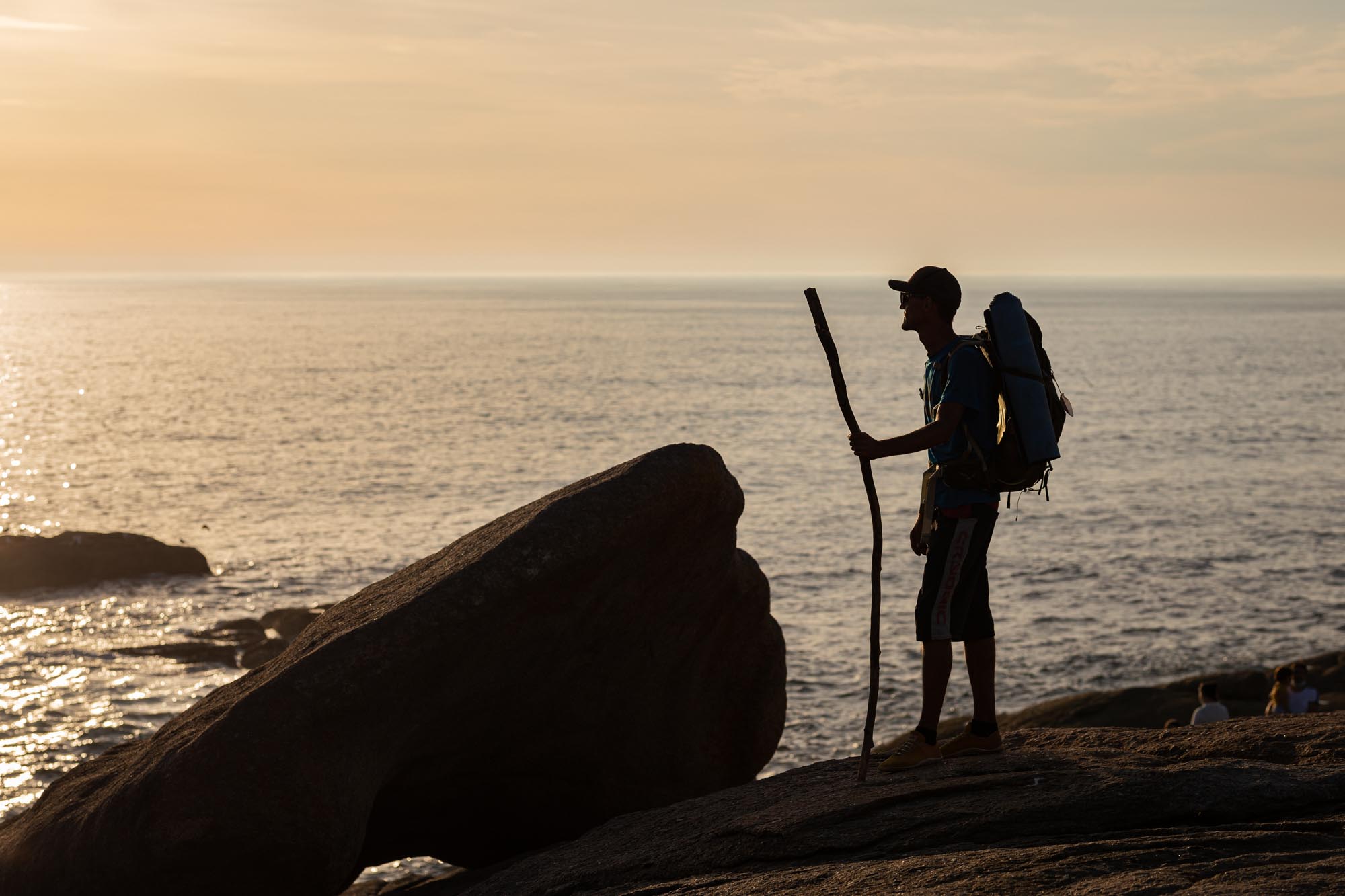
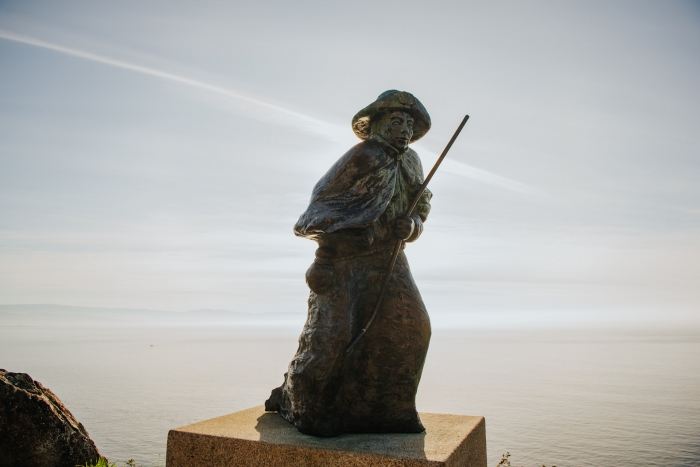
More and more pilgrims are choosing to continue the Camino de Santiago to the end of the world, whether to the Fisterra Lighthouse or to the Sanctuary of Virxe da Barca in Muxía.
This route holds great emotional value, beyond the beauty of the hiking trail itself. We are talking about two destinations that offer a unique and mystical experience, as the final point of a journey that symbolises the closure of a cycle.
This path is the last stage of a spiritual journey that doesn’t end in Santiago, but continues to the Atlantic Ocean, where the majesty of the landscape and Galician traditions offer a memorable experience.
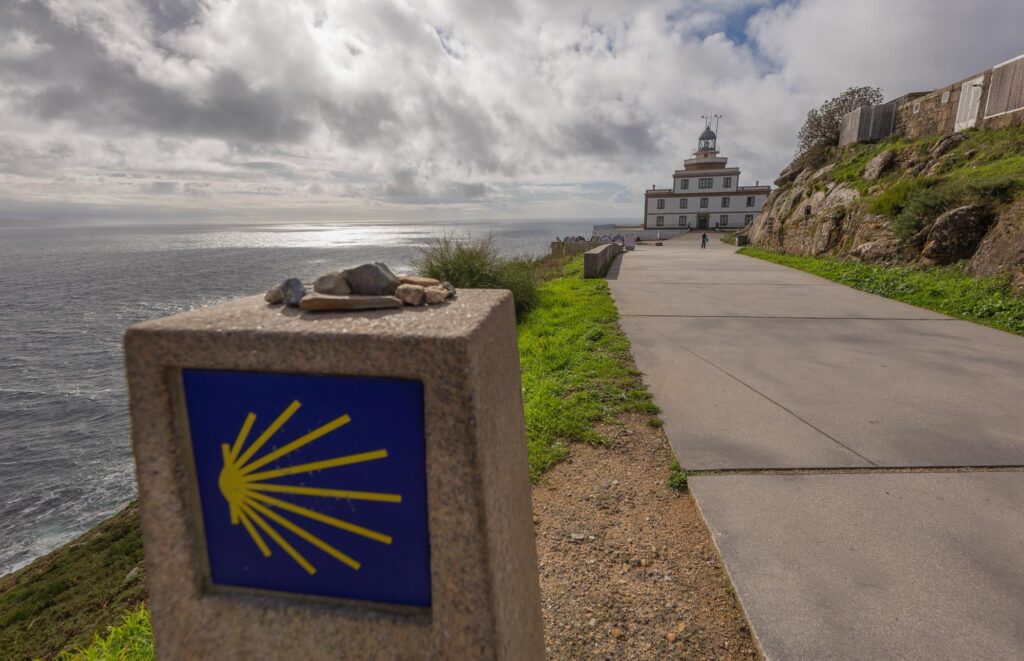
Where does the Camino de Santiago to Fisterra and Muxía pass through?
It begins in Santiago, and the first stage connects the Galician capital to Negreira, still outside of Costa da Morte. The next stage links Negreira to Olveiroa, now within our territory. From Olveiroa to Cee is the next stage. Cee to Fisterra takes you to the end of the world.
Fisterra to Muxía completes the route.
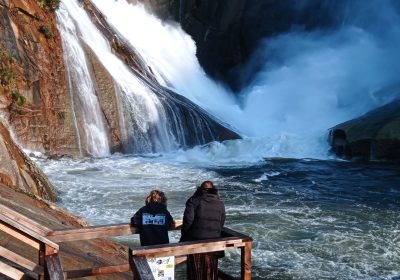
Along the way, various mountains will be climbed, such as Monte Aro, from where the Fervenza Reservoir can be spotted. Throughout the kilometres of this route, you will pass many hermitages, chapels, and churches. And countless crosses.
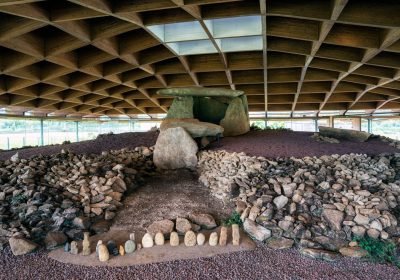
You can enjoy small villages, the deepest nature, and the remnants that both the ancient and current inhabitants have left in this land.
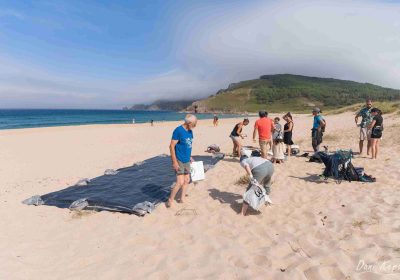
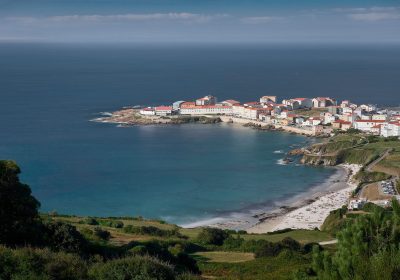
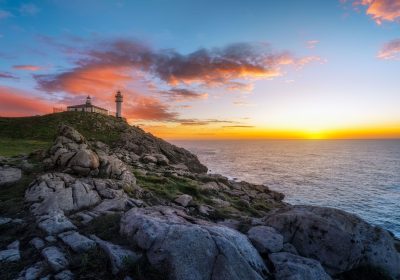
Upon reaching Cee, you’ll see the sea for the first time, and the ascent to the Fisterra Lighthouse will bring you face to face with the end of the world. To finish the route in Muxía, the ocean will remain to your left throughout the entire journey, allowing you to enjoy stunning cliffs and endless beaches.
In conclusion, the Camino de Santiago to Fisterra and Muxía passes through the very essence of Costa da Morte.
How many kilometres is the Camino to the end of the world?
Six stages and almost 120 kilometres to discover the interior of Costa da Morte and the end of the world. This route aspires to be more than just a journey, but a spiritual voyage.
Where to stay?
Along the Camino, you’ll find various hostels that will make your journey more bearable. The stages are well defined, so you’ll have no problem finding somewhere to sleep. You’ll also find guesthouses and rural houses where you can stay. If you’re looking for something more special, in Fisterra, you can stay in the lighthouse itself, and in Muxía, there’s a National Parador.
What to bring on the Camino?
If you’re already doing the longer route, these tips may not be of much help. But if you’re thinking about taking this route as your main one, here are some recommendations:
- It is important to wear comfortable and durable clothing and footwear, as the route, although not as long as the main stages of the Camino, is still demanding in some sections.
- Additionally, don’t forget to bring appropriate clothing for rain, as the weather in Galicia can be unpredictable. A good raincoat and a waterproof backpack will help you stay dry in case of bad weather.
- It is also recommended to bring sunscreen, as despite the rain, sun exposure can still be considerable.
Beware of the Vákner
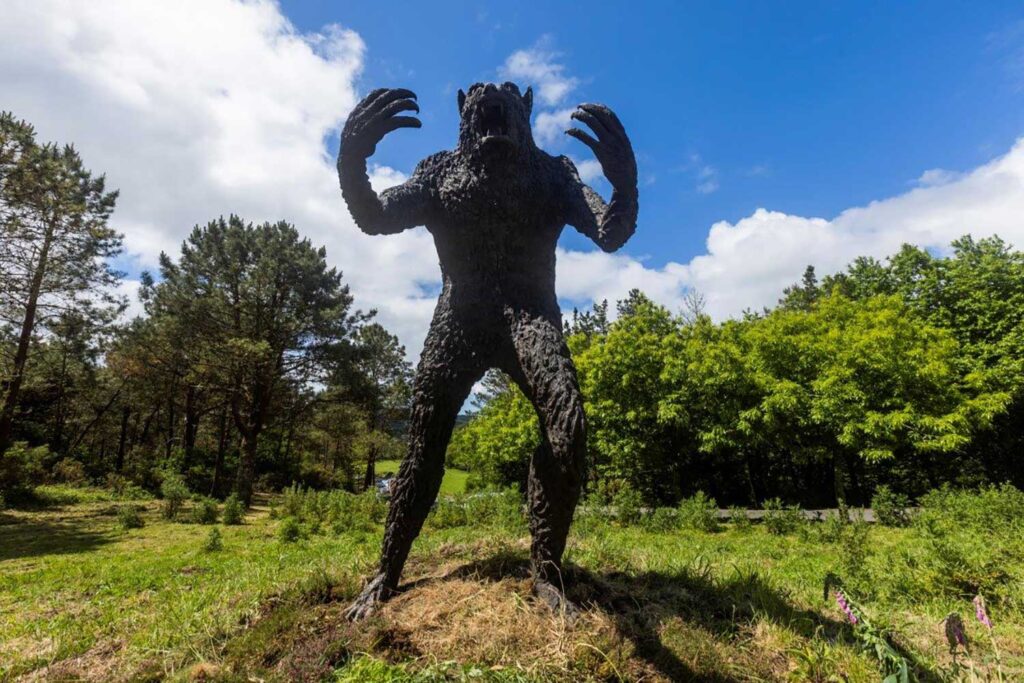
This is not advice. It’s a joke! The Vákner is a mythical creature that the Concello of Dumbría, through which the Camino passes, has decided to rescue and use in sculptures and murals. Legend has it that the Vákner, part man and part wolf, would appear to pilgrims in the mountains.
With its stunning views, picturesque villages, and connection to the sea, this final stretch of the pilgrimage is the perfect closure for walkers looking for a deeper experience. Whether to complete your pilgrimage journey or to explore Costa da Morte, Fisterra and Muxía offer a perfect combination of history, spirituality, and natural beauty that you can’t miss.
When you make your way through the area, don’t forget to tag us in the photos you upload to Instagram on our account @visitacostadamorte