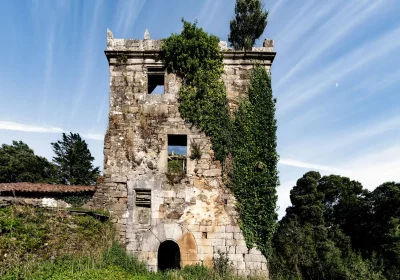


The Capela de Riobó, also known as the Church of San Martiño de Riobó, is one of those places where stone, silence and history come together in a truly special way. Located in Cabana de Bergantiños, very close to the manor house of A Penela, this church holds remarkable artistic and heritage value, making it a meaningful stop for anyone wishing to discover a corner of Costa da Morte where the past still feels very much alive.
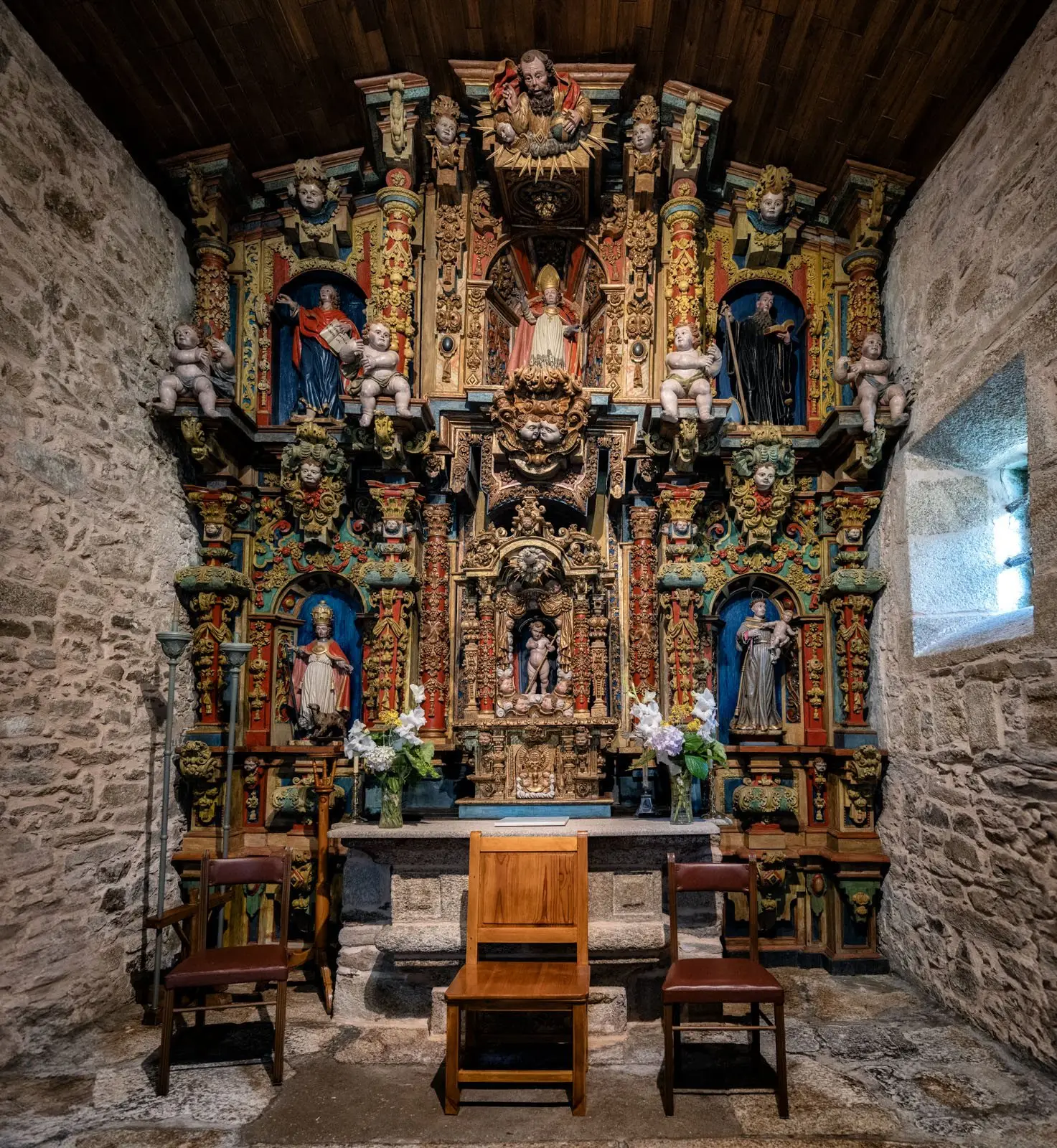
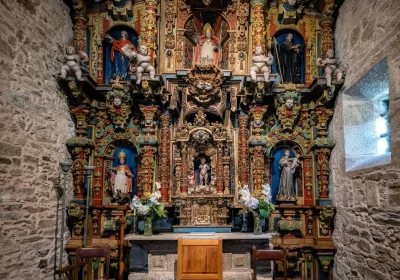
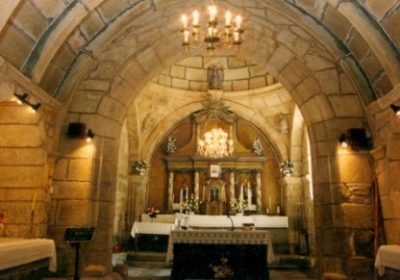
The building is mostly Baroque today, although it still preserves important Romanesque features, such as the structure of the apse, the first rows of masonry on the walls and the triumphal arch with semi-columns leading into the chancel. Inside, the slightly pointed round arch stands out, resting on attached columns with vegetal capitals influenced by the Compostela workshops of the transitional Romanesque period. Two fonts are also especially noteworthy, one of them with a base shaped like a bear or wolf, linked to the symbolism of the Moscoso family, as well as the altarpiece of San Martiño, regarded as a true jewel of the municipality’s sacred heritage.
On the northern side of the churchyard there is also an interesting stone cross, with Christ crucified on the front and a praying Virgin on the reverse. Beneath the altar lie three tombs, including that of Ruy Soneira de Riobóo, who ordered the construction of the church and belonged to the house of A Penela. Altogether, the Capela de Riobó is a place rich in historical meaning, ideal for visitors seeking religious heritage, art and authenticity in a setting deeply connected to the history of Costa da Morte. You can read more in this blog article.