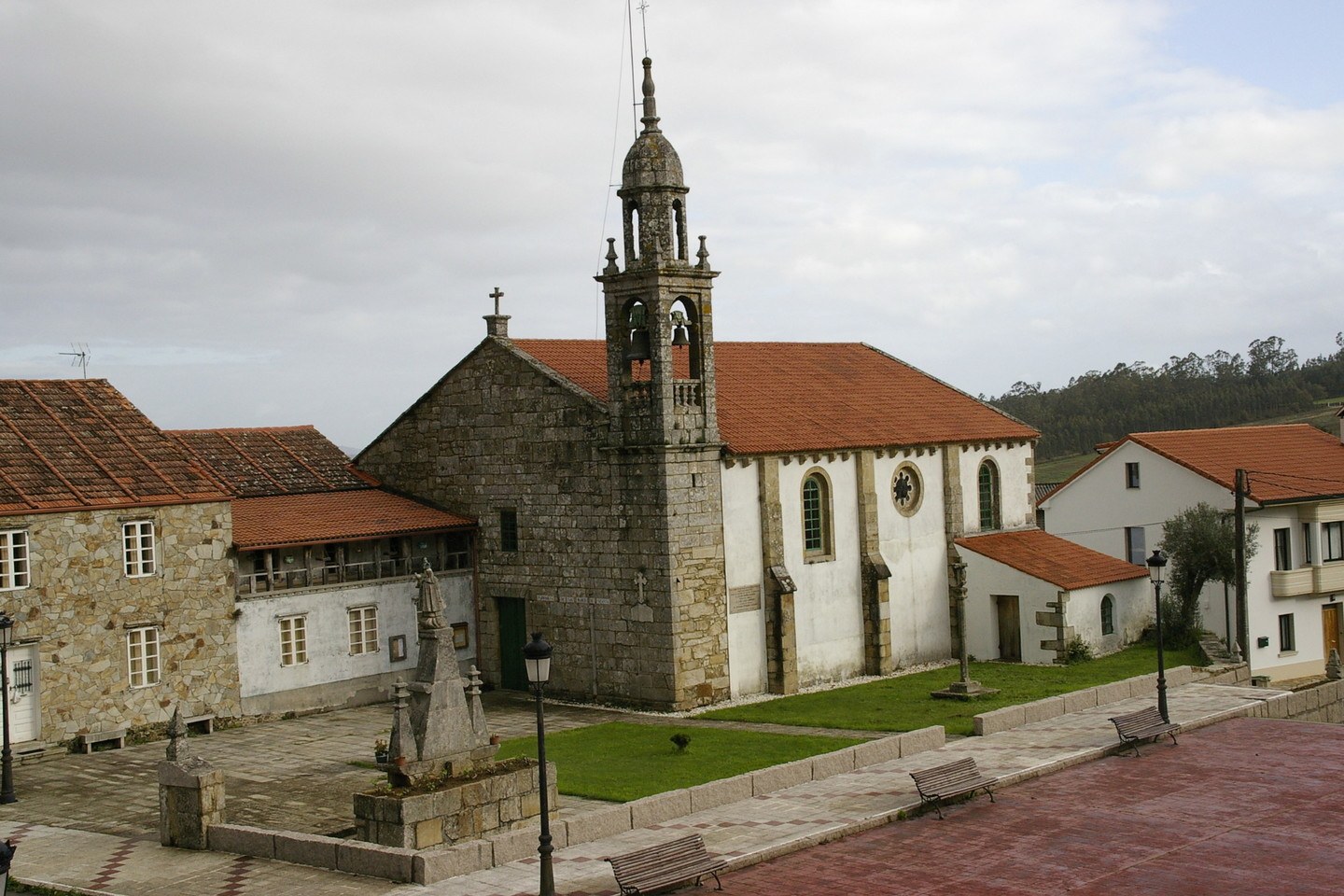


San Mamede de Seavia Church stands in a parish in the municipality of Coristanco whose monastic history reaches back to the Middle Ages. A Benedictine community once occupied this place, connected to the religious and noble networks of Bergantiños. Yet the building visible today should not be confused with that medieval foundation: the earlier Romanesque church underwent successive alterations, and much of the present structure dates from a major rebuilding in the early twentieth century.
Historical accounts describe the medieval church as having three timber-roofed aisles and a vaulted central apse. Its façade was renewed in 1791, and between 1910 and 1911 the deteriorating building was rebuilt under parish priest Santiago Abuelo Lado, following plans by Benigno Cortés. Parts of the older fabric and artistic furnishings were reused. This layered history makes Seavia particularly interesting: it is not an untouched Romanesque monument, but a living building that tells the story of changing needs and continued local commitment.
The appeal of San Mamede lies in that continuity between a medieval monastery, later rebuilding and the community that kept its church alive. If the interior is accessible, take time to look at the altarpieces and other features inherited from earlier phases. Outside, notice how the building belongs to Coristanco’s agricultural landscape. It is a rewarding stop for travellers interested in the quieter, less familiar heritage of the Costa da Morte and the history of its rural parishes.