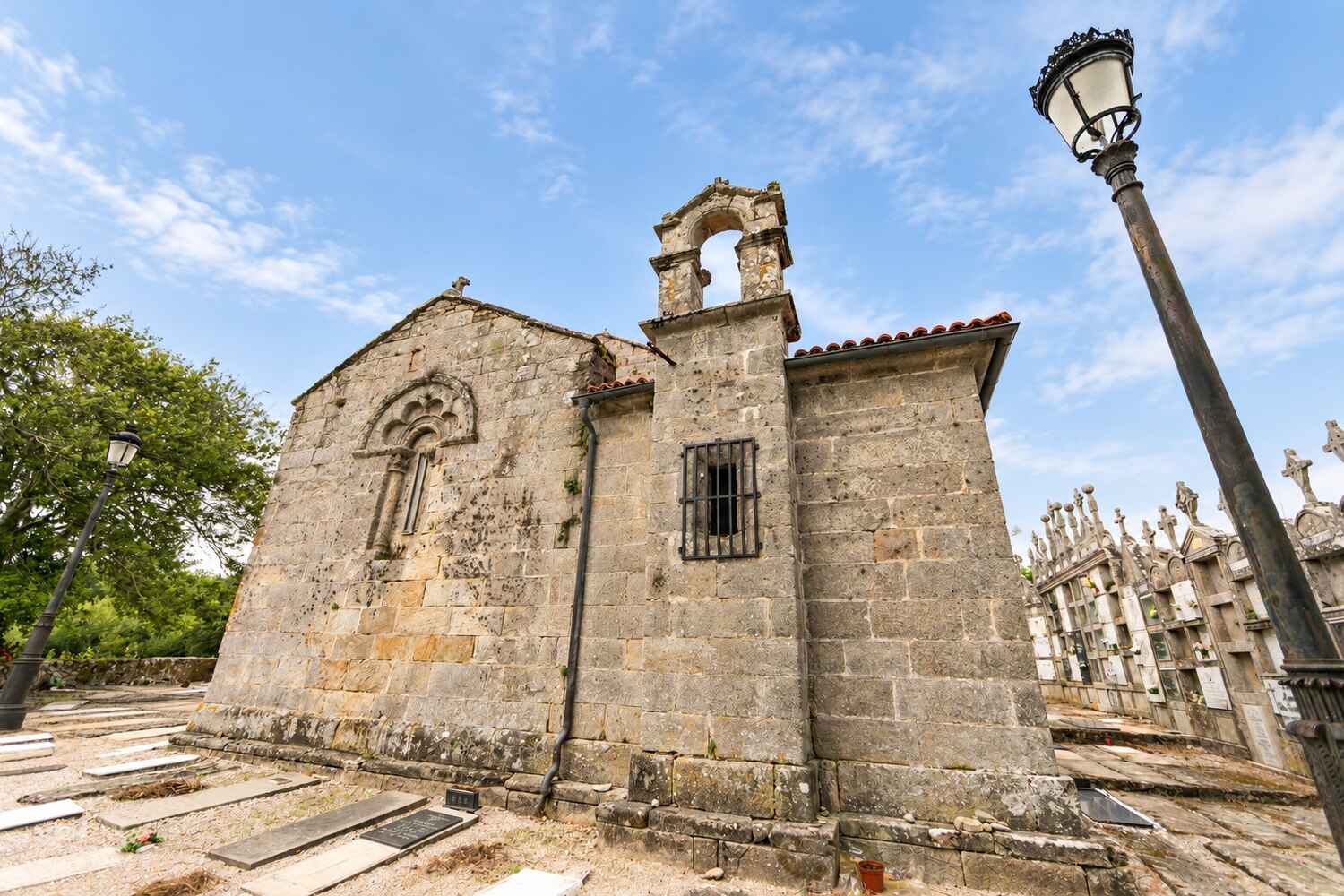


Santa María de Xaviña Church, in the municipality of Camariñas, is one of the most rewarding examples of rural Romanesque architecture on the Costa da Morte. Its origins go back to the twelfth century, and it retains a single nave and apse, although later renovations changed parts of its appearance. Rather than monumental scale, its appeal lies in the quality of the stonework and in what it reveals about the spread of medieval art to small communities near the Camariñas estuary.
Outside, look for the characteristic pentagonal lintels of the side doors and the carved corbels around the apse. The apse window is particularly striking: its four-lobed arch has been linked to the decorative traditions of Romanesque Santiago de Compostela, especially the Platerías portal. If the church is open, the slightly raised semicircular triumphal arch, supported by two pairs of columns with foliage-carved capitals, reveals the craftsmanship of its medieval builders.
Take your time to walk around Santa María de Xaviña, comparing the different walls and noticing how the medieval fabric sits alongside later alterations. Its artistic similarities to churches in nearby Leis and Cereixo place it within a wider local Romanesque tradition. This is an excellent stop for travellers who want to discover Camariñas beyond its beaches and coastline: in the everyday setting of a rural parish, centuries of history remain visible in stone.