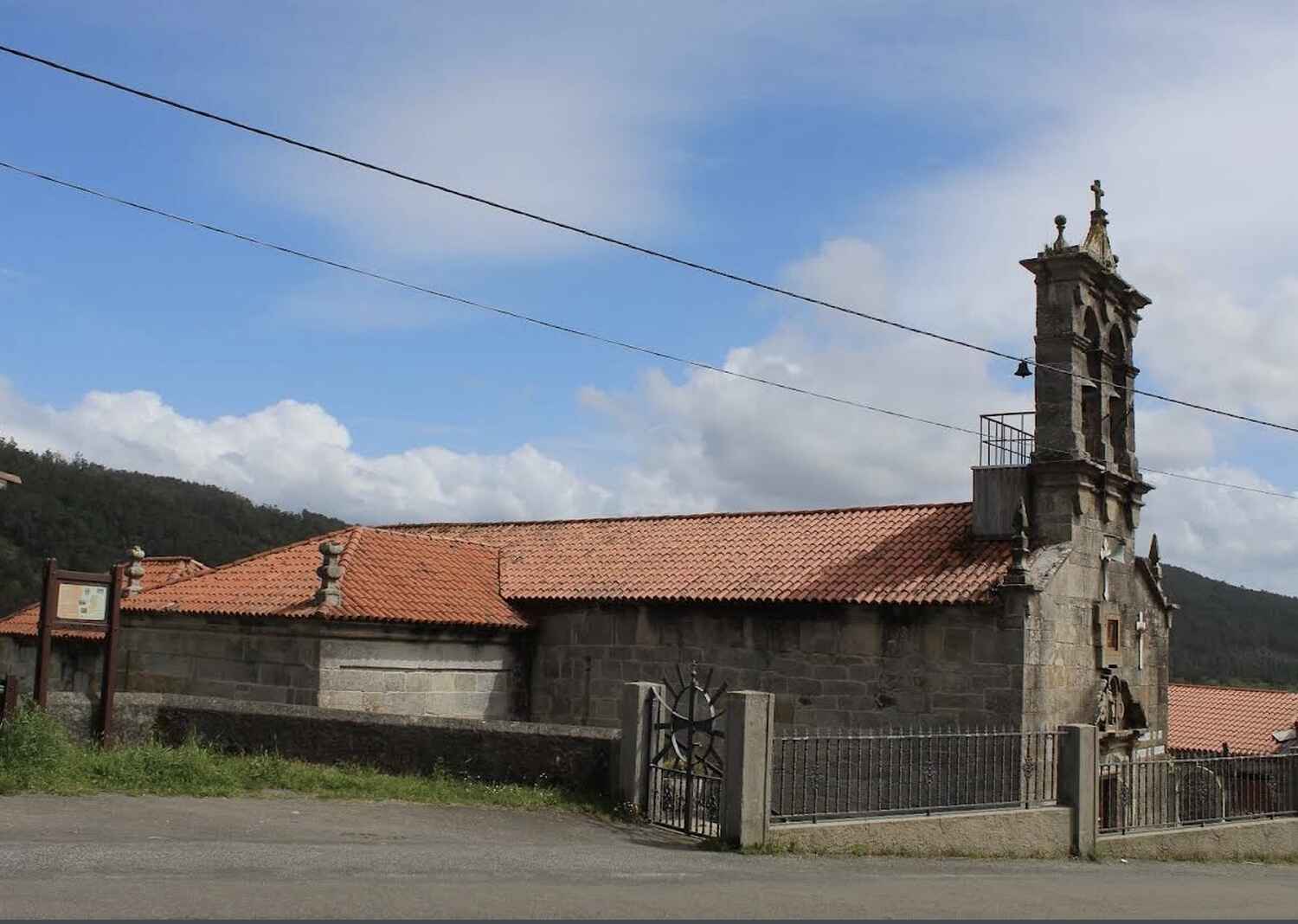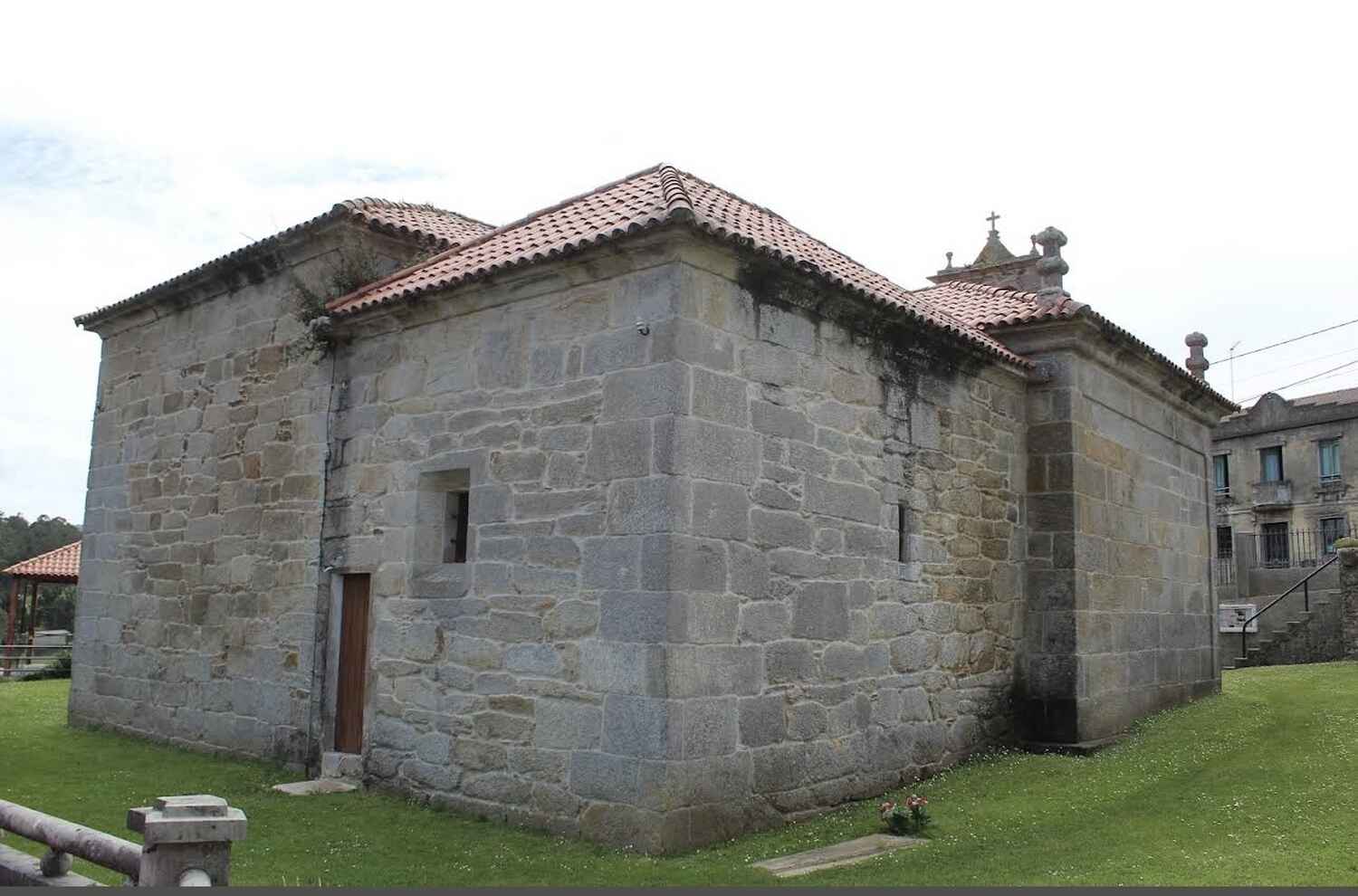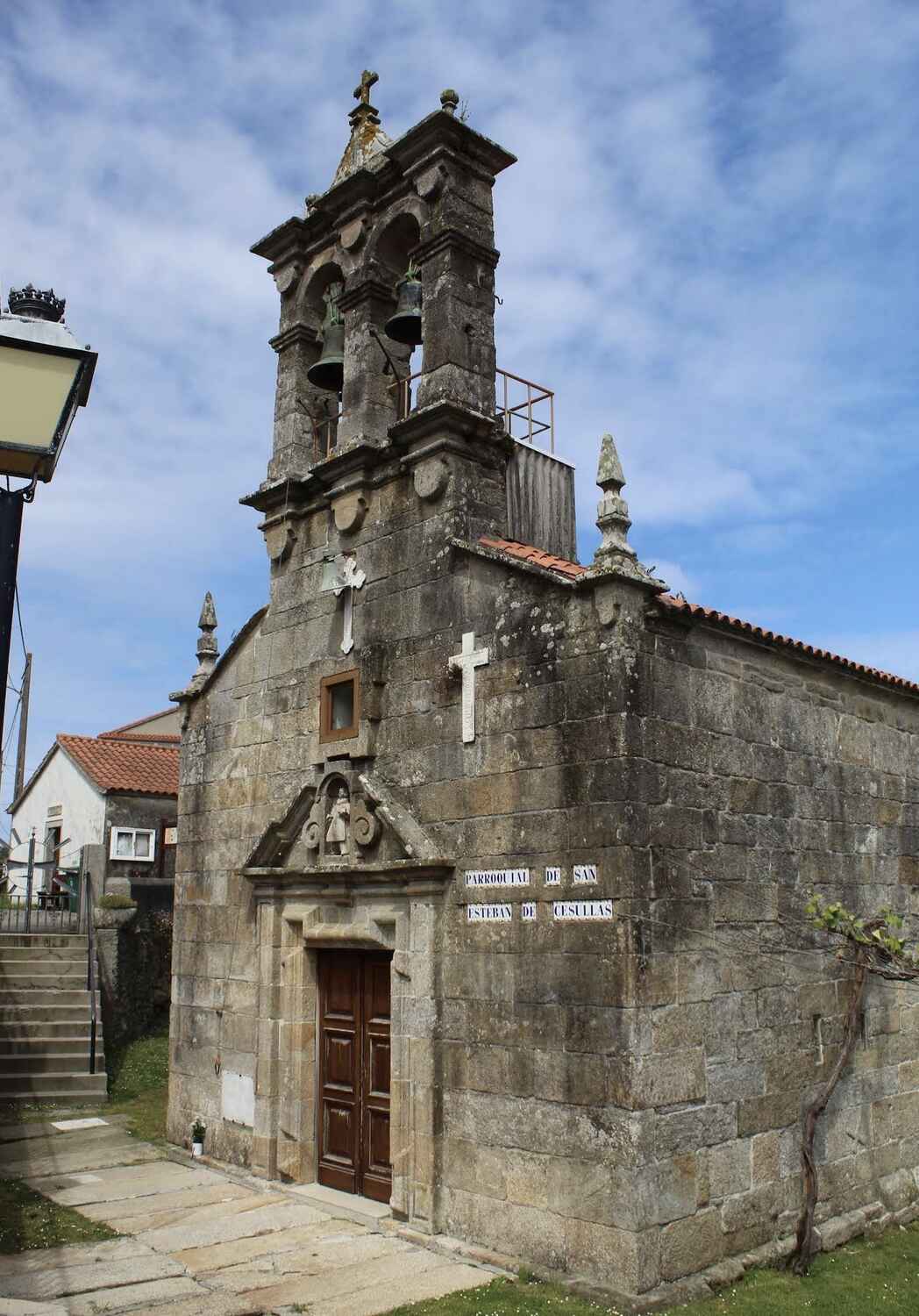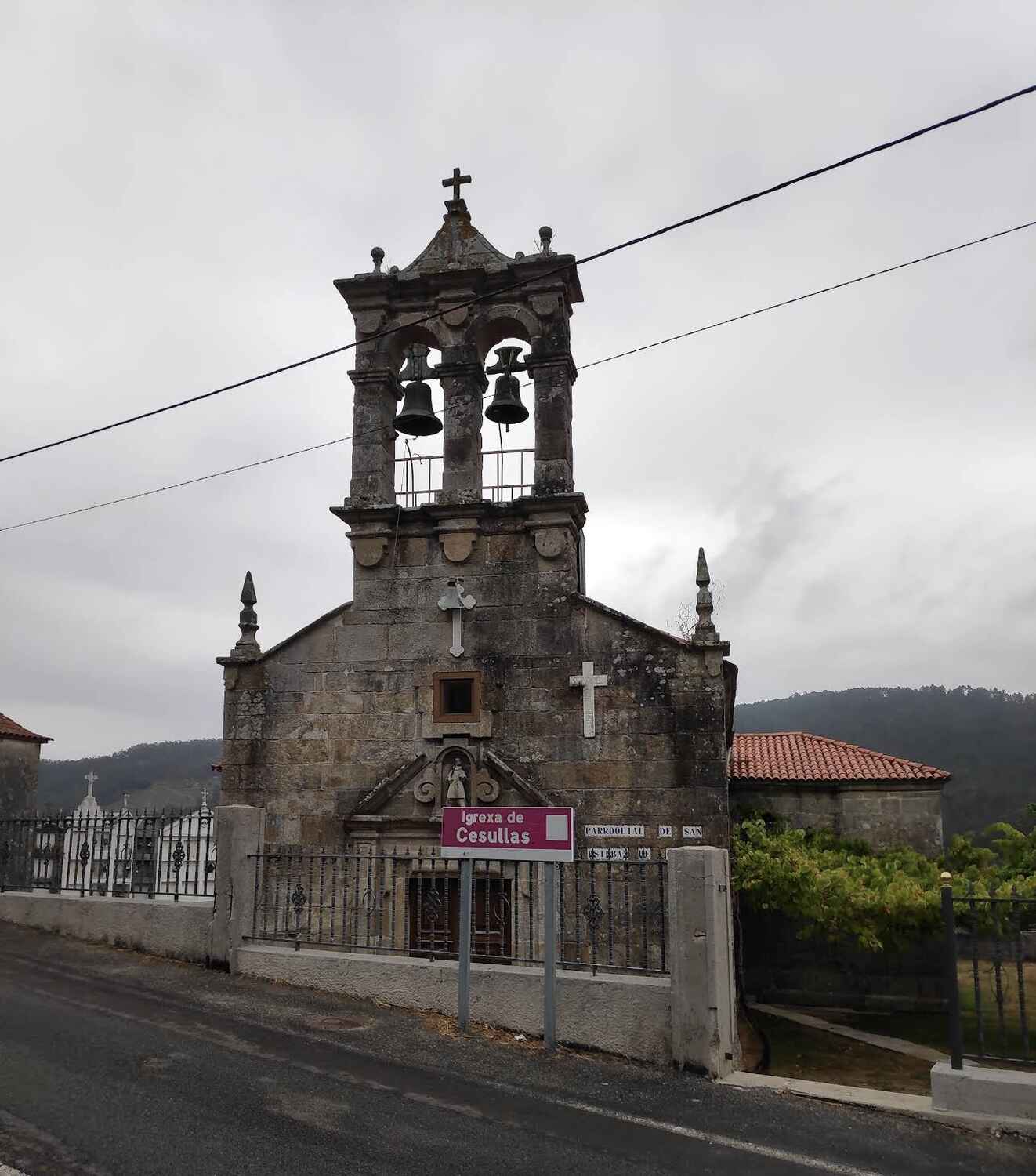


Santo Estevo de Cesullas Church is part of the historic heritage of the municipality of Cabana de Bergantiños, with far more to discover than its exterior might first suggest. Above the lintelled doorway of its five-sided façade, a stone image of Saint Stephen stands among decorative mouldings and scrolls. The bell gable, added in the 1940s, completes a building shaped by generations of parish life. Nearby, the Santo Estevo fountain and the richly decorated Cruceiro do Sacramento stone cross form a small heritage ensemble best explored on foot.
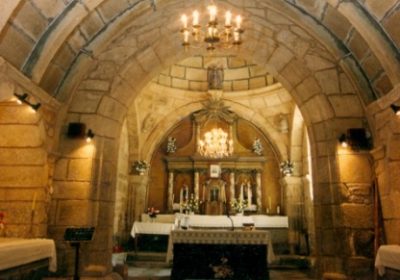
Inside are five altarpieces from different periods. The main one, dated 1783, includes images of Our Lady of Mount Carmel, Saint Anthony, Saint Roch and the patron saint. The southern Rosary chapel dates from the seventeenth century and retains a ribbed vault with Gothic echoes. Opposite it, the northern chapel was built in 1873 with funding from Fernando Pérez, a parish emigrant in Argentina. Further donations from across the Atlantic enriched the church, leaving an architectural record of the bonds connecting this Galician community with its emigrants.
Before leaving, look closely at the carved figures and reliefs of the Cruceiro do Sacramento, one of Cabana’s most distinctive stone crosses. Together with the fountain and church, it offers a glimpse of Cesullas’s religious and communal past. The parish is also associated with Saturnino Cuíñas, a priest and collector of local folklore. His story is a reminder that heritage on the Costa da Morte lives not only in buildings but also in the traditions passed down through generations.