MORAIME, HISTORICAL CENTRE OF COSTA DA MORTE

Get to know Muxía through “MORAIME, HISTORICAL CENTRE OF COSTA DA MORTE”. A perfect primer: context, landscape, and key points—no filler. Tip: look out for moraime.
128. Igrexa de San Xulián de Moraime

There is a great lack of knowledge of the history of Moraime and the role that it played in the past as the religious and administrative centre of a large territory that extended from the lower reaches of the river Anllóns to Fisterra. As well as being a noted authority on religious affairs, the abbot of this monastery also had considerable political and administrative power over this western region. The lack of signage and publicity regarding the heritage of this important historical and architectural ensemble and the fact that its magnificent Romanesque church is not open to the public mean fewer visitors come to Moraime than it deserves.

The Benedictine monks of this monastery were the ones to spread Christianity and create new parishes on Costa da Morte. They founded important religious centres, such as the aforementioned sanctuary of Our Lady of A Barca in Muxía to bring Christianity into ancient pagan cults through the appearance of notable figures of the Catholic Church, such as the Virgin, the Apostle James and Christ, giving pilgrims a reason to come to this area—the origin of the present-day Way of St James between Fisterra and Muxia.

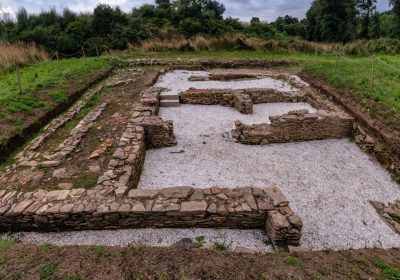
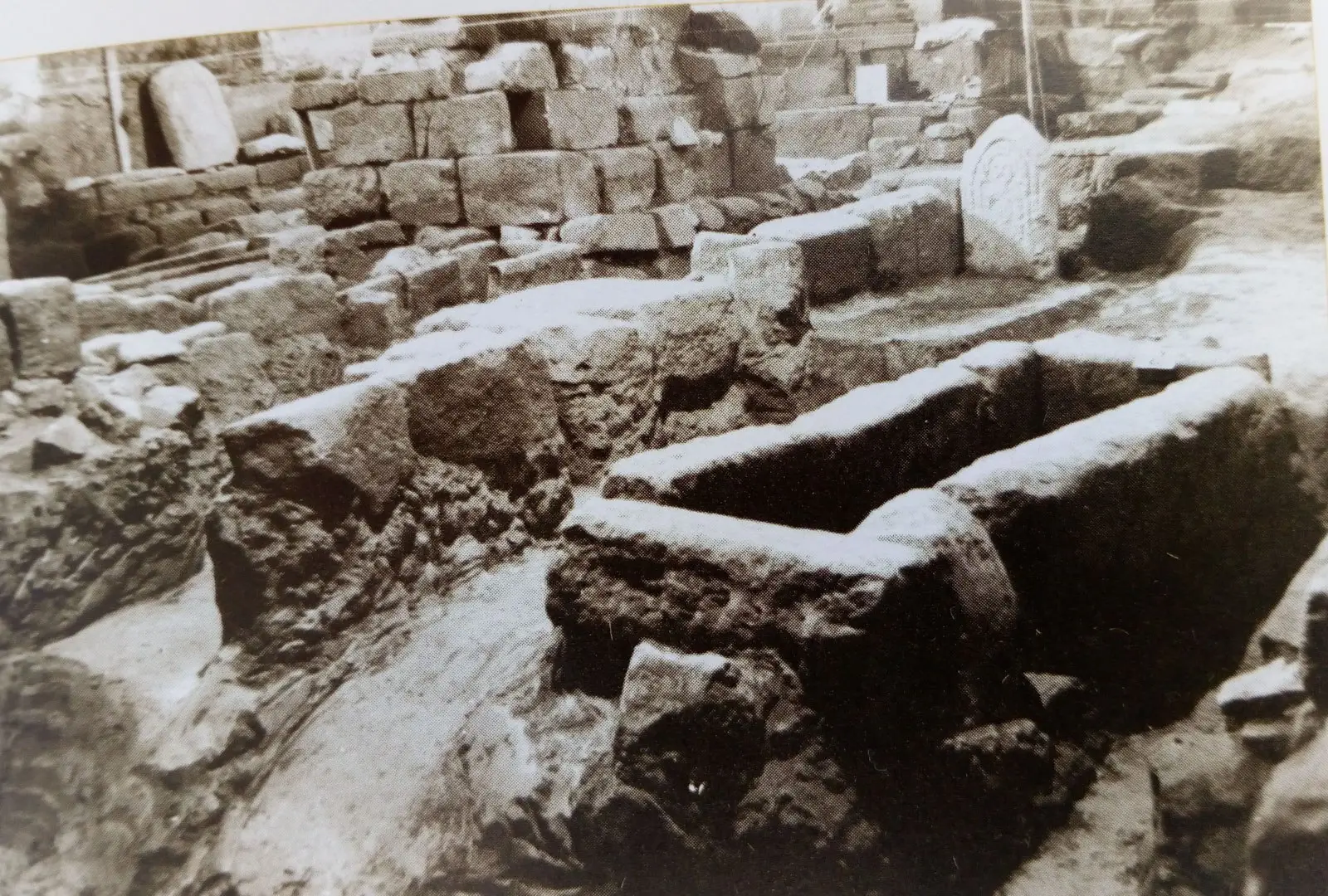
The history of Moraime goes beyond the founding of the monastery. In 1972 archaeological excavations were made directed by Manuel Chamoso Lamas, where the remains of a Roman house were discovered (various structures and a hypocaust) and numerous objects from the late Roman period. All these remains could point to the existence of a Roman villa. In the same place a Visigoth necropolis was also found, composed of several tombs, as well as remains from that time.

There is no information on the founding of the Moraime monastery but its origins could go back to the 10th century. The first document that exists is from 1095. The original monastery was destroyed by the Almoravids at the beginning of the 12th century and then a new one was built with aid from King Alphonso VII, who spent some time in his childhood at this religious centre in Muxía. After the granting of properties and privileges by some monarchs, the religious community of Moraime came to suffer times of abuse and attacks from the local nobility, until its incorporation into the monastery of San Martiño Pinario in Santiago de Compostela.

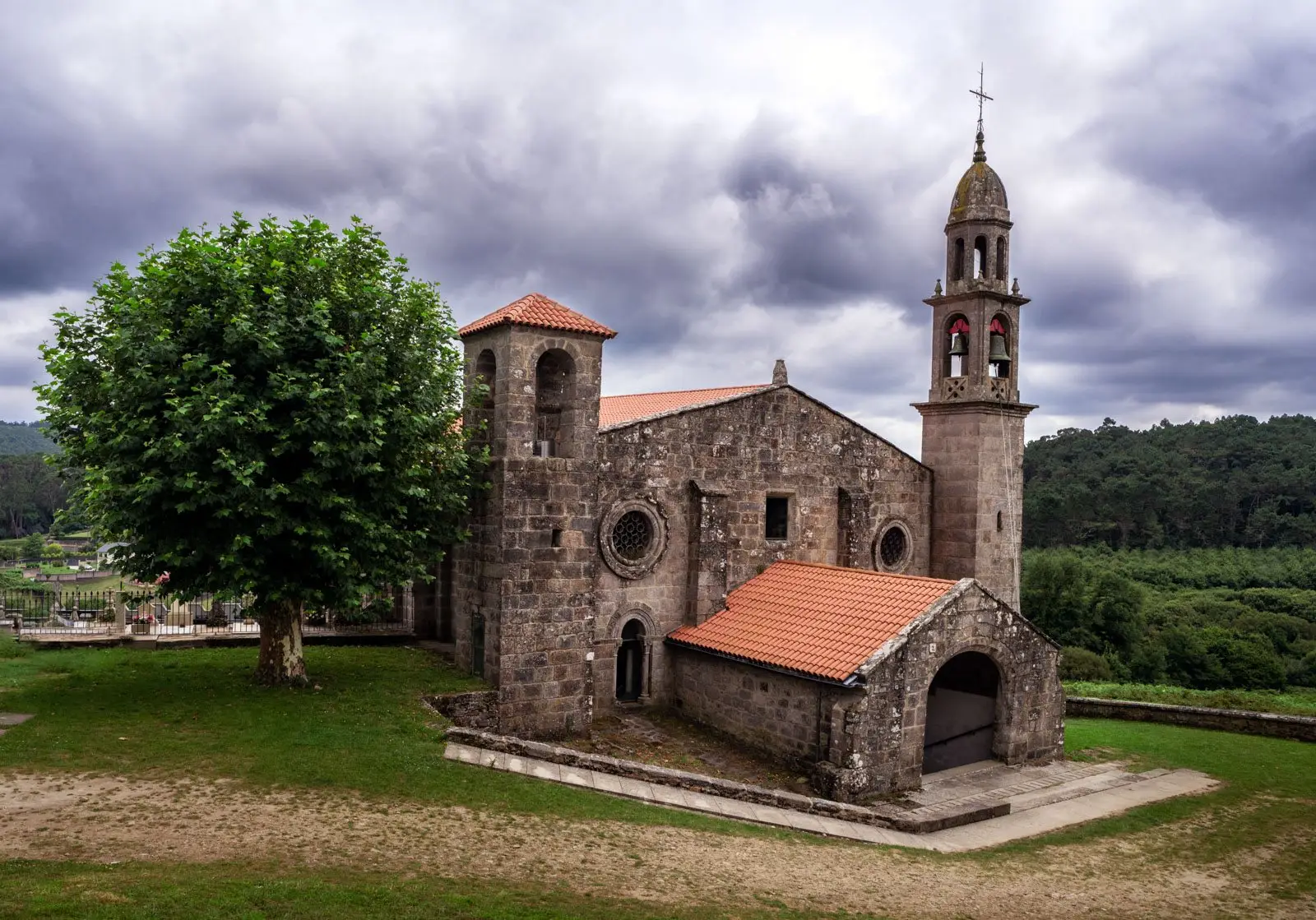
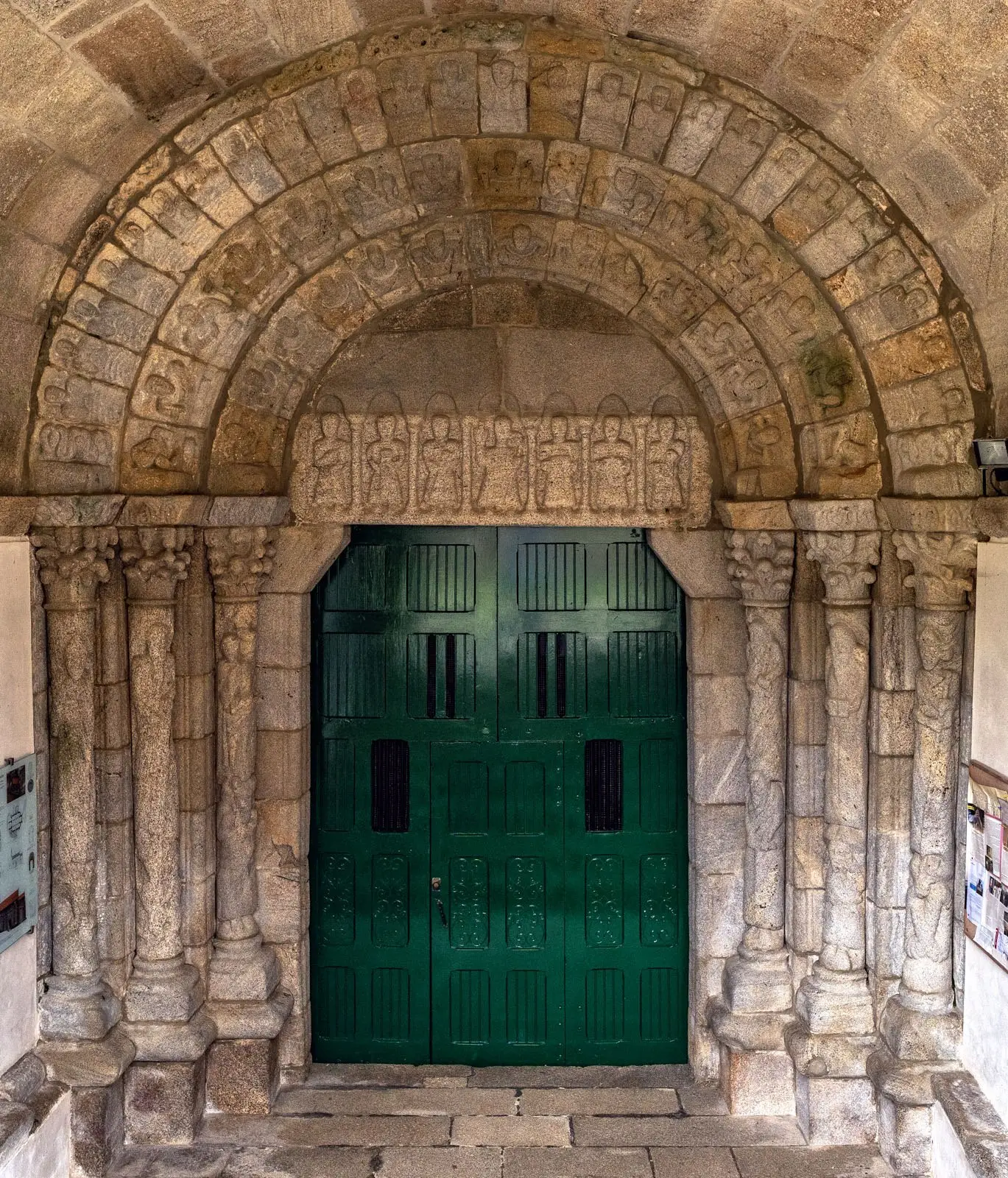
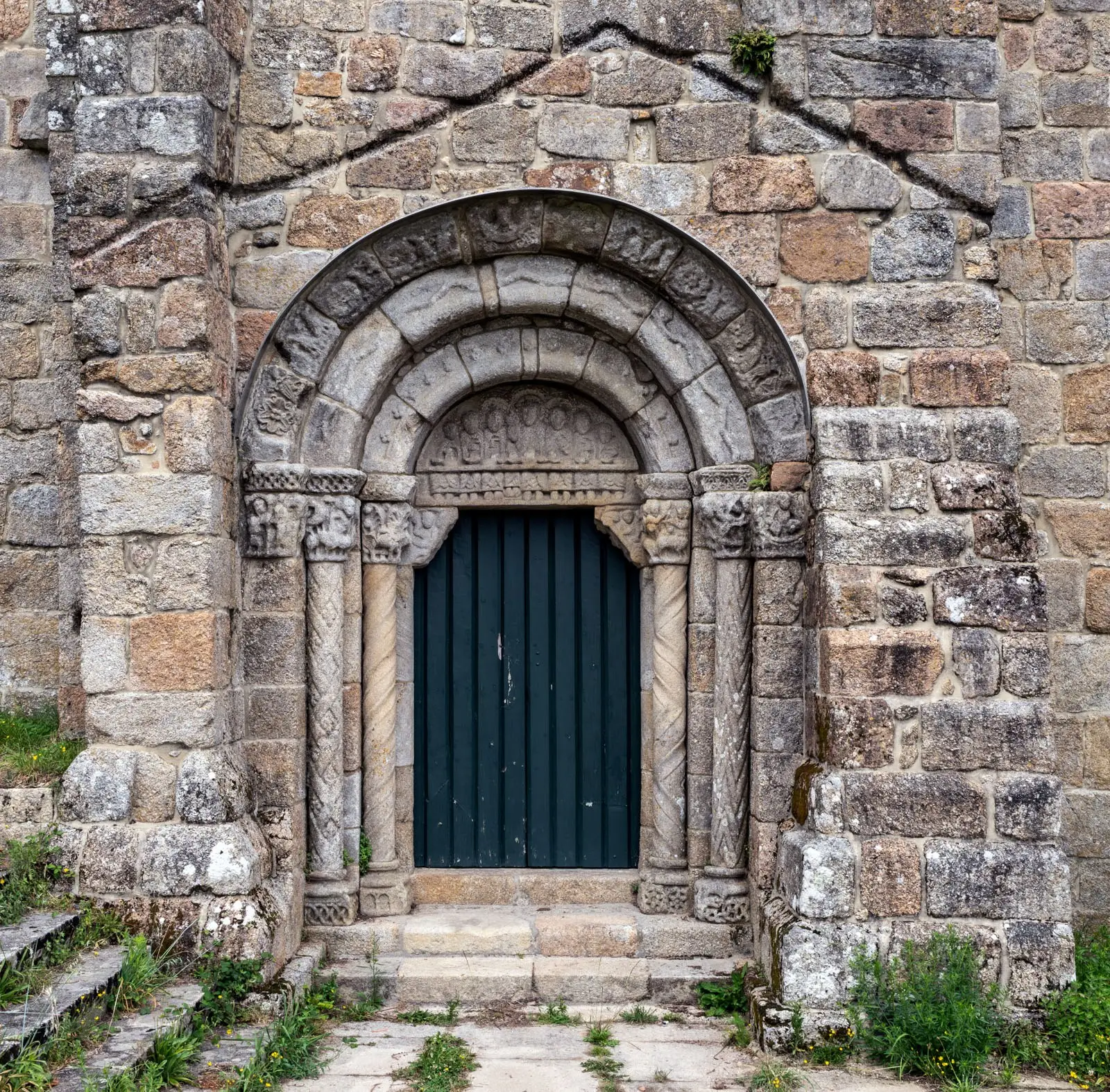
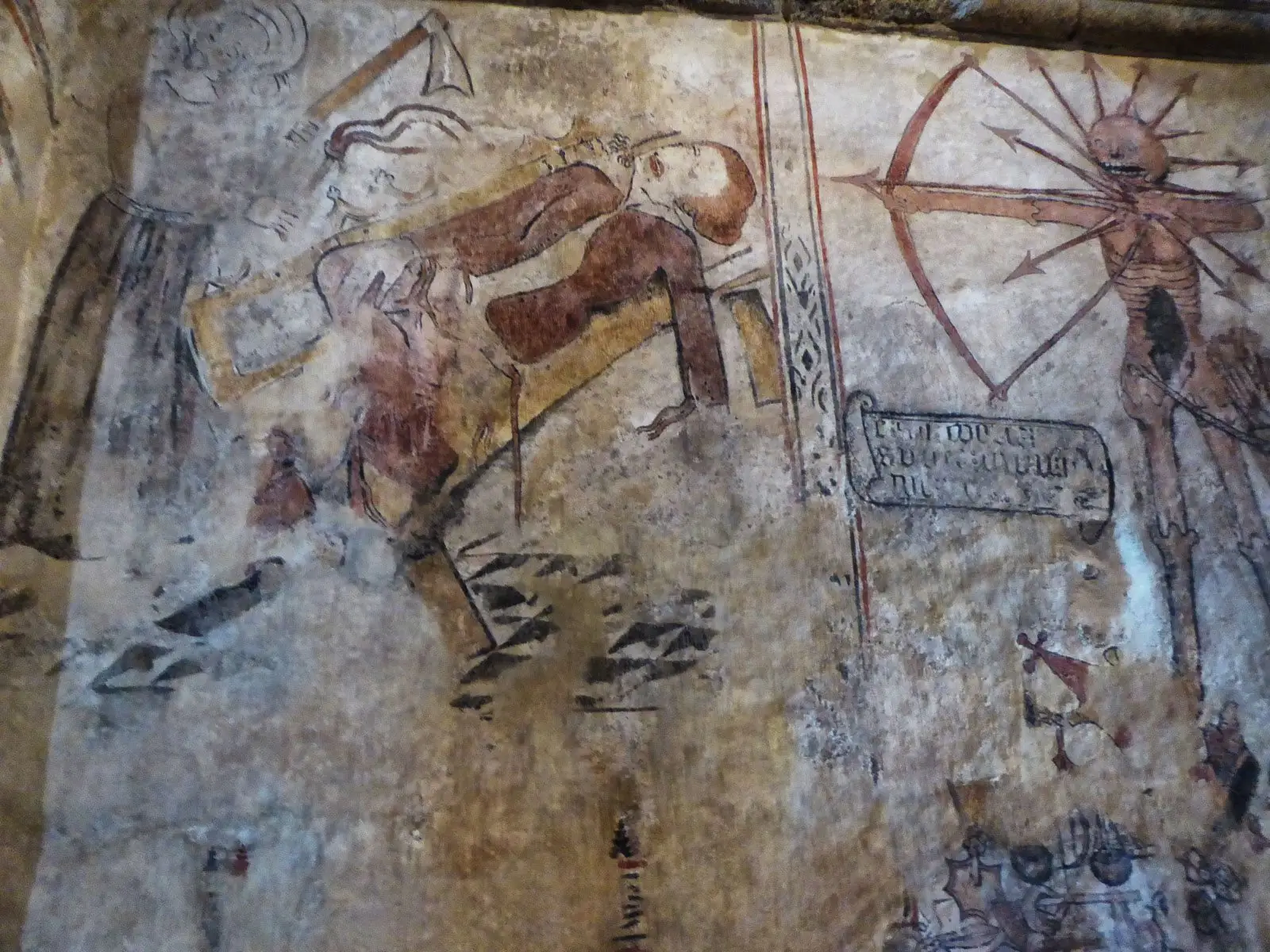
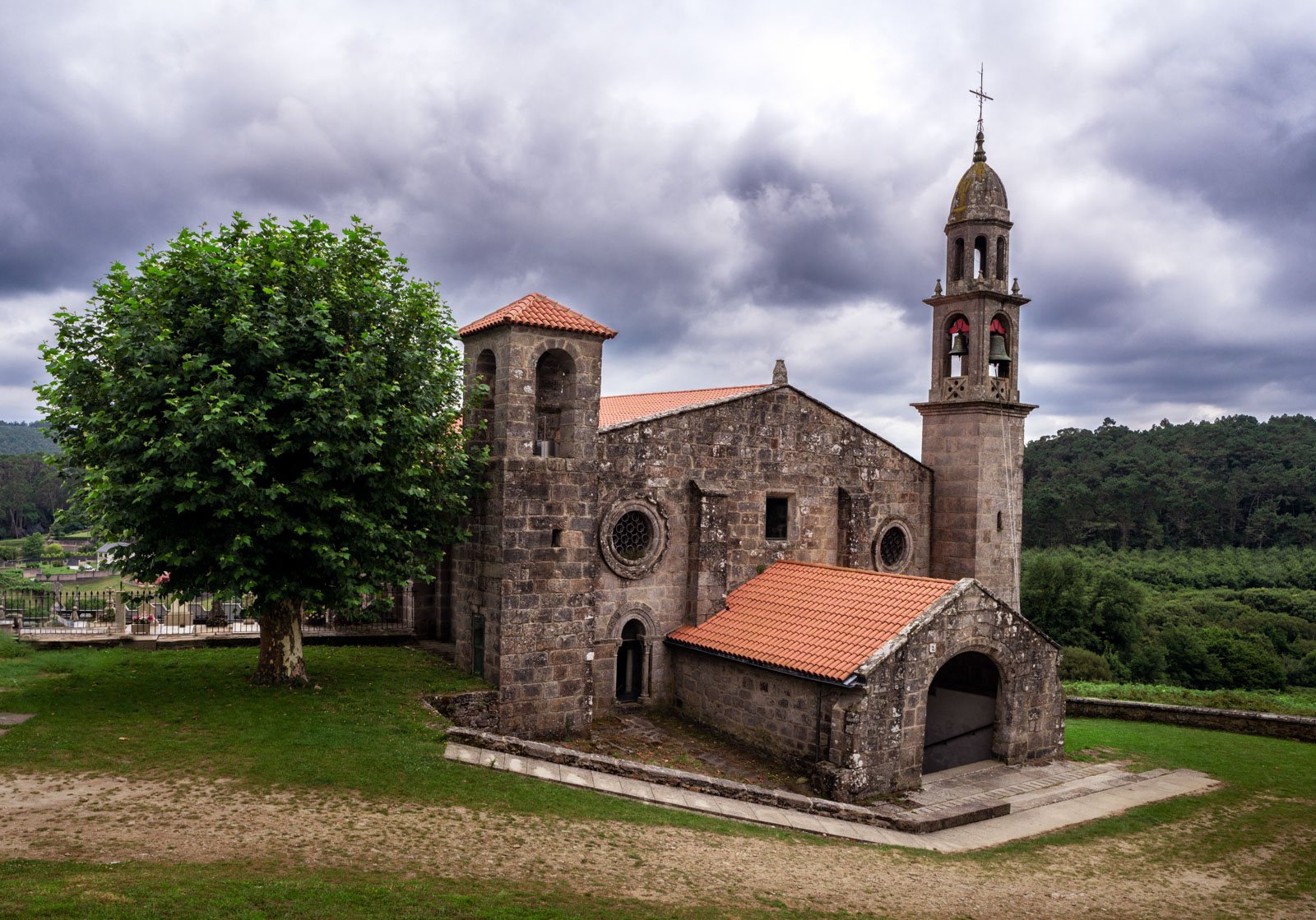
Out of this entire historical and artistic ensemble, only the magnificent Romanesque church, dating from the late 12th century, has been preserved. It is in the form of a basilica, with three naves and three apses. Its notable features are the west door and the extraordinary south door, which has a depiction of the Last Supper on the tympanum. Inside, as well as its excellent collection of capitals, of note are the interesting 15th century Gothic paintings depicting scenes of the seven deadly sins and death, which were discovered in the 1960s. The ensemble is rounded off by the old priest’s house, built in the mid-18th century.
Photo gallery of MORAIME, HISTORICAL CENTRE OF COSTA DA MORTE

Discover the Costa da Morte on our blog

Blog Costa da Morte

ÉZARO WATERFALL, A SPLENDID NATURAL SIGHT

The river Xallas, which takes its name from the district that it crosses, has its sources on the western slopes of Monte...

BRAZAL ROCK, NATURE’S BALANCING ACT

Nature has been very generous with Costa da Morte, leaving outstanding natural monuments sculpted with the chisels of wa...

FÉRVEDA DE ENTRECRUCES WATERFALL, A SYMPHONY FOR THE SE...

Nature gave San Paio de Entrecruces the gift of a extraordinary work that moves all visitors who go to this magical plac...

Sustainable Tourism on the Costa da Morte: Discover wit...

Costa da Morte boasts an exceptional, vibrant, and wild natural heritage. Unfortunately, its beauty is not eternal unles...

Camino de Santiago to the end of the world: Fisterra an...

More and more pilgrims are choosing to continue the Camino de Santiago to the end of the world, whether to the Fisterra ...

BRANDOMIL, THE LARGEST ROMAN SETTLEMENT ON COSTA DA MOR...

It has been said that in the west of Galicia, such as Costa da Morte, the amount of Roman influence was very slight; how...

Outdoor activities in Costa da Morte: surf, kayak and p...

Costa da Morte, as expected, is a land of outdoor activities. Especially aquatic. Although it is true that the emergence...

CAPE FISTERRA, THE LAST STOP ON THE WAY TO BEYOND

Travellers who go to cape Fisterra and look out at the sea without knowing that the American continent is over there wil...

Tourist Information Points in Costa da Morte 2025: your...

Planning your holiday on the Costa da Morte? With the 2025 Guide to Tourist Information Points in Costa da Morte, you’ll...

Where to find graffiti, murals and street art in Costa ...

Are you wondering where to find graffiti, murals, and street art in general in Costa da Morte? Well, you’re in luc...

Upcoming events on the Costa da Morte

Find out instantly what activities await you on the Costa da Morte. Here you will find an up-to-date list of concerts, fairs, guided tours and shows that take place on the Costa da Morte. Don’t miss any event: experience the culture, sport and tradition of our region. And if you want to find out before anyone else, sign up for our newsletter and you will receive all the news in your email.

  • Thursday
    28
    May

    Eclipse at the end of ...

    Eclipse at the end of the world brings to Fisterra a special outreach ...

  • Thursday
    28
    May

    Pode sorrir e ser un b...

    Pode sorrir e ser un bellaco will be performed at the Auditorio Munici...

  • Friday
    29
    May

    Literary presentation ...

    The Municipal Library of Coristanco will host a new literary event wit...