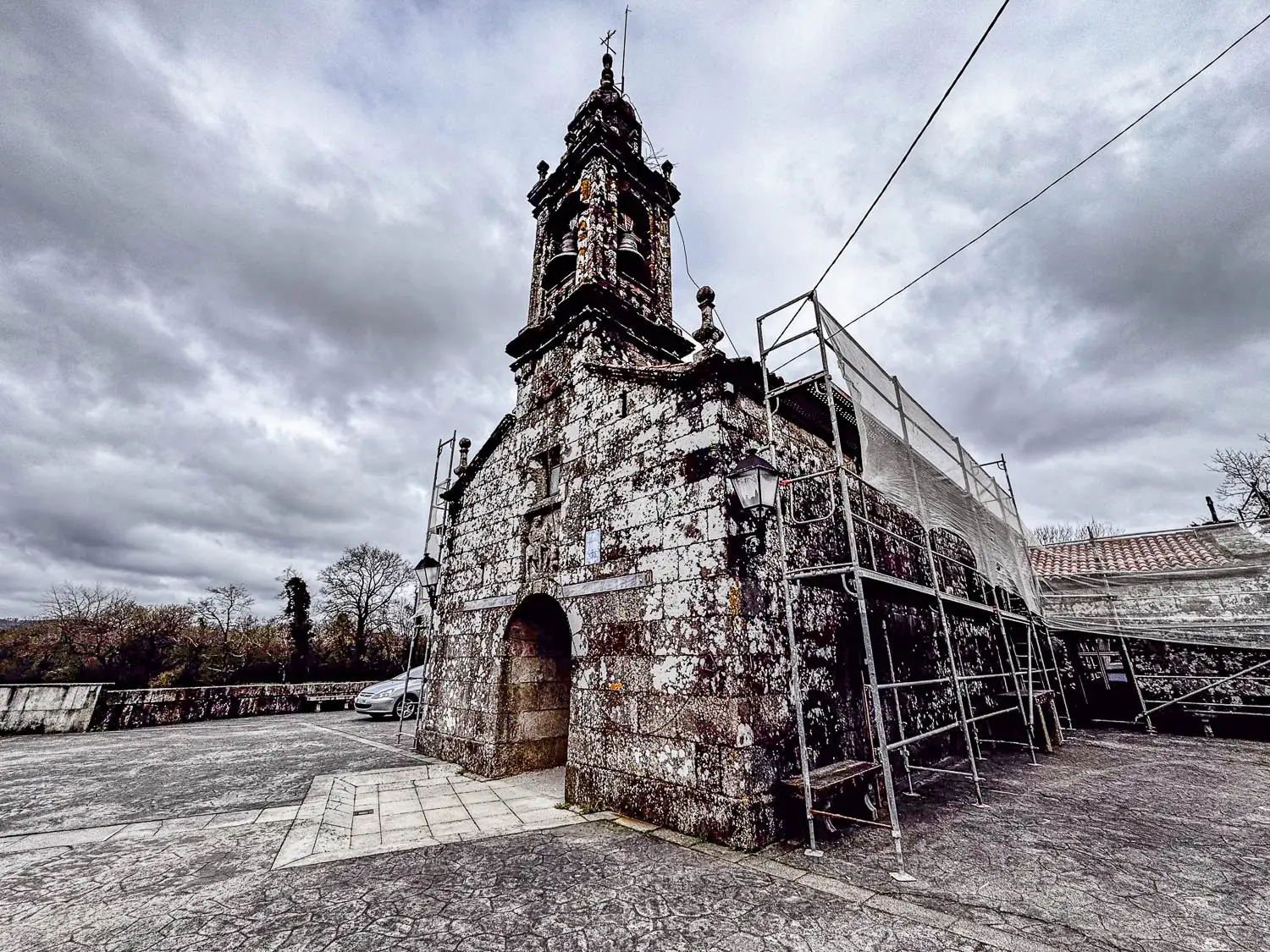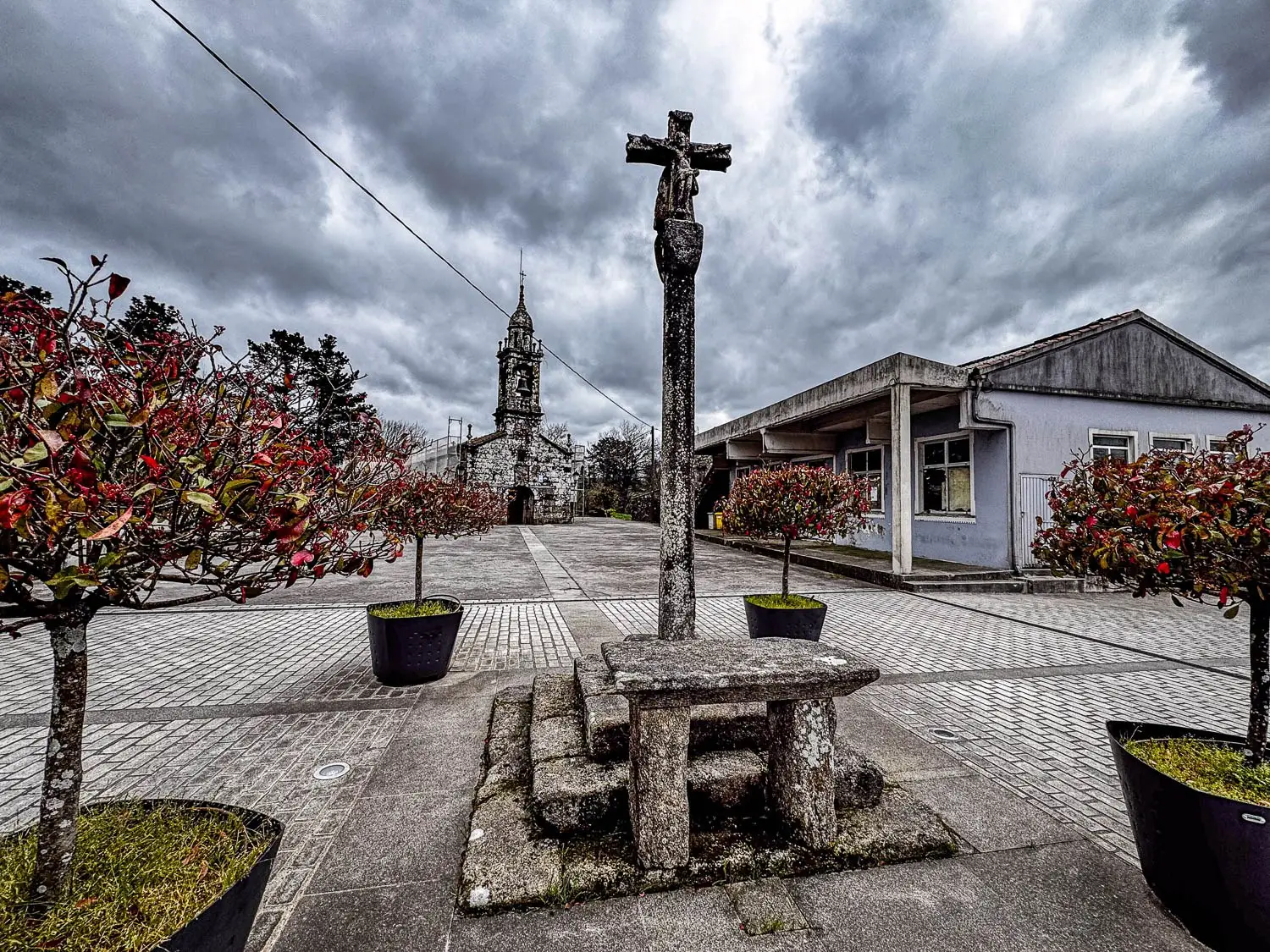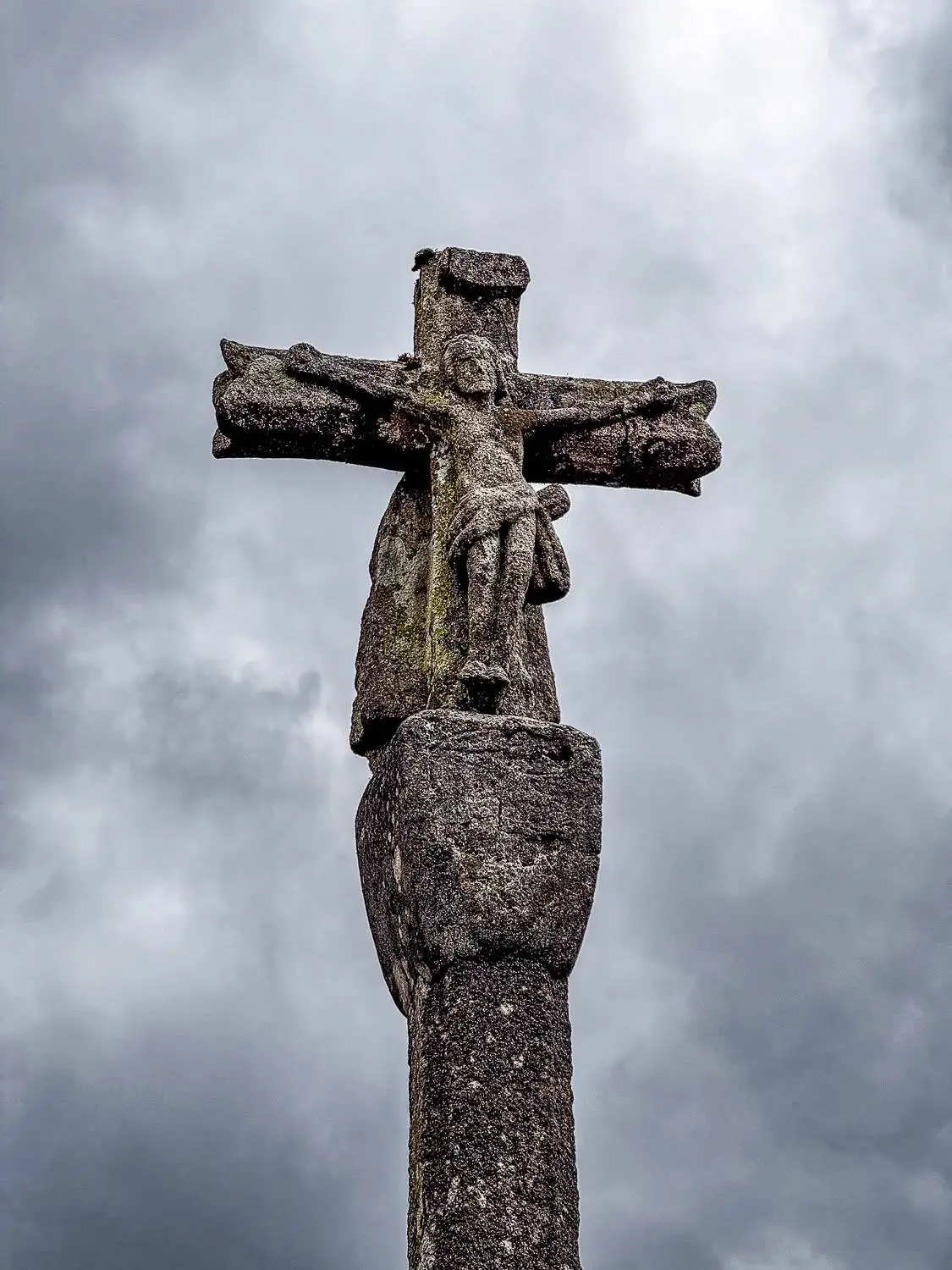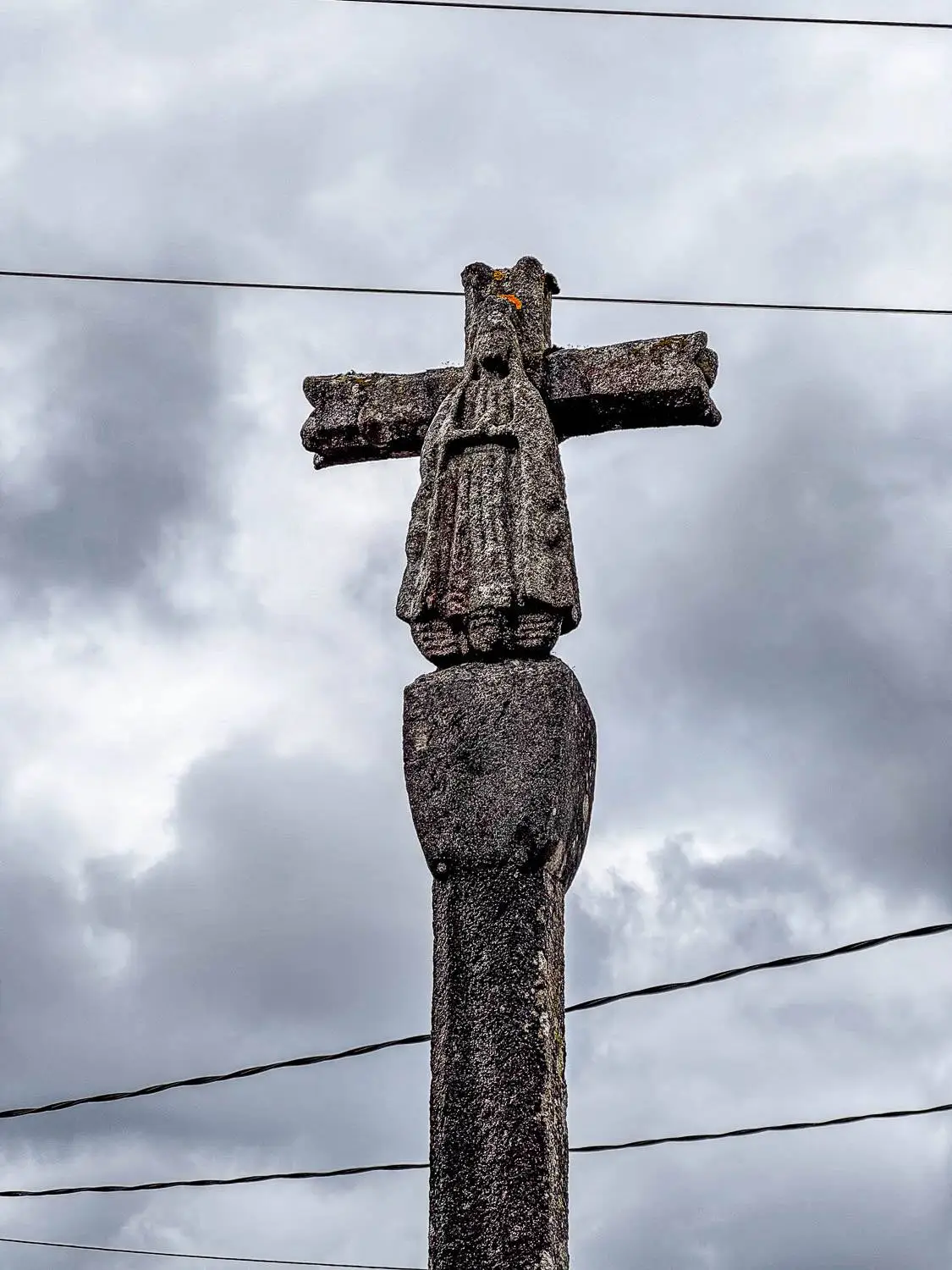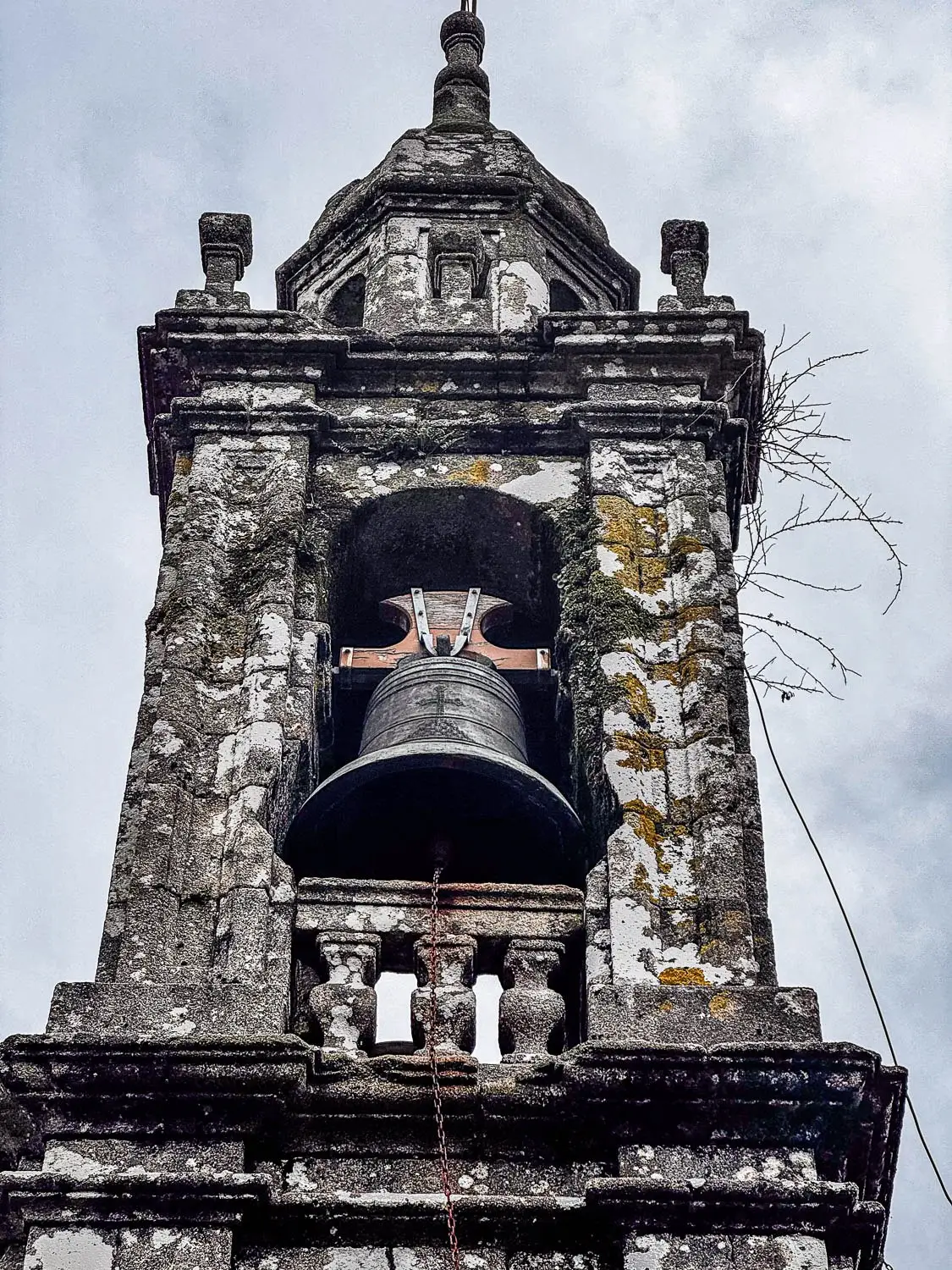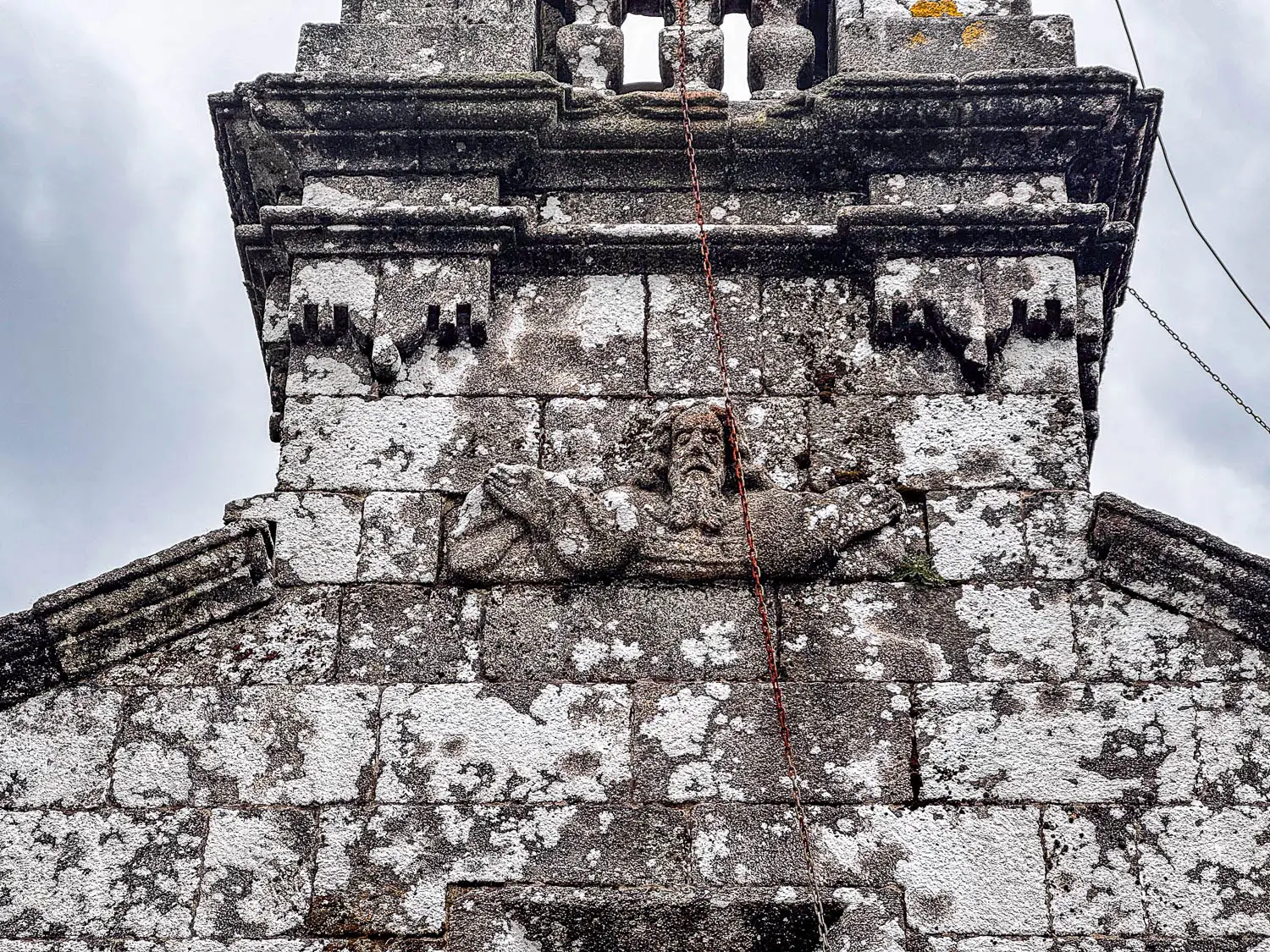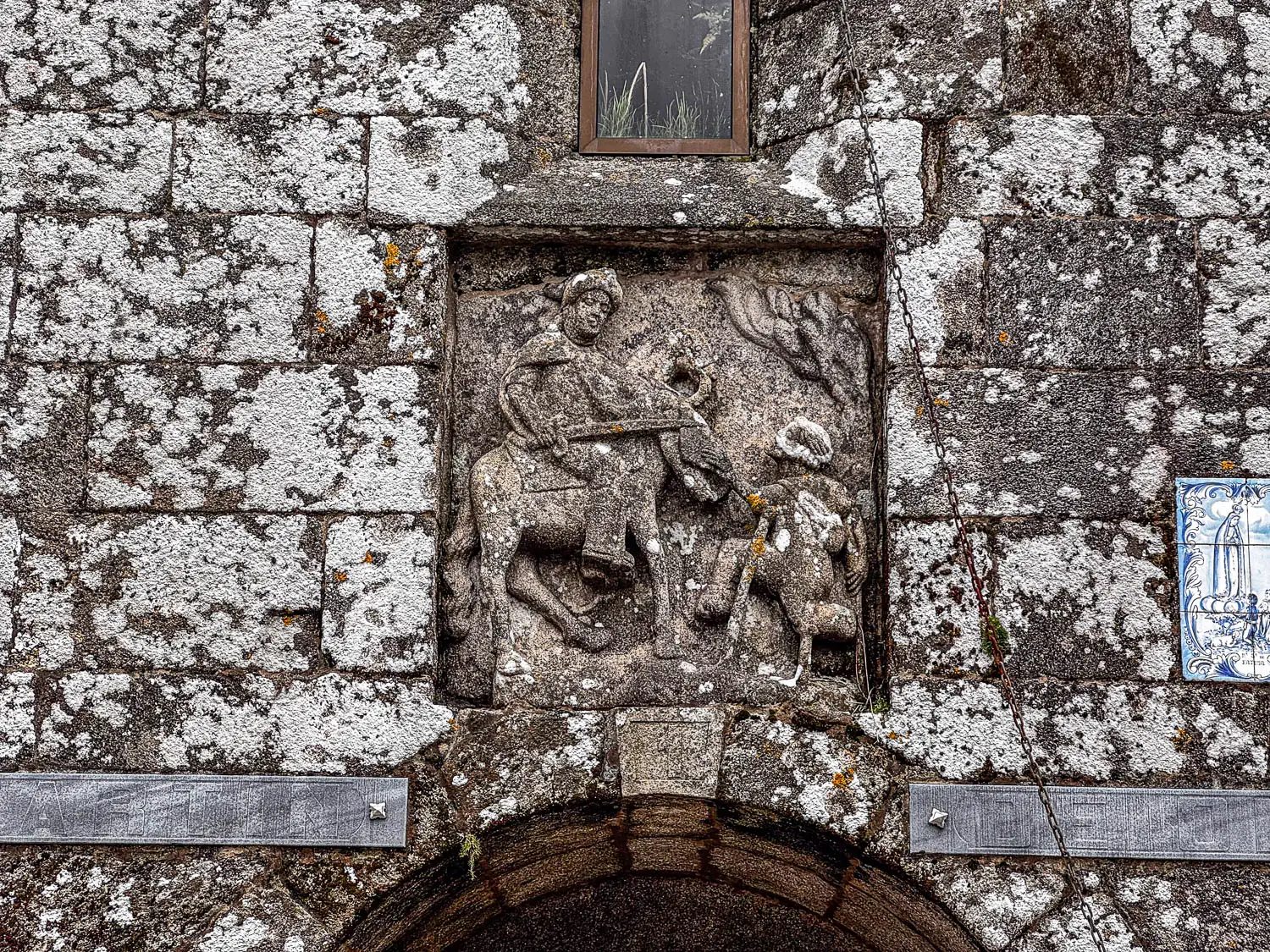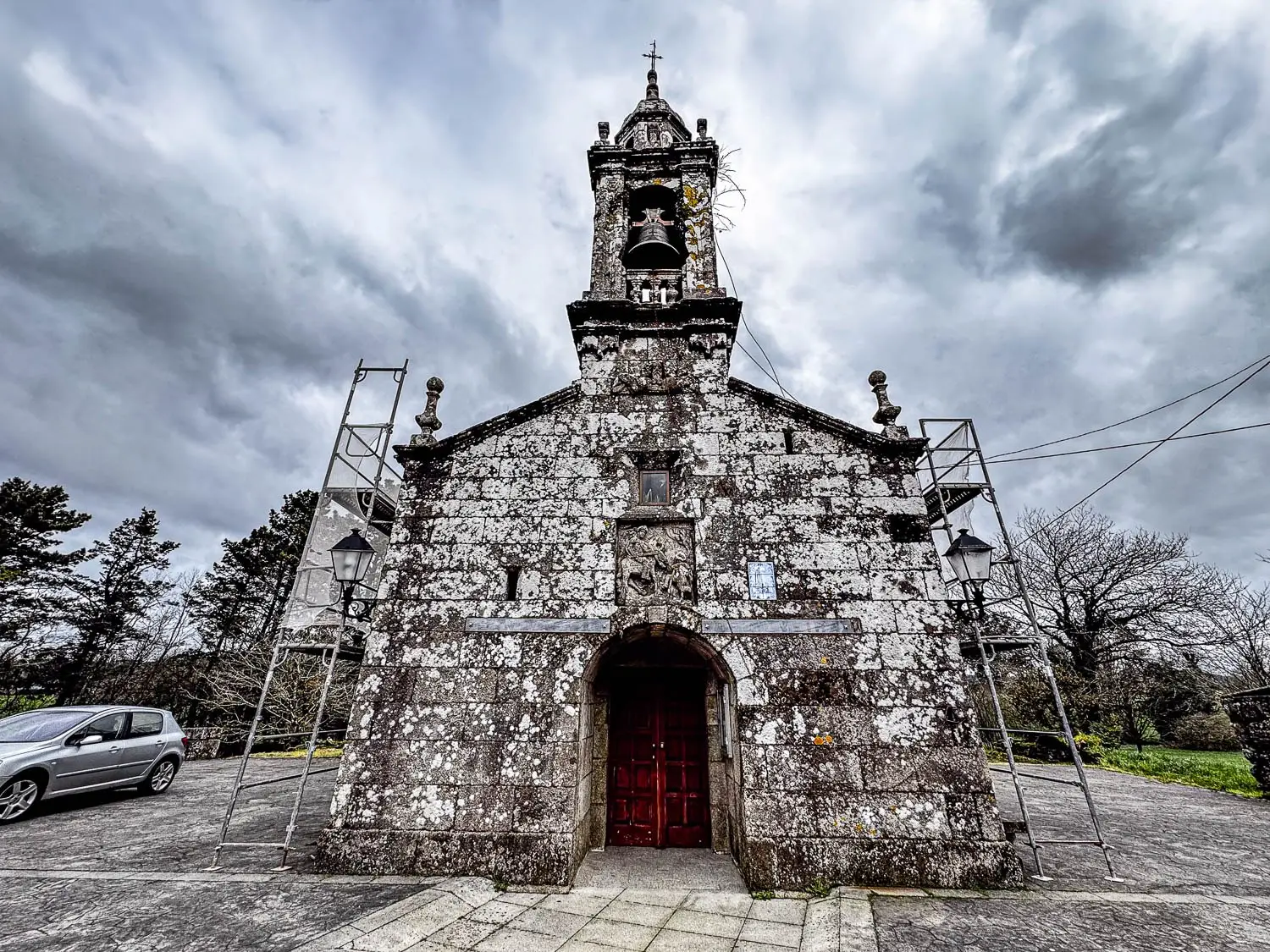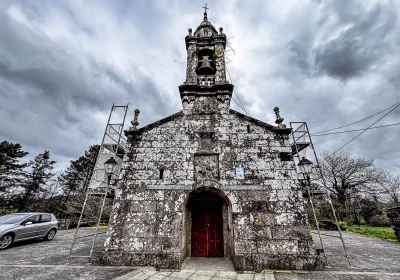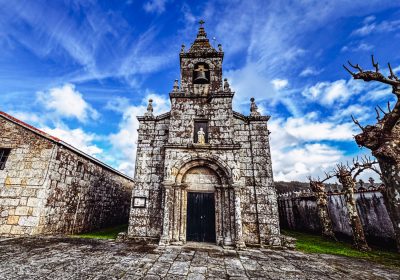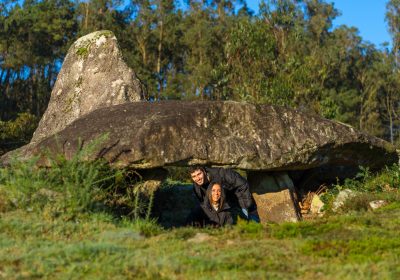


The Church of San Martiño de Olveira, in the municipality of Dumbría, is one of those small temples that discreetly preserve the essence of rural Romanesque architecture in the interior of the Costa da Morte. It is located in a flat environment, marked by crops and a dispersed occupation of the territory, on an open esplanade in which a stone transept located in front of the building also stands out. The temple has a nave with a transept, granite ashlar walls, a gabled roof and an attached sacristy on the north side.
The most significant area that survives from the medieval fabric is the main chapel, where several essential elements of its Romanesque origin are still recognized. The semicircular triumphal arch, supported by columns attached to the wall, and the arch of the presbytery, with similar characteristics, make up a space of great sobriety and notable historical interest. The presbytery is covered with a barrel vault and the plant capitals, inspired by Compostela models although resolved with greater simplicity, show how the artistic language of the Galician Romanesque also reached modest churches such as this one.
On the outside, the Church of San Martiño de Olveira stands out for its chevet, for the slender buttresses and for the corbels preserved in the south wall, decorated with geometric motifs. Inside, there is also a holy water font belonging to the Romanesque period. The set of these remains, together with the good execution of the ashlars and the voussoir of the arches, allows the temple to be located around the second third of the twelfth century. Its value lies precisely in that simple authenticity that makes the visit a way to get closer to the history, art and landscape of Olveira.