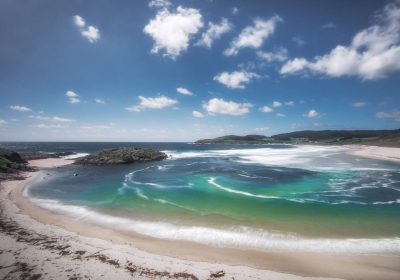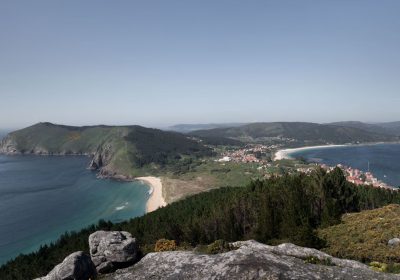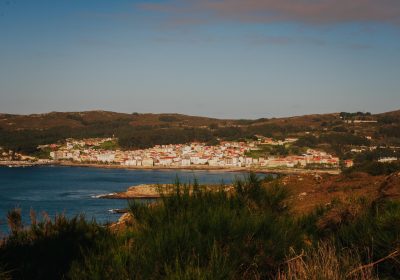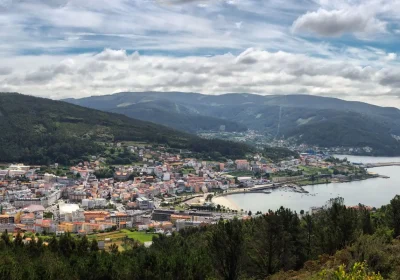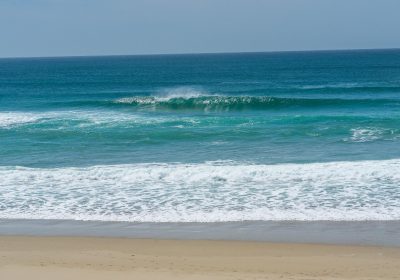


If you are looking for surf beaches in Galicia, the Costa da Morte deserves a place on the map from the start. Here, well-established surf beaches, consistent Atlantic swell and exposed stretches of coastline sit alongside more sheltered or scenic coves. This guide follows the 14 coastal municipalities of the Costa da Morte, choosing one beach in each and linking directly to its interactive-map page.
Not every beach in this selection has the same surfing profile. Razo, Nemiña, Caión, Area Maior, Soesto, A Barra and Mar de Fóra are clear surf references; other stops complete the geographical picture of the coast and require particular attention to sea state, access and individual experience. Beginners should also read our dedicated guide on learning to surf on the Costa da Morte.
For a broader look at water-based activities, see our article on surfing, kayaking and paddleboarding on the Costa da Morte.
14 beaches to explore the Costa da Morte with surfing as the common thread
1. Caión, A Laracha
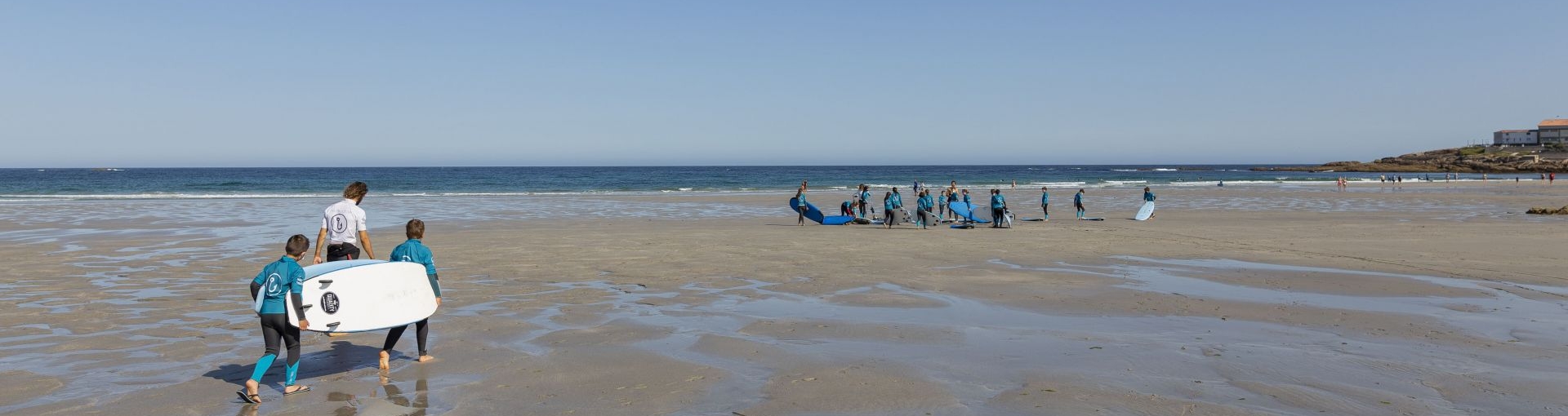
Caión beach, in A Laracha, is one of the northern gateways to the Costa da Morte and has a strong relationship with surfing. Its orientation and the partial shelter provided by the surrounding terrain can create interesting conditions with different winds, while regular Atlantic swell makes it worth checking through much of the year. Its urban setting adds convenience: a promenade, services and the atmosphere of a fishing town are only a few steps away. It is a useful stop for anyone wanting to combine time in the water with a relaxed visit to Caión and a first taste of the coastal landscape that defines this part of Galicia.
View Caión on the interactive map
2. Razo, Carballo
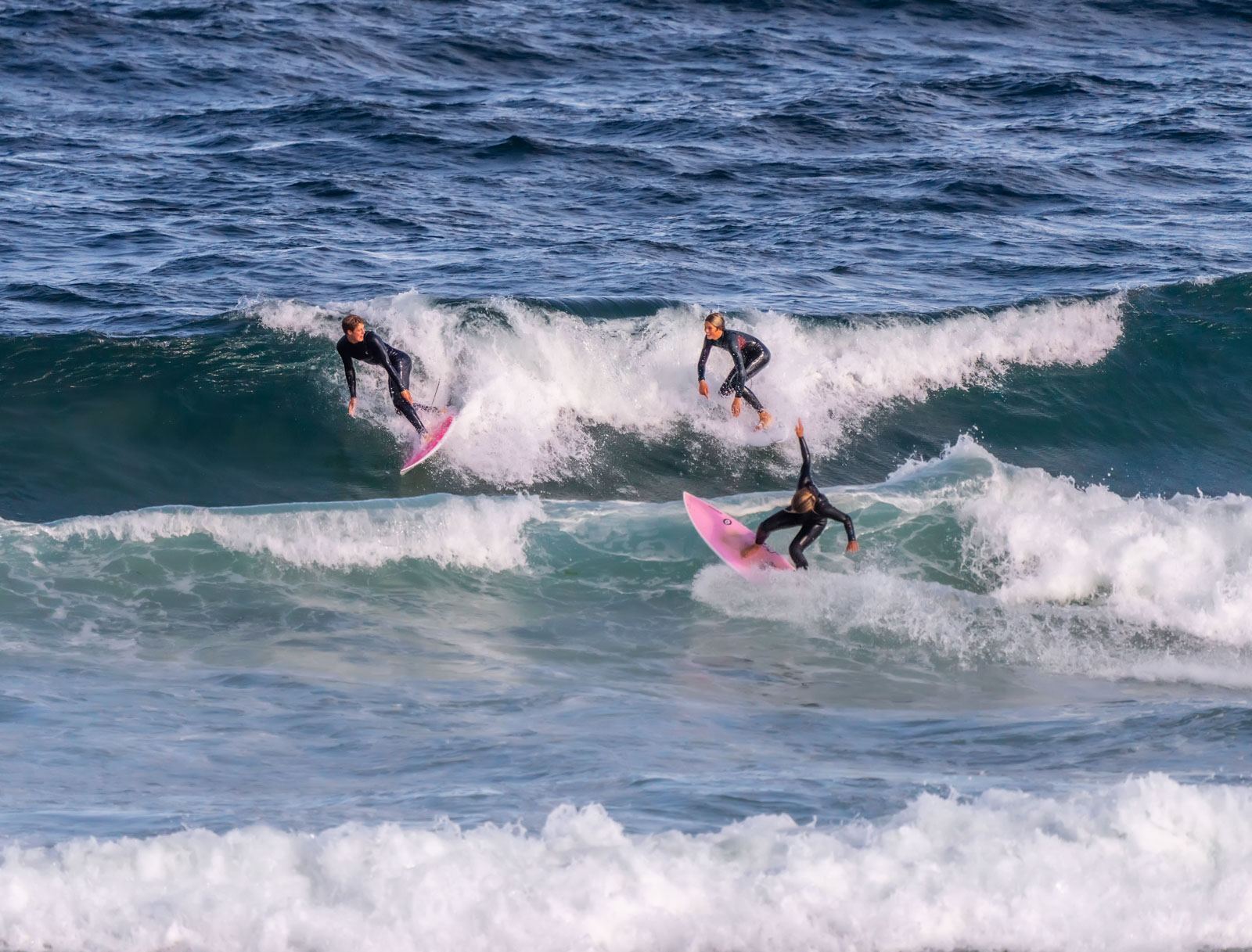
Razo, in Carballo, is one of the best-known names in Galician surfing. Its size, wave consistency and variety of peaks can produce very different setups depending on tide, wind and shifting sandbanks. It is also one of the strongest surf-culture hubs on the Costa da Morte, with schools, regular local practice and a long connection with competitions and sporting events. That combination of a broad beach, open scenery and specialist services makes it useful both for surfers looking to progress and for more experienced riders. Before paddling out, take time to watch the peak you have chosen: on a beach this large, conditions can vary significantly from one section to another.
View Razo on the interactive map
3. Area Maior, Malpica de Bergantiños
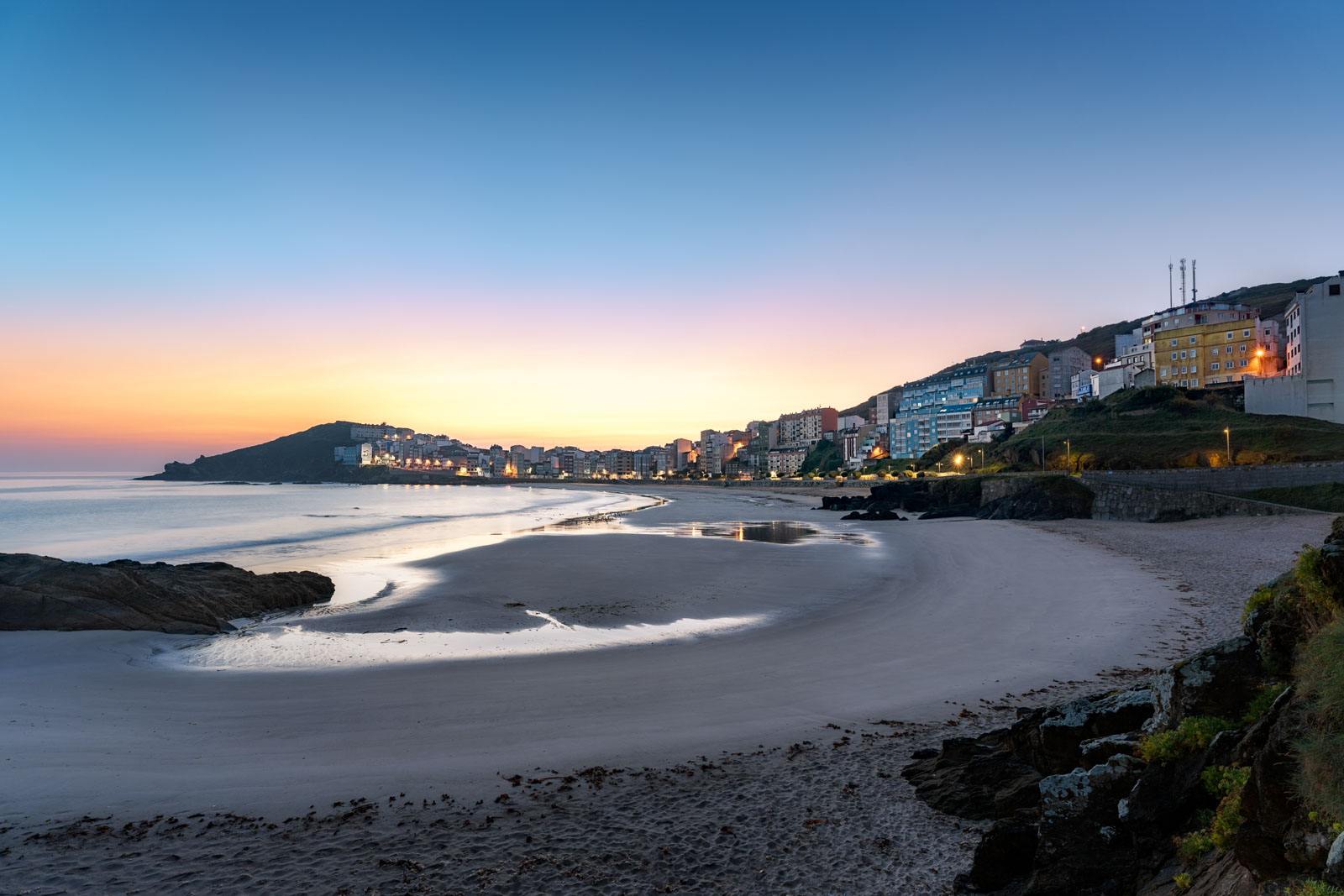
Right in the centre of Malpica, Area Maior lets you approach surfing with the atmosphere of a fishing town only a few steps away. Useful conditions often appear outside summer, and its sandy-bottom waves can be an attractive option when swell and wind line up with the beach. Its location offers something that the wilder beaches cannot always provide: easy access to the harbour, cafés, streets and local services before or after a surf. It is also a good base for understanding Malpica’s strong relationship with the Atlantic and with sea-based sports, all within a compact town where the ocean is part of everyday life.
View Area Maior on the interactive map
4. A Barra, Ponteceso
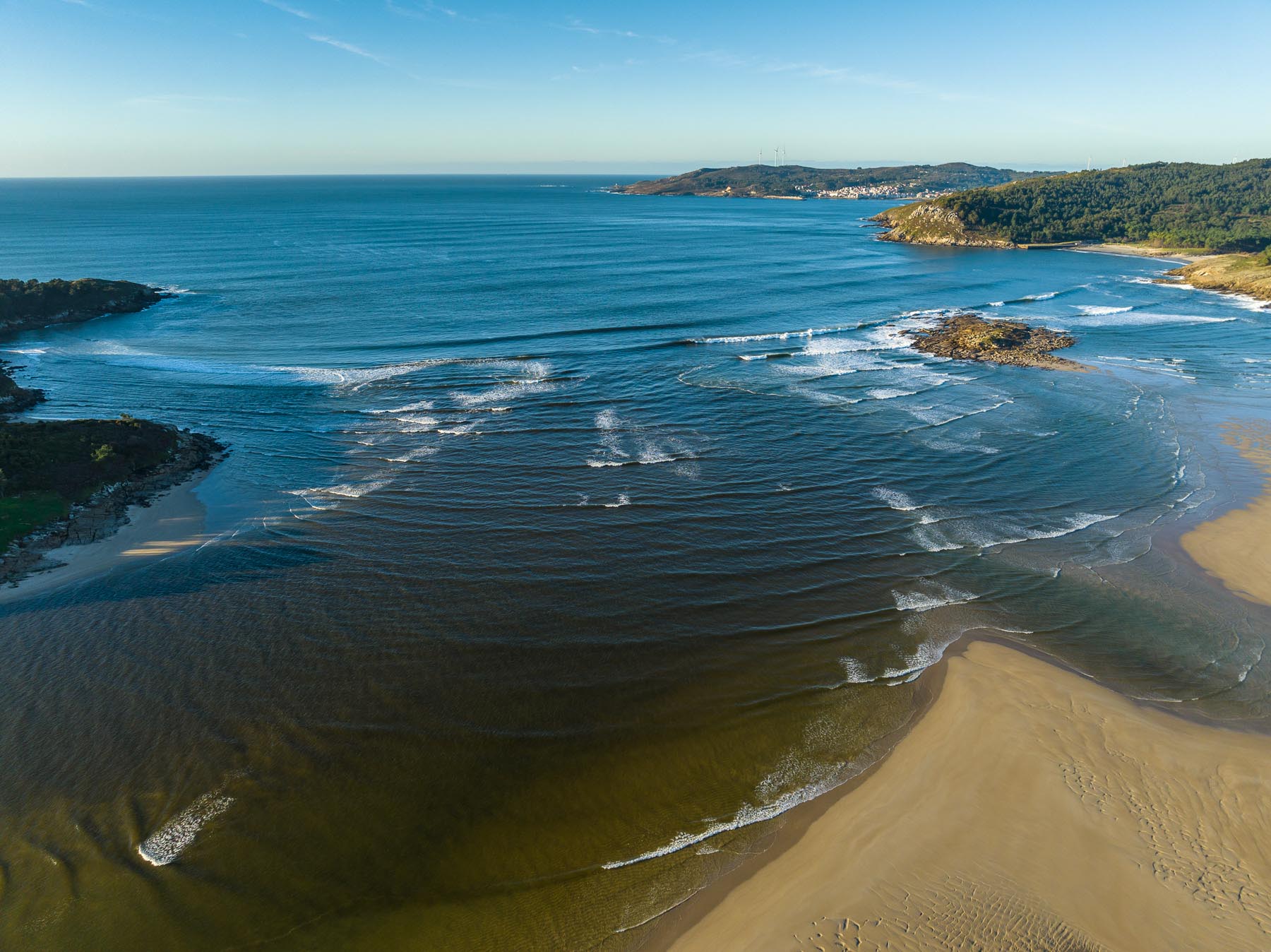
A Barra, in Ponteceso, is a quiet natural beach in a landscape shaped by the Anllóns estuary. Its relatively sheltered position compared with open-ocean beaches can make it worth checking on days when other stretches of coast are too exposed. Water movement here is strongly influenced by the river mouth, tides and changing sandbanks, so careful observation is particularly important before entering. Beyond surfing, the combination of sand, estuary and protected landscape makes A Barra feel very different from the large exposed beaches farther north and west. It is a useful reminder that choosing a beach on the Costa da Morte is as much about understanding geography and conditions as it is about chasing swell.
View A Barra on the interactive map
5. San Pedro, Cabana de Bergantiños
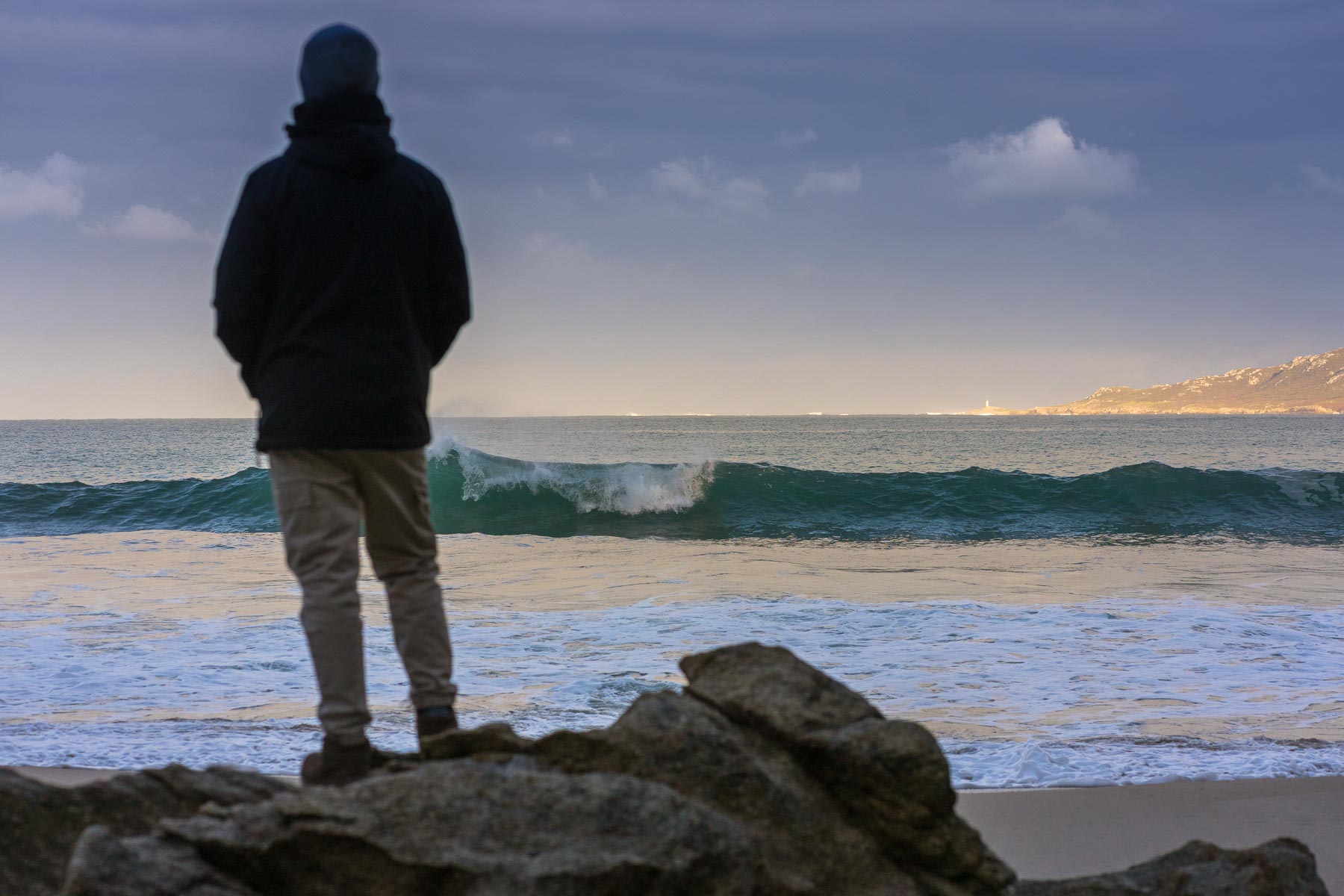
San Pedro, in Cabana de Bergantiños, is a small beach tucked between coastal formations. It is included here not as one of the route’s major surf spots but as Cabana’s seafront stop in a journey through every municipality with access to the sea. The staircase approach, compact scale and open Atlantic setting all encourage a careful look at conditions before considering any activity in the water. Its appeal also lies in contrast: after broad exposed beaches, San Pedro shows how quickly the coastline can change over just a few kilometres, shifting towards smaller coves and more intimate corners. That variety is one of the defining features of the Costa da Morte.
View San Pedro on the interactive map
6. Soesto, Laxe
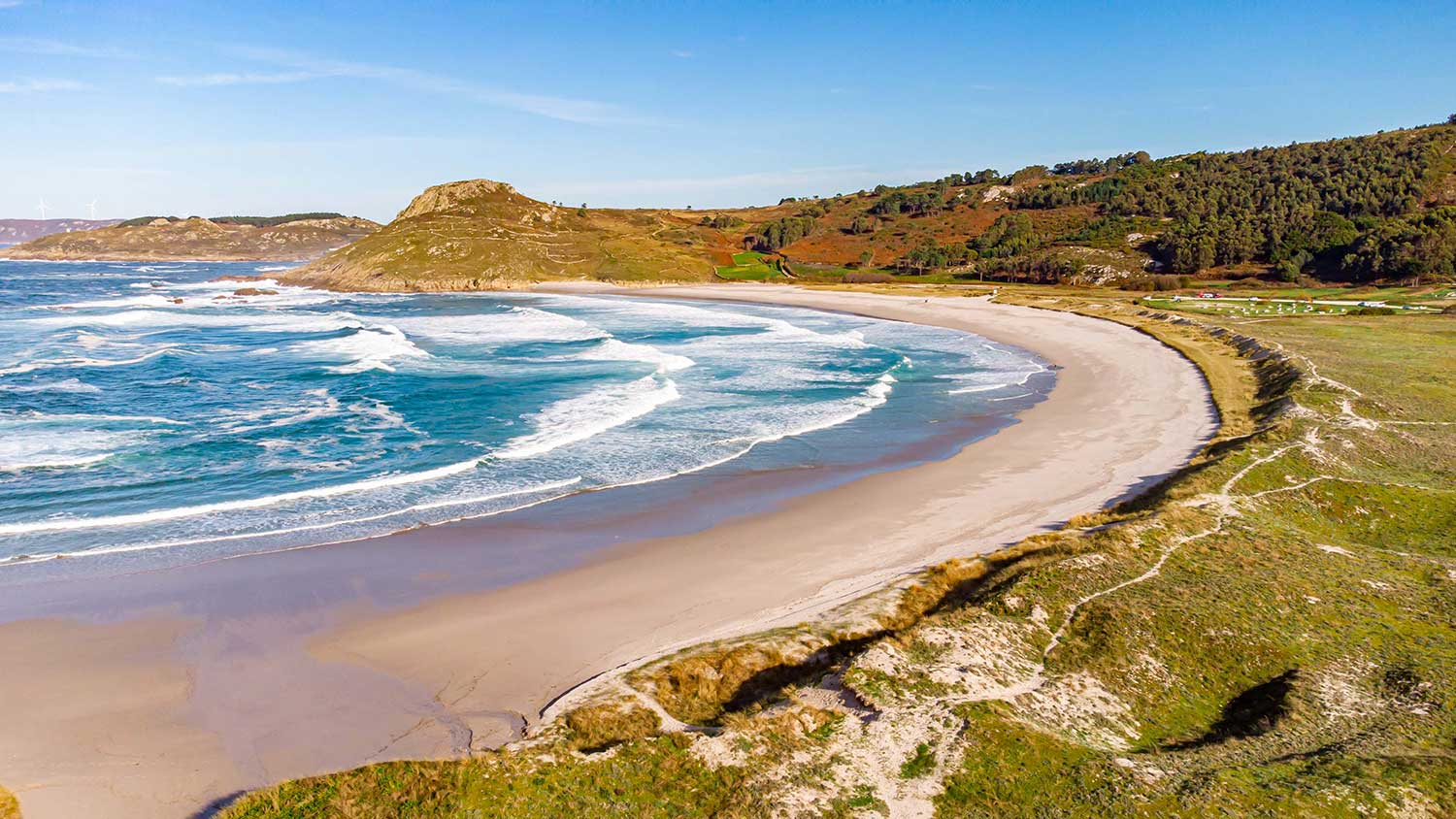
Soesto, in Laxe, is one of the most recognisable beaches for anyone following surfing on the Costa da Morte. Its exposure gives it notable wave consistency, with several peaks shaped by tides and sandy bottoms, so reading the sea is especially important. The open, lightly developed setting reinforces the Atlantic character of the place: dunes, nearby hills and an uncluttered horizon. It is highly photogenic and worth visiting even when you are not going into the water. For more beaches with this wild Atlantic feel, the surfing and wild beaches on the Costa da Morte page expands the selection with other spots around the territory.
View Soesto on the interactive map
7. Sabadelle, Vimianzo
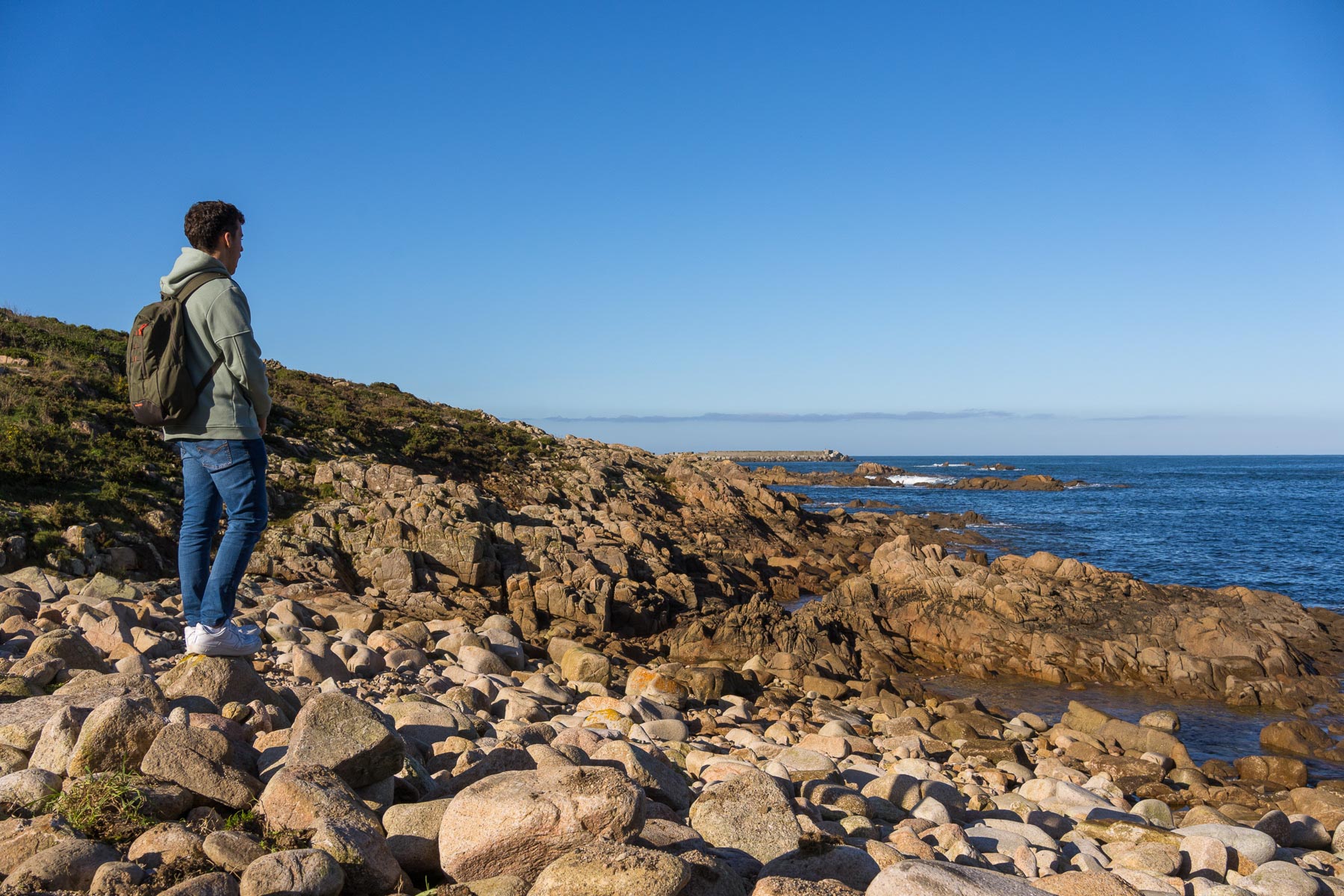
Vimianzo reaches the sea at Sabadelle, a place very different from the large sandy surf beaches. Its pebble shoreline and wild surroundings make it a stop for understanding the diversity of the Costa da Morte rather than a general recommendation for paddling out. The appeal here lies in observing the landscape, the force of the Atlantic and the transition between rock, pebbles and open water. Precisely because it is so different from the better-known sandy spots, extra caution is essential and familiar surf assumptions should not simply be transferred here. Sabadelle’s role in this route is territorial and scenic, completing the picture of the 14 coastal municipalities.
View Sabadelle on the interactive map
8. O Trece, Camariñas
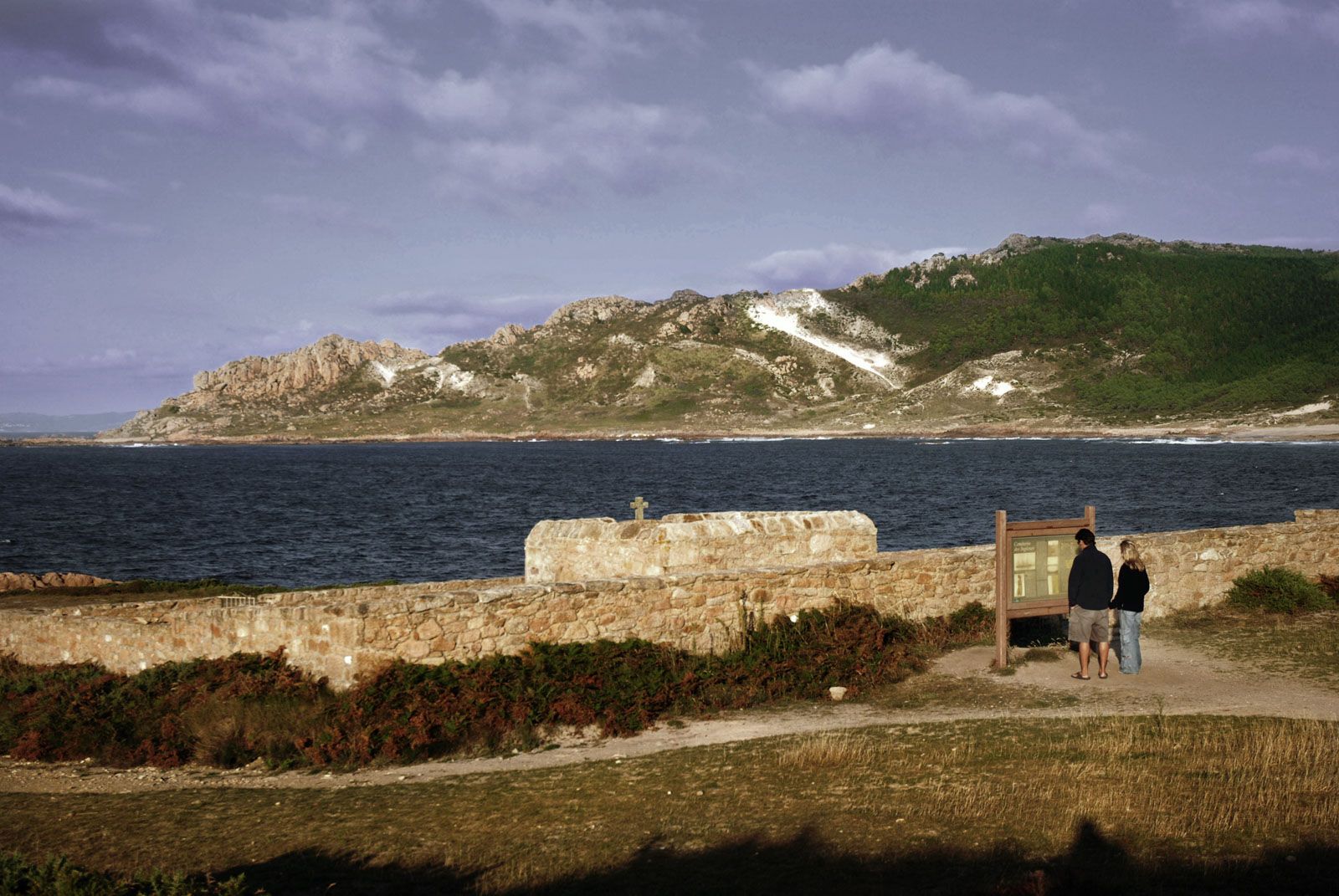
O Trece, in Camariñas, is one of the most powerful coastal landscapes on the entire route. The dune system, pebble formations and small sandy coves create an almost untouched section of shoreline close to some of the most emblematic scenery on the Camariñas coast. In a surf guide it also serves as a reminder that the Costa da Morte demands respect and careful reading of the sea: not every spectacular beach is suitable for every level. Here, natural and scenic value come before any promise of easy conditions. Taking time to walk, observe the ocean and understand the setting is as much part of the experience as any sporting activity.
View O Trece on the interactive map
9. Nemiña, Muxía
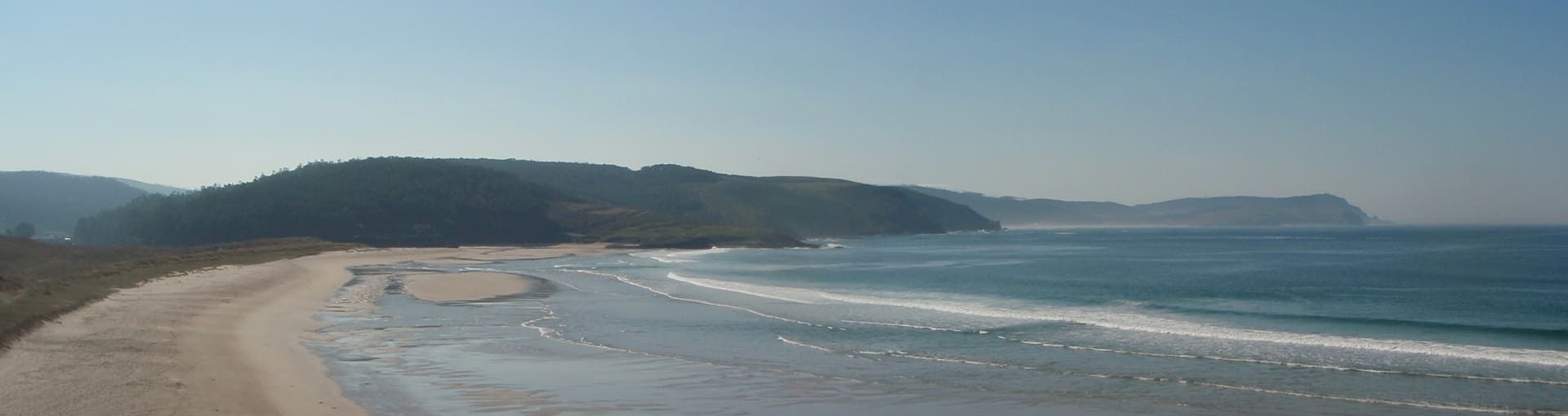
Nemiña, in Muxía, is part of the history of surfing in Galicia. Its sandy bottom, shifting peaks and the different setups created by changing tides help explain why it is so well known among surfers. Nearby services are closely connected to surf culture, making the beach a particularly practical reference for visitors who arrive with the intention of getting in the water. Its size still means you need to choose your entry point carefully and watch conditions before paddling out. The landscape, open to the Atlantic and close to Cape Touriñán, completes one of the most characteristic coastal experiences in the municipality and makes Nemiña worth visiting even when the sea is not right for your level.
View Nemiña on the interactive map
10. Lires, Cee
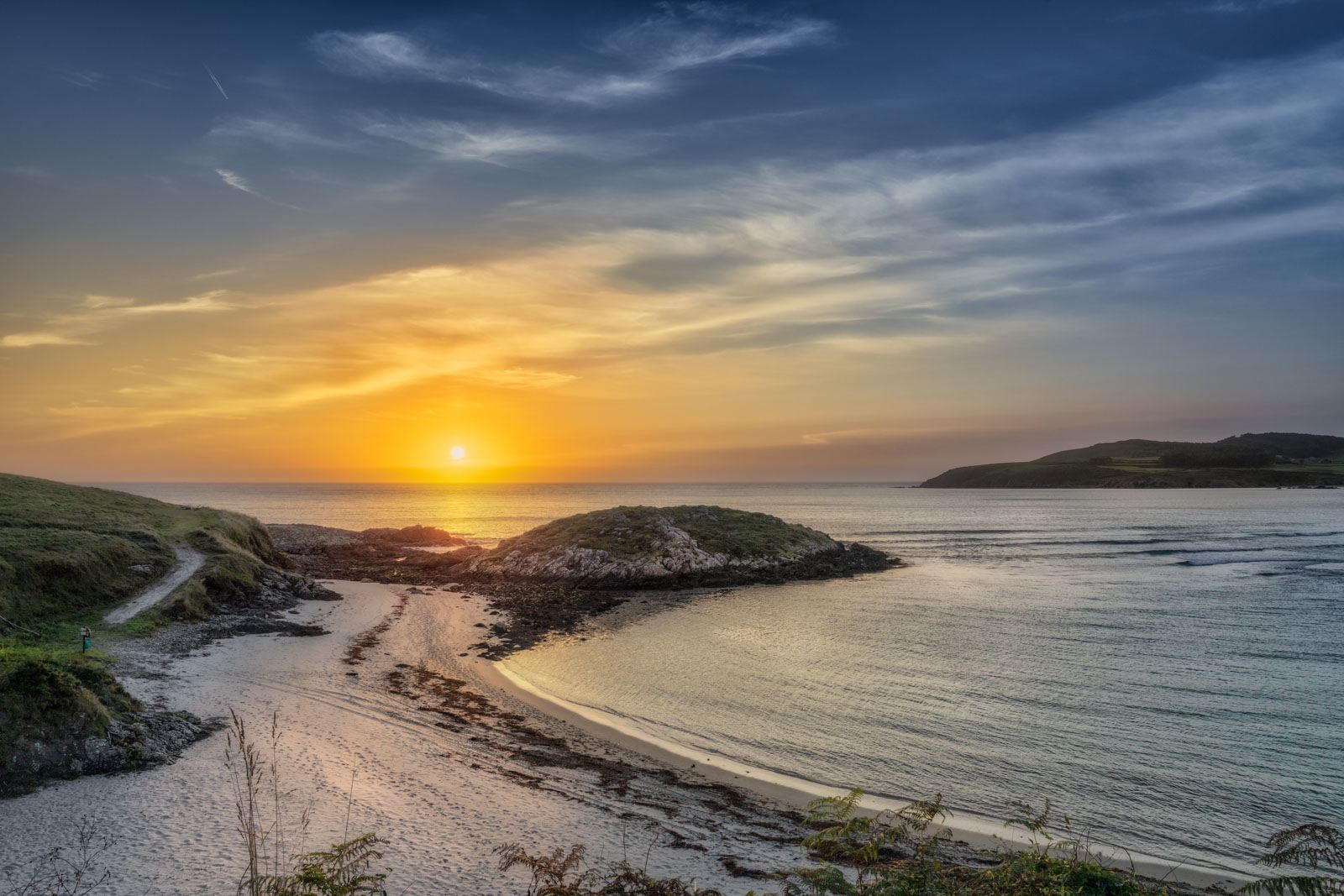
Lires, in Cee, sits at the end of the small estuary of the same name, very close to Nemiña but with a distinct personality. The Castro river mouth, changing tides and a natural setting included in the Natura 2000 network mean that the landscape can shift noticeably through the day. Rather than competing with Nemiña as a surf spot, Lires helps explain how exposure, estuary dynamics and orientation can transform conditions over only a few kilometres. It is also particularly attractive late in the day, when the light helps reveal the shape of the estuary and the surrounding coast. This makes it a rewarding stop whether or not the surf is working.
View Lires on the interactive map
11. A Cova, Corcubión
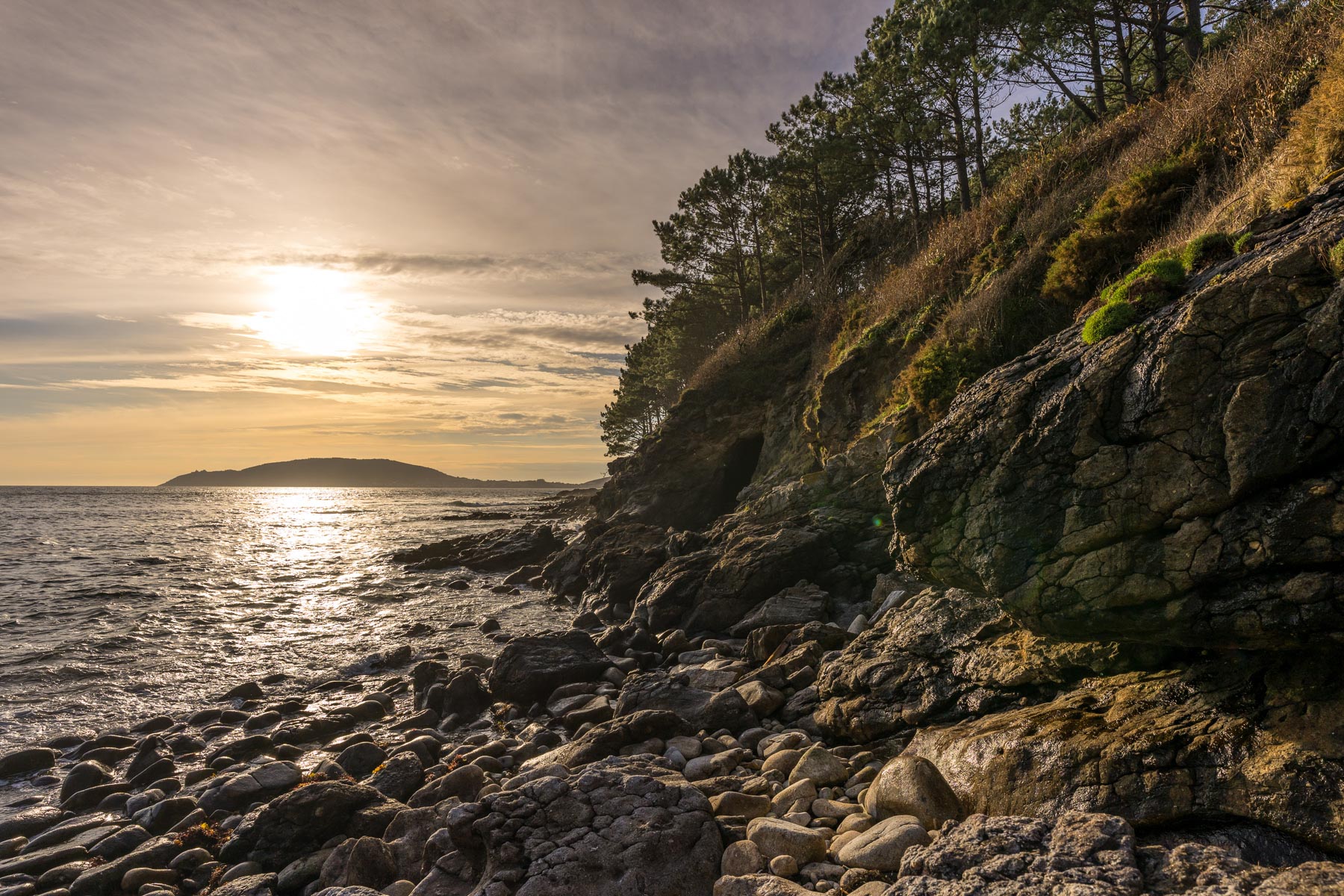
A Cova, in Corcubión, is a small pebble beach hidden in the parish of Redonda. It should not be treated as equivalent to the main surf spots in this guide; instead, it represents Corcubión on a route intended to cover the whole coastal territory. Its discreet access, the cave that gives the beach its name and the small nearby waterfall make it worthwhile in its own right. This is one of those places where scale changes completely compared with Razo, Carnota or Nemiña, and where walking and observation should take priority. Including A Cova also shows that the Costa da Morte is not simply a continuous chain of large, exposed sandy beaches.
View A Cova on the interactive map
12. O Ézaro, Dumbría
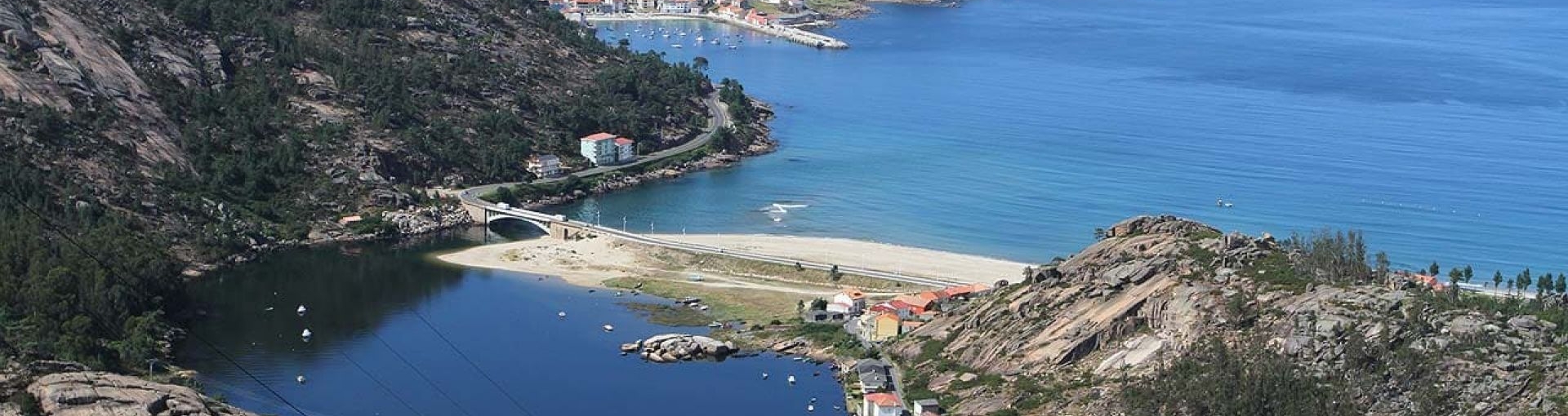
O Ézaro, in Dumbría, brings beach, river mouth and mountain together in one of the most distinctive landscapes in the southern Costa da Morte. The sand is divided between an area close to the village and another more open stretch, with the Xallas river and Monte Pindo shaping the surroundings. On this route it represents a different way to approach the coast: not simply looking for waves, but understanding how river, sea and relief interact. It is also a useful base for combining the coast with other water activities; our guide to surfing, kayaking and paddleboarding includes more ideas for exploring this part of the territory.
View O Ézaro on the interactive map
13. Mar de Fóra, Fisterra
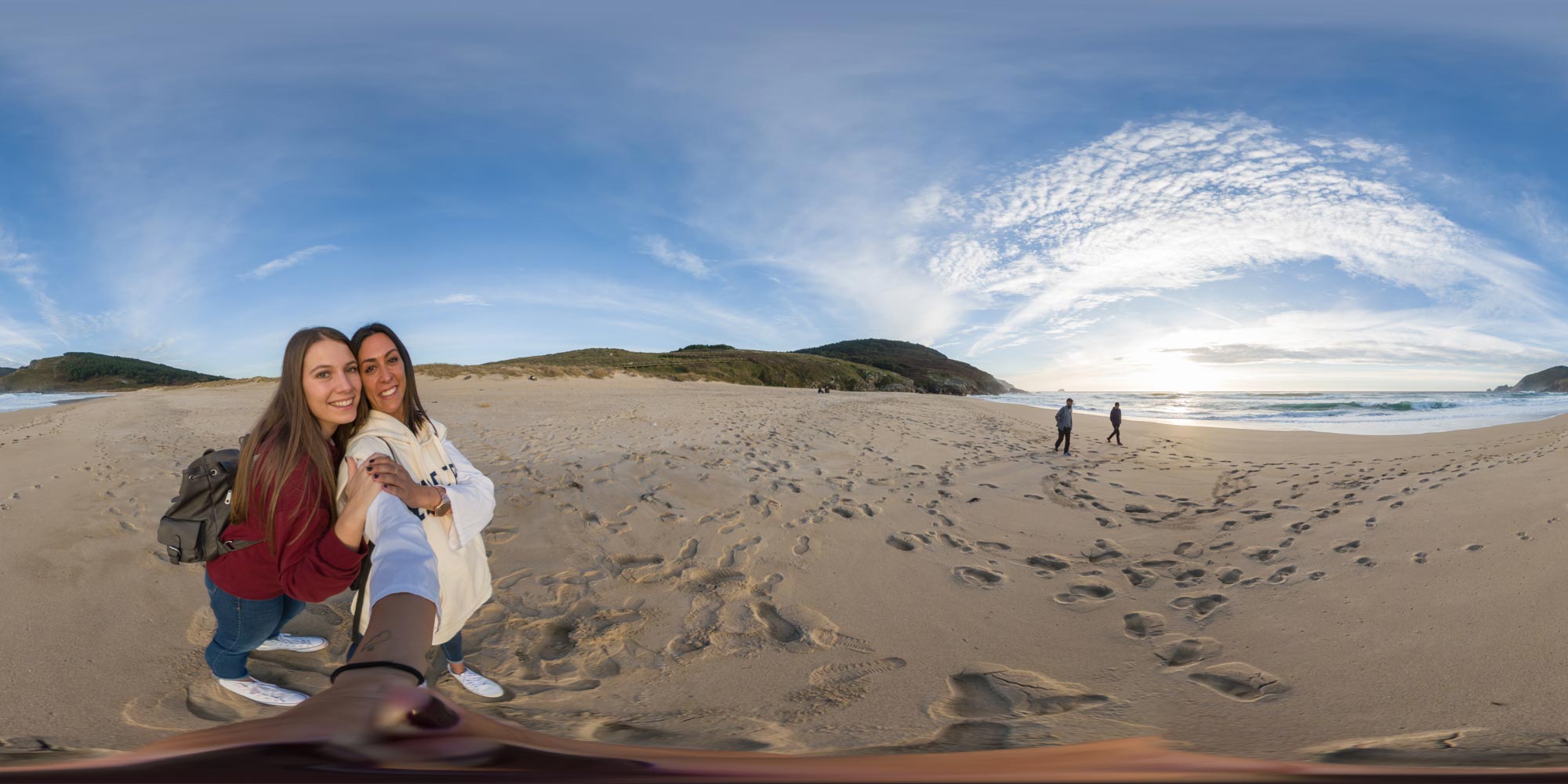
Mar de Fóra, in Fisterra, puts surfing back at the centre of the route. It is an exposed Atlantic beach with several peaks that vary according to seabed and conditions. That exposure gives the place its character, but it also means surfers need to judge their own level and the sea state carefully before going in. For experienced riders it is one of those beaches that captures the personality of the Costa da Morte: ocean energy, a lightly developed setting and a constant sense of open horizon. Even without a board it is worth visiting for the landscape and sunset, especially when evening light falls across the Atlantic west of the Fisterra peninsula.
View Mar de Fóra on the interactive map
14. Carnota, Carnota
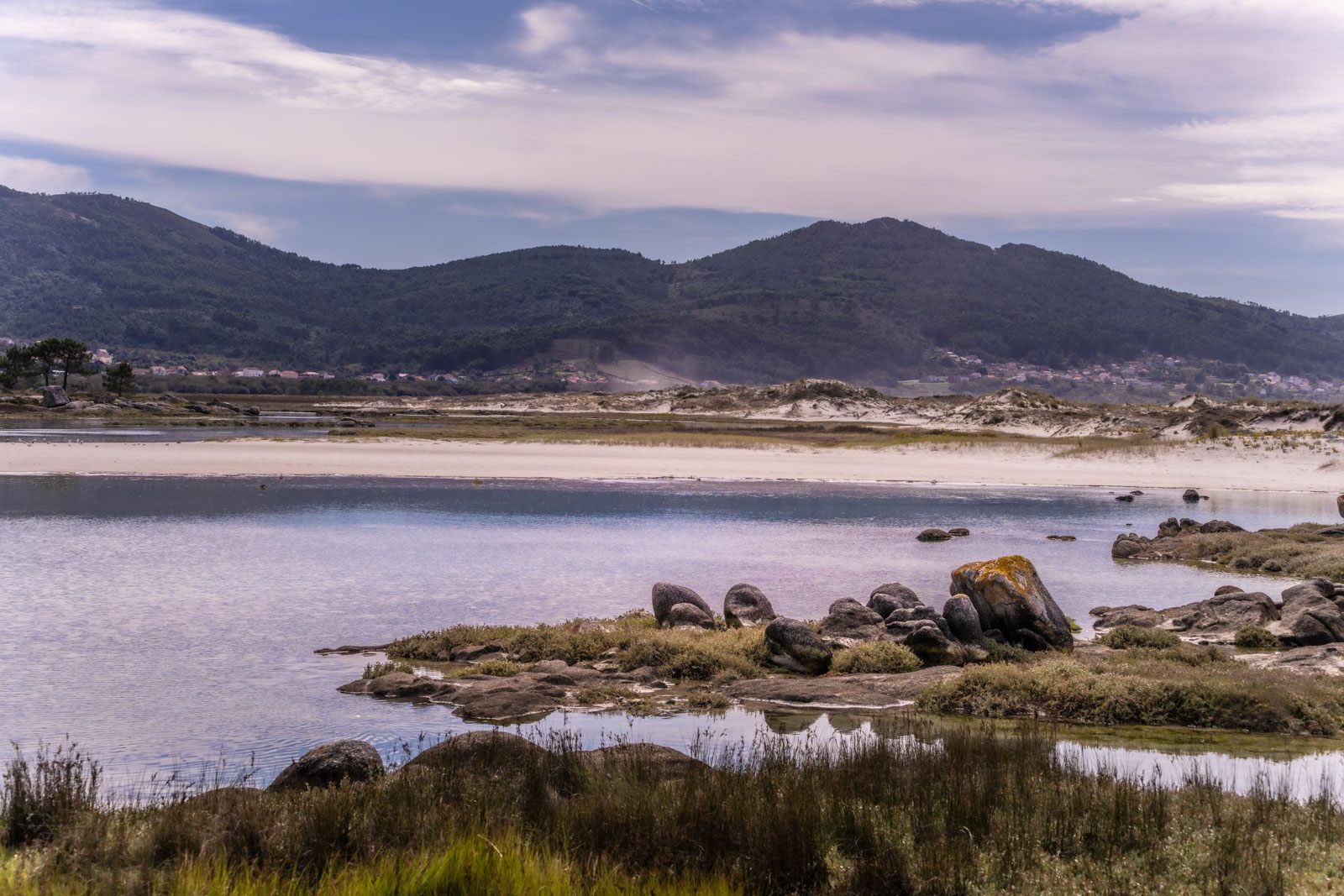
Carnota beach closes the route with one of Galicia’s great stretches of sand. Roughly seven kilometres long, its dune system and marsh form an area of exceptional environmental value where the sheer scale of the landscape is striking. Its size allows many different sporting and leisure uses, but it also means conditions can vary from one section to another. Before entering the water, take time to assess sea state, current and wind at the exact point you have chosen. Beyond surfing, Carnota is an essential stop for understanding the natural dimension of the Costa da Morte and the relationship between beach, dunes and wetland habitats.
View Carnota on the interactive map
What about the inland municipalities?
The Costa da Morte is made up of 17 municipalities, but Coristanco, Mazaricos and Zas have no coastline. That is why this route includes 14 beaches: one for each municipality with access to the sea.
How to choose a beach for surfing on the Costa da Morte
On an Atlantic coastline like this, there is no beach that is perfect every day. Swell, wind, tide, shifting sandbanks and a surfer’s experience can completely change a session. For beginners, Razo, Nemiña, Area Maior or Caión may offer suitable conditions at certain times and have an established surf culture. More experienced surfers have many more exposed options, but those options also demand better judgement.
Always check the forecast, watch the sea before entering, respect the people already in the water and never confuse a spectacular beach with a safe one. If you are learning, the best choice is to go with a surf school or someone who knows the spot well.
More surfing and water activities on the Costa da Morte
This selection is intended as a starting point. Each link opens the individual beach page so you can find more information and place it within your route. To keep exploring, visit our surfing and wild beaches on the Costa da Morte page and our article on outdoor activities: surfing, kayaking and paddleboarding.