

Monte Branco, monte Branco (Monte Branco, Monte Branco)
E. Pondal
cando te vexo de lonxe (When I see you from afar)
verto a soas triste pranto. (I weep sadly, all alone.)
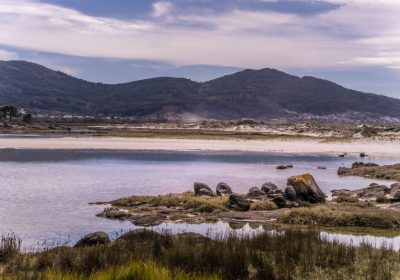
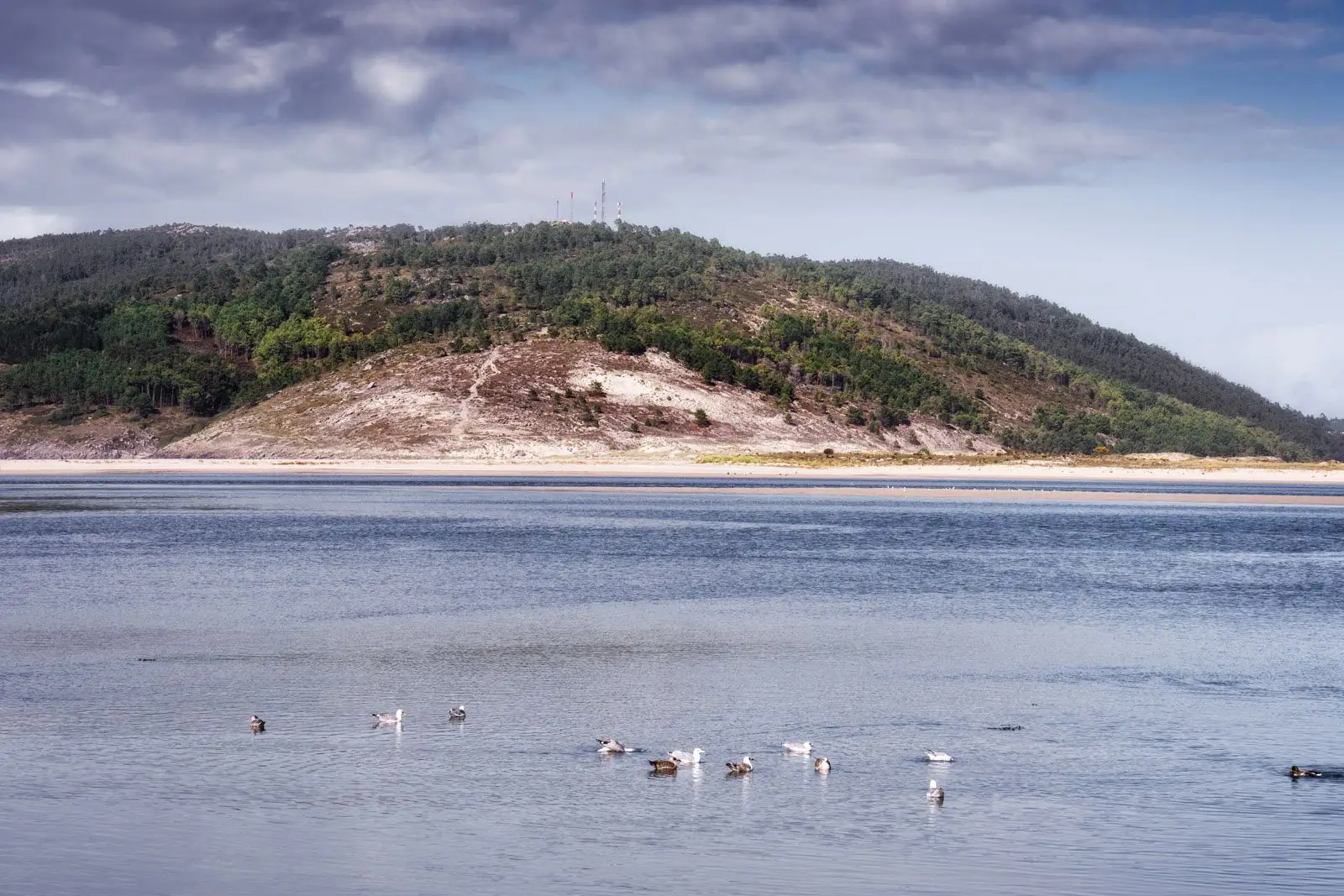
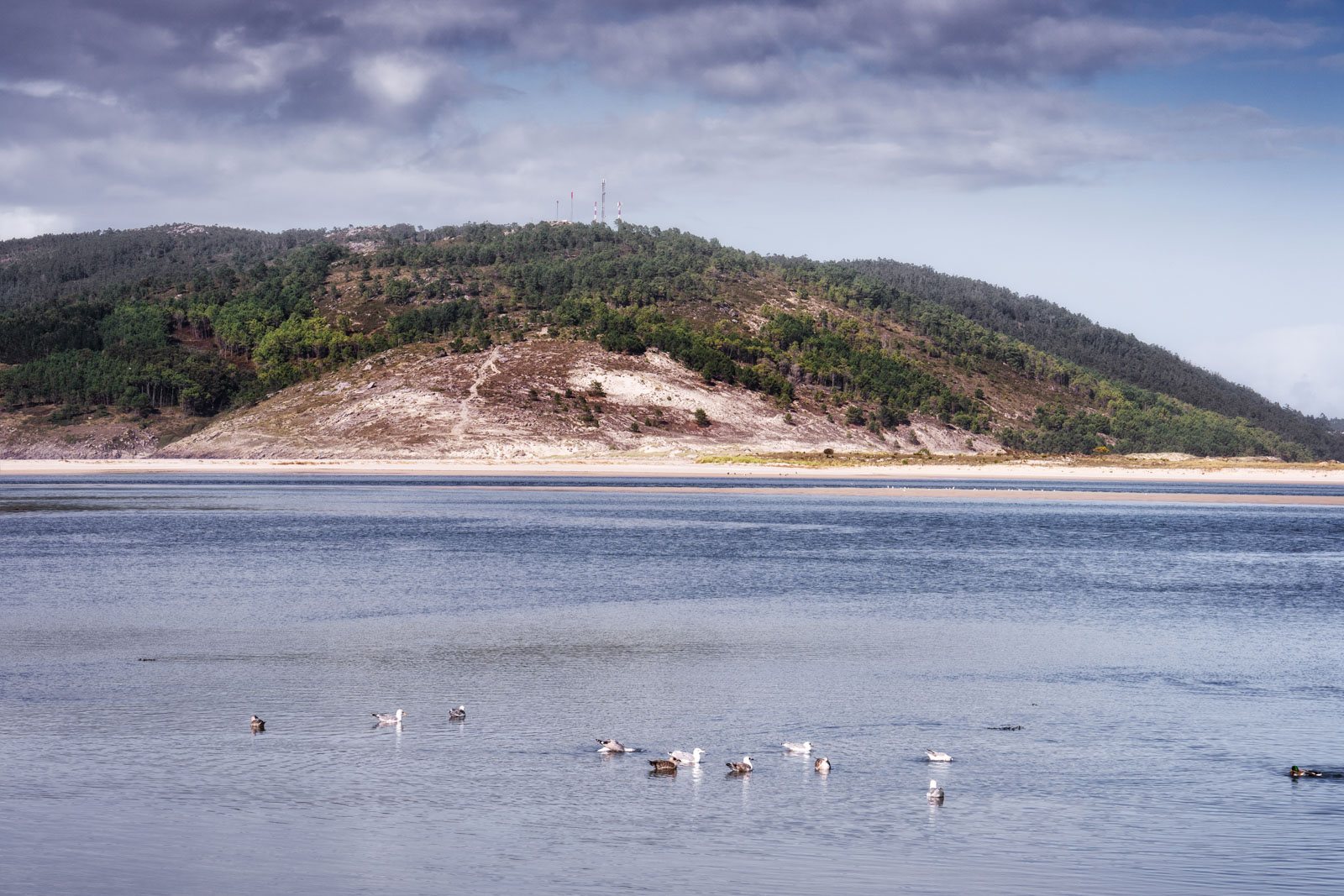
The poet Eduardo Pondal (1835-1917) used to look out from his house in Ponteceso, beside the river Anllóns, at this mountain covered in a white mantle of sand from the Barra dunes that the south and south-westerly winds scattered over its slopes.
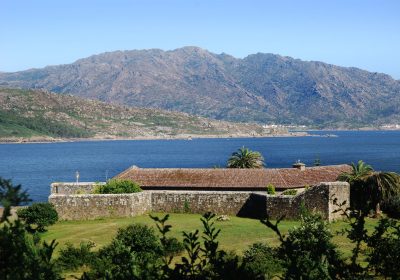
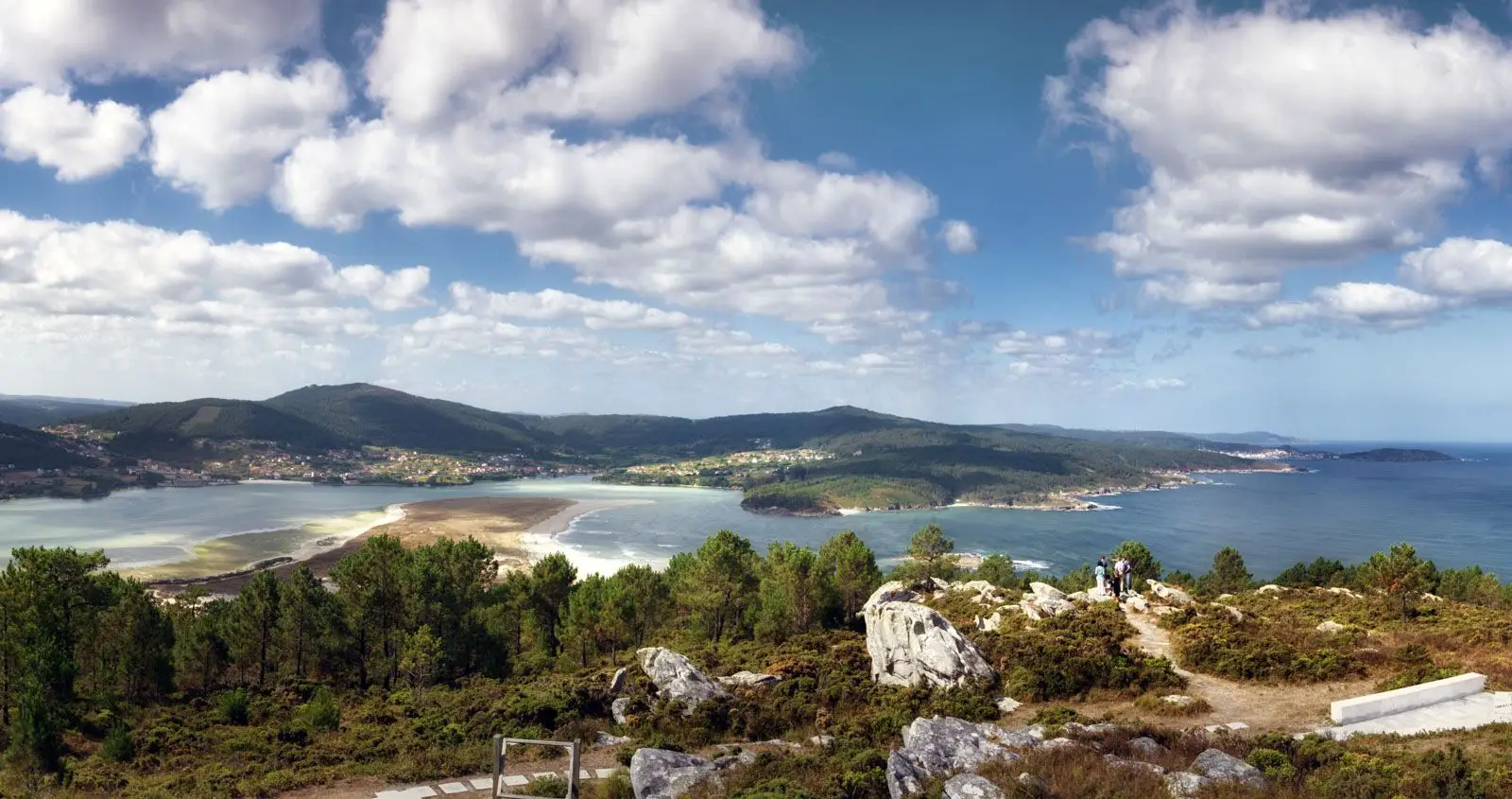
Along the coast of Costa da Morte are vantage points or natural lookout points that offer extraordinary panoramic views over the coastal landscape. Monte Branco provides excellent conditions for that, both due to its strategic position and the easy access to its summit. A hill that is not very high (182 m) but with an excellent location for enjoying the best panorama of the mouth of the river Anllóns and the Corme and Laxe rías.
If you look left, you will see the meandering course of the river along its final stretch, the town of Ponteceso, the surrounding valley and the Insua Bay. On the left-hand side of the bay are the lands of the parish of Cesullas, with the hamlet of Neaño.
Straight ahead, in the foreground, is the tongue of sand or sandbank between the estuary and the sea, and farther off, the lands of the parish of Canduas in the municipality of Cabana, which rise to the top of Castelo de Lourido hill on the horizon. On the right, in the foreground, is the beach of Balarés and the large pine forest surrounding it and, farther off, the calm waters of the Corme and Laxe ría.
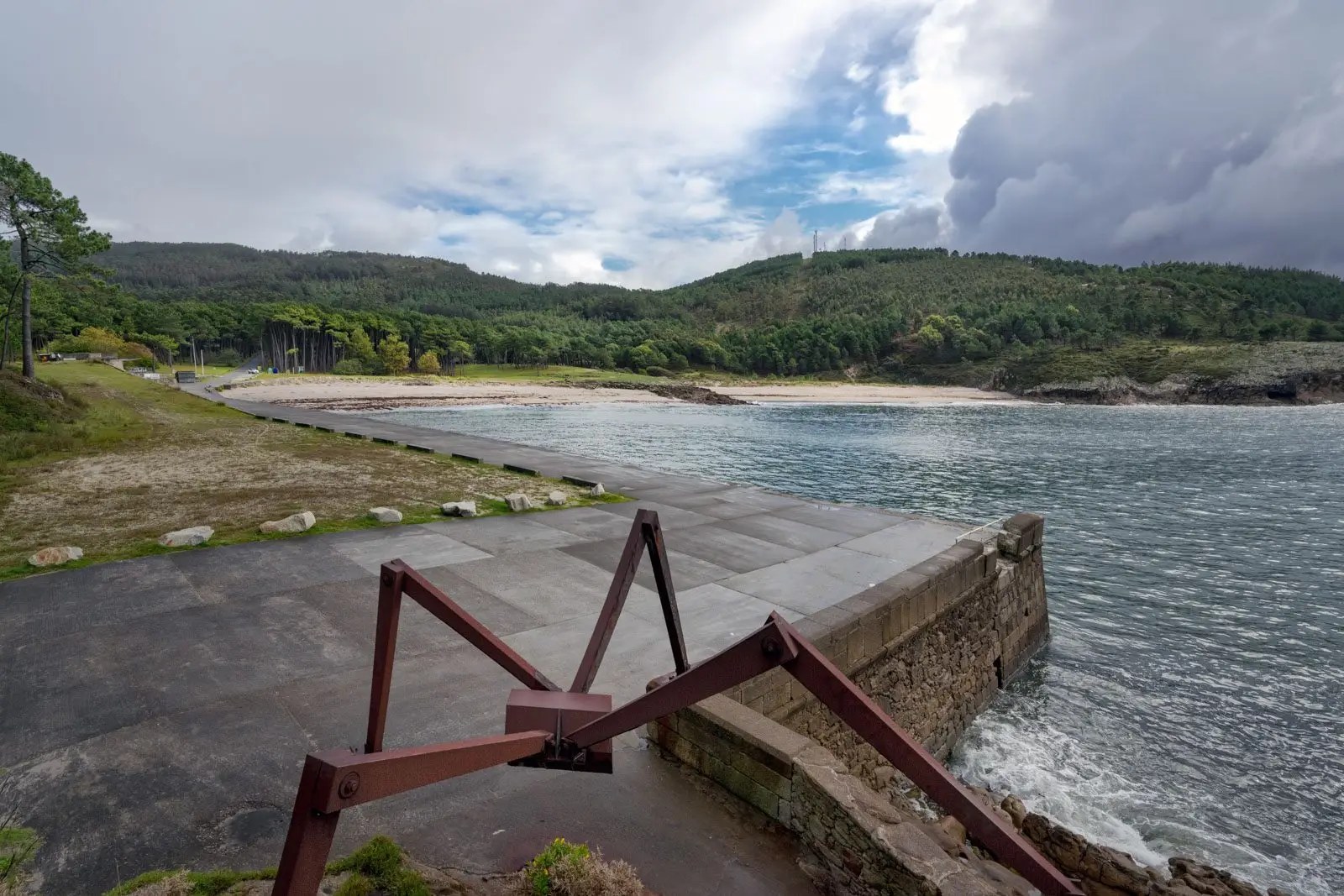
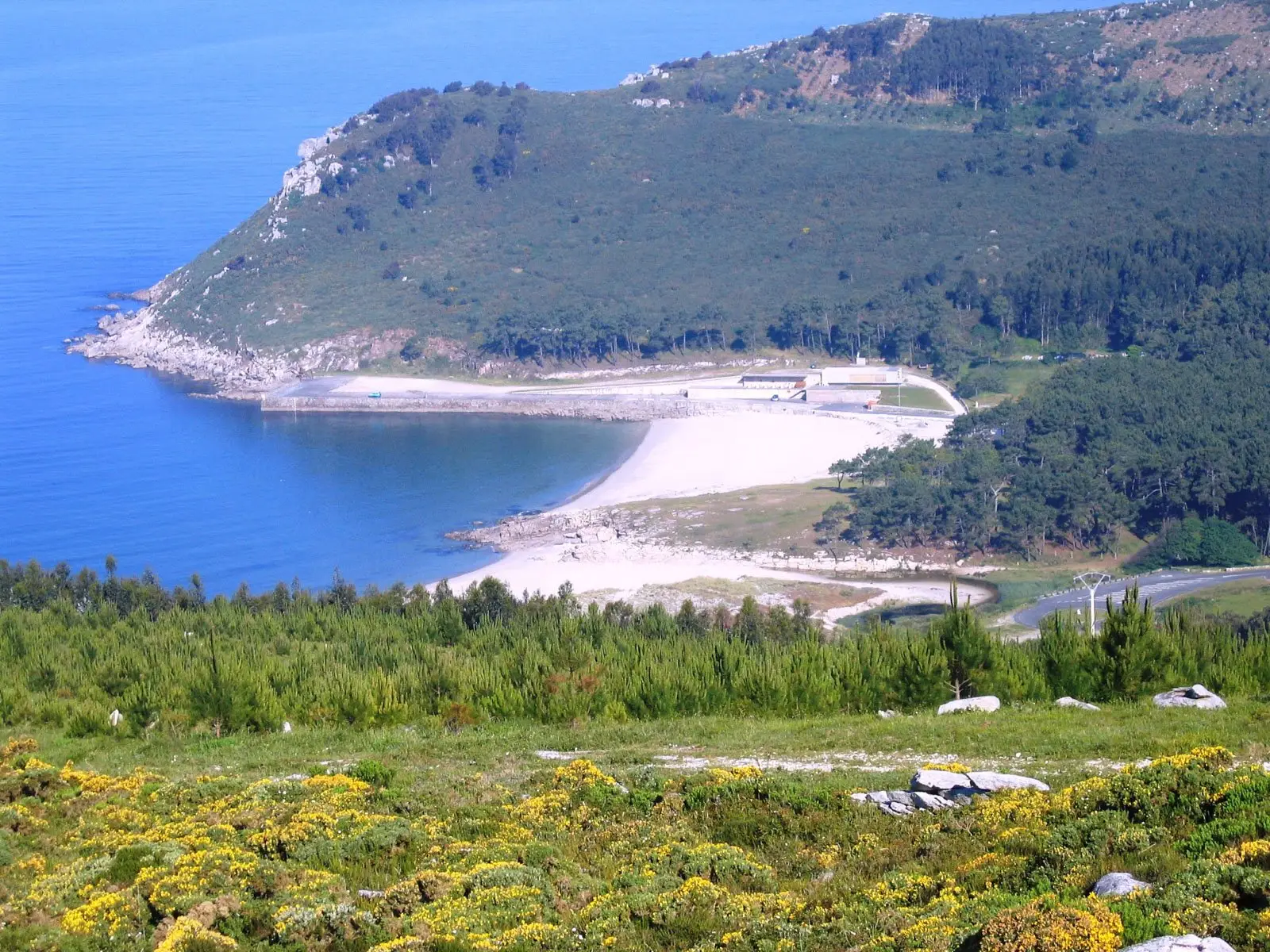
Leaving Monte Branco behind, turn left at the crossroads to go to the Balarés beach. Here, there is a tiny hamlet and the chapel of Santa Mariña, cited by Jerónimo del Hoyo at the beginning of the 17th century. It later fell into ruins and, at the end of the 19th century, a new chapel dedicated to this local saint was built in the town of Ponteceso. Between 1936 and 1962, on this same spot, there was a titanium mine and, to take this mineral away, a small pier was built, which is still there. The other mining installations have disappeared and, after the mine closed, the land was purchased by the A Coruña provincial government and turned into today’s recreational area.