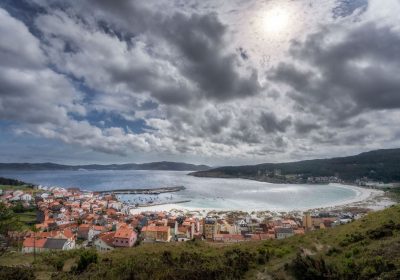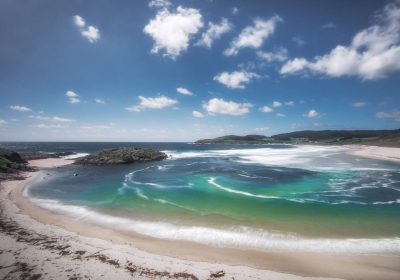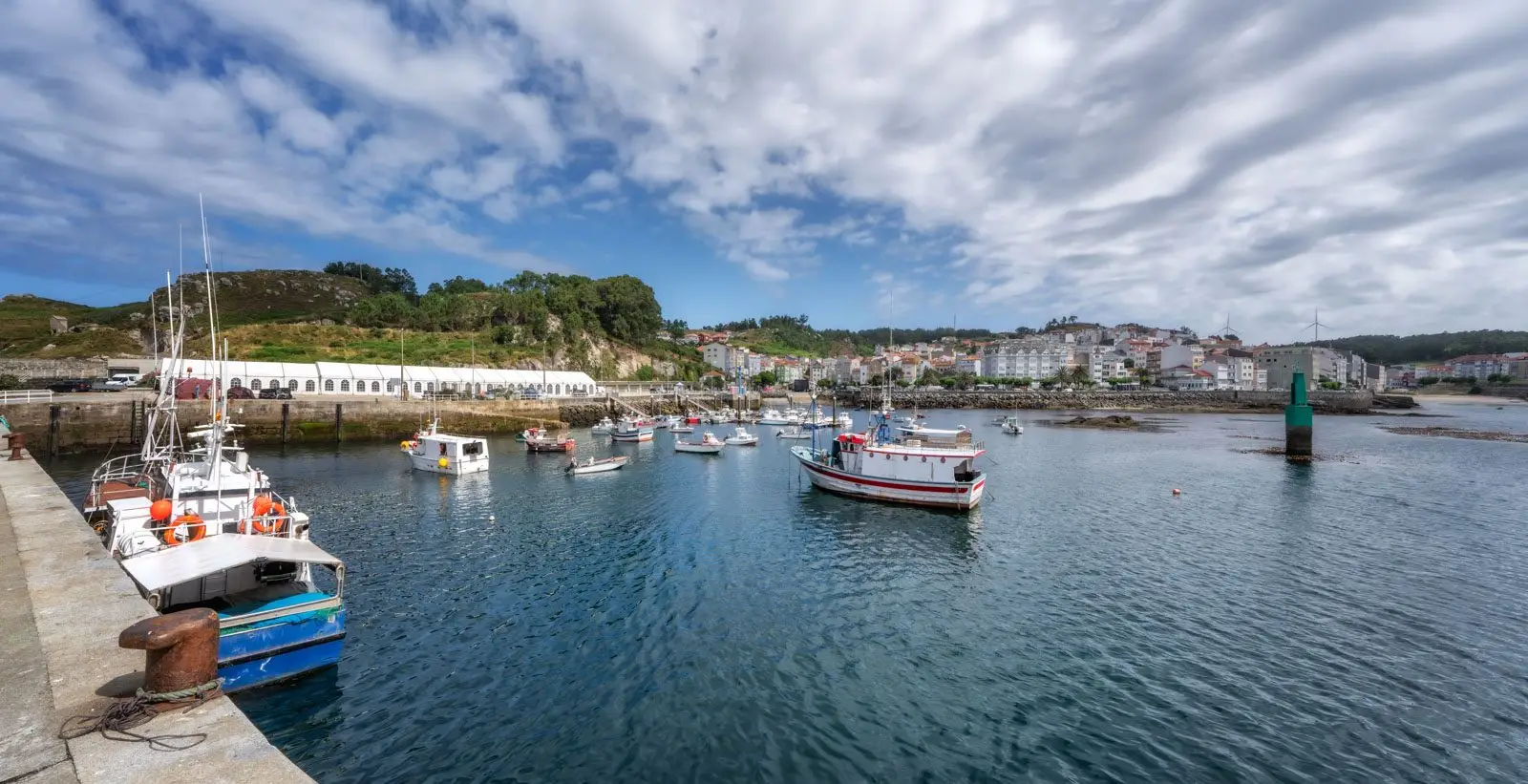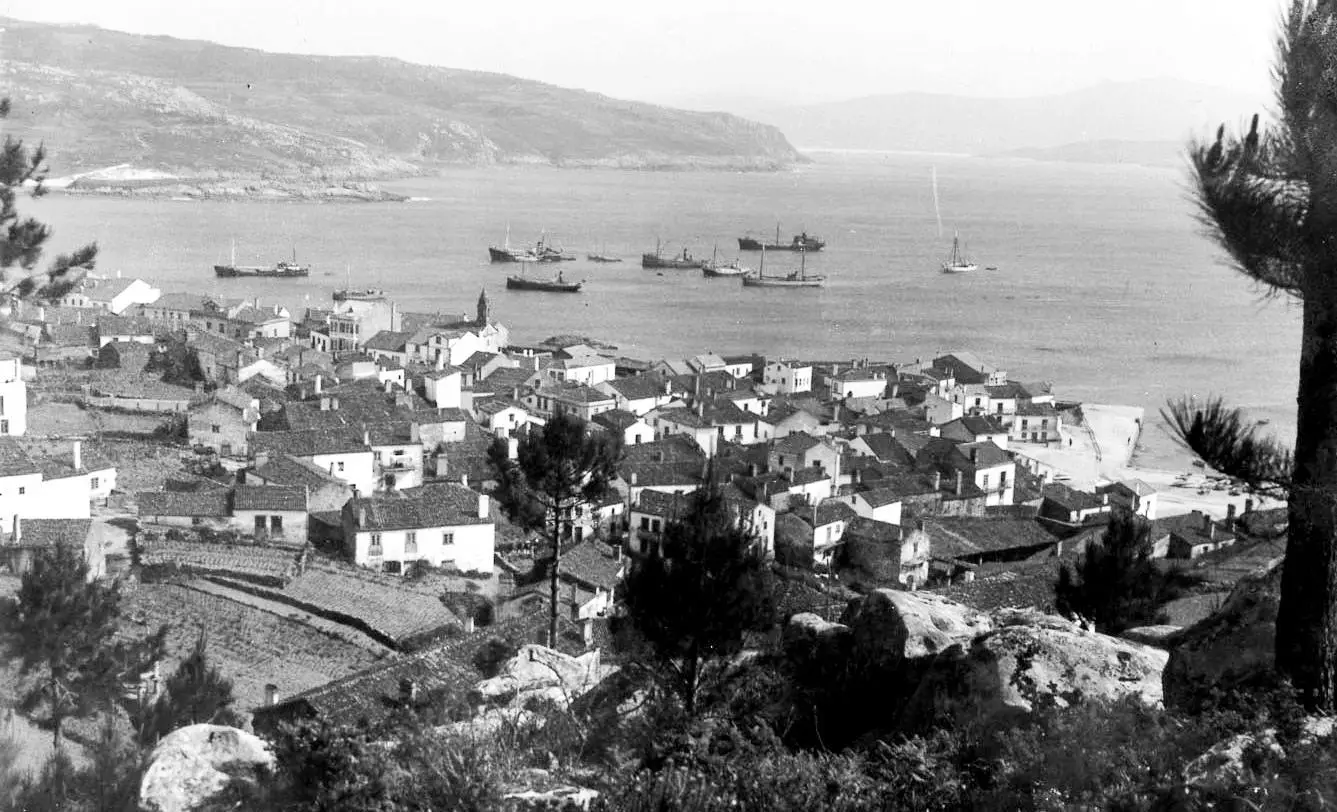


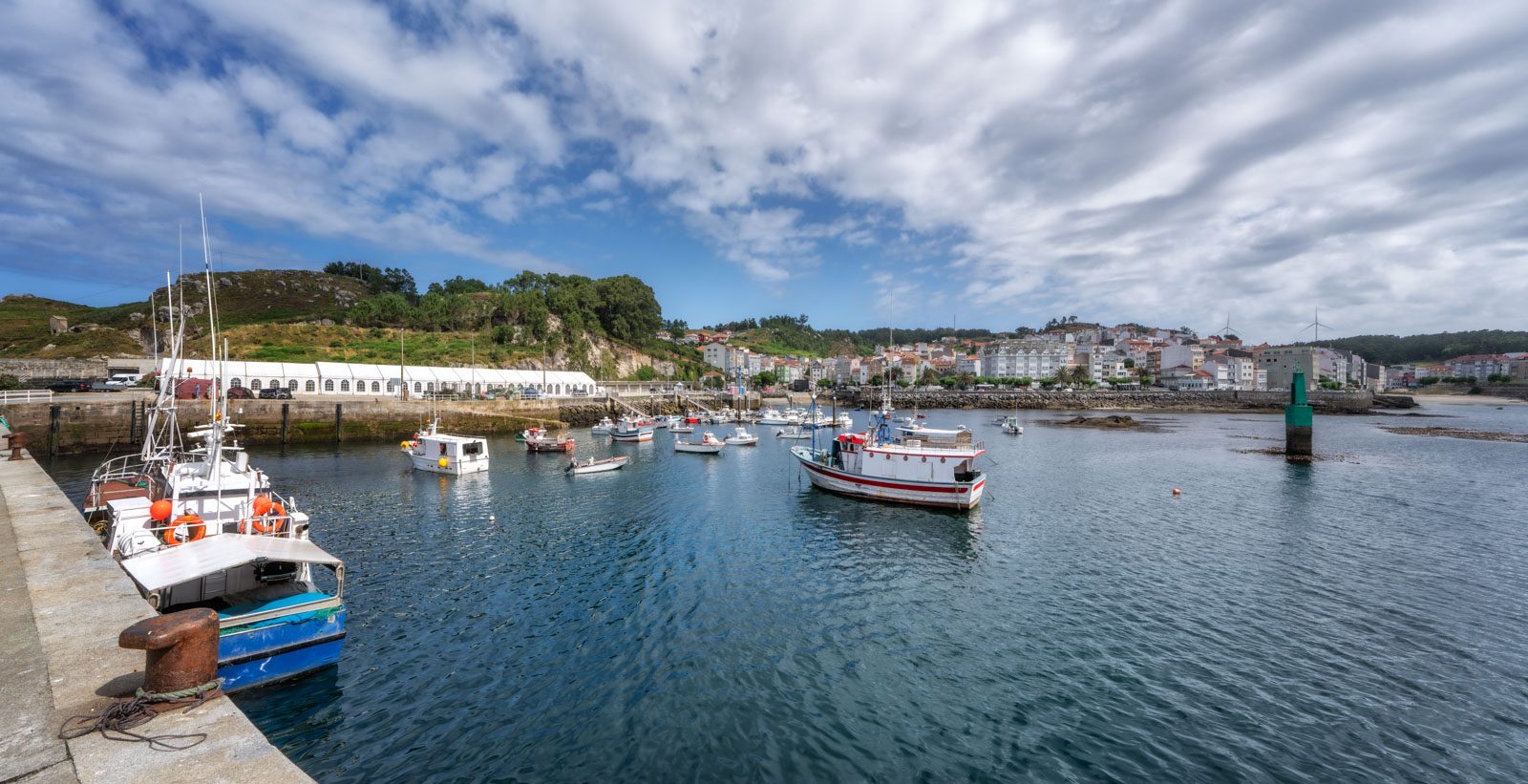
Corme Porto owes its existence to the favourable conditions in the bay on which the port is located, allowing the population to make use of and gain their livelihood from maritime resources. Prior to the town, there was the parish of Santo Hadrián further inland, in Corme Aldea, to which the coastal town belonged.
On the map by the Portuguese Pedro Teixeira (1634), both of these population centres are shown. Corme Porto is depicted beside a long beach with painted boats, indicating the importance that it had at the time, and Corme Aldea is represented by the parish church of Santo Hadrián (dedicated to Sain Adrian).
The intellectual José Cornide, when referring to this port, in addition to emphasising its excellent conditions for docking boats, also mentions the presence of Catalans in the town, who were engaged in sardine fishing and salting.
In the 1920s, Corme had a prominent position among the ports of Galicia owing to its coastal shipping fleet of more than forty boats that sailed to ports around the Peninsula, many carrying wood from the pinewoods of Bergantiño.
At this time Corme was a lively town both economically and socially. It had several salting factories, steam line-fishing boats and three conger eel curing facilities. The houses were typical of a seafaring town. The traditional urban landscape changed completely from the 1970s onwards, when new buildings appeared. Today, the town continues to live on resources from the sea, such as fishing, shellfishing and tourism, although its fleet continues to shrink.
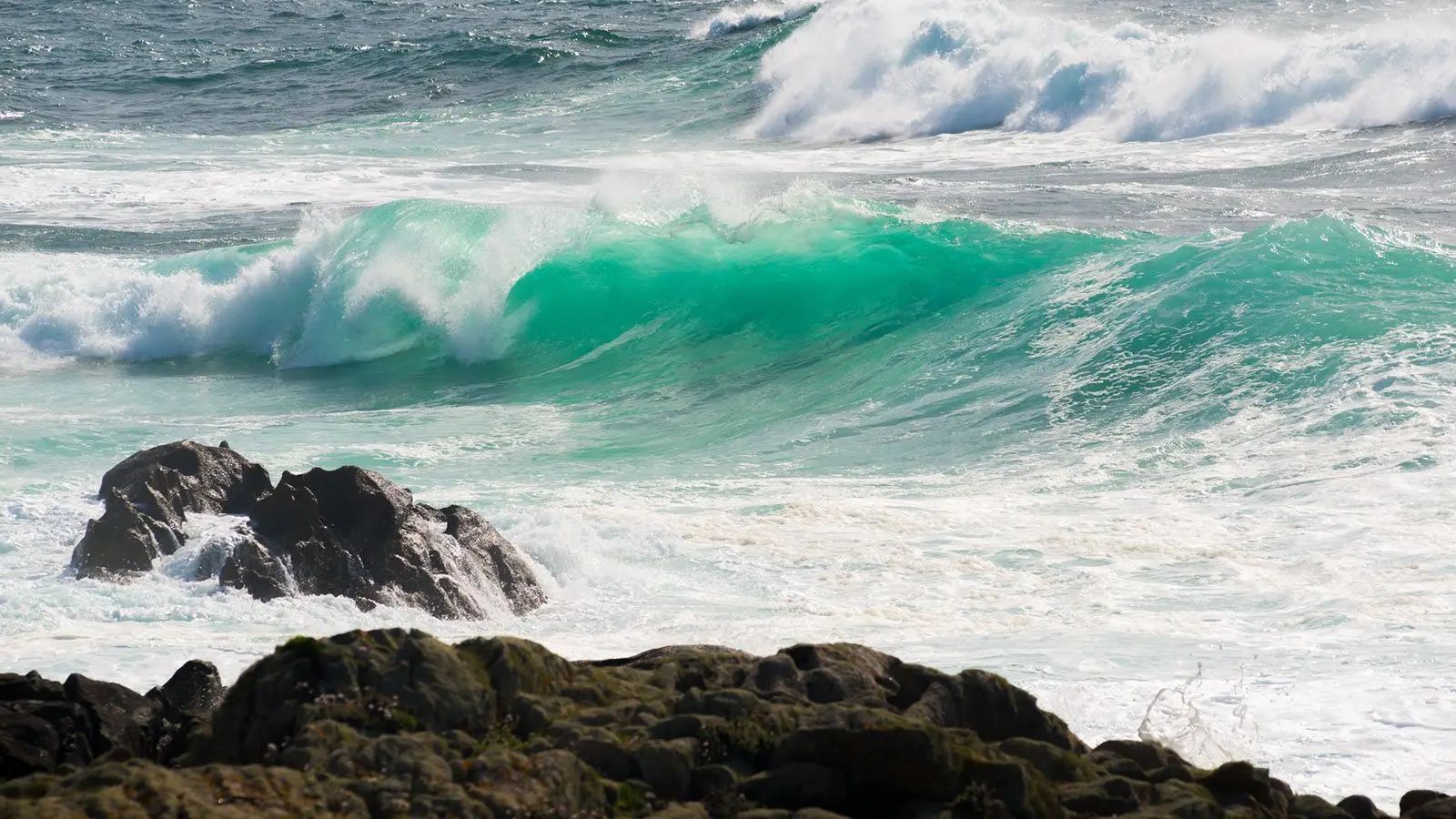
Both the town of Corme and Cape Roncudo are known for their goose barnacles, a much appreciated shellfish, which grows in abundance on the rocks of this coastal outcrop pounded by heavy seas.
The fame of the barnacles of Roncudo dates back to ancient times. The writer Carré Aldao had already emphasised the quality of the marine crustaceans of this area: “Cape Roncudo, where large, excellent goose barnacles grow, among the most tasty on the entire coast.”
Since 1992, in the first two weeks in July, the Festa do Percebe, the Barnacle Festival, is held. It is a very popular event at which, in addition to tasting this shellfish, music and attractions are on offer all day.
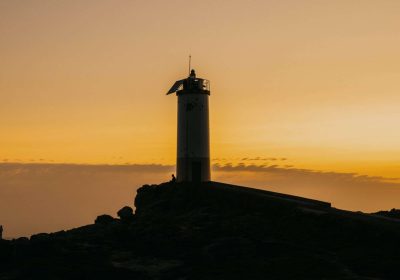
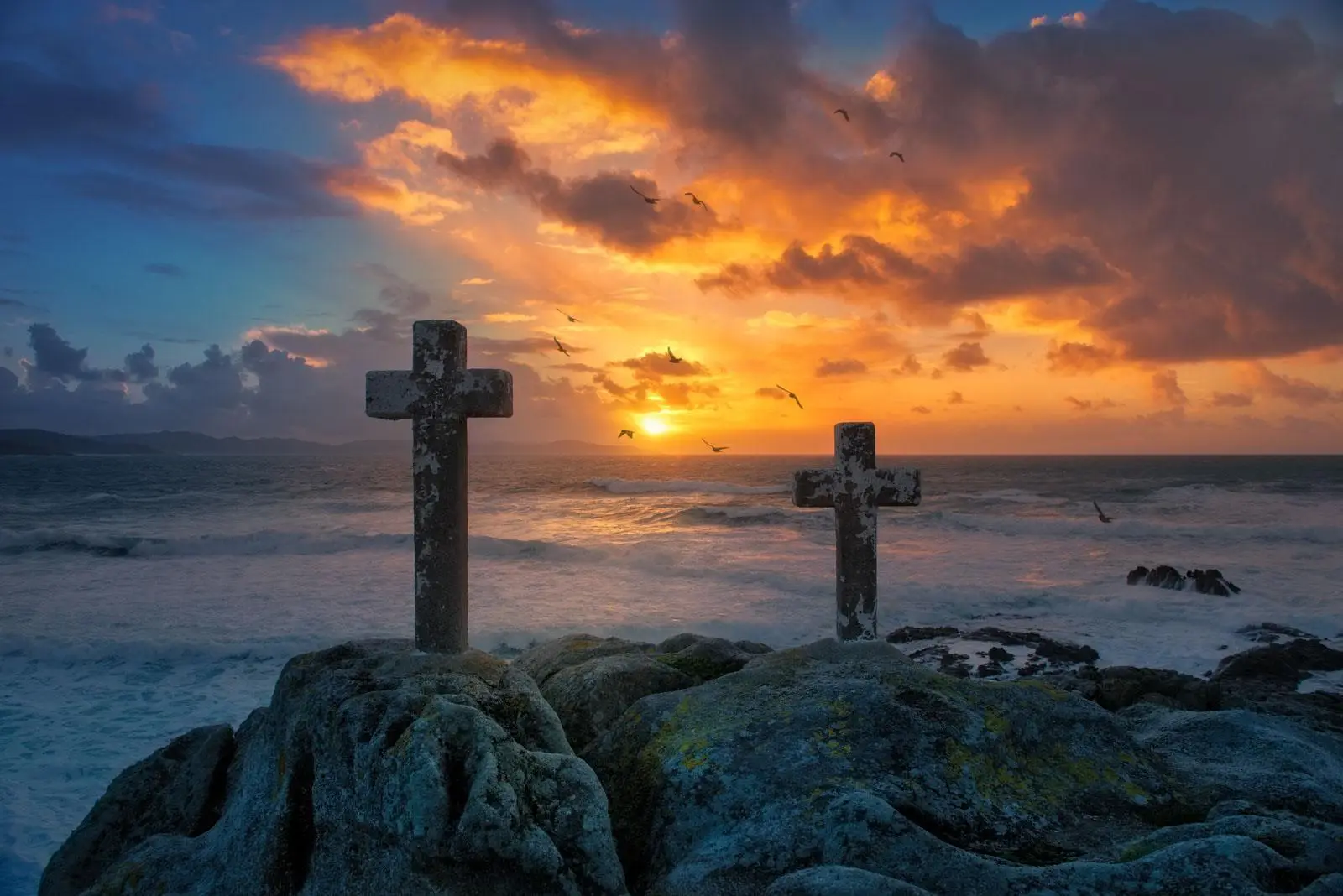
Cape Roncudo is located some 3 km from the Corme port, and is recommended as a place to visit for any traveller who goes to Corme. The walk offers spectacular views of the other bank of the ría (estuary): the town of Laxe, the Traba beach and rocks, the coast of Camelle and Arou and Cape Tosto. At the end of the road, the traveller’s interest will be aroused by the sea that pounds against the cliffs, the lighthouse and the white painted crosses on top of some of the rocks, a reminder of the barnacle collectors who were swept into the sea while harvesting this precious shellfish.