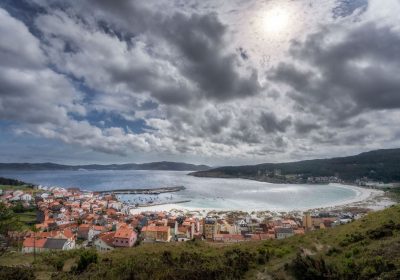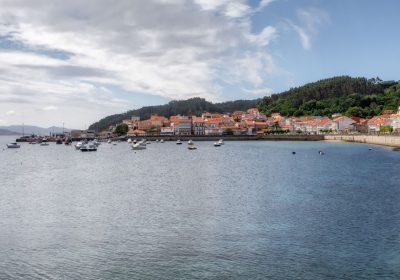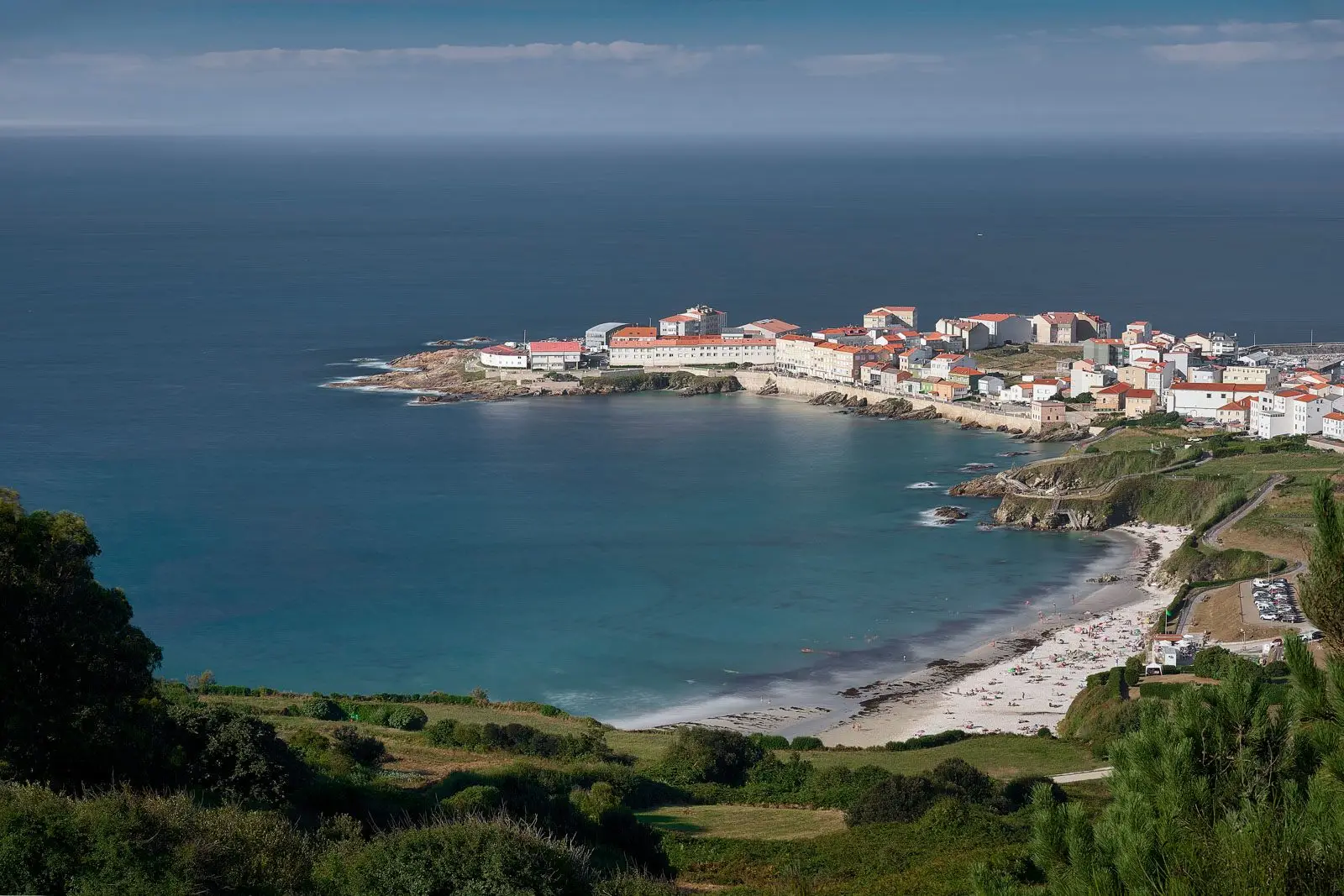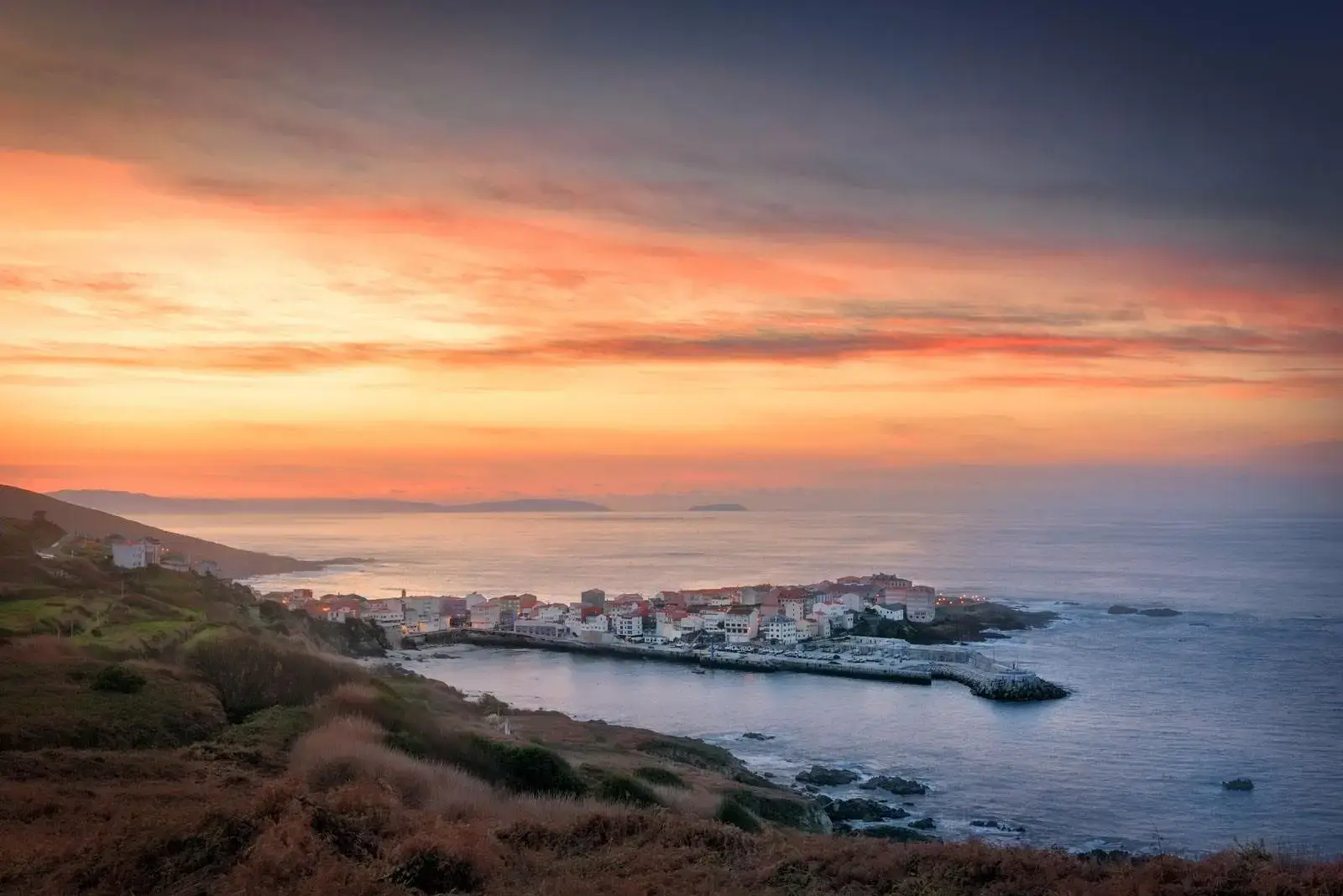


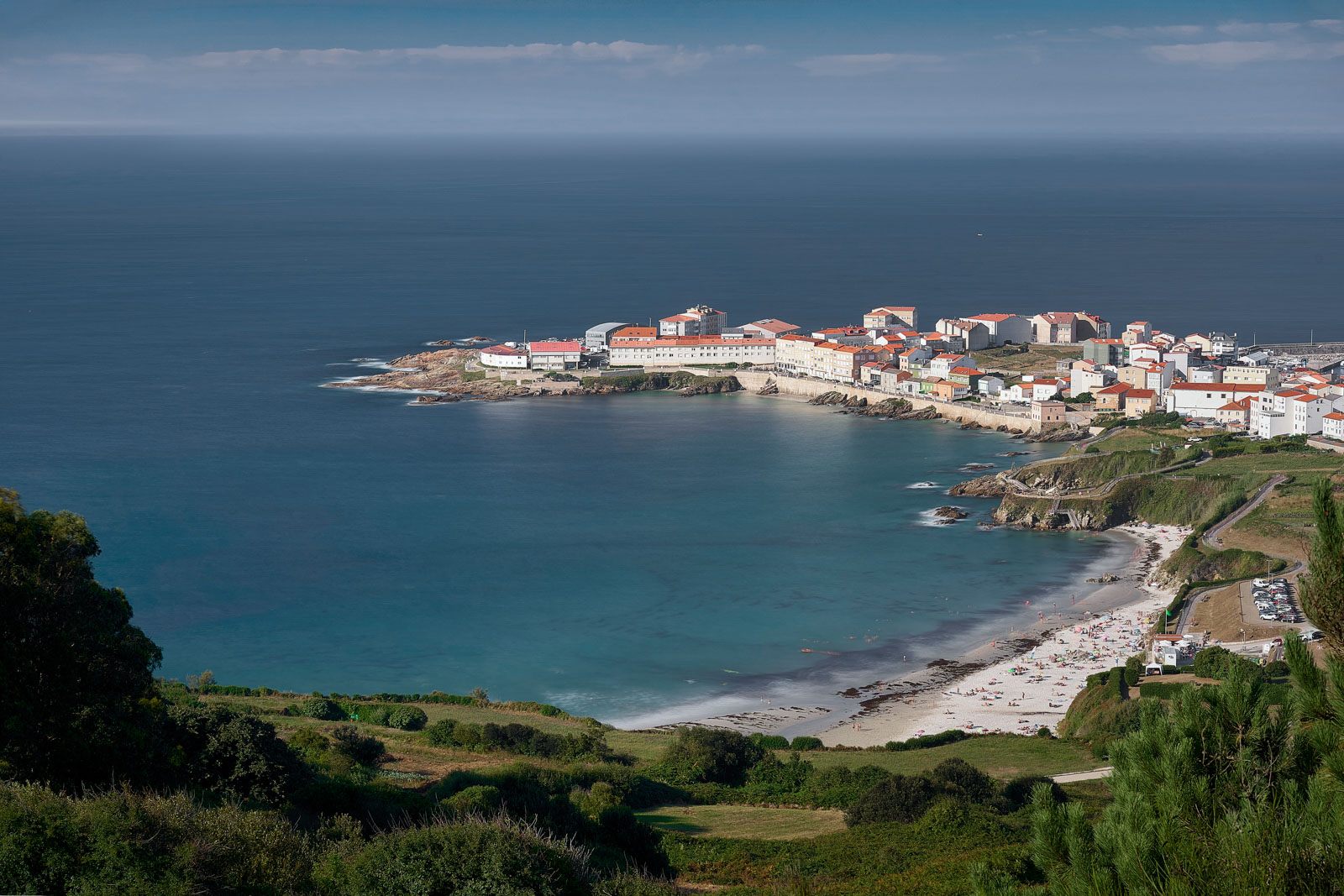
Travellers who want to get to know the town of Caión should see it first from afar, from one of the lookout points, before entering the town. The best panoramic view is from the lookout point on the DP-1009 road near Goxán.
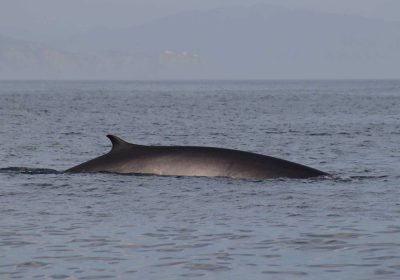
The first inhabitants who decided to settle on this little peninsula, pounded by the sea with all its force, were very courageous. One of the first references to this port talks of whaling, information given to us in the mid-16th century by Licenciado Molina regarding the ports of Caión and Malpica: “where, in particular, many whales die here, more than in other places in the kingdom, is that these ports are always wilder.”
A branch of the noble Bermúdez de Castro family came to live in this small fishing town. One of its members, Francisco Bermúdez de Castro, founded the Monastery of the Augustinian Friars here and gave it some important privileges. These monks were also responsible for governing the parish, dedicating it to Our Lady of Perpetual Help.
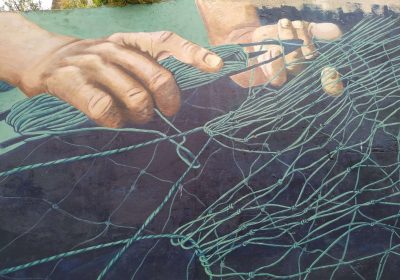
The main activity of the inhabitants of Caión has always been fishing, first whaling and then, from the 18th century onwards, sardines, conger eels and hake. Today, tourism has become the major resource of the town as visitors are attracted by its excellent location and magnificent beach.
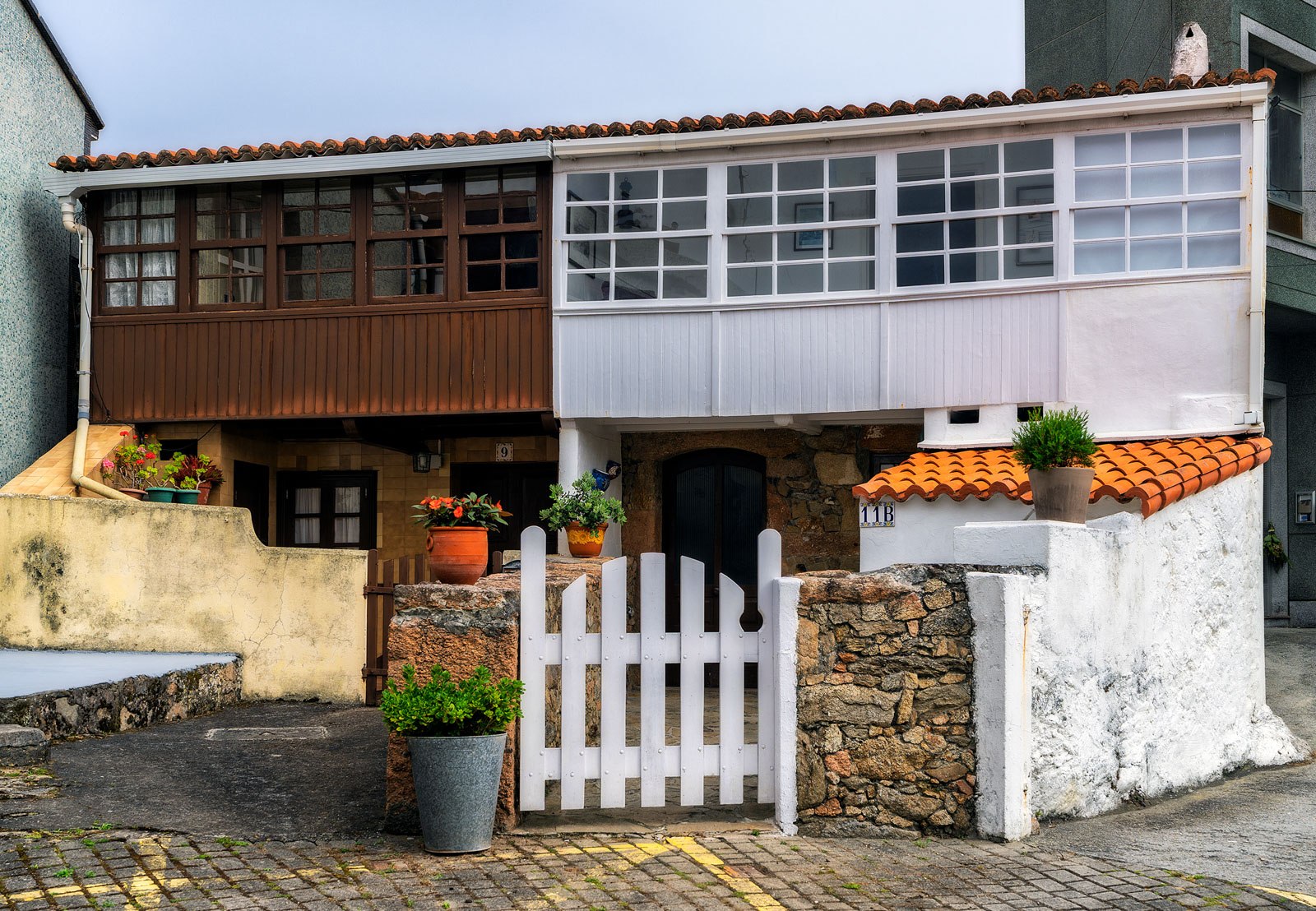
In the second half of the 20th century, the town underwent significant urban renewal, with the old fishermen’s cottages being replaced by new buildings. Some traditional buildings still remain in the centre of the town, allowing us to imagine what the old Caión looked like.
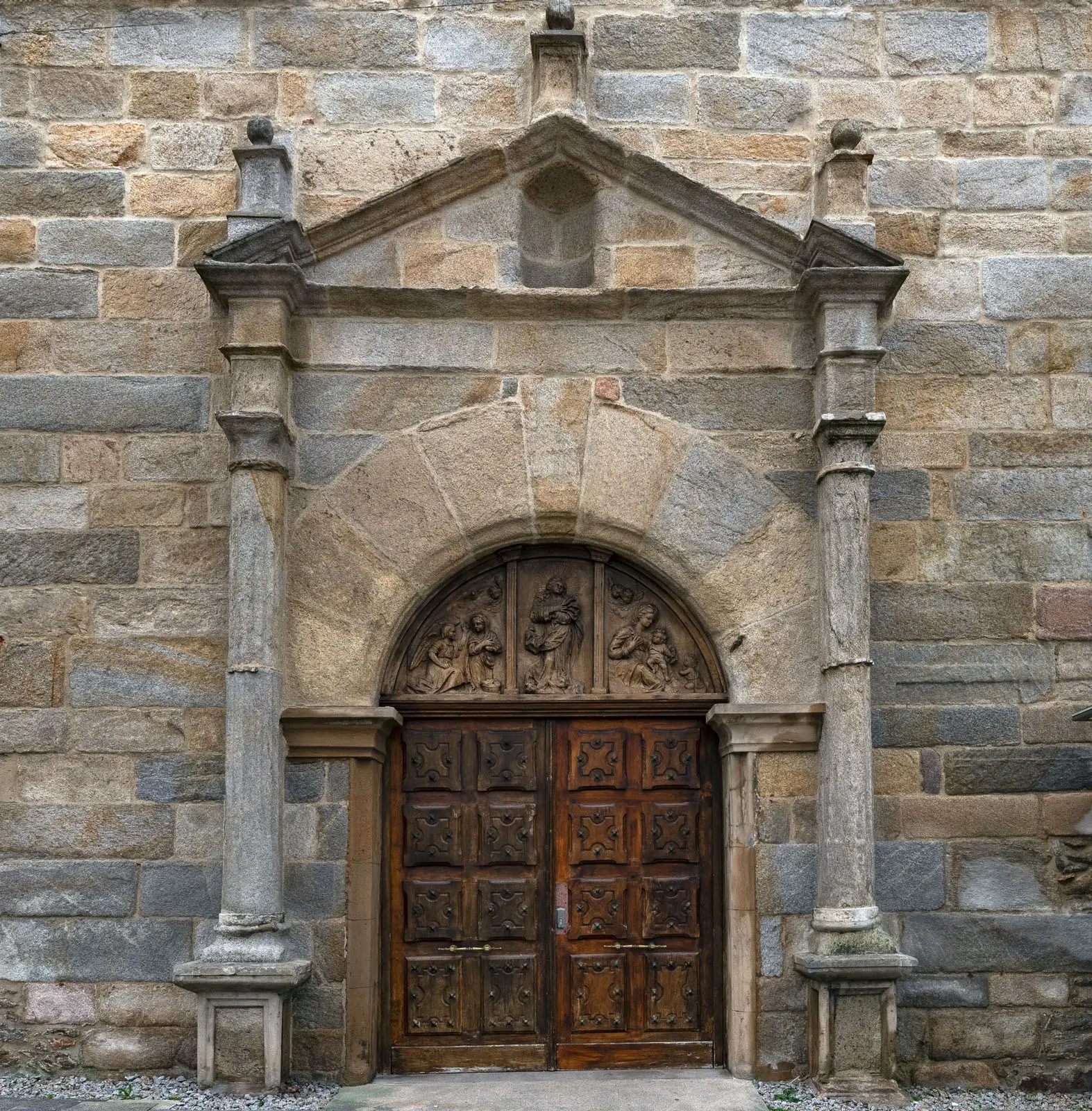
This seafaring town offers visitors a number of attractions that are not to be missed. First of all, Eduardo Vila Fano Square, which is considered to be the centre of town, with the two most important historical buildings: the manor house of the Counts of Graxal and the parish church of Santa María do Perpetuo Socorro (dedicated to Our Lady of Perpetual Help). The manor house is a long building that runs along the western side of the square. The church was the former church of the Augustinian monastery, replacing the previous parish church, which is where the chapel now stands. Its most interesting architectural feature is the Renaissance façade on the north wall, facing the square. Adjoining the south wall of the church is the old monastery. On the façade, two coats of arms can be seen. The one on the left shows a tower with the following inscription: Malo mori quam foedari (Death before dishonour). On the coat of arms on the right are the symbols of the Bermúdez and Castro families.
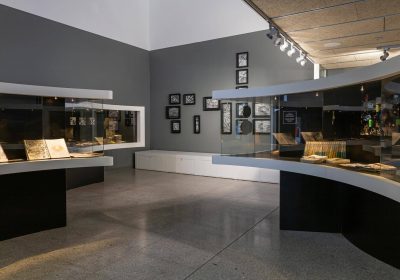
Very close to the square is the fishermen’s association building, which houses the fishing archives and a permanent exhibition on the seafaring culture of the town.
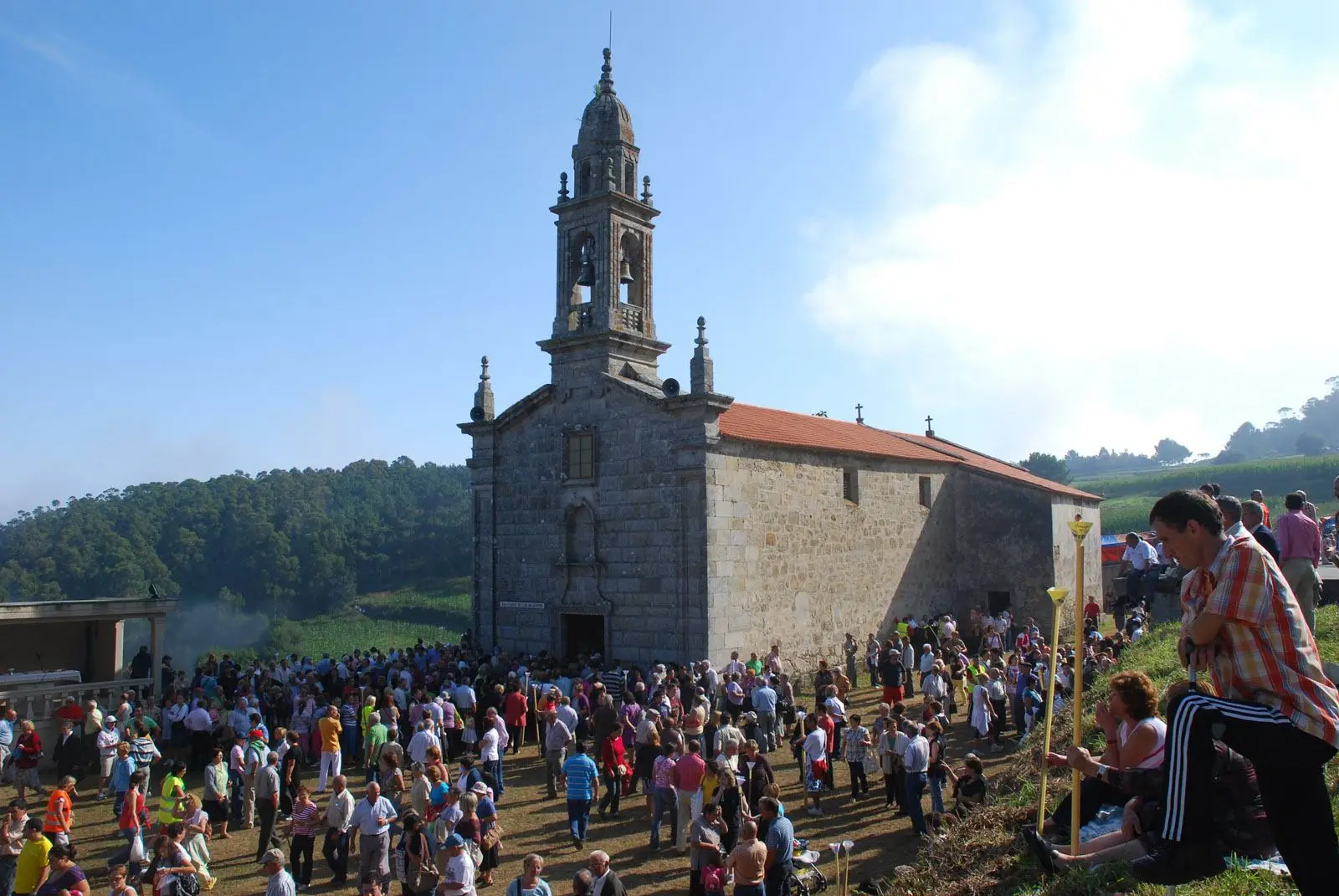
It is interesting to visit the sanctuary of the Virxe dos Milagres (dedicated to the Virgin of Miracles) some two kilometres from the town on the road to Carballo. The present-day church, of Baroque style, dates from 1836. A well-known pilgrimage is held here every year on 8 September.