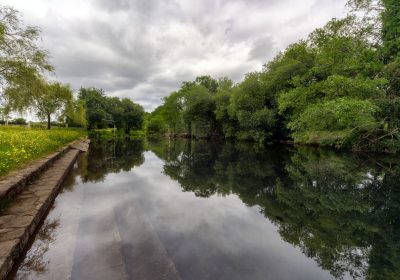


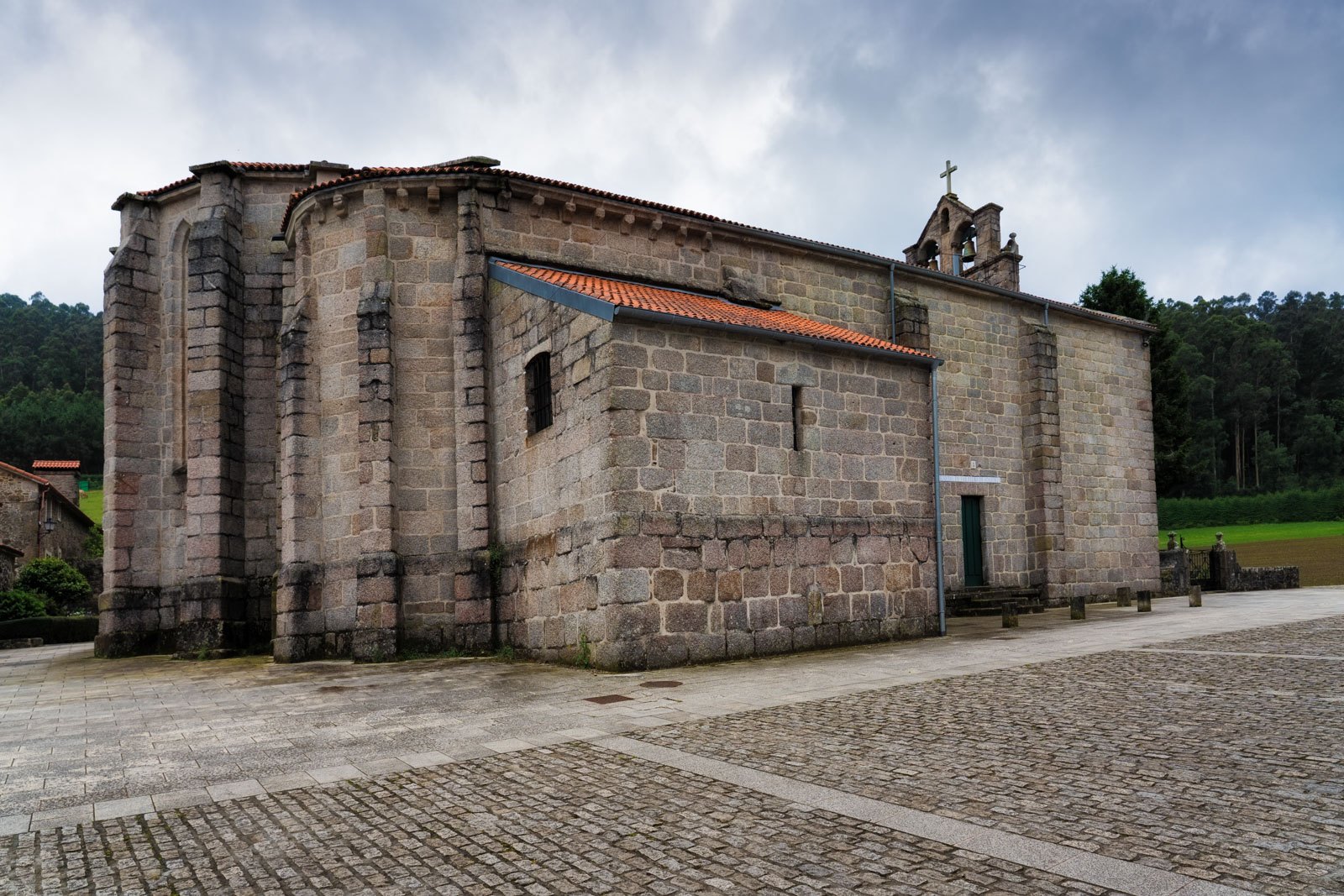
On high ground above the river Anllóns to the north of Coto de Pedrouzo is Soandres, a large parish in the municipality of Laracha. It shares its name with an old Benedictine monastery whose influence extended as far as the modern municipalities of Cerceda, A Laracha and Carballo.
It is said that the origin of this Bergantinian monastery, of which there is documentary evidence since the 10th century, was very much older, since inside the parish church of San Pedro (dedicated to Saint Peter) a sacred stone dedicated to Hercules was found, which is now in the Santiago Cathedral Museum.
The mediaeval monastery had its moment of glory in the 11th and 12th centuries, when it received most of the donations of land, settlements and churches, some donated by the powerful Traba family. Properties that the monks continued to permit the residents of the surrounding parishes to use in exchange for the payment of rent.
Starting in the 14th century, the local nobility and their squires began to take over a large proportion of these properties, rents and other assets by abusing their strength and power, even coming to physically attack some members of the religious community without respecting the orders that the king sent to them to return the usurped properties to the monks. At the end of the 15th century, Soandres became a priory belonging to the monastery of San Martiño Pinario in Santiago.
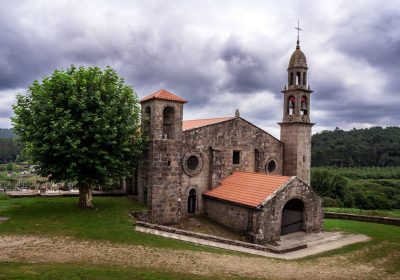
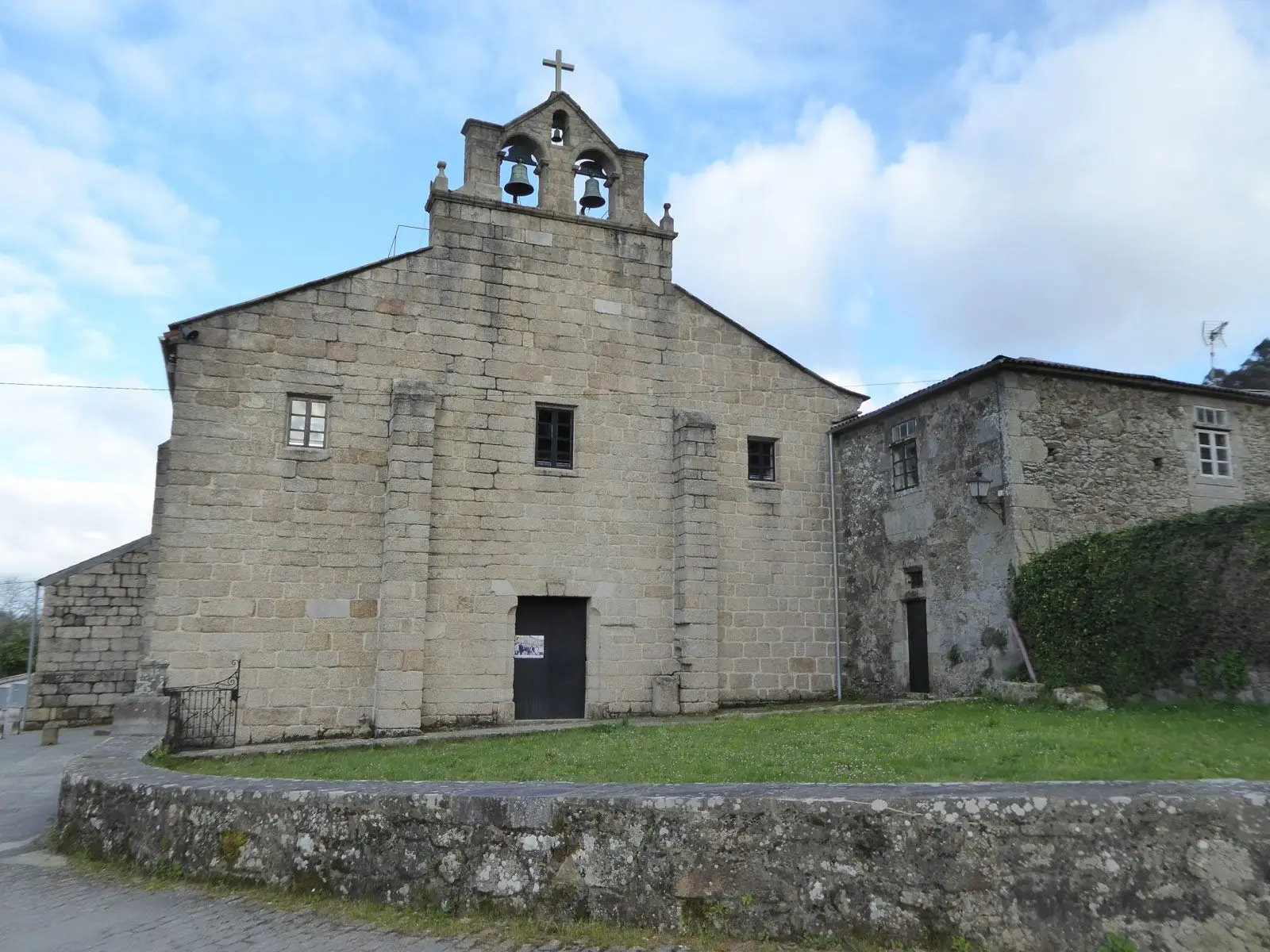
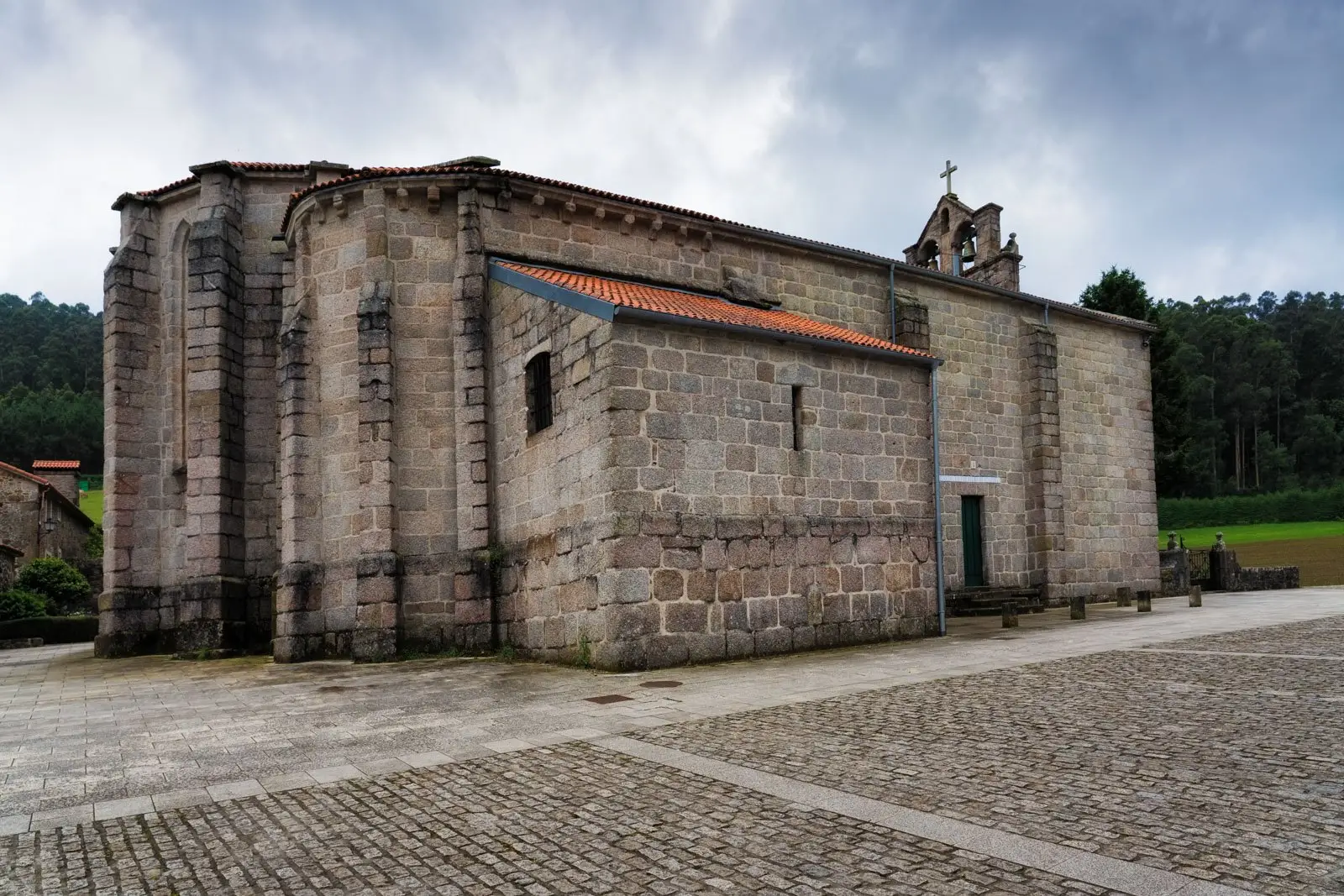
There are only a few remains of the early Romanesque church after it was remodelled in the Gothic style in the 14th century. What has remained was the splendid façade with three apses with tall ogival windows, similar to the churches of San Domingos de Bonaval in Santiago and San Francisco in Betanzos. In the second renovation, during the Baroque era, the church changed again considerably, especially the nave and the façade, giving it its current appearance.
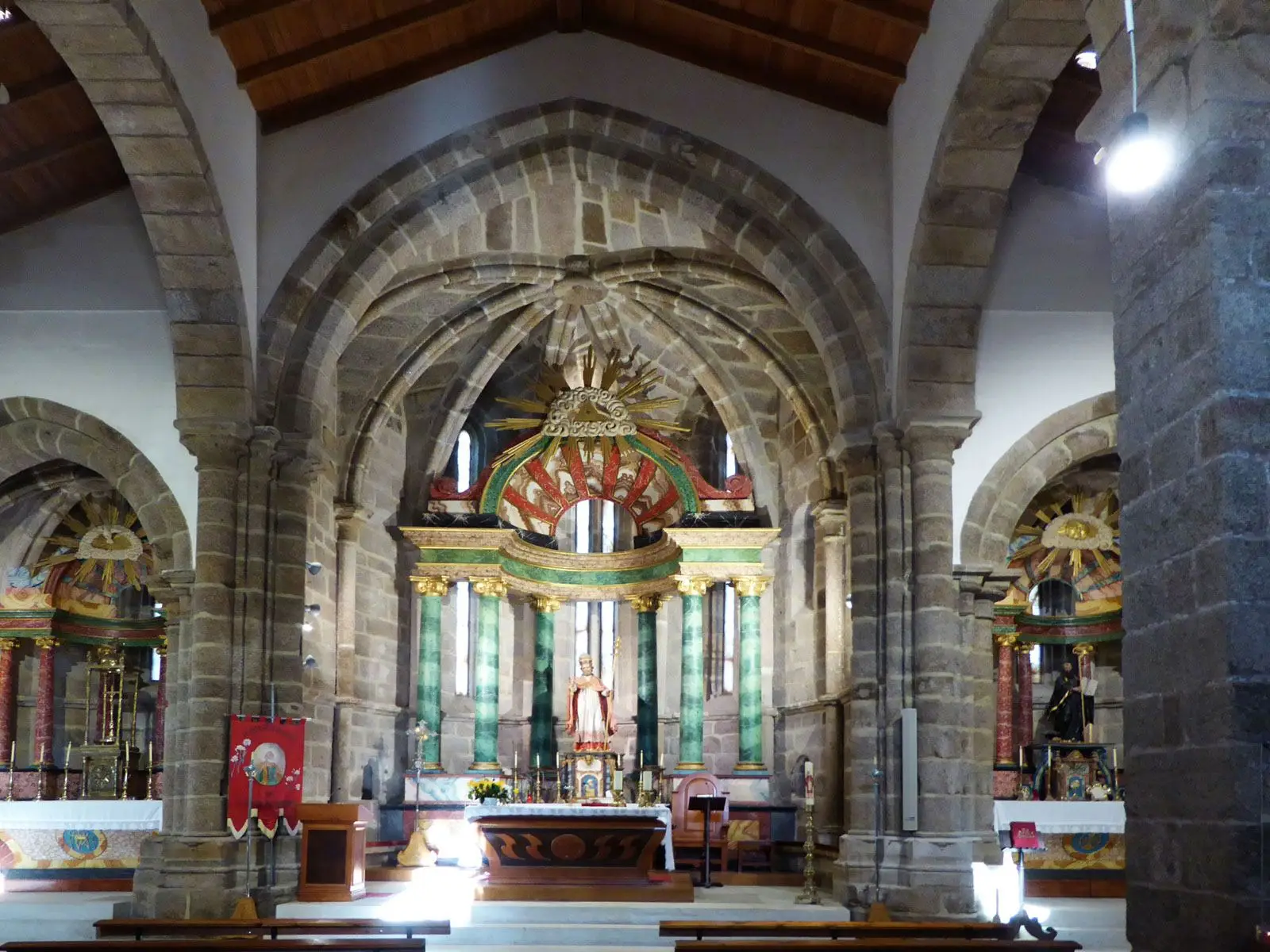
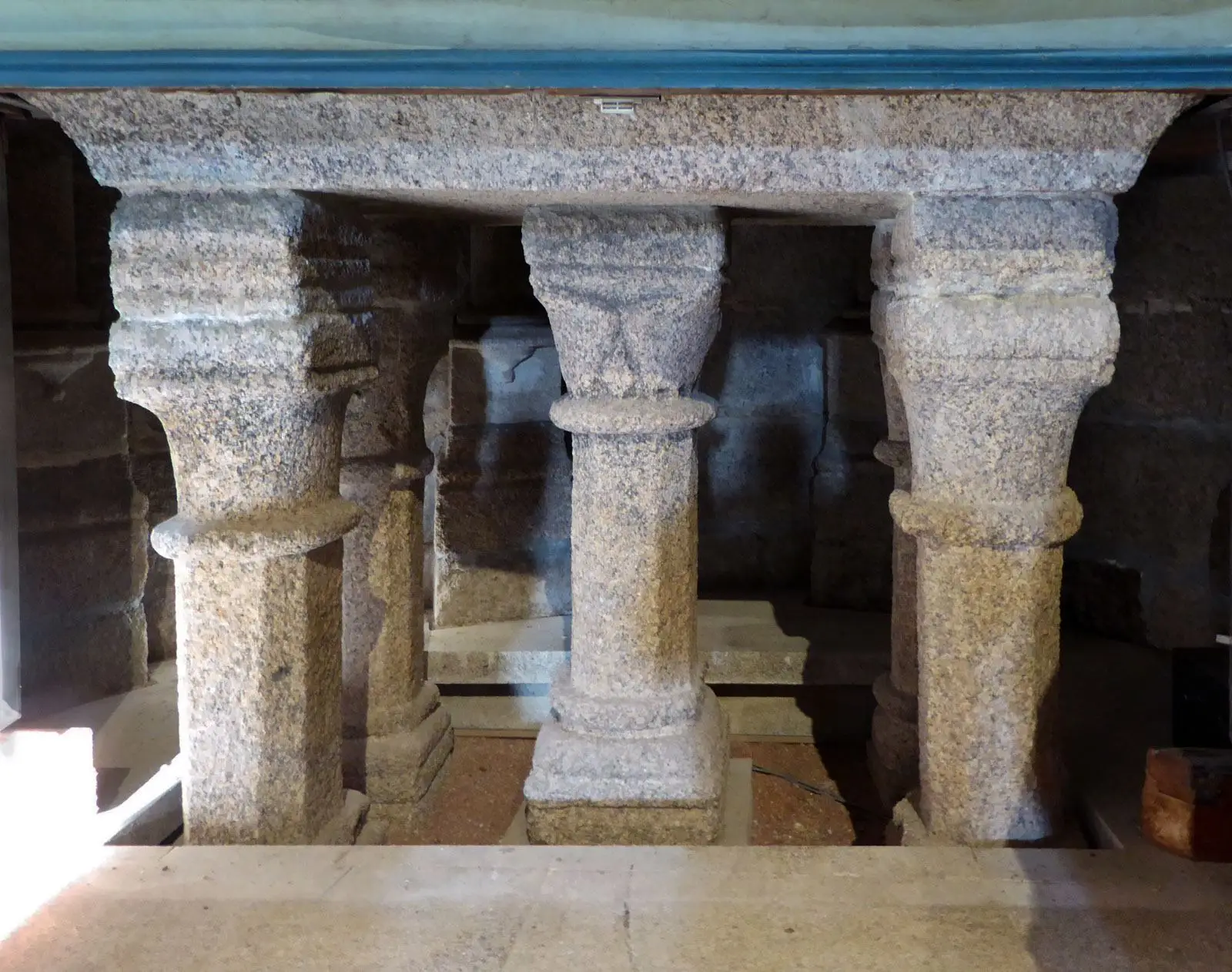
In the interior, the floor plan of the basilica consists of three naves, the main one and two apses, which are entered through pointed arches. Above the central apse is a lovely ribbed dome. The canopies over the chapels in the apses are baroque. In 2004 some Gothic stone altars were discovered in the side chapels; few of these are still to be found in Galicia.
On looking at the architecture of the modern priest’s house, built in the 18th century and abutting on the south wall, one can see how it has kept the shape of the buildings that housed the old monastic community and the cloister.