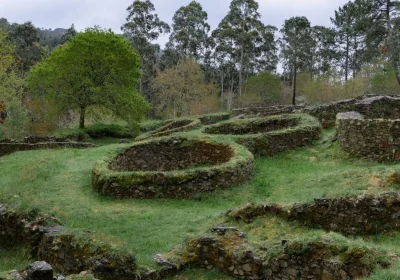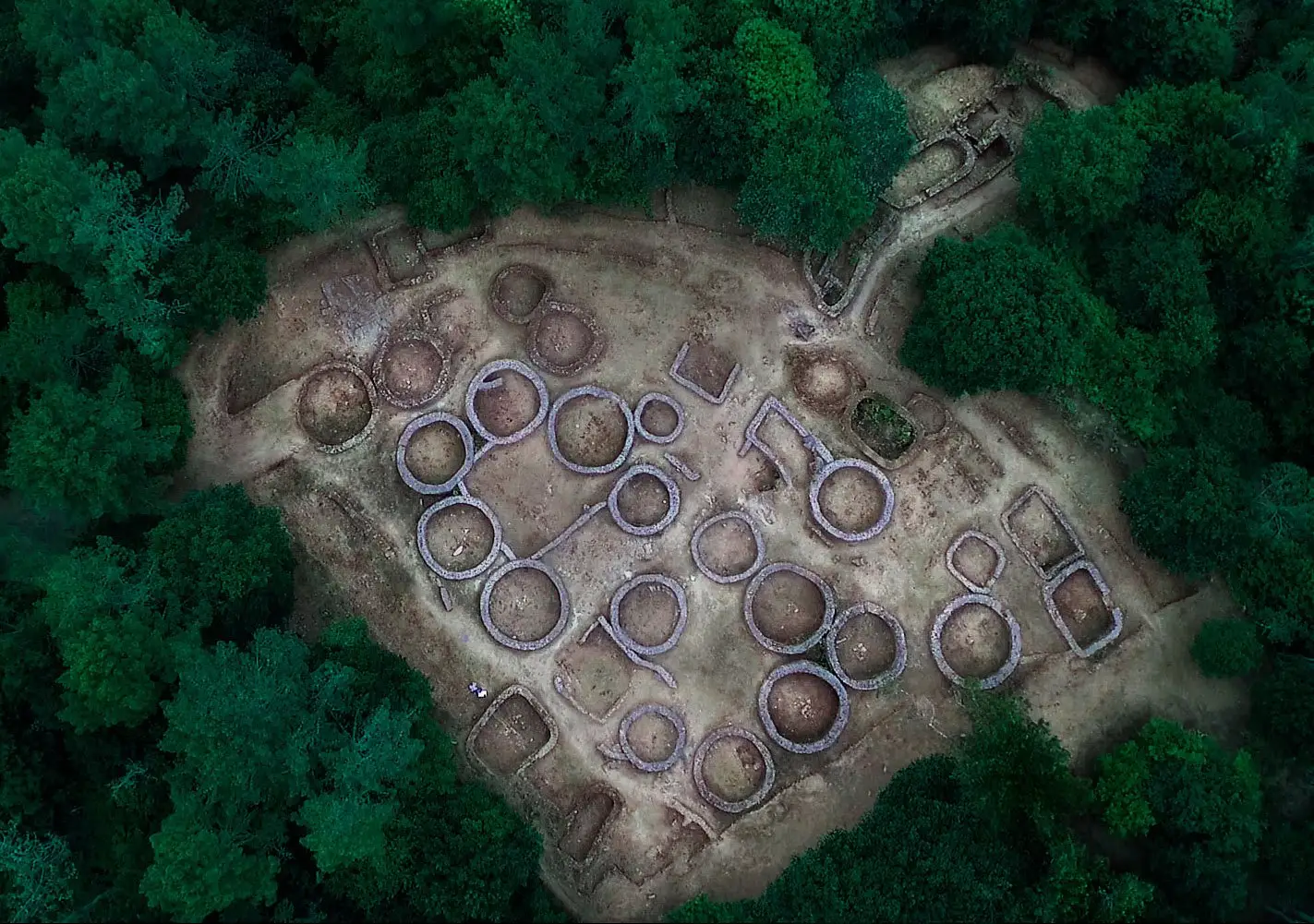


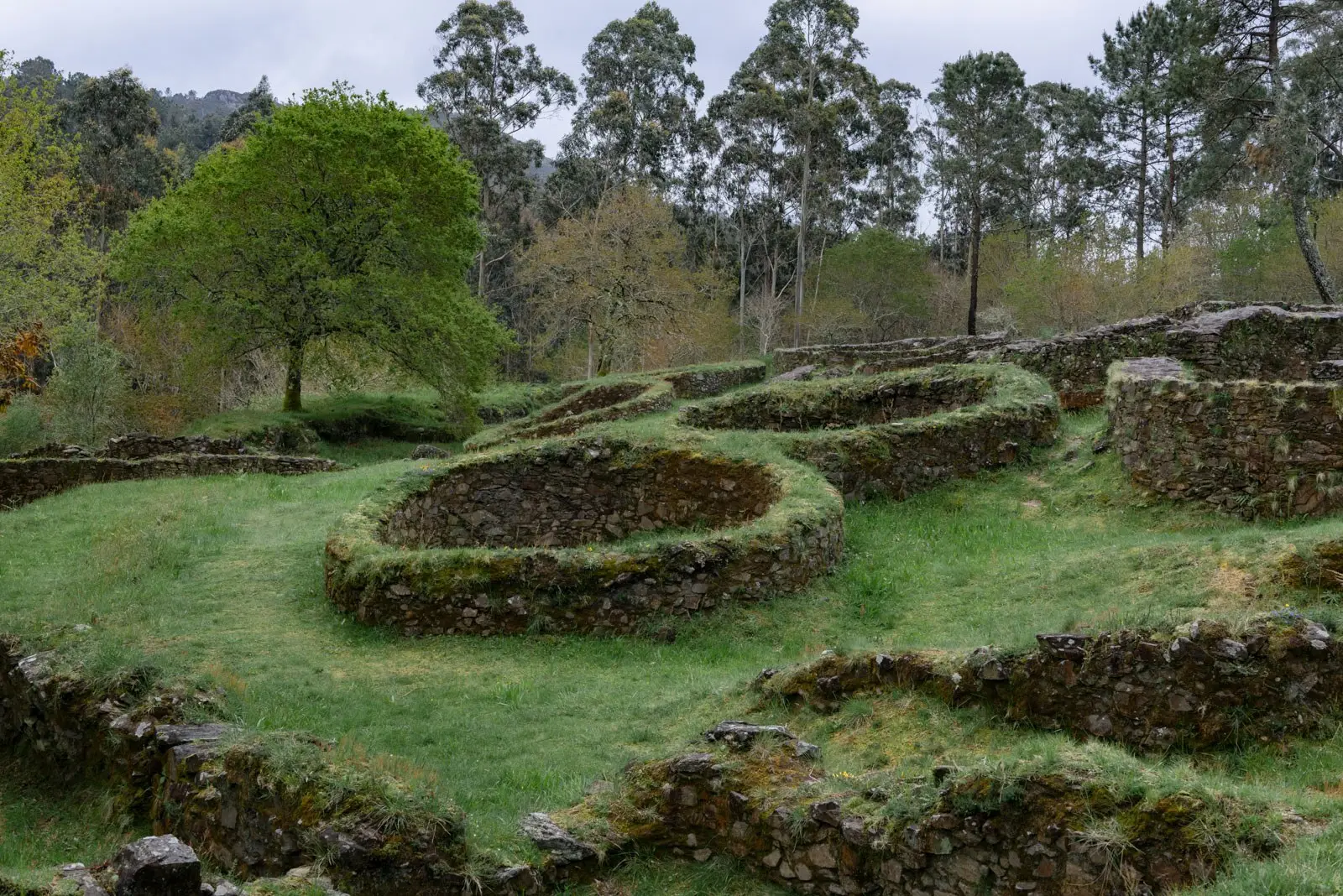
The “A Cidá” fortified settlement in Borneiro (Cabana de Bergantiños), close to the Dombate dolmen, is an excellent example of an Iron Age village, where the homes of the inhabitants of these fortified settlements can be seen.
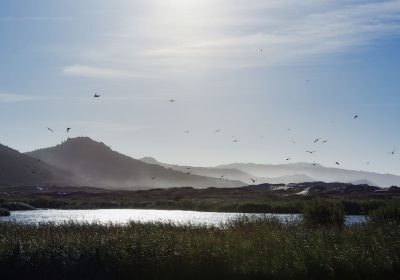
It is located in the far north of the Chan de Borneiro plain on a slope down to the Muiños stream. The village is protected by two walls and a moat in the flat area, and a single wall in the east because of the protection afforded by the slope down to the stream.
Its oval shape reaches 19 m long by 55 m wide at the summit, so it is considered a medium-sized site. Carbon-14 dating, one of the first done in Galicia, revealed that the earliest date of habitation was 525 B. C.E.
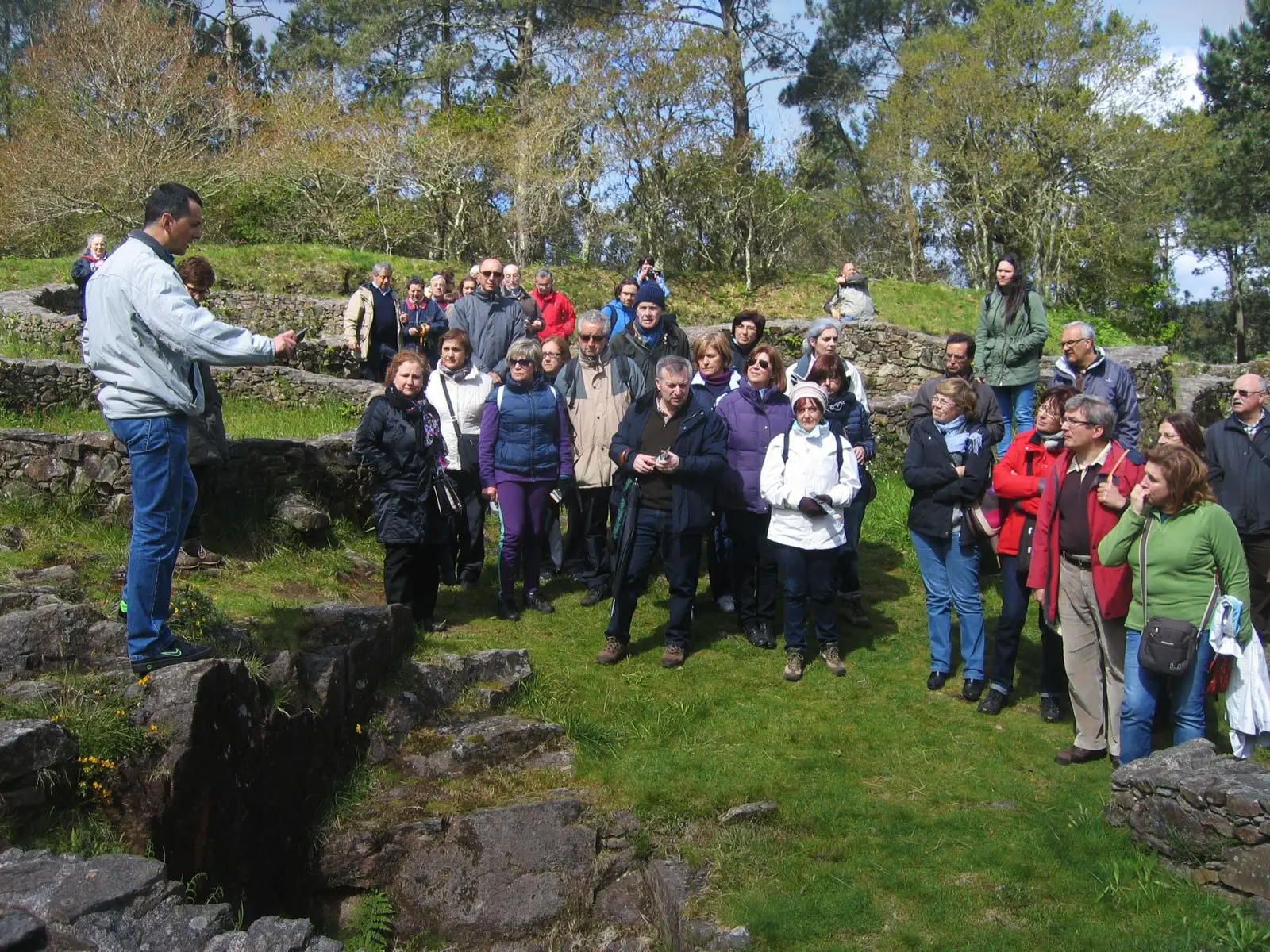
It was one of the first castros, fortified settlements, to be excavated by archaeologists. Sebastián González carried out the first intervention in the 1930s. After this came Jorge Juan Eiroa, in the 1970s, and then Ana Romero Masiá, in the 80s, discovered a greater number of buildings. The latest excavations were made in 2007 by Fidel López, in the area outside the walls and at the eastern entrance.
Most of the buildings inside the walls are circular and were used as homes. In them the doorway can be seen, which may have been higher than the remaining walls. There are other rectangular buildings with rounded corners, intended for other purposes. In the so-called Barrio Extramuros, or neighbourhood outside the walls, an oval building, a spring and a kind of oven, which has been interpreted by some as a sauna, were found.
During the various archaeological digs, many objects and materials were found. In stone: flat mortars, sharpening stones, moulds for smelting and polished axes. In pottery: remains of bowls, pots, mugs, etc. In metal: needles, rings, fibulas, knives, daggers and sickles. Most of these items were taken to the Castelo de Santo Antón Historical and Archaeological Museum in A Coruña.
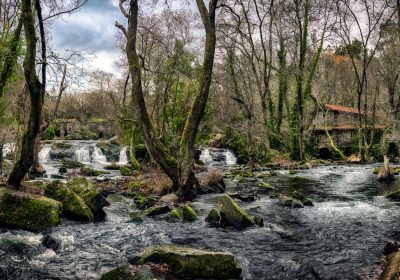
The settlement is linked by a 3 km long trail to the Insua Bay path, called the Ruta dos Muíños (the Mills Trail), which runs down to the stream of the same name. This is a very attractive route because of the lovely riverside woodland on the banks and the many watermills along the way.