

The town of Carballo was established on the right bank of the river Anllóns in the first half of the 18th century after the rediscovery of the hot springs. On the other bank of the river was the former mediaeval parish of San Xoán de Carballo. In the 1920s this place was considered a modern, well laid out town, but anarchic growth in the 1970s, as well as the destruction of the most exceptional buildings, led Carballo to be considered an ugly town. The approval of the town plan changed this anomalous situation, but the former negative stereotype still lingers in the memories of the local inhabitants and visitors.
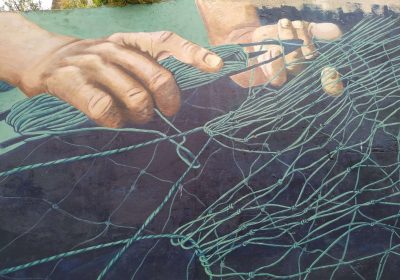
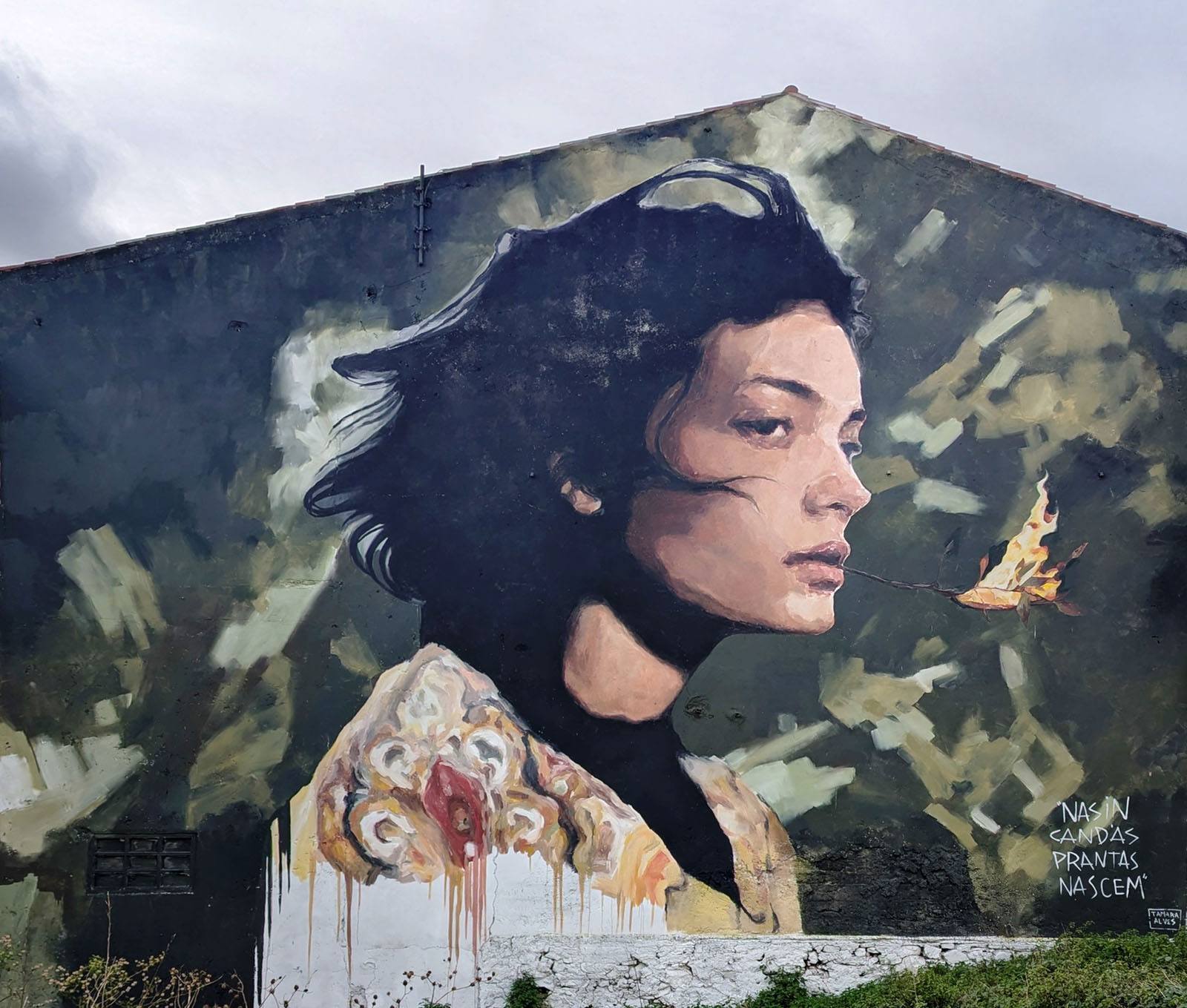
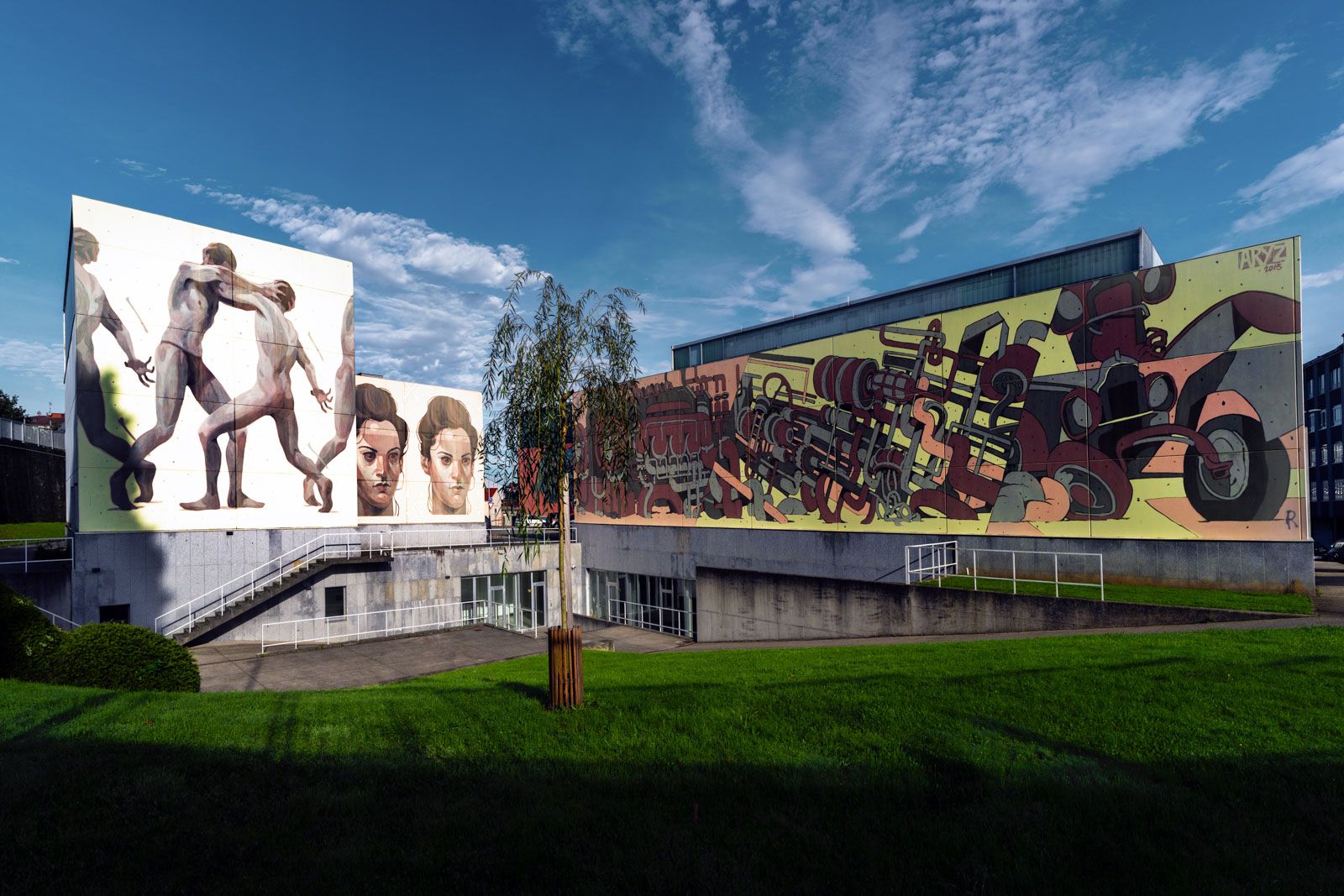
With the intention of projecting a new image of the Bergantinian capital and turning Carballo into an open-air museum with avant-garde artistic offerings that would surprise its residents, and, at the same time, creating a tourist resource, in 2013 the local council began the project known as Tearing down Walls with Paint.
The first wall that was “torn down” was an old house on the corner of Rua do Sol, where the artists Paula Fraile and Roberta Venanzi, the project coordinators, painted the mural “O Carballo”, in praise of the vegetation and the oak tree that gives the town its name. The project was expanded in the following year with works by local artists and reinforced starting in 2015 with the organisation of the Carballo International Public Art Festival, better known as Rexenera Fest, with the aim of bringing great Galician, national and international creators of street art together for one week in the spring of each year.
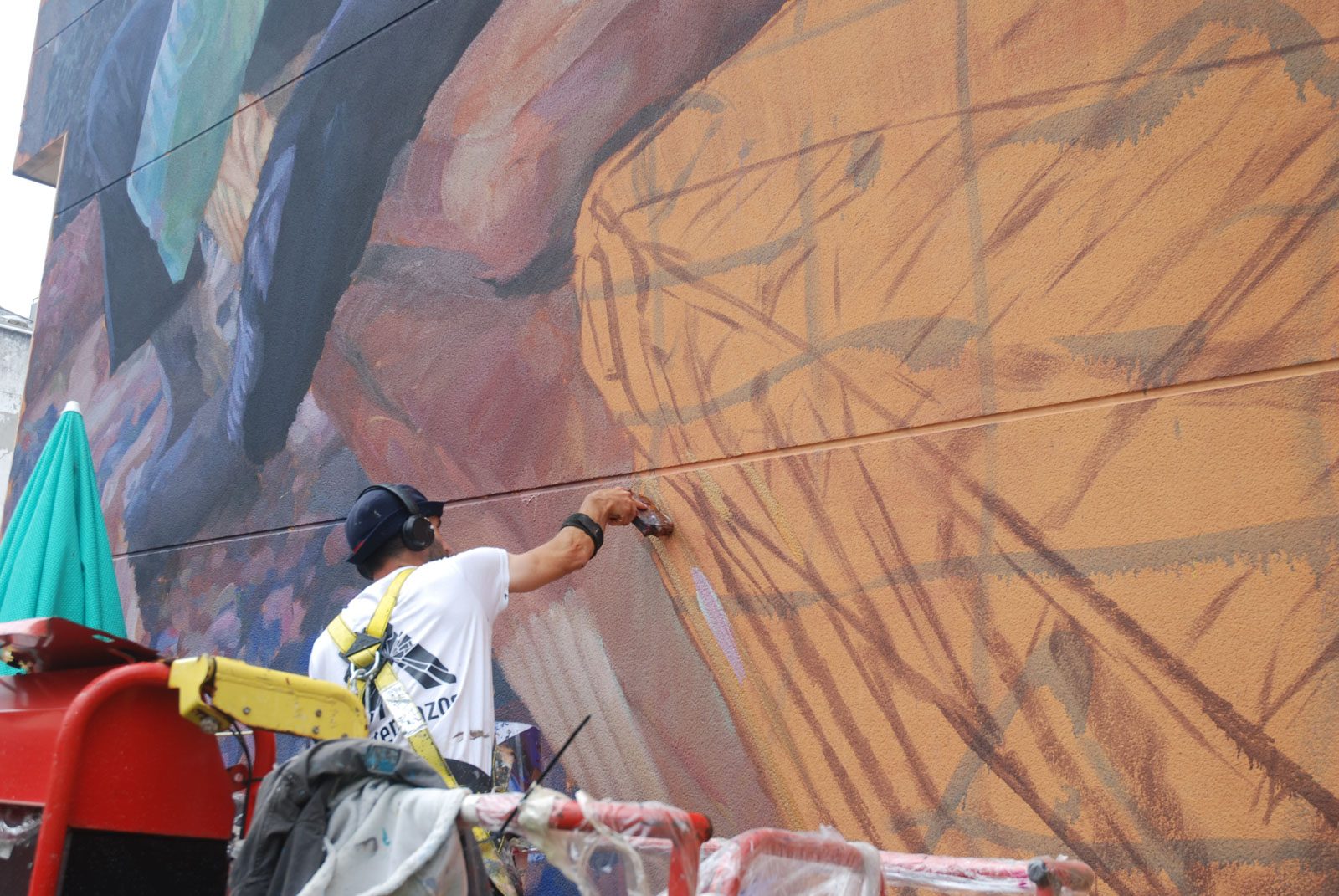
During the event, the invited artists simultaneously paint on a number of streets in the town and the residents have an opportunity to watch the creation of each work. Highly prestigious creators have passed through Carballo, such as Bodalo II from Portugal, Pixel Pancho from Italy, Dulk from Valencia, Nomada, originally from Almeria but living in Galicia, Natalia Rak from Poland, Milu Correch from Argentina, Marta Lapeña, Isaac Mahou from Zaragoza, the PichiAvo duo from Valencia, Marija Tiurina from Lithuania, Van Vúu from Catalonia, Udatxa from the Basque Country and Mou, Yoseba MP and Lidia Cao from Galicia.
On the same days, other activities are scheduled, in which the artists have an opportunity to talk about their creative careers or the projects that they are working on during the event. There is also music, and to top off this artistic event, a guided tour is offered of the works from the current edition and previous ones.
There are now over 100 murals on display in the Carballo open-air museum. The Carballo street art project has gained global recognition after joining the 270 cities around the world that have backed the development of artistic initiatives of this kind. On the derrubandomuros.gal website, full information can be found on this innovative artistic project and suggested routes.