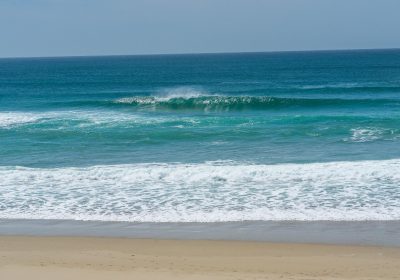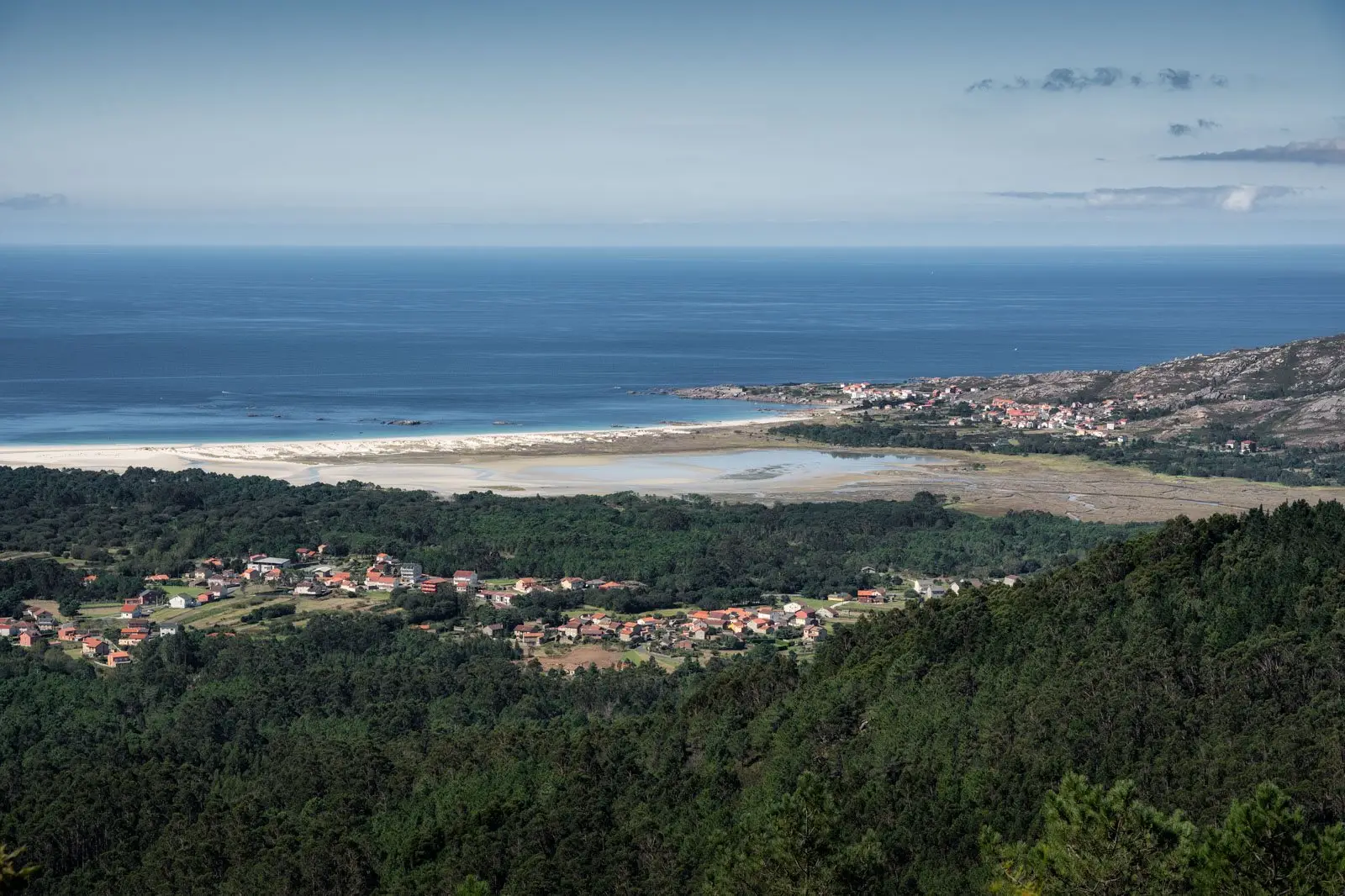


From Caldebarcos Point in the north to Remedios Point in the south is a great sandy coastal arc resulting from the lowlands of the Carnota valley meeting the sea. This arc of white sand was produced by tiny grains of quartz and the remains of the shells of bivalves. This almost seven kilometre long sandbank is considered to be the longest beach in Galicia, with various names depending on which place is nearby: the Caldebarcos, San Mamede, Carnota, Cancelo and Mar de Lira beach. The most abundant fauna in this sandy area are seagulls and waders.
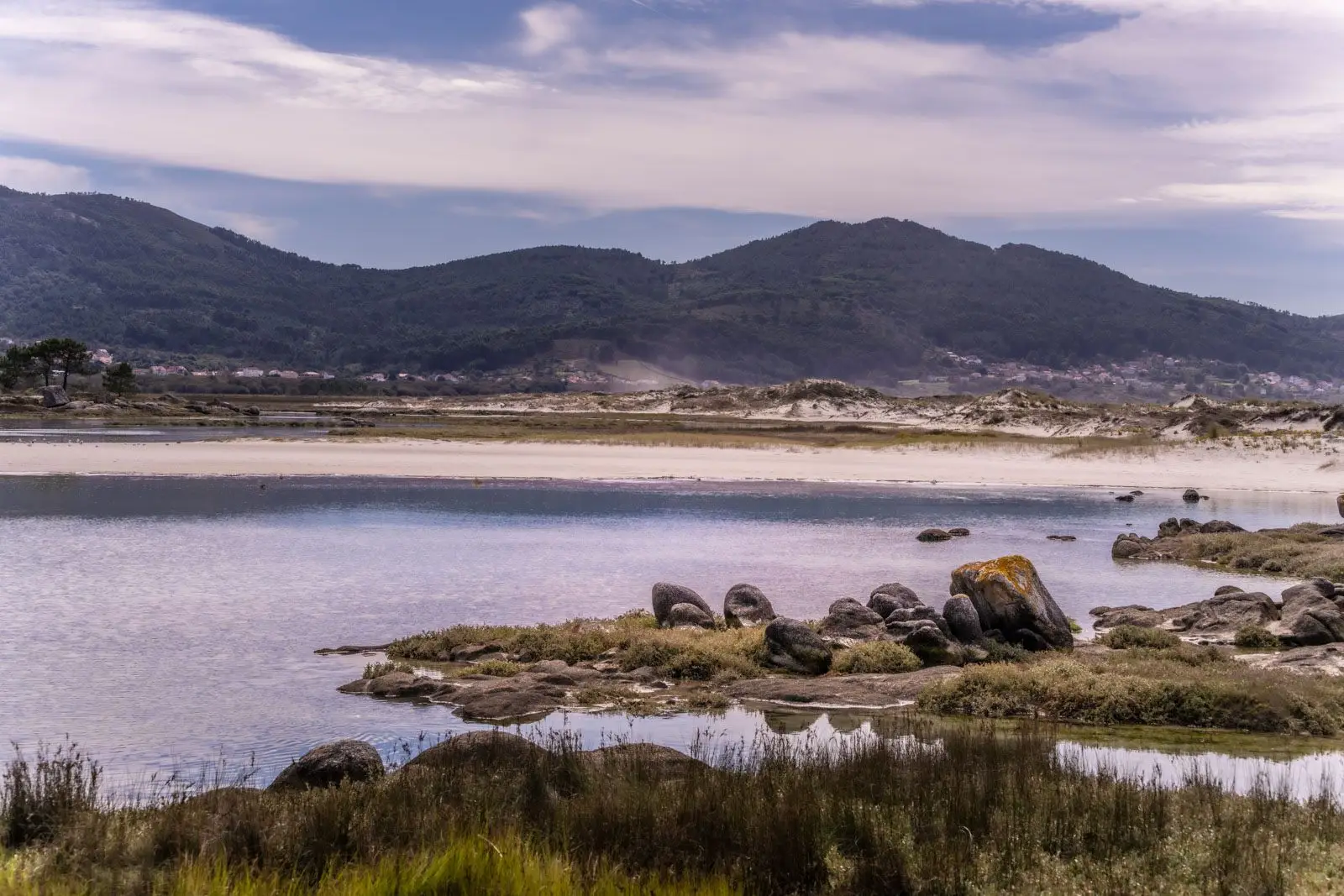
Parallel to this arc a line of dunes has formed that makes it difficult for the water from the streams that end here to flow into the sea along this stretch of coast, such as the Pedrafigueira channel, which is forced to veer to the north, to join the river Vadebois, before it flows out into the sea at Boca do Río. These dunes were formed by the north-easterly winds that predominate in the area. They are not very high and sparsely colonised. Plants grow on them that are capable of adapting to such arid soil.
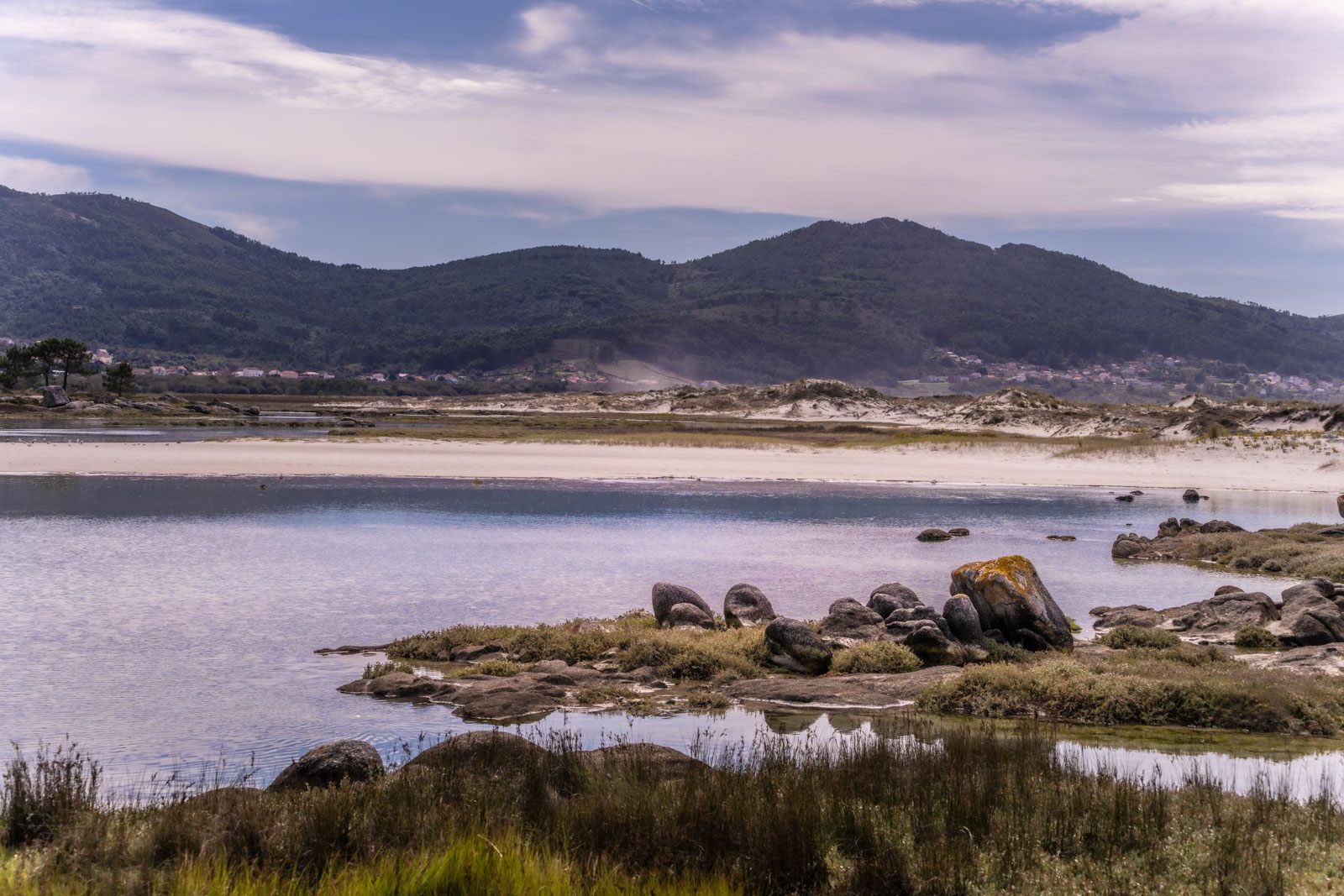
Behind the dunes are marshes, which help to trap the river water. The marshy area is divided into two parts: Caldebarcos and Berberecheira in the north and the section called the Lagoa (Lagoon) in the south. Each of the marshes also has a lagoon. In the marshlands various species of rushes, grasses and glasswort grow. It is where there is the greatest concentration of birds because of the possibility of their finding food.
Boca do Río takes its name (literally, Mouth of the River) from the channel that leads from the river to the sea and allows salt water to flow into the lagoon and the marshes when the tide rises and flow out when it falls. Because of the movement of a great volume of water, there are strong currents.
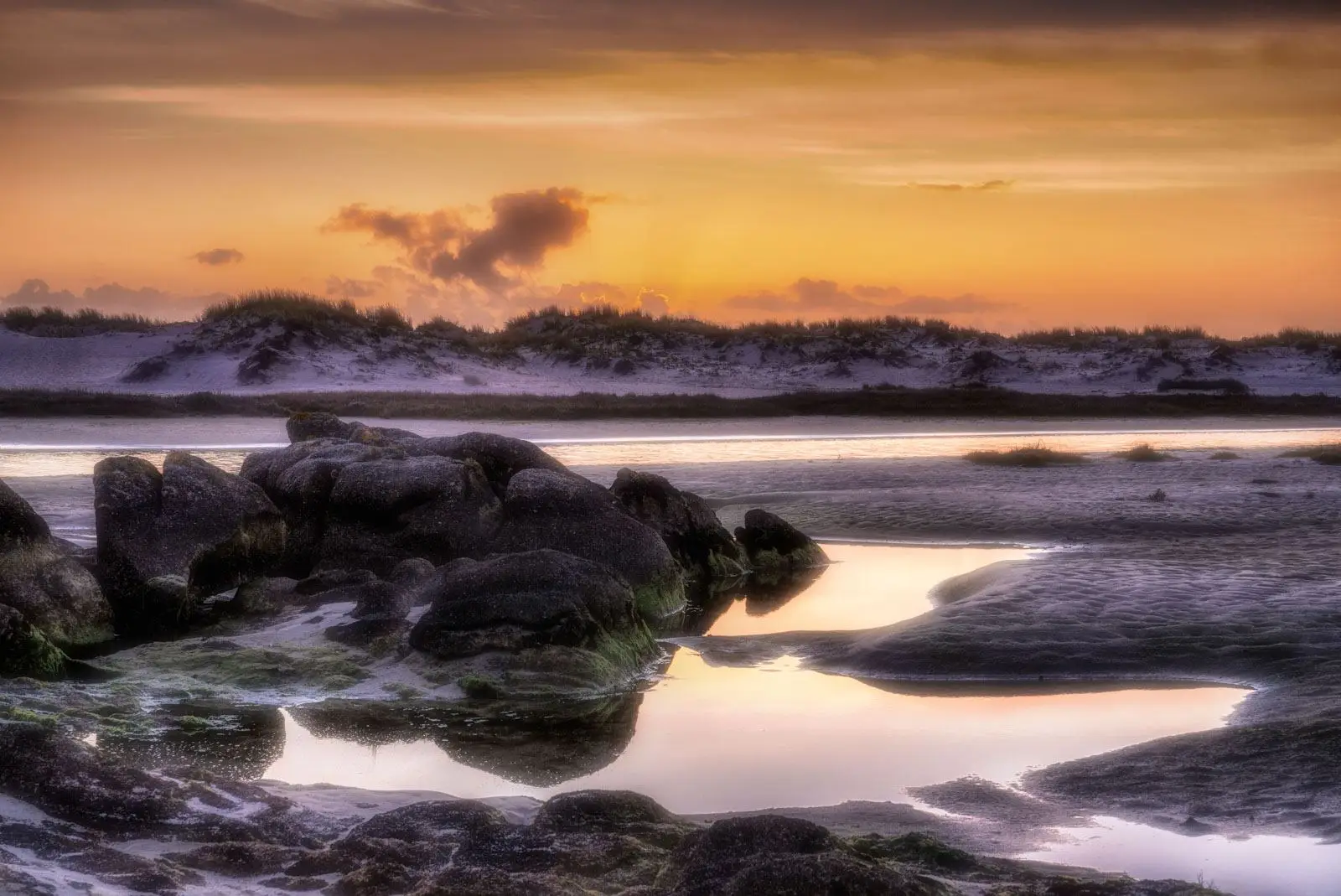
In this area by the beach interspersed rocks lend a great beauty to the landscape. In the nearby area stand the remains of an ancient building named the Casa do Sal (the House of Salt). It was an old warehouse where goods that arrived by boat were stored, including this product, salt, which had such great importance in past times. Here too are the marsh and lagoon of Caldebarcos. At low tide a large expanse of sand is exposed that is known to the locals as the Berberecheira because of the abundance here of this bivalve, cockles. It is a very well-known site for birdwatching especially water birds and waders.