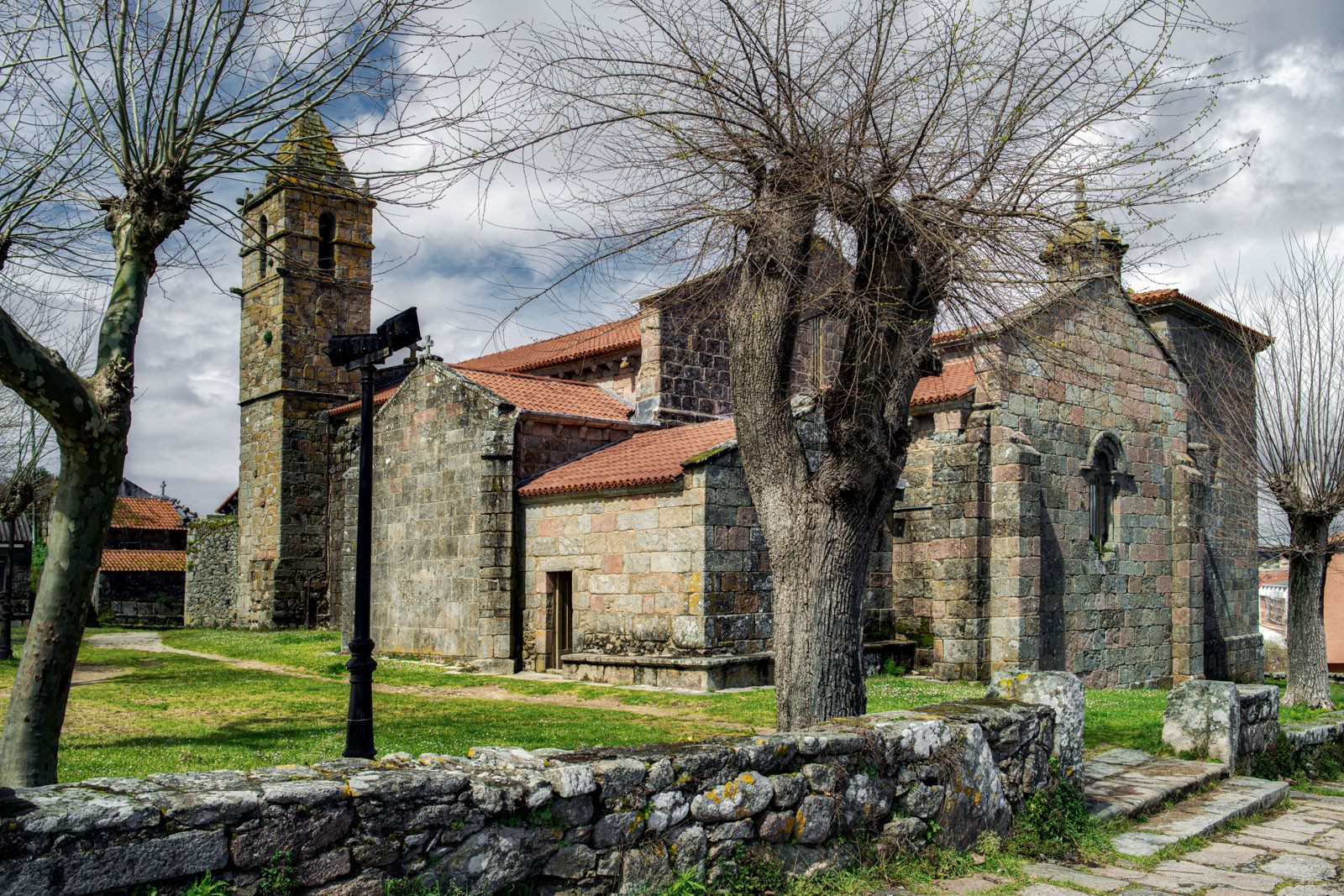


Santa María das Areas Church, in the municipality of Fisterra, stands beside the road climbing from the town towards its lighthouse, on the slope of the cape. It deserves far more than a quick stop on the way to the Atlantic: the church is documented in a donation from 1199, and its architecture combines Romanesque, Gothic and Baroque phases. Outside, look for the Romanesque doorway with its carved arches, the bell tower and the chapels added over the centuries, all reflecting the importance this sanctuary acquired.
One of its greatest treasures is the chapel of the Santo Cristo de Fisterra, built around the end of the seventeenth century and the beginning of the eighteenth. It houses a Gothic image of Christ, popularly called the Cristo da Barba Dourada, surrounded by legends and devotional traditions. The Baroque altarpiece framing it was carved by Miguel de Romay in 1721. Other chapels retain vaulting and details from different artistic periods; if the church is open, walking through them is like reading several centuries of religious art in one building.
Santa María das Areas is closely tied to the pilgrim tradition of travelling beyond Santiago to the ‘end of the earth’. A pilgrims’ hospital was established opposite the church in 1479, evidence of the many travellers drawn to Fisterra. Allow time for the sanctuary before continuing towards the cape: its architecture, chapels and devotion to the Holy Christ tell an essential part of the area’s spiritual and cultural history, beyond the famous lighthouse and sunset.