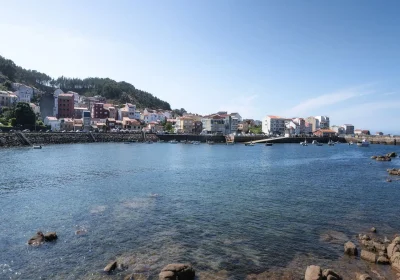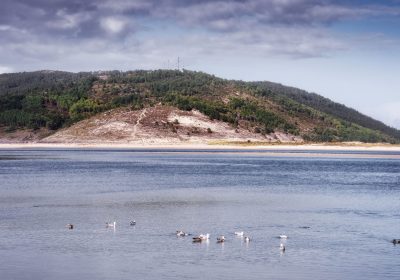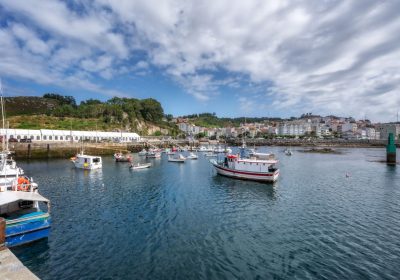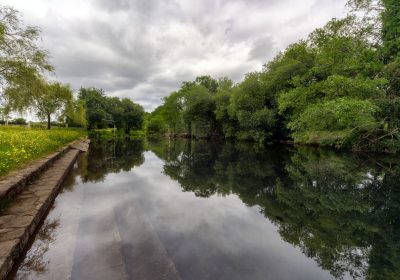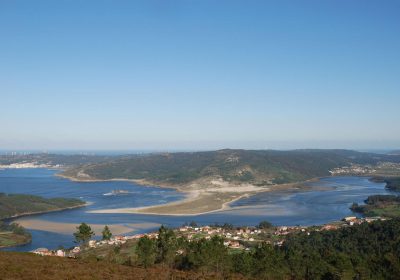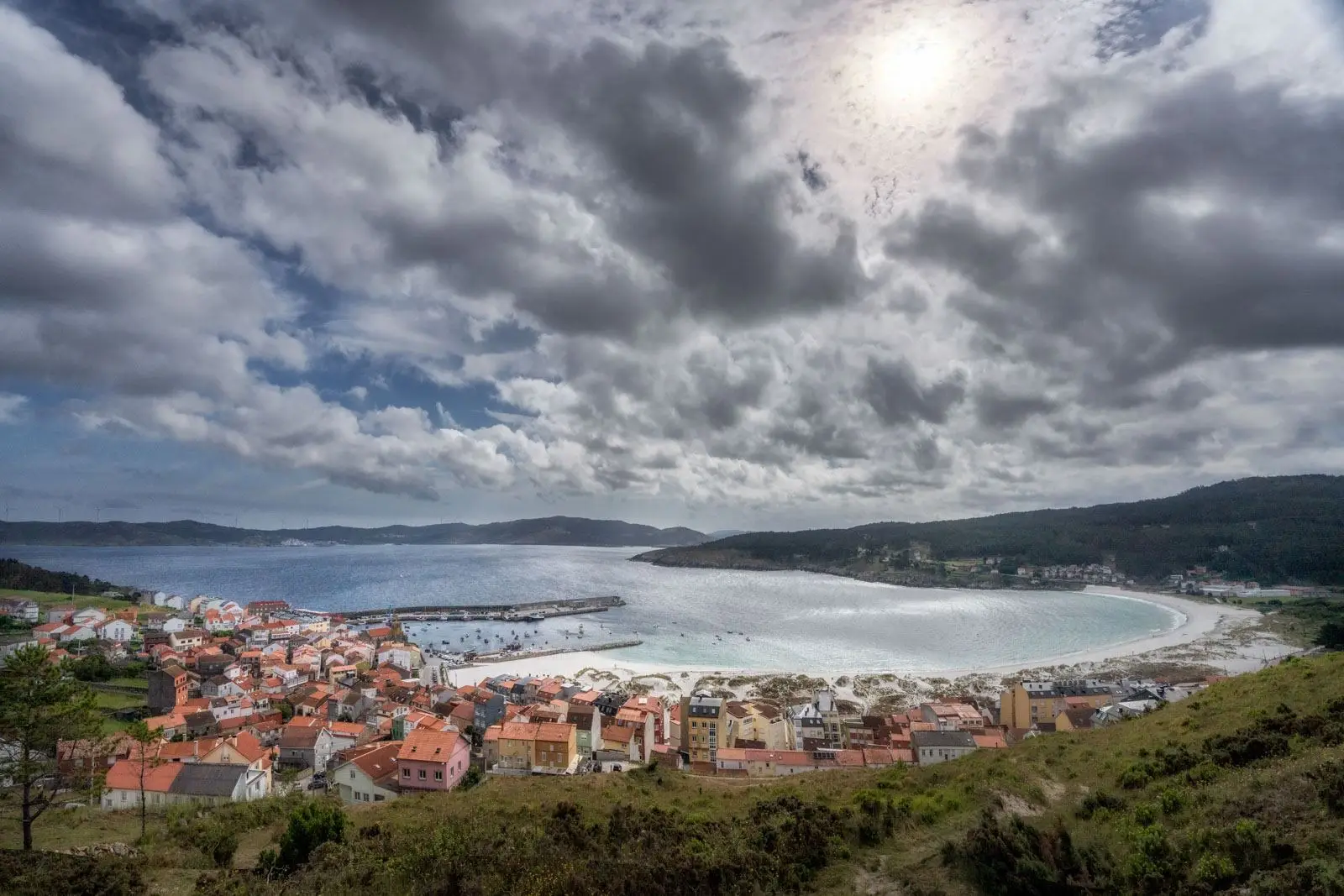


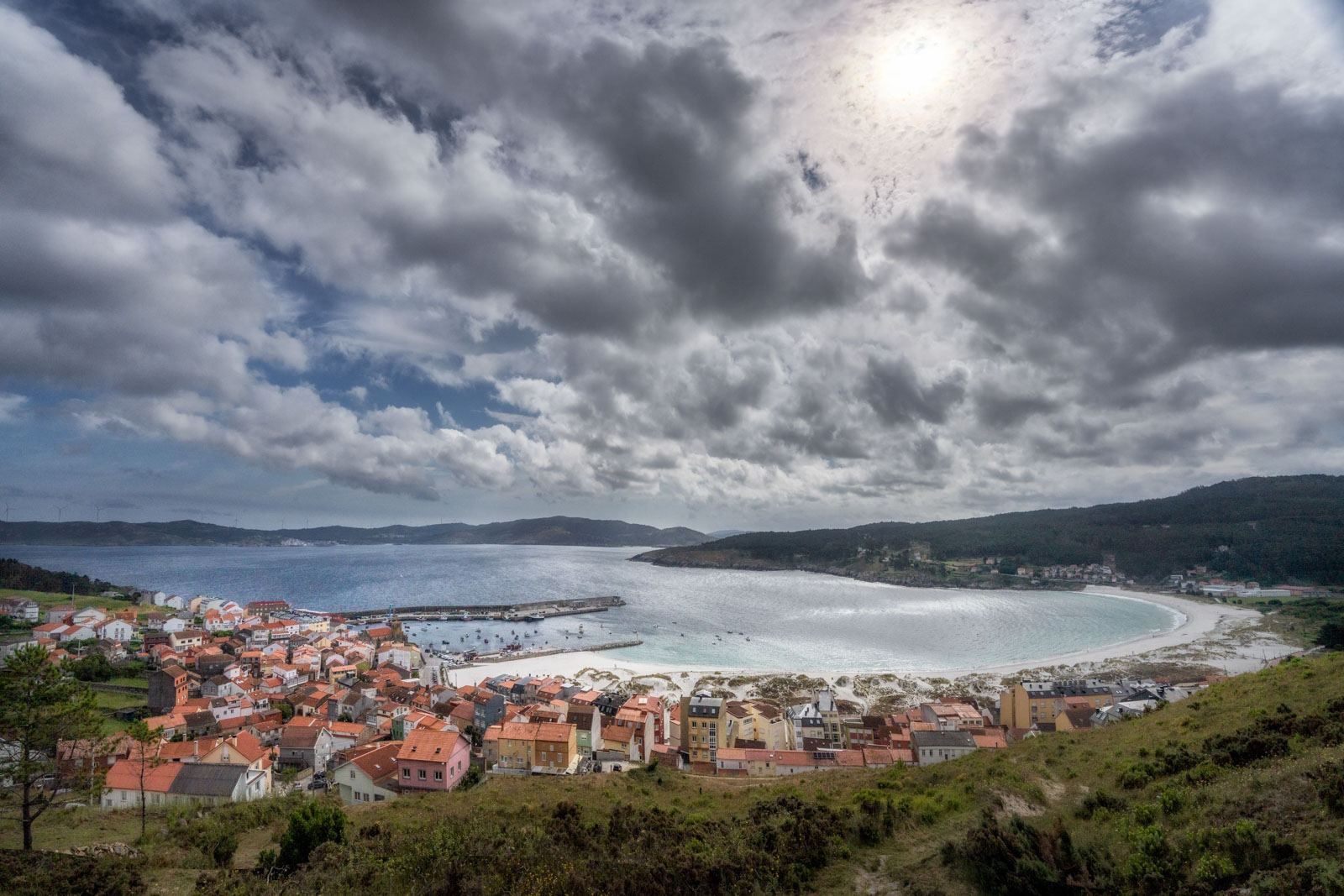
To the south of the ría, in which the Anllons deposits the water it has collected along its path through the Bergantiños district, stands the historic town of Laxe, at the edge of a long white sandy beach. The good natural conditions of this bay led to this coastal town being founded in the Middle Ages and it was an attractive place for the noble Moscoso family.
Some authors refer to the excellent conditions of the port for fishing and landing boats. The intellectual José Cornide informs us that the town was frequented by fishermen from all over the country, especially Catalans, who fished for sardines in order to export them to other areas outside Galicia.
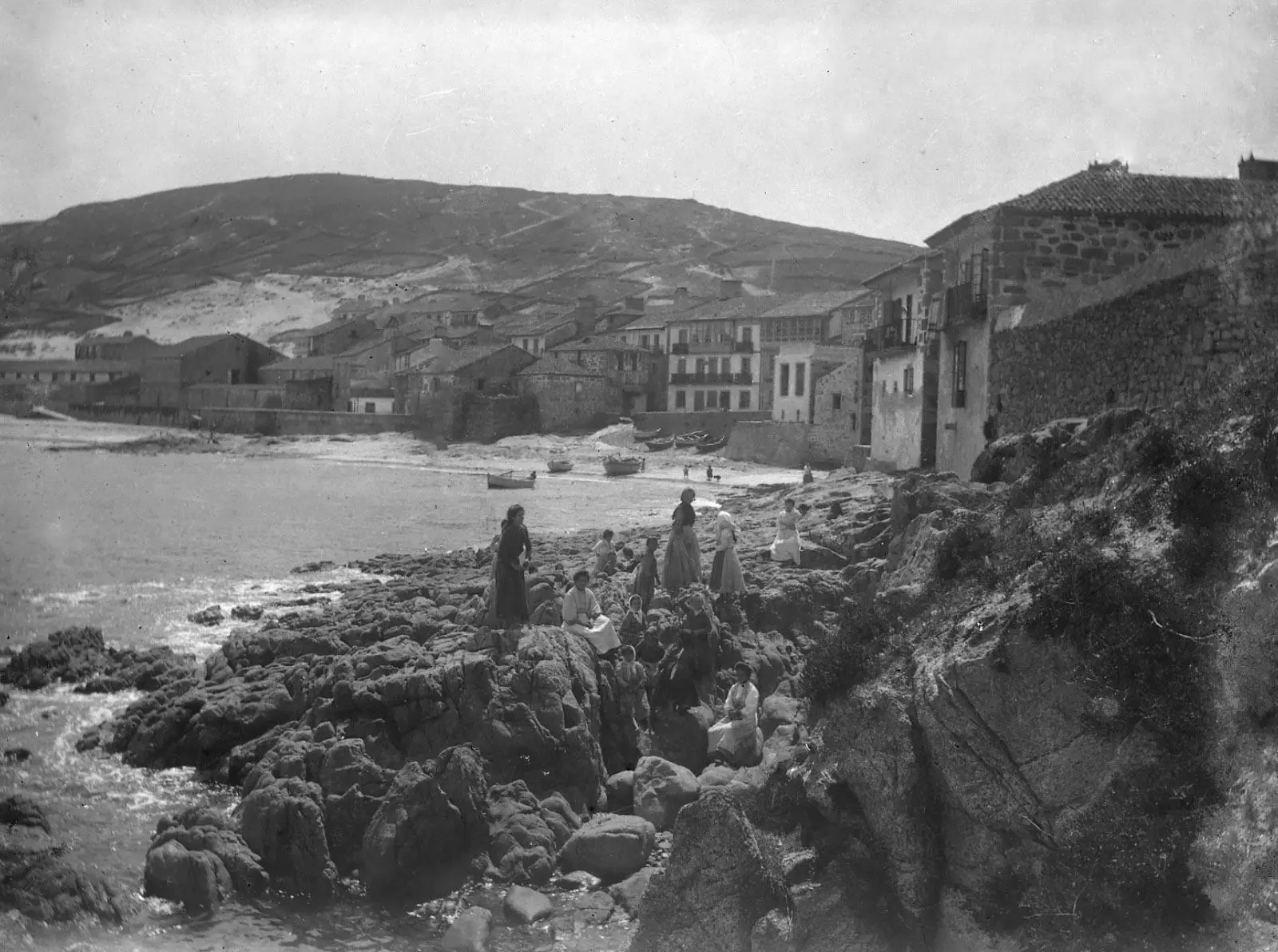
At the beginning of the 20th century there were five salting factories in the port, mainly employing women. The kaolin mine by the beach also contributed to its economic development. Today, Laxe depends essentially on fishing and tourism.
Among its famous people are the poet Antón Zapata García, the distinguished geologist Isidro Parga Pondal and the founder of the Laxe Geological Laboratory and photographer José Vidal García.
Travellers who come to Laxe can visit its interesting natural and historical heritage. In the centre of town, on Ramón Juega Square, is the Casa do Arco (Arch House), the most emblematic civil building, commissioned by Urraca de Moscoso and her husband Pedro de Osorio at the end of the 15th century.
Close to the square is the Museo do Mar (Museum of the Sea). Its contents focus on the historical and anthropological heritage of the municipality and town of Laxe. It also houses the Vidal Photographic Archive, from which most of the images on display come.
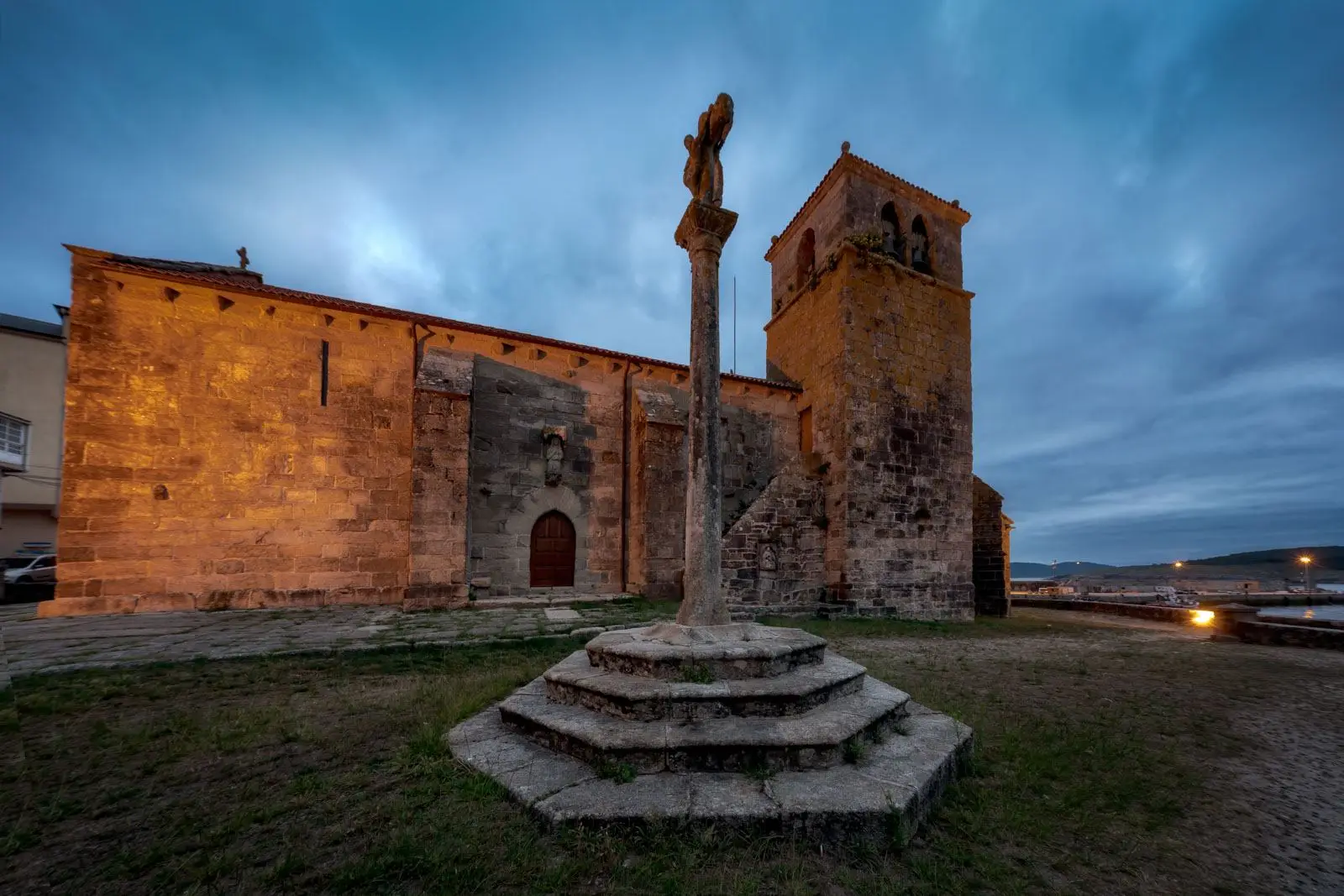
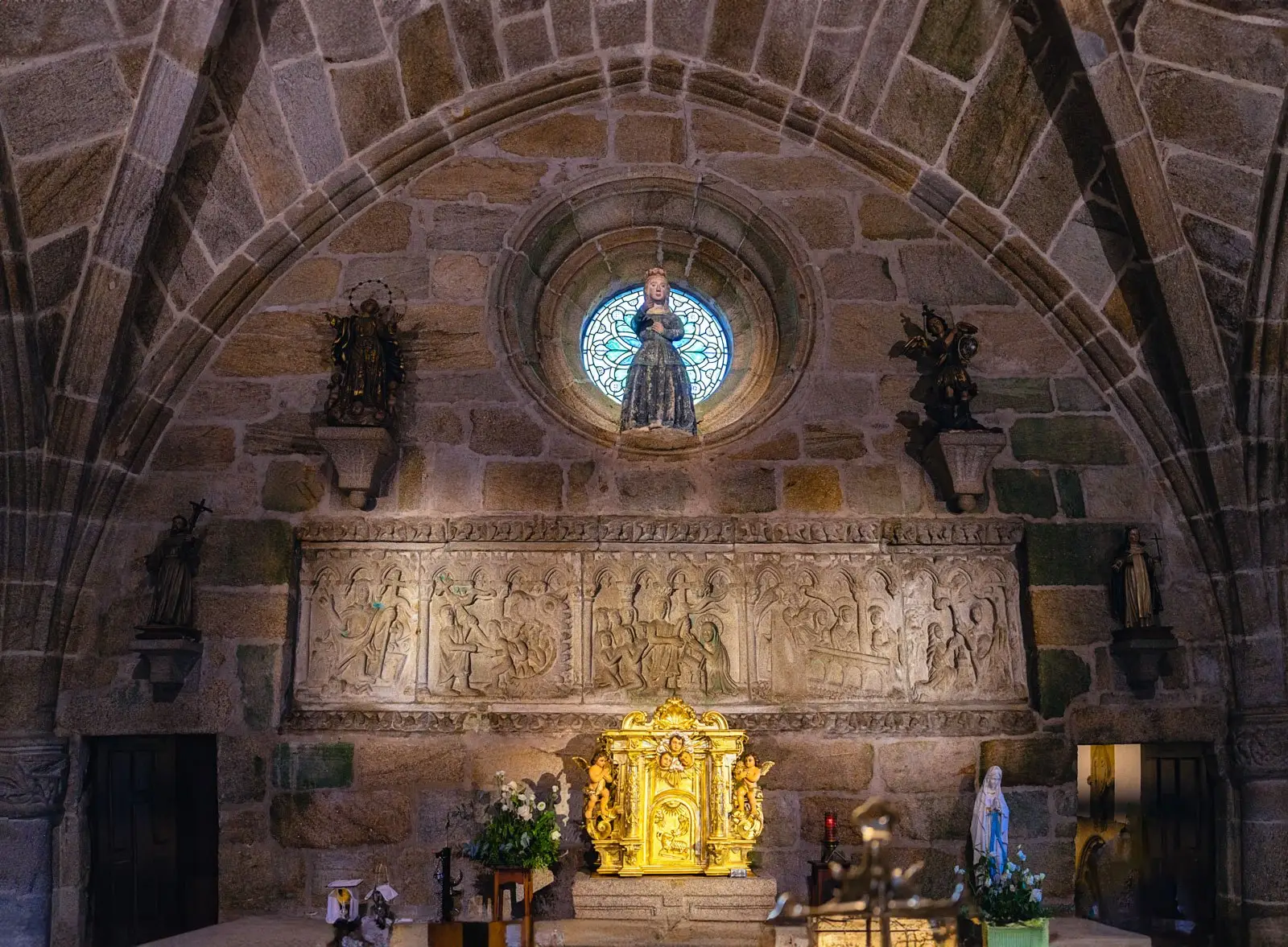
The next historic building to visit is the Church of Santa María da Atalaia (dedicated to Saint Mary), located on a high point overlooking the port, the long beach and part of the town centre. It is a Gothic church commissioned by Juana de Castro e Lara at the end of the 15th century. It has one nave and a rectangular main chapel with a ribbed vault. A square belltower with a defensive air was built against the south wall. The highlights of the façade are a rose window and a pointed arch doorway. Inside, the main features are the stone images of the patron saint, Saint Agnes, and the relief of the Resurrection.
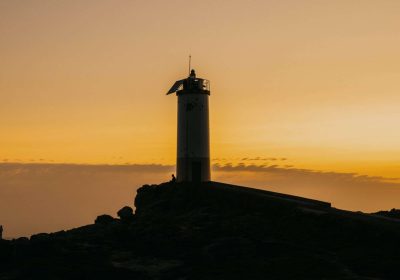
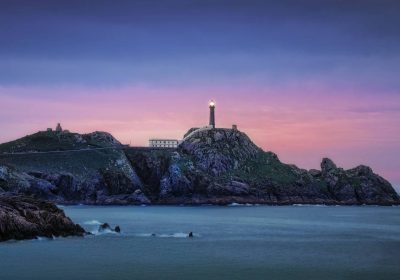
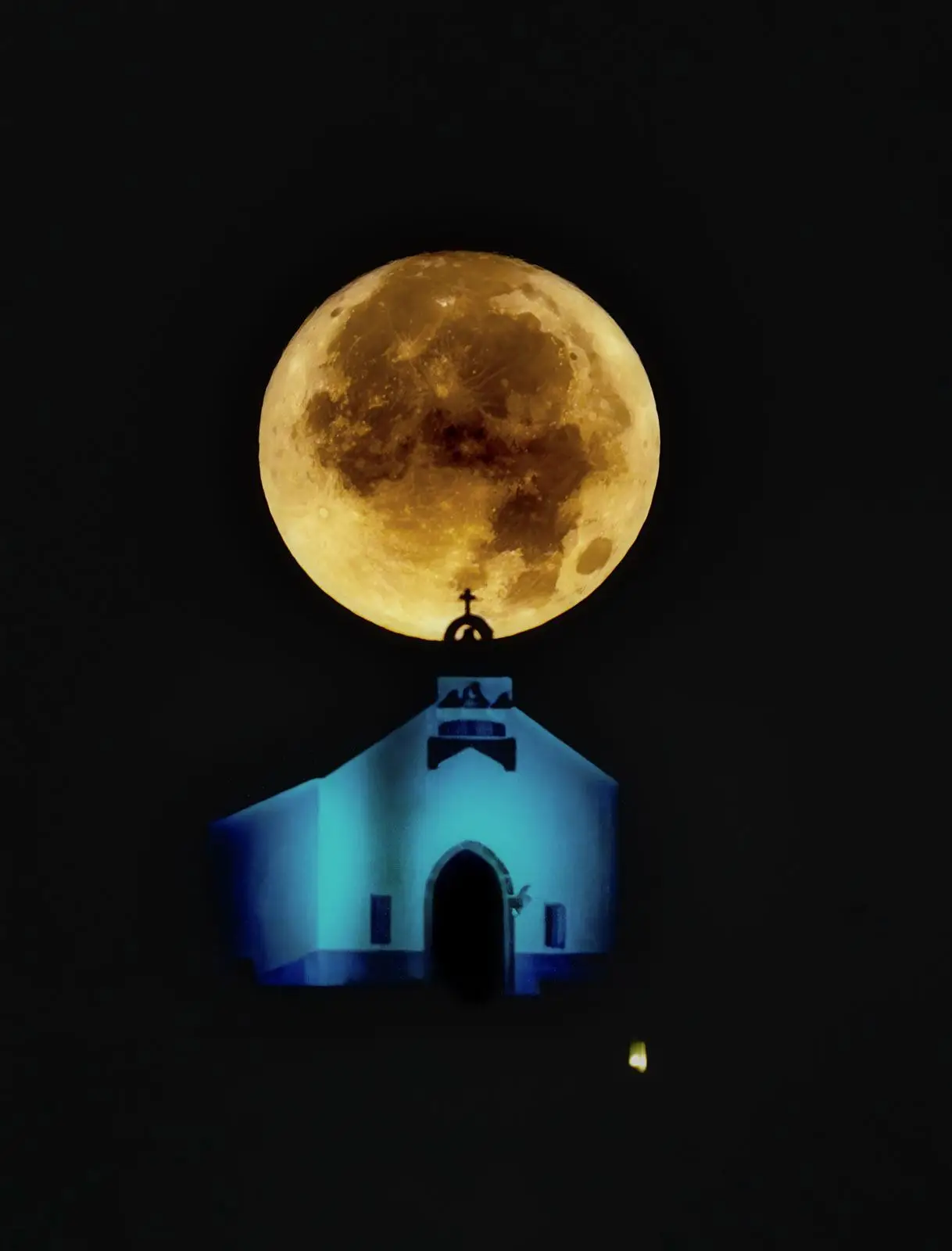
An interesting walk, because of the attractive landscape, goes from Laxe to the Insua Point, where the lighthouse is located, and to the chapel of Santa Rosa (dedicated to Saint Rose), from where you can contemplate a magnificent panorama of the town and its famous beach.