TORRES DO ALLO, ONE OF THE FIRST TRADITIONAL MANOR HOUSES IN GALICIA

Take a closer look at Zas through “TORRES DO ALLO, ONE OF THE FIRST TRADITIONAL MANOR HOUSES IN GALICIA”. Start with this chapter and you’ll understand the area better before you visit. Tip: look out for galicia.
100. As torres do Allo un dos pazos mais antigos de Galicia 1.jpg

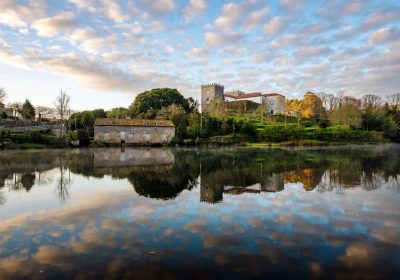
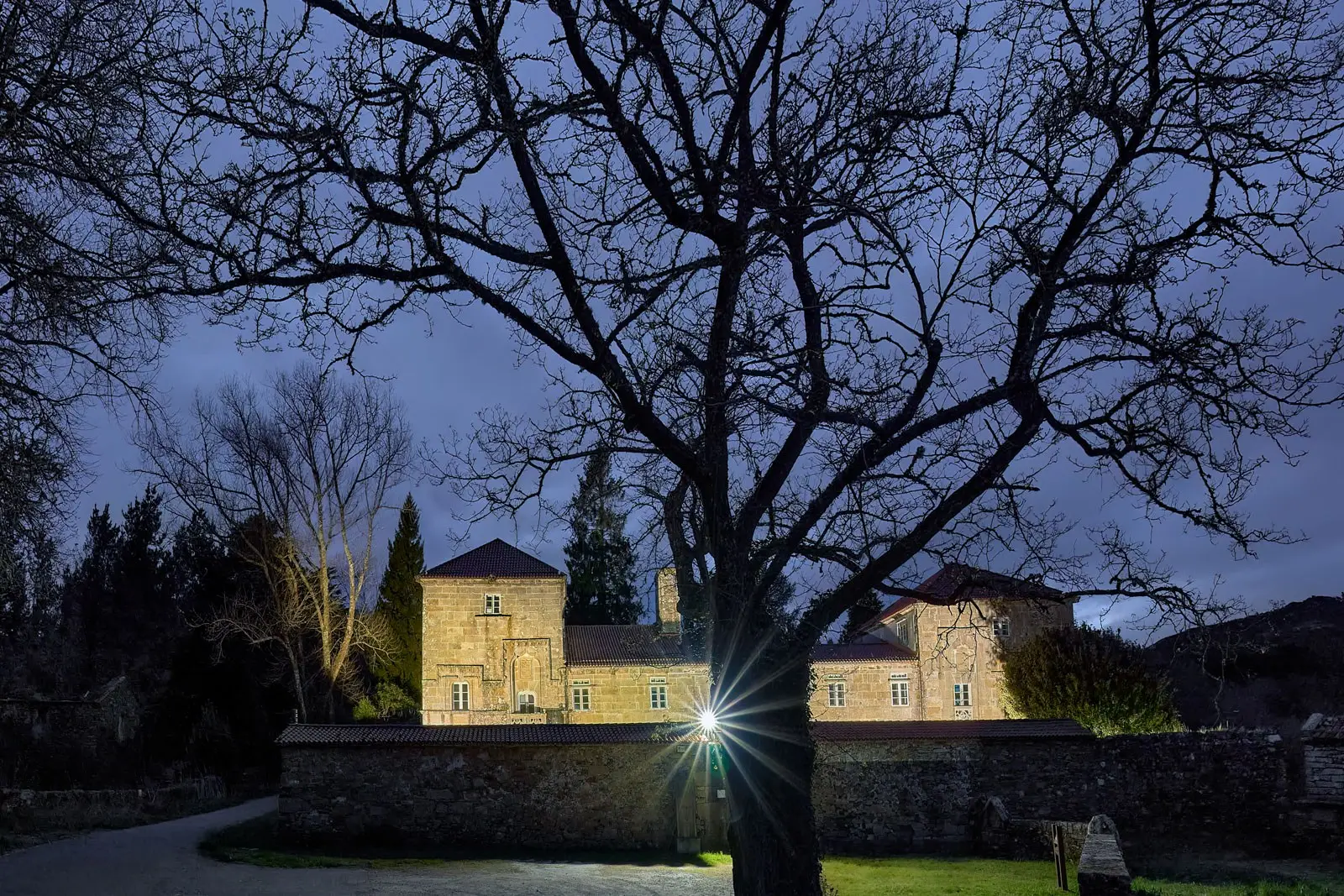
Very close to the town of Baio, at kilometre 55 of the C-552 from A Coruña to Fisterra, is the manor house of Torres do Allo, one of the most important examples of this type of house in Galicia (called pazo). Throughout history, this house in Allo underwent few alterations because it always remained in the hands of the same family, the Rioboos, who were from the Penela tower.

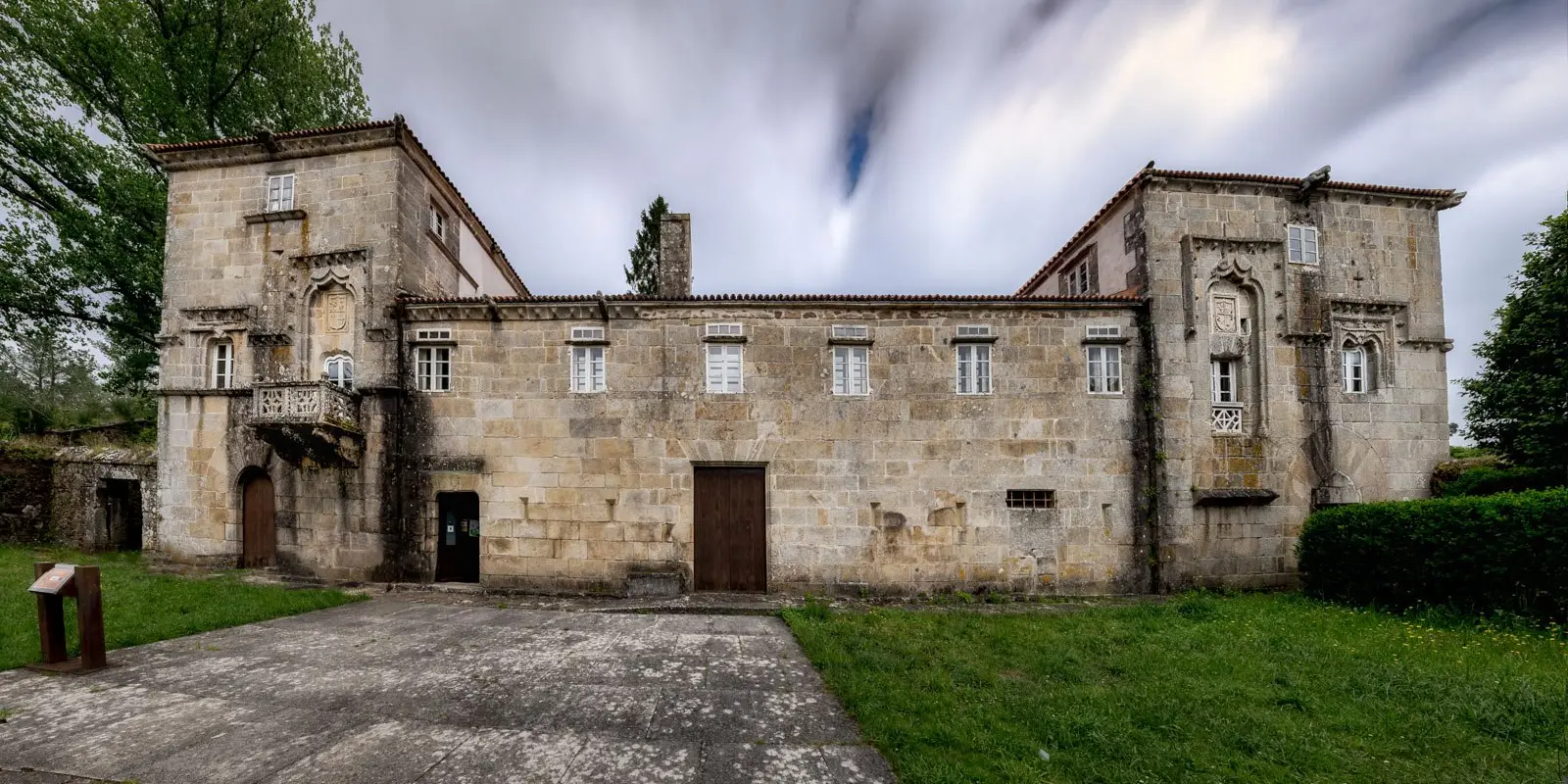
Until the research conducted by the historian José A. Sánchez García, it was believed that the entire building was from the same era, but, because of this new information, it was discovered that the north tower was built between 1490 and 1512, at the initiative of Alfonso Gómez de Rioboo Villardefrancos; the south tower and the central part of the house were built between 1669 and 1685 at the decision of Gómez de Rioboo e Seixas and his wife Jacinta de Luces Caamaño, who decided to preserve the late Gothic style of the original tower.

The towers are almost symmetrical. On the ground floor, there is a door with a half-point arch with large voussoirs, typical of the architecture of the 16th century. It is on the second floor that richer decoration can be seen on the features of the façade: an arched geminated window and French windows in the north tower and a balcony in the south tower. The entire grouping is framed by a mixtilinear arch. On the third floor there is simply a window.

On the coats of arms are the symbols of the families that were related to the Rioboos and lived in this stately home. A tower wreathed in brambles, for the Rioboos; a pine tree and lances, for the Caamaños; five doves, for the Seixas; two lizards under a stone, for the Losadas; and five fig leaves, identifying the Figueroas.

The central section is on two levels with a gable roof, on which there is a sturdy chimney. On the ground floor, there are three doors and on the upper floor, six rectangular mullion windows. On the cornice, figures of gargoyles can be seen.

In the first half of the 20th century the owners stopped living in the manor house, while the agents remained, and by the second half of the century it was no longer inhabited. The A Coruña provincial government, aware of the historical and architectural value of the building, came to an agreement with the López-Rioboo family and purchased it in 1998. Two years later, restoration work began and it was opened to the public in 2005, managed by the municipality of Zas. The interior shows what rural life was like at the time of the manor houses, the lineage of the Rioboo family and information on other manor houses on the Costa da Morte. Cultural activities are also held there.

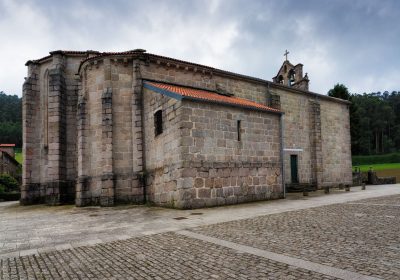
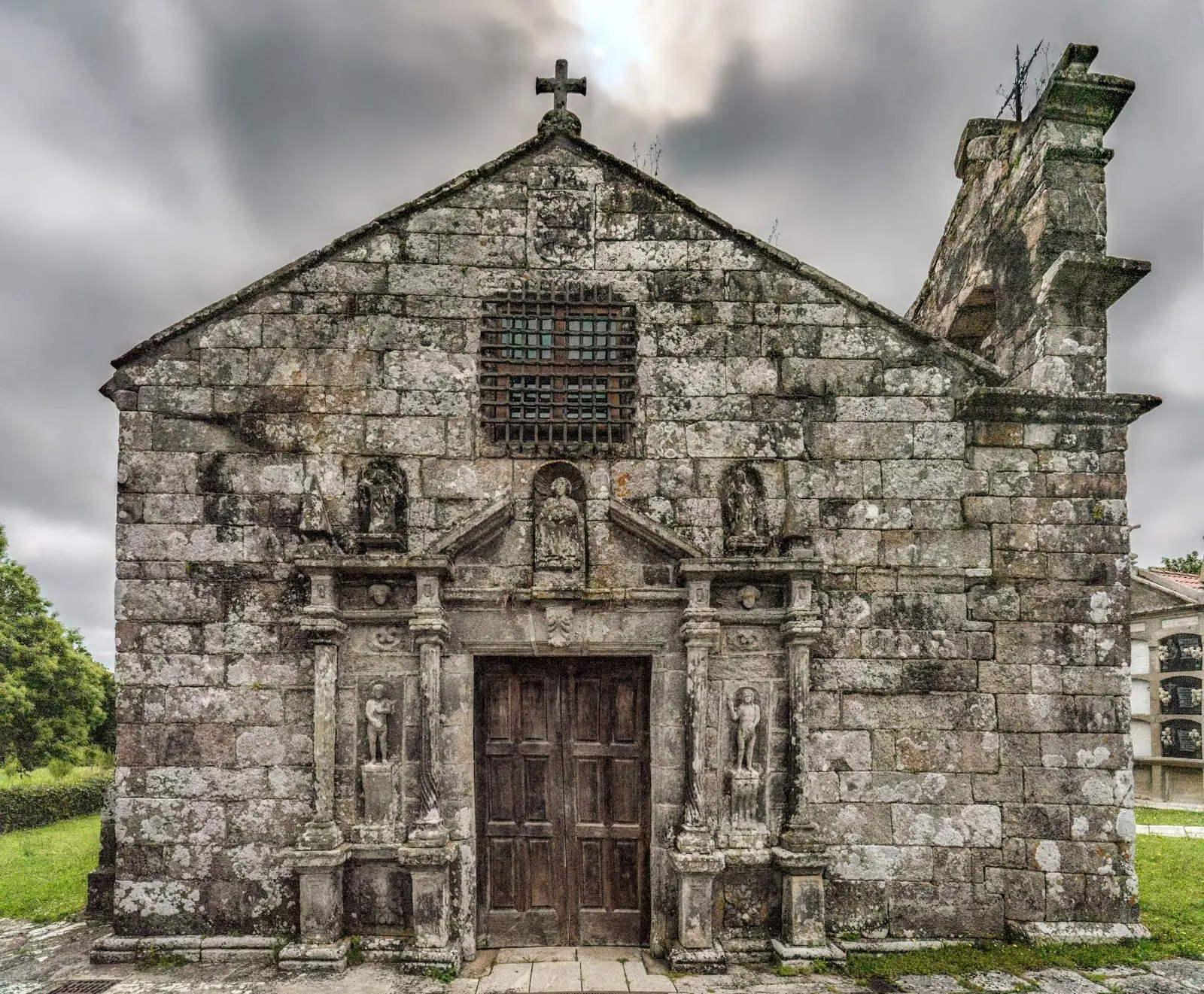
Some 200 m from the manor house is the parish church of San Pedro do Allo (dedicated to Saint Peter), which acted as the private chapel of the Rioboos, where several family members are buried. It contains an interesting Renaissance façade-altarpiece.
Galería de fotos de TORRES DO ALLO, ONE OF THE FIRST TRADITIONAL MANOR HOUSES IN GALICIA

Discover the Costa da Morte on our blog

Blog Costa da Morte

Birdwatching in Costa da Morte

Birdwatching is much more than a pastime; it is a powerful tool for connecting people with nature and promoting bird con...

Discover the Best Plans for the Saint John

The Costa da Morte is a magical destination all year round, but let’s be honest. The Saint John’s Eve in Gal...

Museums to Visit on the Costa da Morte: 11 Cultural Sto...

Talking about the Costa da Morte means thinking of lighthouses, wild beaches, cliffs, Atlantic gastronomy and villages w...

CORME, THE TOWN WHERE GOOSE BARNACLES PUT ON THEIR FINE...

Corme Porto owes its existence to the favourable conditions in the bay on which the port is located, allowing the popula...

Festivities and traditional events on the Costa da Mort...

If there is one thing that defines the Costa da Morte, apart from its wild landscapes and untamed sea, it is its strong ...

Sustainable Tourism on the Costa da Morte: Discover wit...

Costa da Morte boasts an exceptional, vibrant, and wild natural heritage. Unfortunately, its beauty is not eternal unles...

MONTE PINDO, GALICIA’S CELTIC OLYMPUS

Monte Pindo, known locally as O Pedregal (the stony ground), is such a striking geographical accident that it cannot be ...

REFUXIO DE VERDES, FILLED WITH THE BEAUTY OF NATURE

The river Anllóns, that silver snake that crosses the district of Bergatiños from east to west, after passing through th...

CAIÓN, A TOWN BY THE SEA

Travellers who want to get to know the town of Caión should see it first from afar, from one of the lookout points, befo...

TORRES DO ALLO, ONE OF THE FIRST TRADITIONAL MANOR HOUS...

Very close to the town of Baio, at kilometre 55 of the C-552 from A Coruña to Fisterra, is the manor house of Torres do ...

Upcoming events on the Costa da Morte

Find out instantly what activities await you on the Costa da Morte. Here you will find an up-to-date list of concerts, fairs, guided tours and shows that take place on the Costa da Morte. Don’t miss any event: experience the culture, sport and tradition of our region. And if you want to find out before anyone else, sign up for our newsletter and you will receive all the news in your email.

  • Saturday
    21
    March

    San José Festival of X...

    On March 21, 2026, Xora celebrates the San José Festival with a day th...

  • Saturday
    21
    March

    A Journey Through the ...

    On Saturday, March 21, 2026, the Fogar do Pensionista in Malpica de Be...

  • Saturday
    21
    March

    Artur Ui: O ovo da ser...

    Artur Ui: O ovo da serpe comes to the Baldomero Cores Auditorium with ...

Logo Cmat Color Fondo Transparente
Privacy Overview

This website uses cookies so that we can provide you with the best user experience possible. Cookie information is stored in your browser and performs functions such as recognising you when you return to our website and helping our team to understand which sections of the website you find most interesting and useful.