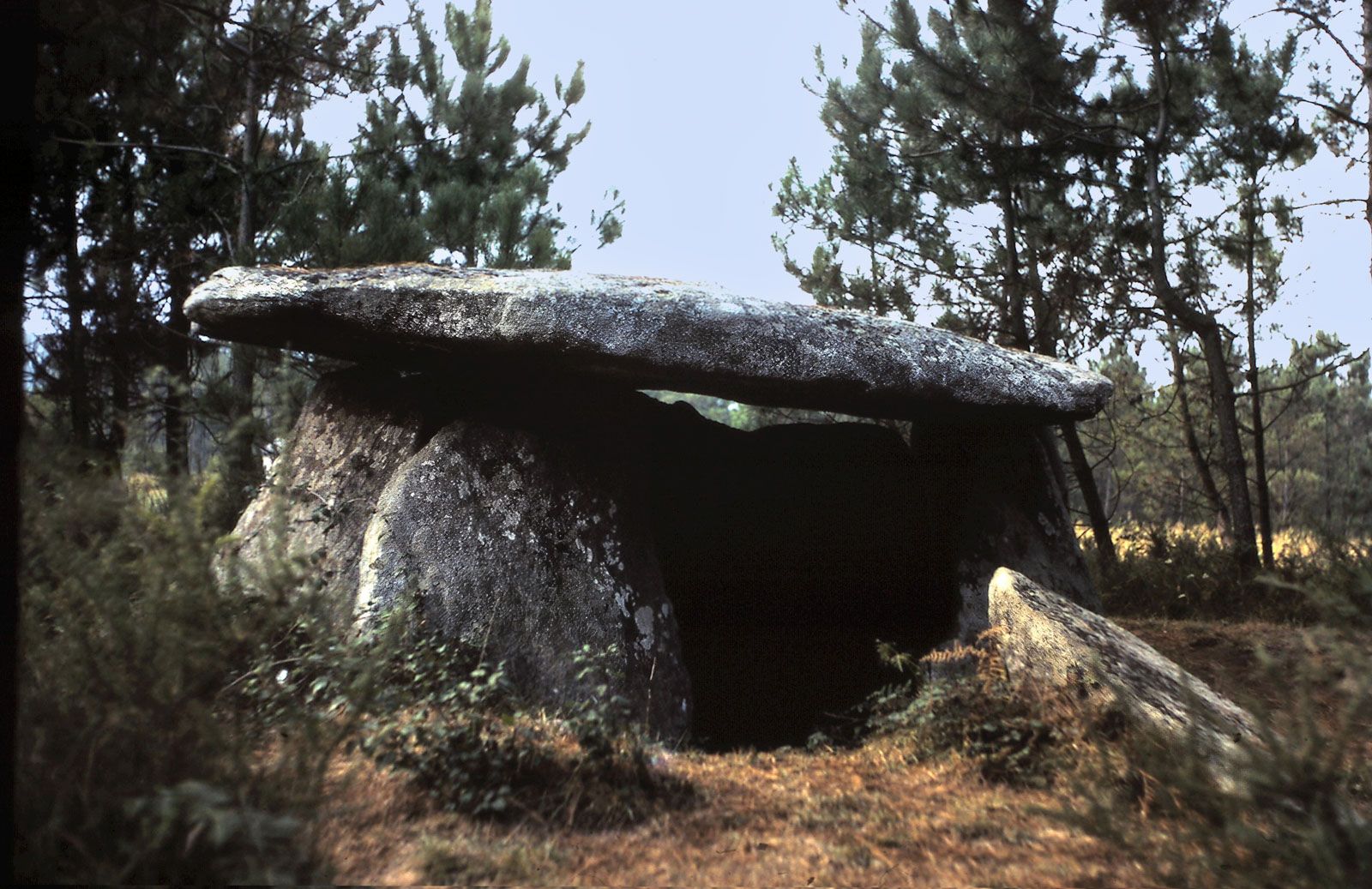


The megalithic culture is one of the most important symbols of the identity of Costa da Morte. More than 600 sites have been catalogued throughout the area, including burial mounds and antas or dolmens, which make this Western region one of those with a greater heritage of this prehistoric culture, which developed between 5000 and 2000 B. C.E.
These megalithic remains are distributed throughout this entire area, showing that it was quite well populated in that period. However, there are areas where a greater concentration can clearly be seen, especially bearing in mind the biggest monuments that have survived until modern times. The district of Terra de Soneira, especially the municipality of Vimianzo, gathers the greatest number of dolmens.
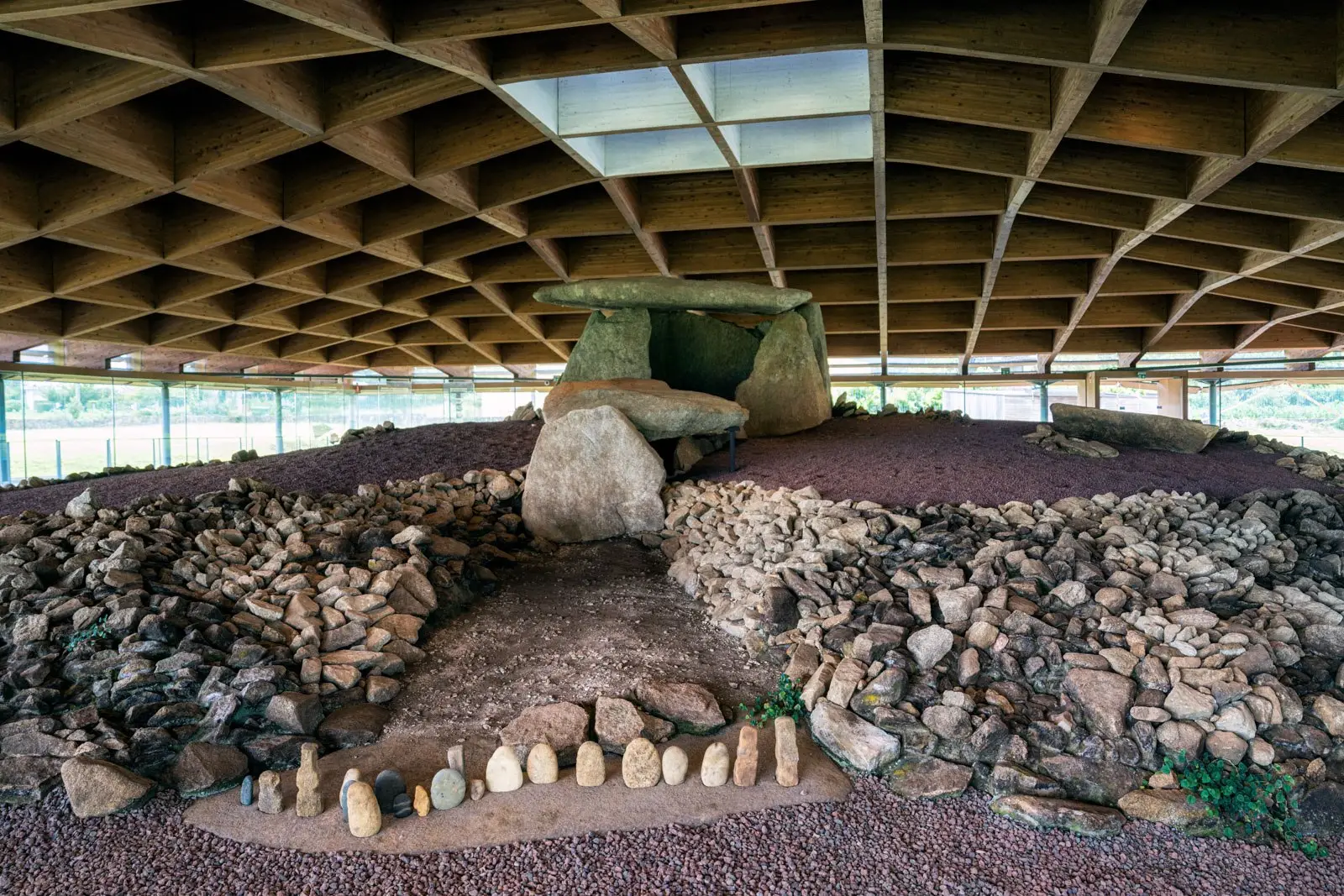
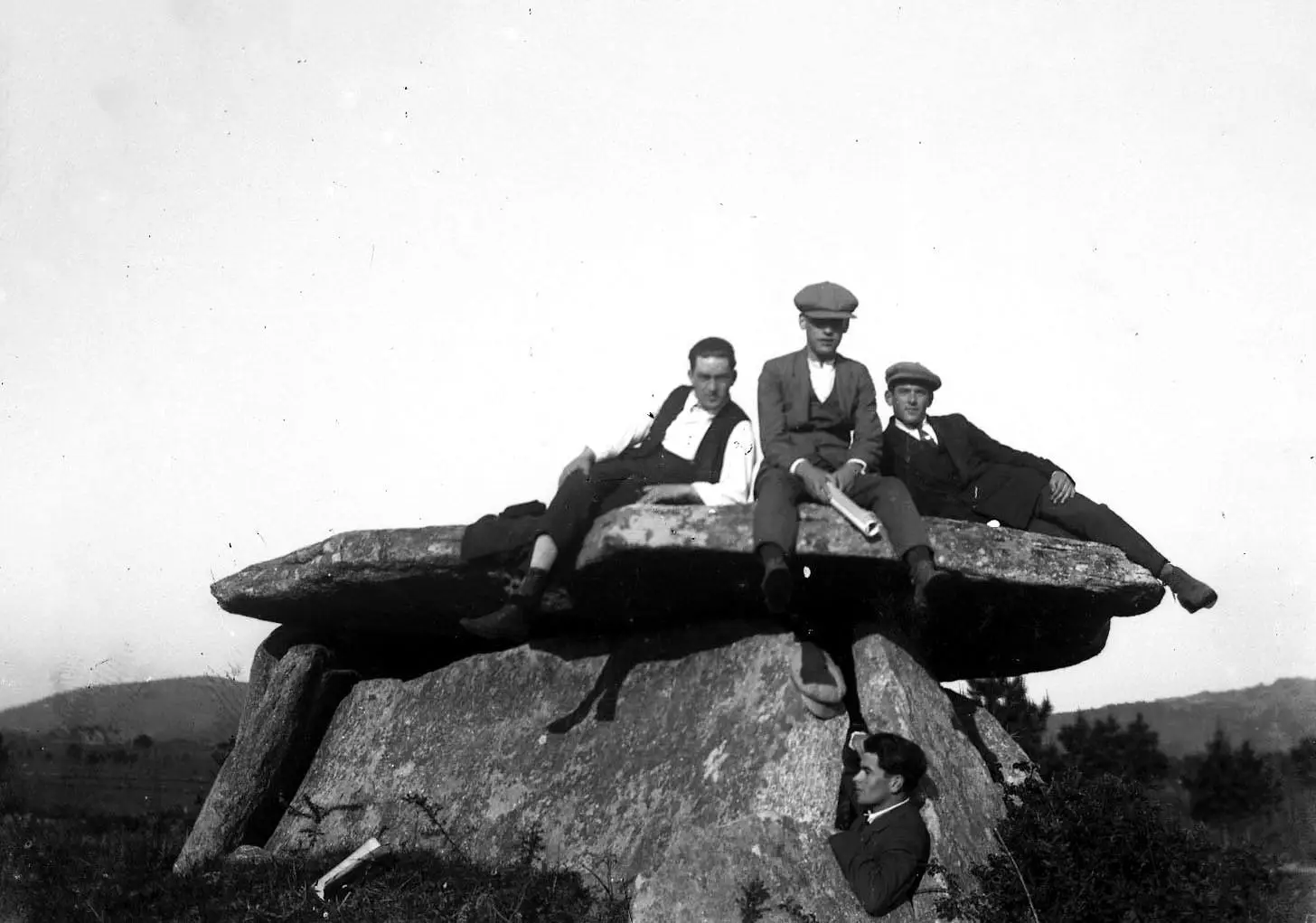
Of all the monuments in this coastal region, the one that received the greatest protection, not only on Costa da Morte but also in the rest of Galicia, was the Dombate dolmen. In the 19th century, it had already caught the attention of the historian Manuel Murguía and the poet Eduardo Pondal, who dedicated one of his poems to it:
Pasado Vilaseco, lugar batido do aire (Having passed by Vilaseco, a windswept place)
no alto da costa de Ures de montesía canle; (High up on the coast of Ures with its mountain ravine,)
pasado Vilaseco, indo p’la gandra adiante, (Having passed by Vilaseco, across the moor,)
xa vía desde lonxe o dolmen de Dombate. (the Dombate dolmen could be seen from afar.)
Eduardo Pondal (Translation by Eduardo Freire Canosa)
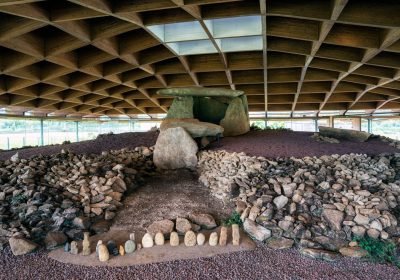
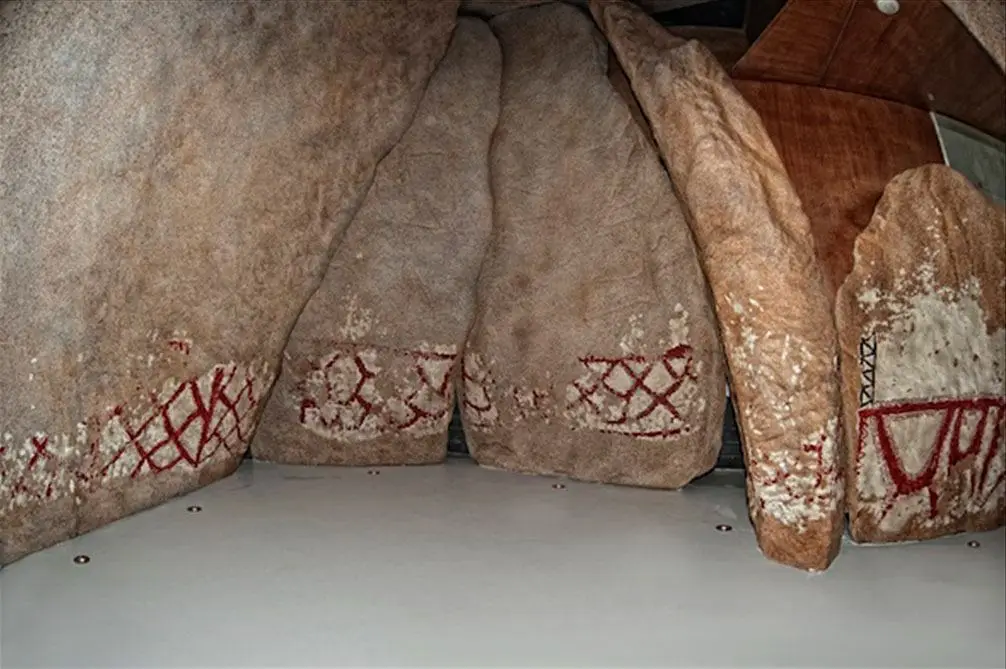
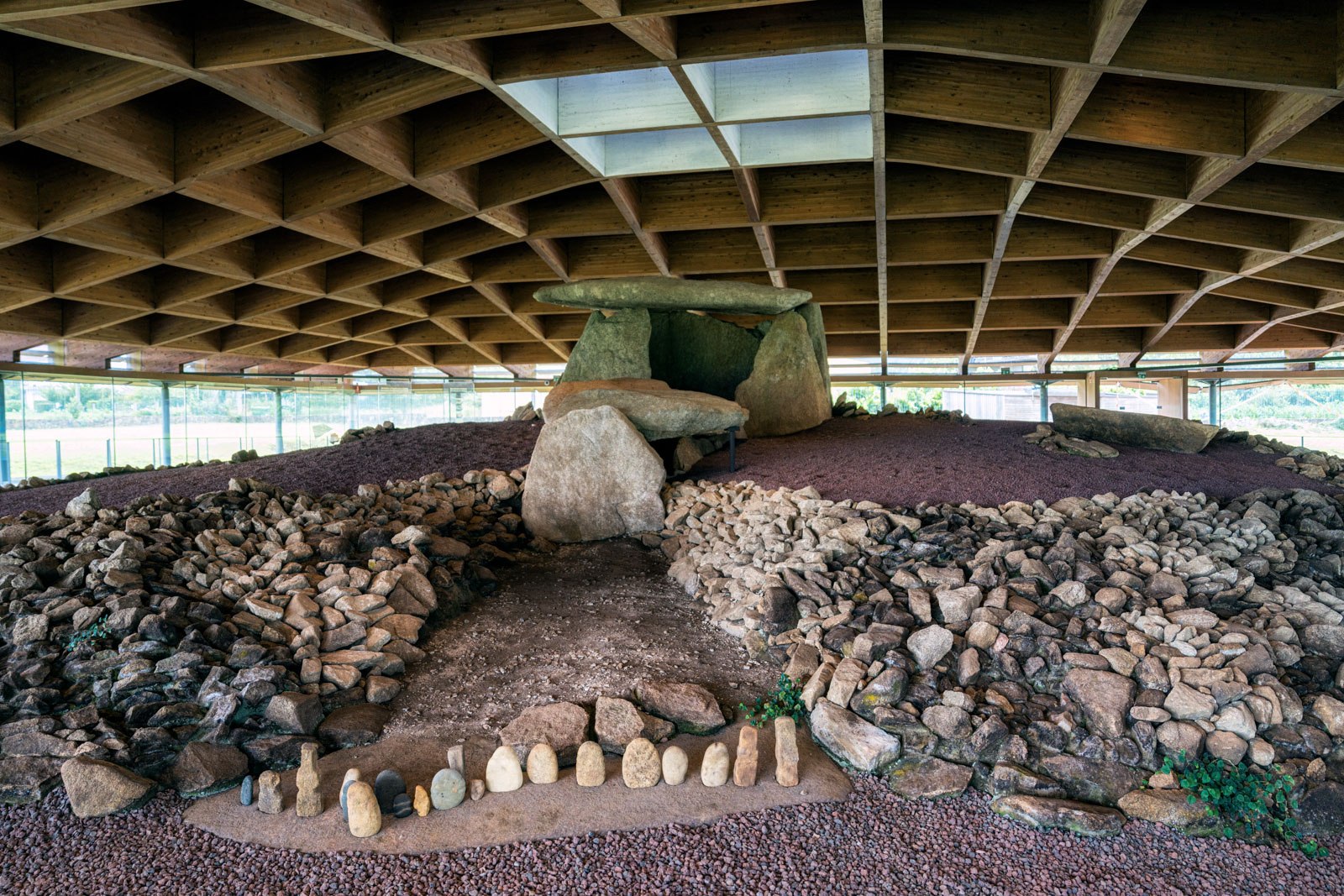
After excavations were made of this dolmen between 1987 and 1989, directed by the archaeologist José María Bello Diéguez, the site completely changed its appearance and some remarkable finds were discovered that increased the knowledge of this site considerably. The most surprising were the carvings found on some pieces of slate and the remains of paintings in the chamber and corridor, as well as the appearance of the remains of a former dolmen, which came to be known as “old Dombate”.
Opposite the entrance to the corridor a line of rudimentary anthropomorphic stone figures was found, called idoliños, little idols, which have also found in other dolmens and are thought to have afforded protection. Inside the monument, arrowheads, flint blades, axes, necklace beads, mortars and other fragments of pottery from the early or later Chalcolithic eras were discovered.
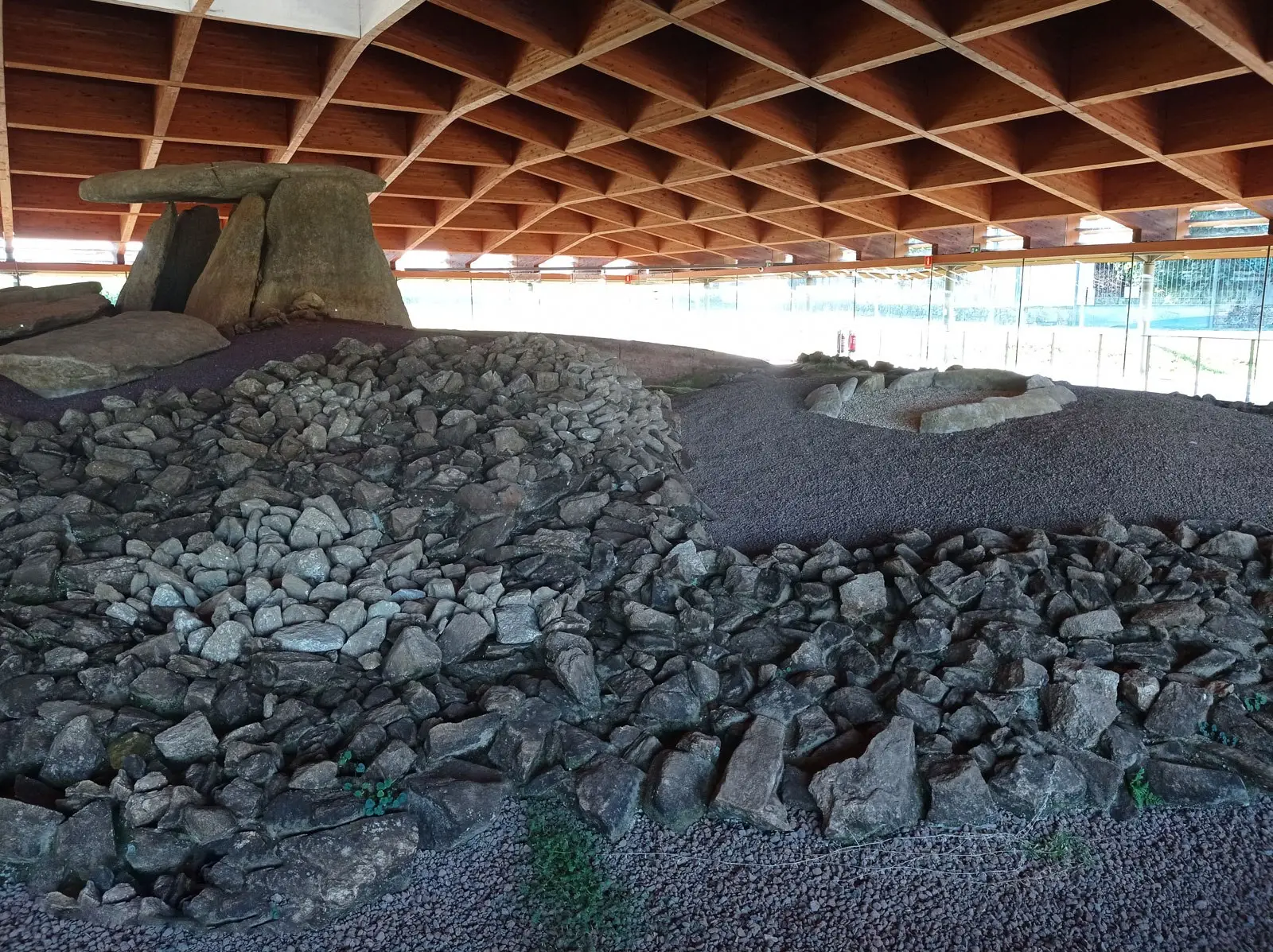
To protect the paintings, the dolmen was provisionally covered in plastic, which remained in place until 2011, when the current structure was built to cover the entire complex and entering the chamber was prohibited. For this reason, a replica of the original monument was installed in the Visitor Reception Centre so that visitors could see the carvings and paintings.
The Megalithic culture is a valuable historical, cultural and tourist resource for Costa da Morte, so that it was necessary for the various administrative departments to become aware of the importance of this heritage so that it could be preserved and appreciated. An attempt was made by the Xunta de Galicia in 2003 to create the Costa da Morte Megalithic Park, but not enough interest or financial resources were invested in it.