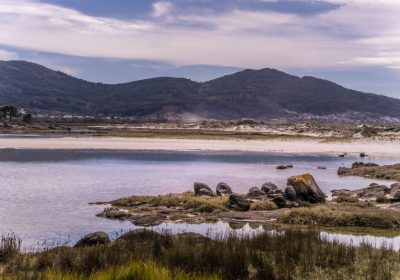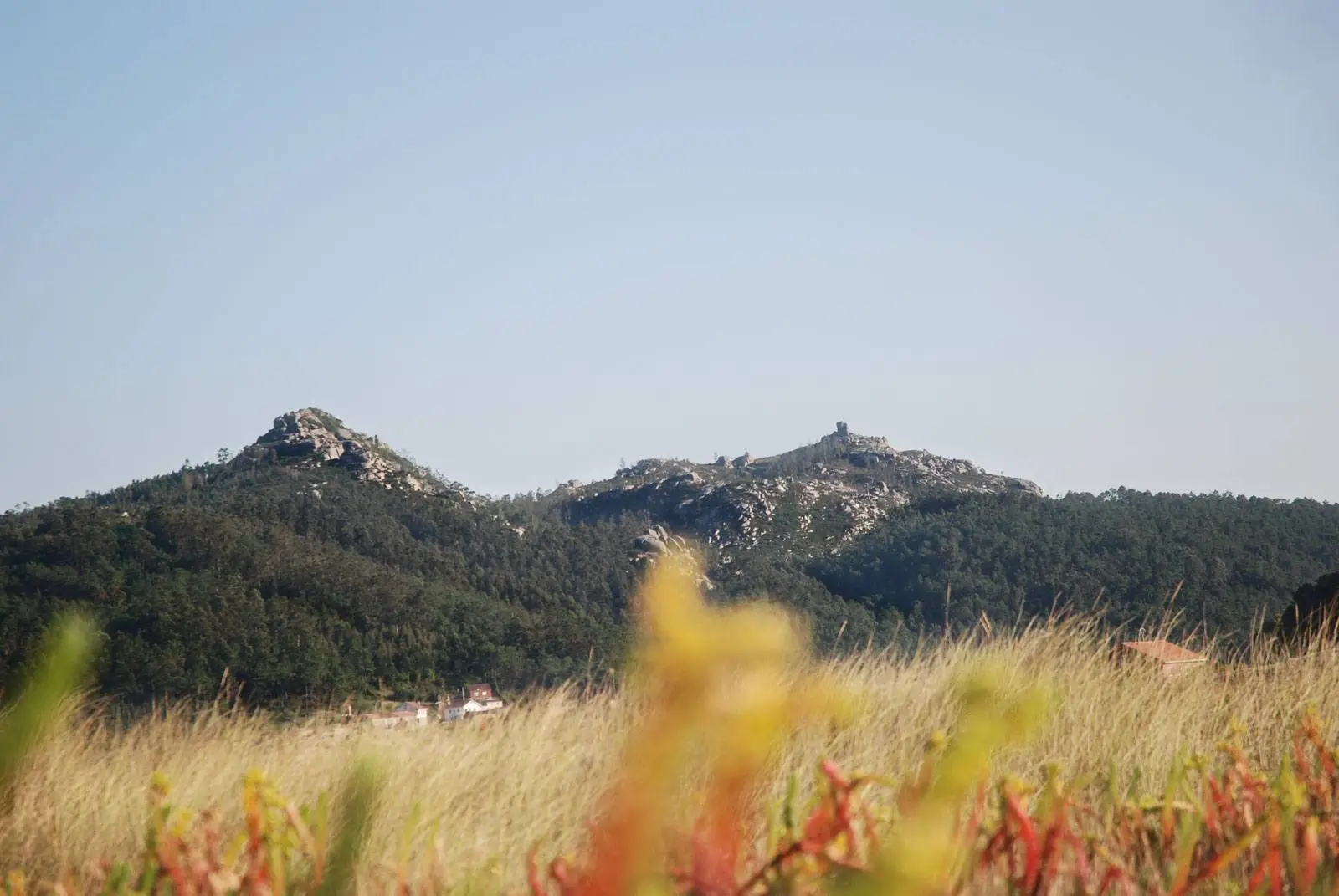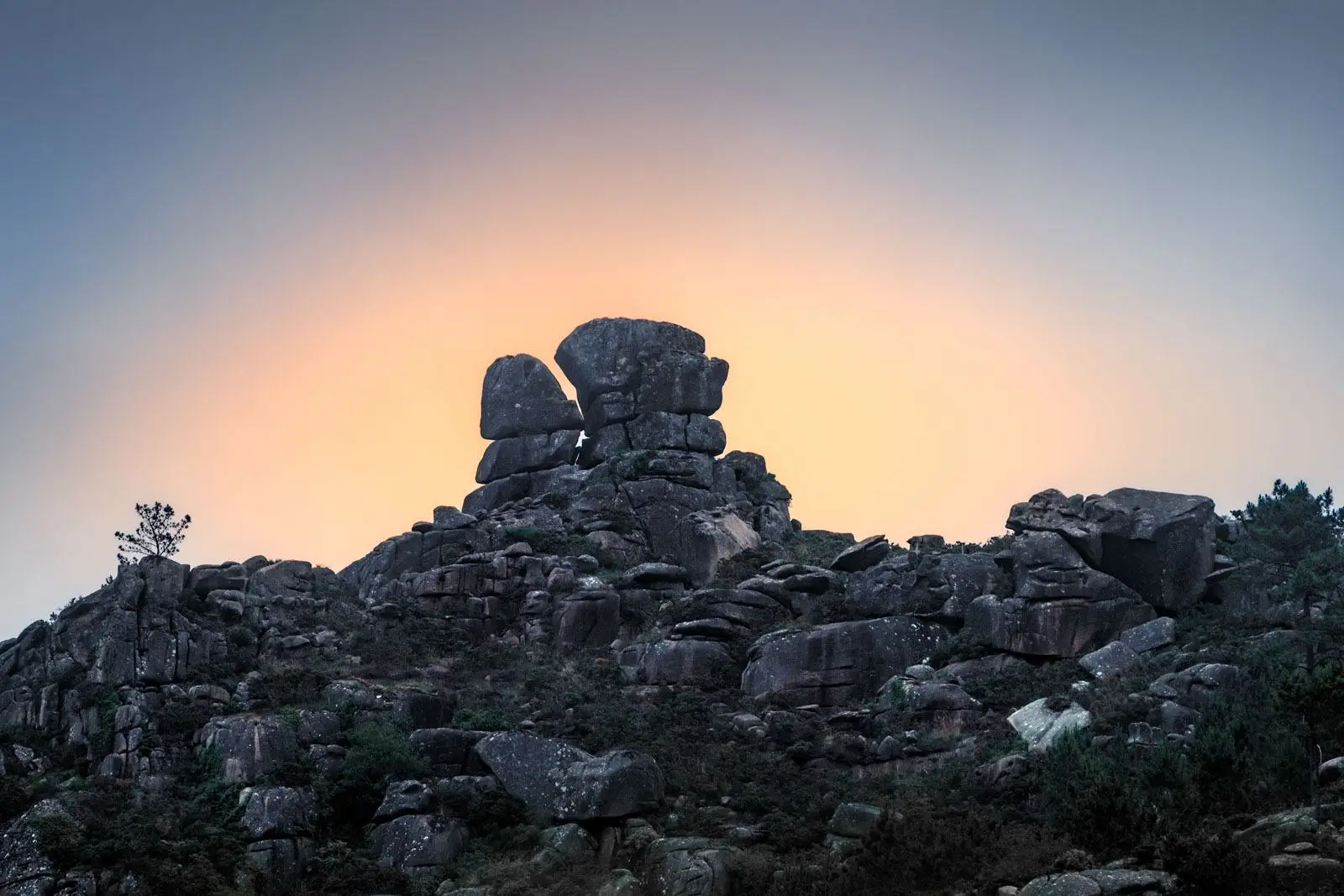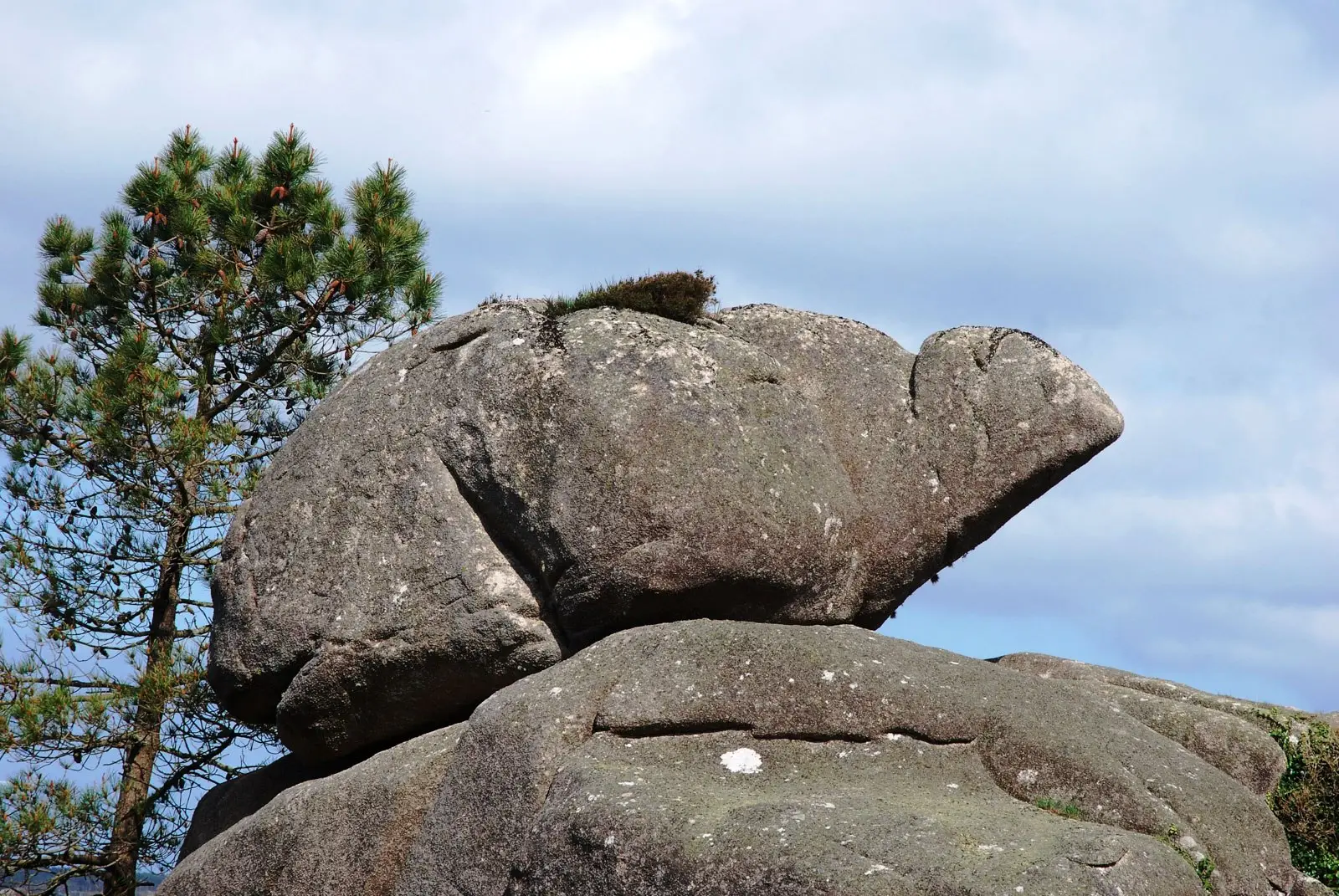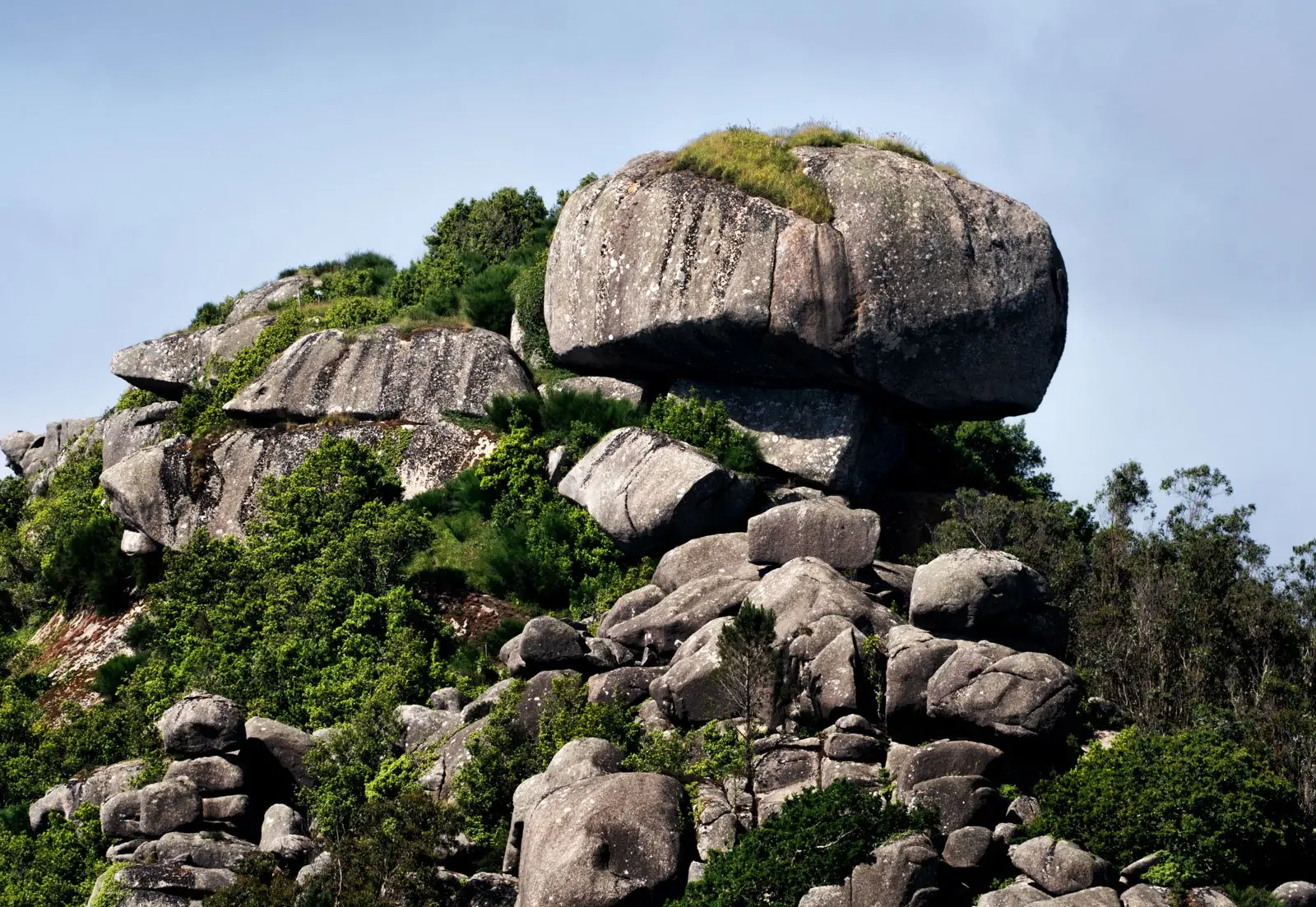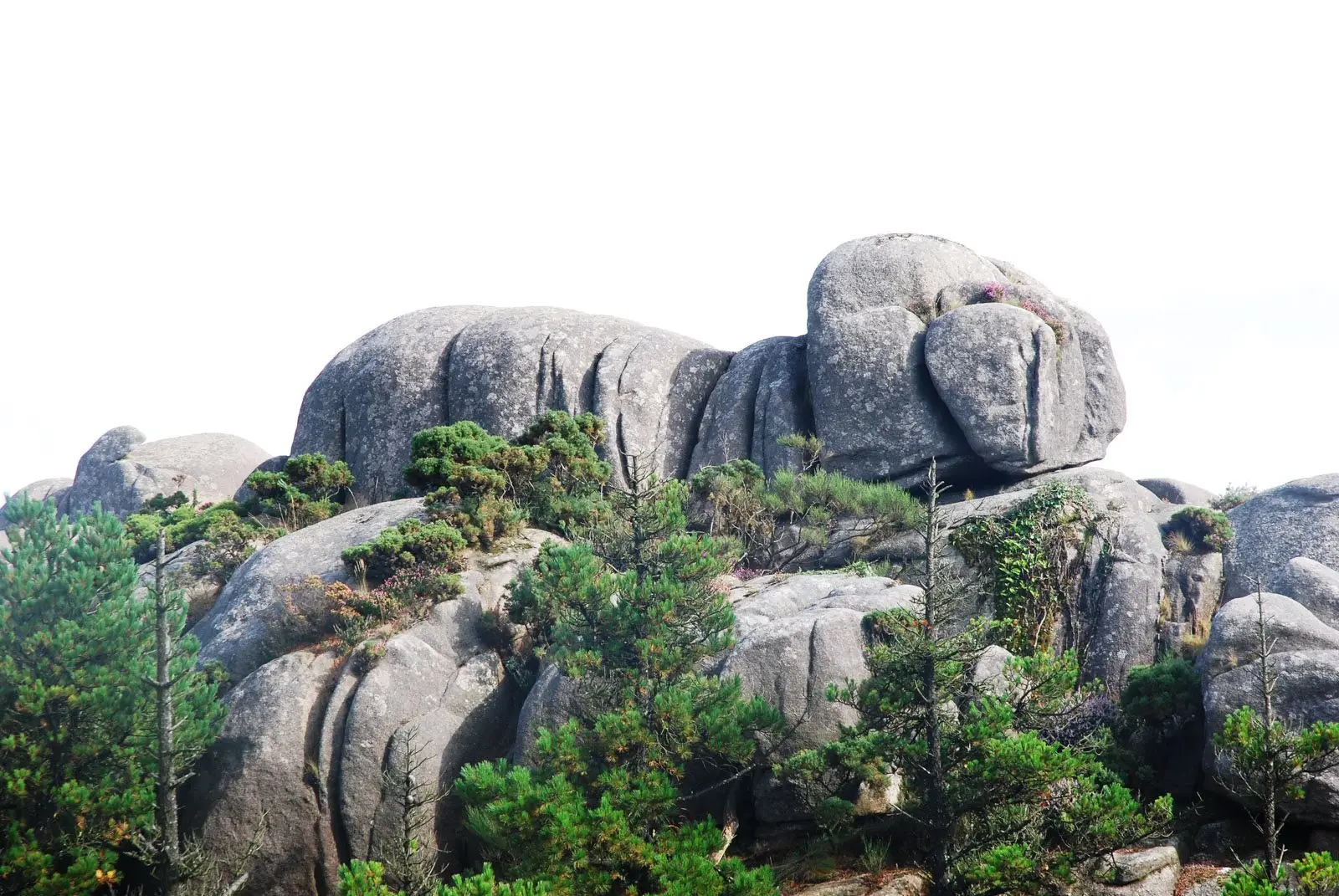


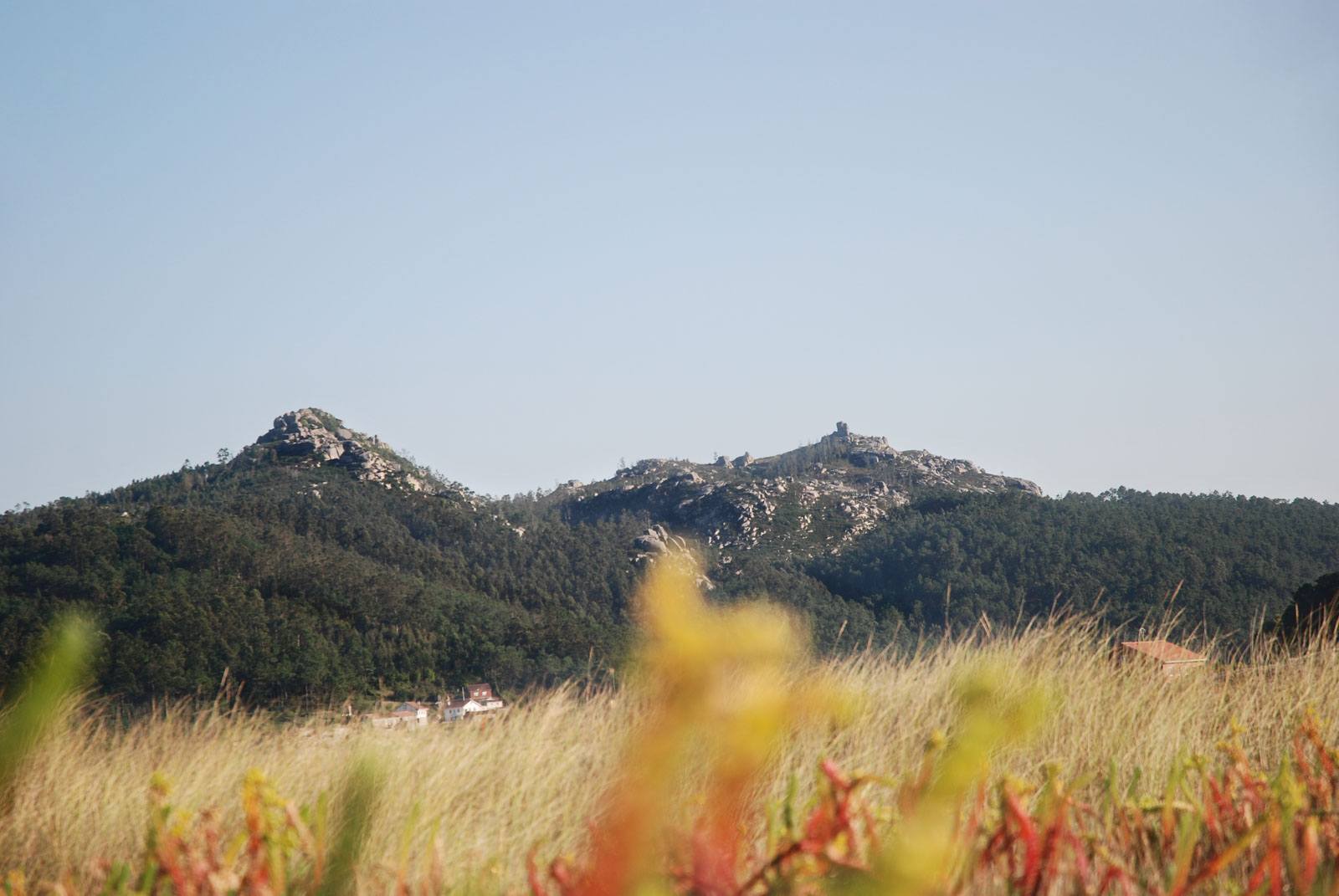
To understand the importance and value of the Pasarela and Traba rocks, it is necessary to understand how this granite complex was formed and the relevance it has for the planet. On learning that these unusual forms date back some 300 million years, that they were formed at a depth of 20 km and that there are very few on the earth, one’s appreciation of this natural area changes.
As some geologists state, these rocks had already had this configuration at the depth already alluded to some 23 million years ago, when they were covered by a layer of sediment some kilometres thick, which disappeared due to erosion. When talking of the Pasarela and Traba rocks, the geologist Juan Ramón Vidal Romaní claims that they are a unique kind of formation and that, although there are many in Galicia, there are few elsewhere on the planet.
Because of ignorance and financial interests, some years ago this outstanding place was about to be destroyed, as several companies wished to establish a quarry here but, thanks to the mobilisation of and a lawsuit by several associations, it was possible to halt this possible attack and get the Xunta de Galicia to declare this natural area a Protected Landscape in 2008. Recently, it has even suffered the threat of the construction of a wind farm, which was also halted.
Visitors have various access points for reaching these rocks, from both the municipalities of Vimianzo and Laxe. One suggested route is from the village of Pasarela to Penedo, from where a track leads to the Pedra do Barco, where the walk around this extraordinary natural site starts. Continue along the dirt track to a path on the left that leads to the first group of rocks to the north of the Cachucha hill. Here are the the figures of the Cantor (singer), Camelo (camel), Coello (rabbit) and Pallaso (clown). Close to this group is the Pedra Multiforme (multifarious rock), one of the more unusual formations.
After this first stop, continue on to the Galla de Pena Forcada, which gives its name to the mountain range that stretches to Cape Vilán. After passing the Pedra Abaladoira (the rocking stone) and the Magrebí (the Maghrebi), you will come to a second area in which spectacular shapes like the Dama da Costa da Morte (Lady of the Costa da Morte), Zafra (Harvest) and Osa (Female Bear) can be found.
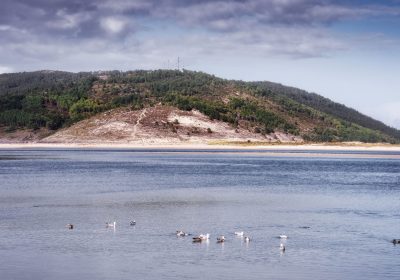
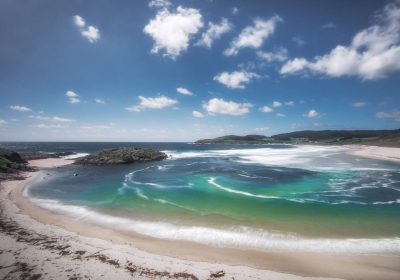
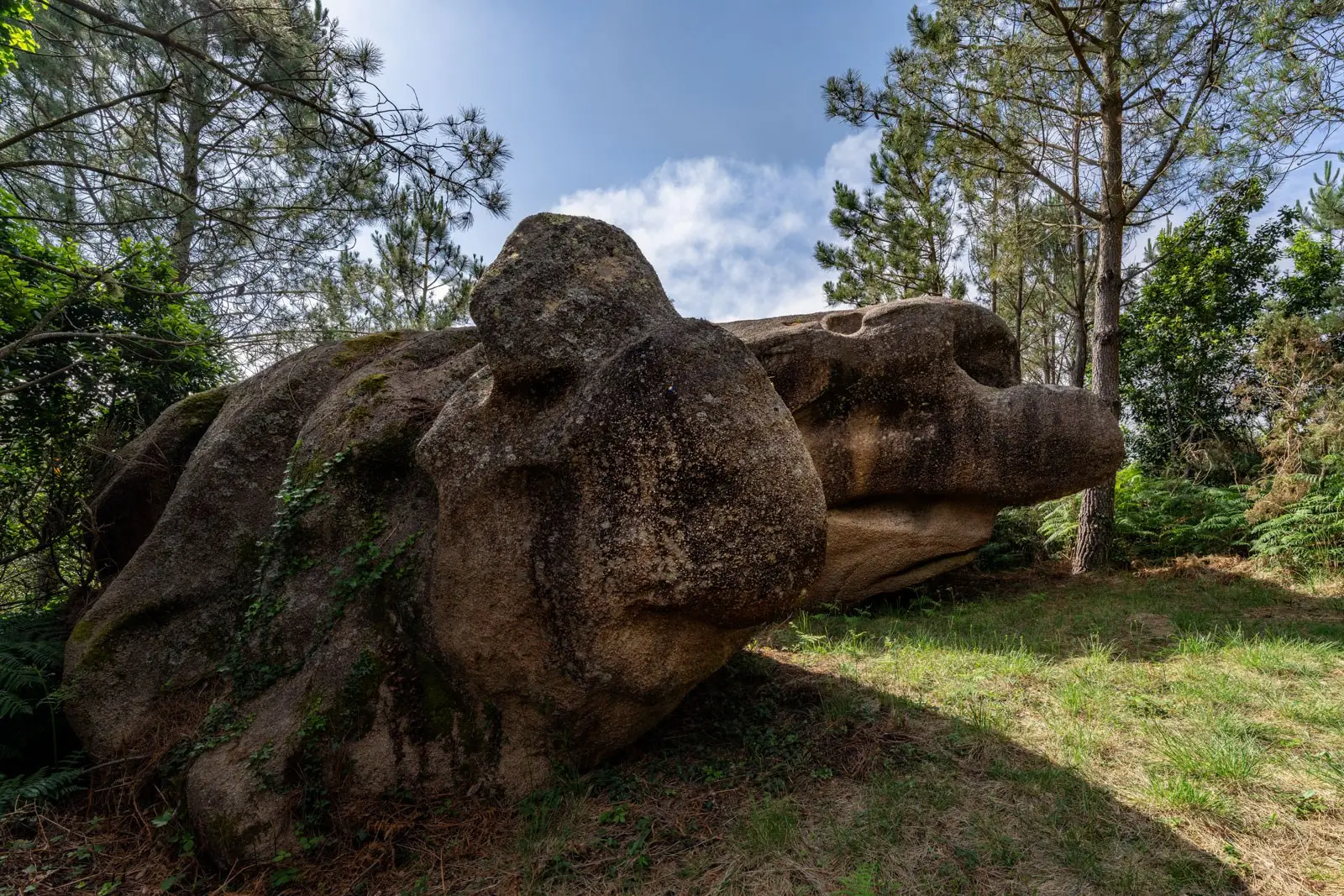
Continuing on into the lands of the municipality of Laxe, beside the path are the Tartaruga-Peixe (Turtle/Fish) and Xigante (Giant). At the track, turn to the right and then take a path to the left that leads up to the Torre da Moa (the Moa Tower) the third stopping place from where you can see an extraordinary panorama over the lagoon and beach of Traba, in Laxe. From this platform, you can see close by the figures of the Can Enfurruñado (Angry Dog) and Cachola do Porco (Pig’s Head).