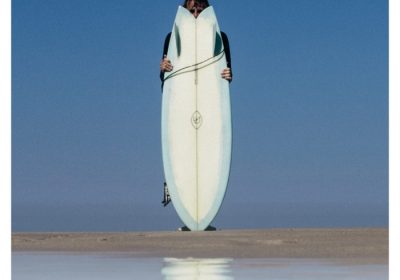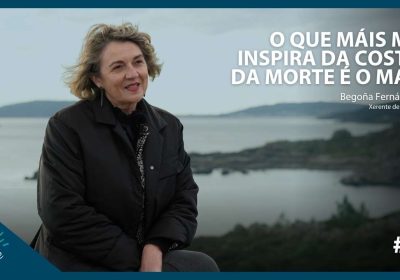


Costa da Morte and surfing are two concepts that are closely linked. Patrick Vilán, who runs Caión Surf House, knows this well. His surfcamp also offers accommodation right by the beach in Caión, A Laracha. Below, we learn his perspective on the current situation of the sector and the future prospects of surfing along this entire coast.
Interview co-financed by the CMAT and the Xunta de Galicia through an agreement with Turismo de Galicia.
Tourism as a driving force for the creation of surf schools, or surfing as a catalyst and tourism driver for the Costa da Morte?
Surfing in Costa da Morte is one of the many activities and sports practised in this area, alongside some of the best-known experiences such as the Camiño dos Faros, the pilgrimage to Fisterra, kayak routes and hiking. Having such an idyllic environment as ours helps surfing to be present on practically all the most important beaches, with a good infrastructure to serve this demand.
There is no doubt that surf schools help to energise the tourism sector, while tourism itself also encourages companies to become increasingly professional and grow in order to offer a higher-quality service.
What is the current state of the sector after the pandemic and the subsequent rise of nature tourism and active tourism? Is there a greater interest in surf culture in this area?
In the months immediately after the pandemic, when restrictions were first eased, there was indeed a significant increase, as many people chose surfing and other outdoor activities as an escape after months of lockdown. There was a considerable rise in demand, especially from the local community and domestic tourism. Little by little, after that initial boom, domestic tourism stabilised and there was an increase in international tourism, thanks to the more relaxed measures adopted by our country. This year, both have stabilised; we have not seen exponential growth since those first post-pandemic months.
From a tourism perspective, we could distinguish between “surf tourism” itself, carried out by people whose main motivation when choosing a destination is to find the best waves, and, on the other hand, those who see surfing as one more experience within their trip, a complementary activity. Can both types of experience coexist in the same destination? Should a differentiated strategy be designed for both approaches?
Indeed, these are two different strategies and profiles. On the one hand, there is the advanced surfer, probably with a more adventurous profile, who is looking for a more independent trip. They are usually visitors from elsewhere; we see many people from Germany, Austria, Belgium…
The impact of this type of visitor in the area is much lower, as they travel in a different format, in motorhomes and camper vans. With the considerable increase in this type of traveller, there is a need to regulate and design specific strategies to channel this kind of tourism so that its impact on the area is positive and benefits local stakeholders. There are models to follow, such as those in France or the Basque Country, where everything is highly regulated, with designated spaces, paid parking areas for vans, and so on.
In general, this more independent type of surf tourism does not approach schools to request lessons or rent equipment; they go to less crowded beaches with bigger waves, while the economic impact of beginner-level surfers is more noticeable.
The Costa da Morte is synonymous with hidden, wild beaches… Which ones would you recommend for surfing? What are the distinctive attributes of this area compared to other parts of Galicia?
Obviously, the Costa da Morte, its location and, to some extent, its distance from urban centres or capitals make it a different place, with a charm that other areas do not have. For example, the Oleiros or Ferrol areas, other important surf destinations in Galicia, do have nearby urban centres, but in the case of Costa da Morte these are a little further away. This already makes it different from the rest, with a more adventurous approach and fewer crowds, which is undoubtedly a differentiating factor.
On the one hand, there are easy-access, comfortable beaches with waves suitable for practically all levels —Caión, Razo, Malpica, Nemiña…— and, on the other, there are those with more difficult access, characterised by a more exposed, rugged coastline and greater risks, which should only be tackled by the most experienced surfers. These lesser-known beaches, which do not appear on maps or tourist guides, are the ones sought by more advanced surfers, entering the wildest, most unknown side of Galicia. Not having, for example, easy access or a live camera to check the state of the sea is also part of this adventure: not being able to plan everything in detail and always leaving something to improvisation.
Once in the sea, what is coexistence like between those of you who work professionally in surfing and tourists or bathers in the busiest areas? Do you think there should be visible regulation for everyone on the most crowded beaches regarding the organisation of these spaces?
In the more than 20 years I have been involved in the world of surfing, I have seen how some areas have become increasingly crowded over the years. Little by little, bodies such as Costas, the Surf Federation and the local councils themselves have begun to regulate timidly, but we are still far from having adequate regulations for the management of these places and, above all, from truly valuing the practice of surfing.
There are many examples of how, in places such as Ericeira in Portugal, a World Surfing Reserve; Ribamontán in Cantabria; or France, surfing is conceived as a catalyst for tourism, with a strong commitment to it, giving it priority through designated areas for local users or tourists, and giving greater value to surfers and their space. There is still a long way to go before Galicia firmly commits to surfing and ideal coexistence between both sides becomes possible.
Are there synergies and collaborations between the surf world and tourism stakeholders in the destination —accommodation, restaurants, other active tourism companies…? For example, accommodation providers and/or travel agencies offering introductory surf sessions.
Yes, it is clear that there are many different business models within this sector. We have companies that focus exclusively on giving surf lessons, and others that choose to offer more than just a lesson: an experience, complementing the sport with gastronomic and cultural experiences, for example. This type of model is always linked to synergies with companies in the area. For example, at our school we collaborate with companies that offer visits to the Sisargas Islands, with rural houses, tourist apartments and accommodation in general… However, it is also true that there are surfcamps that already manage everything internally, doing everything within the school’s own facilities.
How could surf schools contribute to reducing seasonality in certain tourist areas beyond the summer months?
We need to reduce the seasonality of surfing. For example, the months of May, June, September, October or November are months when you can feel a magical connection, a special harmony with the sea. Unfortunately, we still have the mindset of travelling exclusively in July and August, when everything comes to a halt. Foreign tourists who come to championships or classes have mentioned this to us many times, asking why everything stops during a specific month. In my opinion, in this sense, we should become a little more European and even reduce the seasonality of our holidays, spreading everything out more throughout the year.
Offering attractive packages outside the summer season and promoting certain activities from Easter or November onwards can attract an audience looking for something beyond summer, a more relaxed type of tourism. Offering packages that include gastronomic experiences, for example, or organising and combining these activities with championships… are some of the actions that help complement the main activity of surf schools.
In relation to the previous question, what is the best time of year for surfing in the Costa da Morte area, whatever the level? Could you tell us some of the advantages of surfing in winter or outside the summer season?
Winter is hard; the months from December to March and April are complicated for beginner surfing, as we are on a very demanding coast. However, at the same time, it is a period when high-level surfers are looking precisely for this: the best waves and the least crowded beaches. Without a doubt, the widespread idea that surfing is exclusively a summer activity must change, as it can of course continue far beyond the hottest months.
Surfing, sustainability and the environment are closely linked concepts. What action or actions do you think are best to counteract or mitigate the effect that mass tourism can have on certain beaches?
Obviously, surfers are the first to be interested in the ocean and the environment; living connected to the sea is essential for us. Within the surfing community there is a strong sense of responsibility and collaboration to help ensure that the environment is in the best possible condition. Individually, all surfers contribute: when you get out of the water, you have your board in one hand and in the other any rubbish you may have found.
Years ago, these types of actions were not so common, but nowadays there is quite a lot of awareness, with the development of specific campaigns. At community level, there are different platforms that organise workshops, events, talks… All this helps to make the problem visible and to provide solutions, even if they are small and individual.
The Surf and Clean programme in Costa da Morte, for example, works from a more educational perspective, collaborating with workshops, talks and courses in schools, raising awareness among children through surfing. Institutions also have to get involved in rubbish collection in natural spaces, with sustainable and regulated parking and recreational areas, controlled capacities, and by facilitating public transport to reduce the large number of cars arriving at the beaches, with the consequent pollution they generate.
Finally, in your opinion, what actions could be implemented to help society become aware of the opportunities that the world of surfing could offer the Costa da Morte and Galicia in general?
Obviously, my perspective may be different from that of other people, especially those who still see surfing as a dangerous activity, very much centred on summer, or only aimed at more adventurous people, of a certain age, and so on. It is essential to change these ideas and raise awareness of the importance of surfing and all the benefits it can bring at every level, from health benefits, as a way of releasing endorphins, to its economic impact, channelling all this towards quality, sustainable tourism, managed by local people who live in the area and understand its specific reality.
There are examples such as Morocco or some areas of Galicia where there is an emerging number of new schools run by people from elsewhere, mainly Swiss, Austrian or German, which create a bubble effect around themselves and make the impact on the area less visible. The discourse of all the schools in the area should be to generate more community, for public bodies to help facilitate this coexistence and to create a roadmap on how to help balance the free tourist or free surfer with local people. It is a delicate equation, but one that is entirely possible and necessary.