CAPE TOURIÑÁN, THE LAST SUNSET IN EUROPE

Take a closer look at Muxía through “CAPE TOURIÑÁN, THE LAST SUNSET IN EUROPE”. A perfect primer: context, landscape, and key points—no filler. Tip: look out for europa.
133. Cabo e faro Touriñán

In the 1920s, the Muxiá poet Gonzalo López Abente already considered Cape Touriñán to be the westernmost point in Galicia, and called it this in one of his poems: “the longest finger on the Galician hand”.

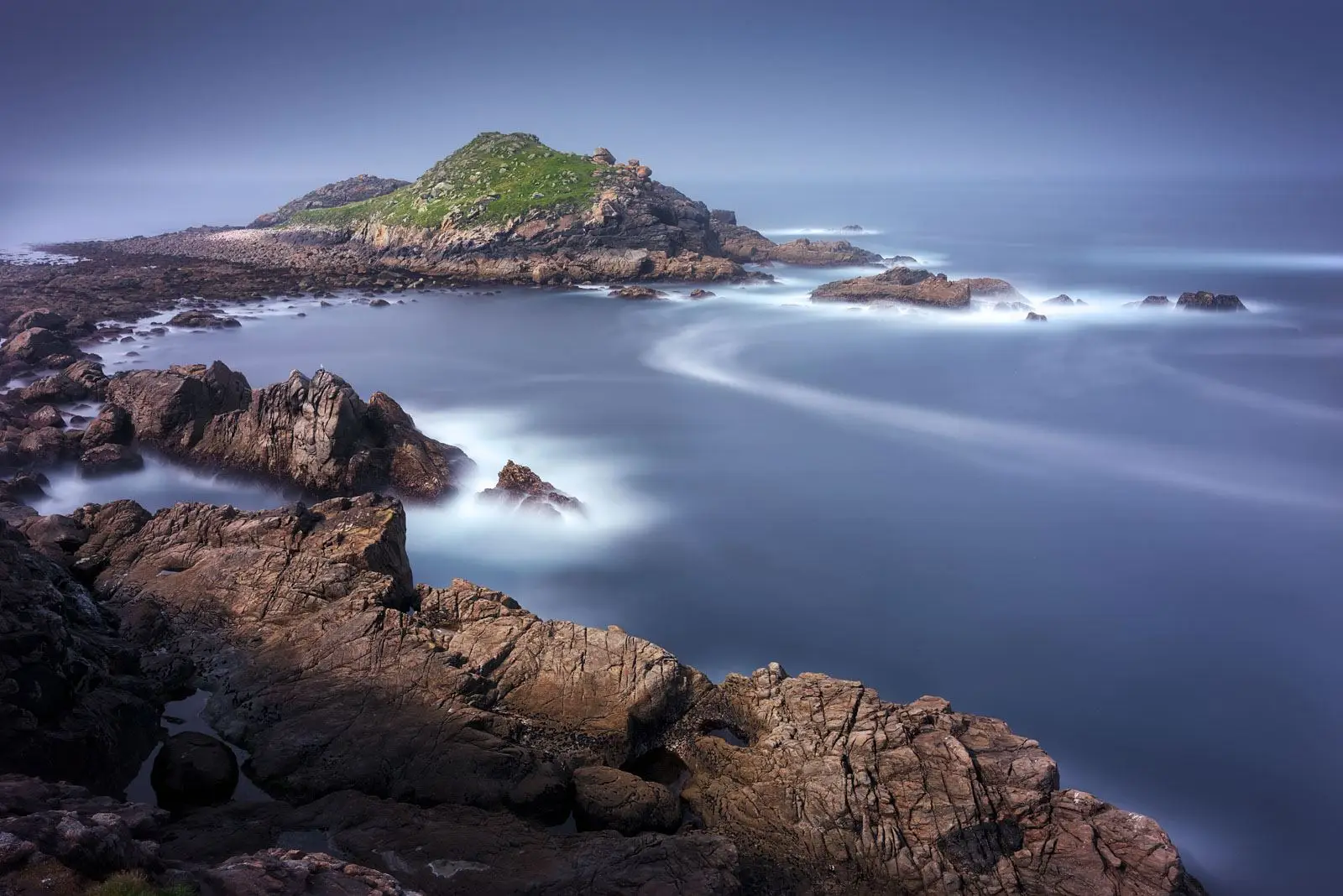
Cape Touriñán is a wild tongue of land, on which no trees grow as it is whipped by the wind and salt, so that so plants grow here other than a low covering of heather and ling. The peninsula formed by this promontory sticks out into the ocean in a north-easterly direction and ends at Gaivoteira Point.

All the shoreline of this peninsula consists of a rocky, irregular coast with steep cliffs, especially in the area closest to the lighthouse, and dangerous shallows that form real traps for the vessels that sail through this area. The best-known and most hazardous of these is the Laxe de Touriñán, a reef a quarter of a mile to the west of this point on which numerous shipwrecks have occurred.

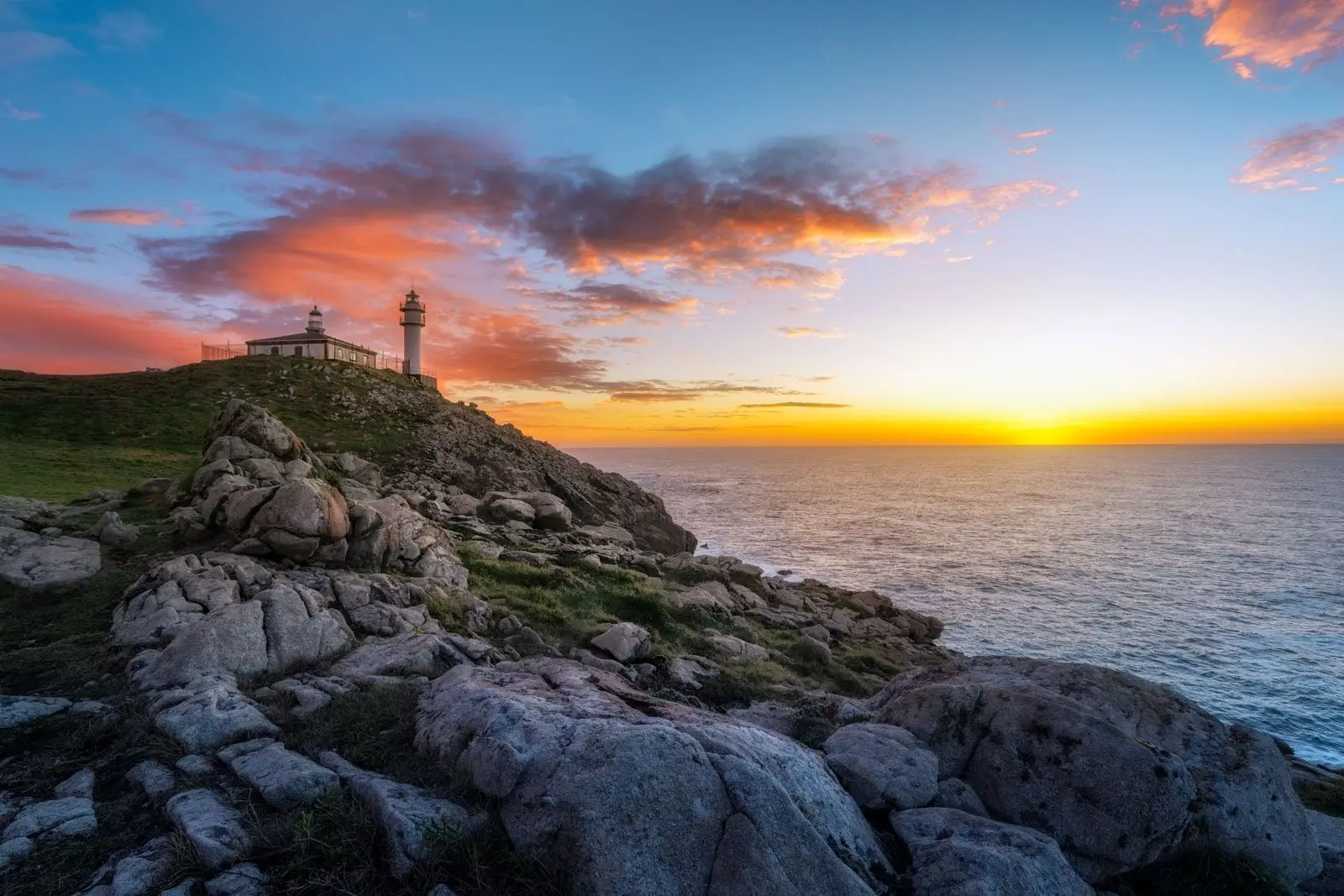
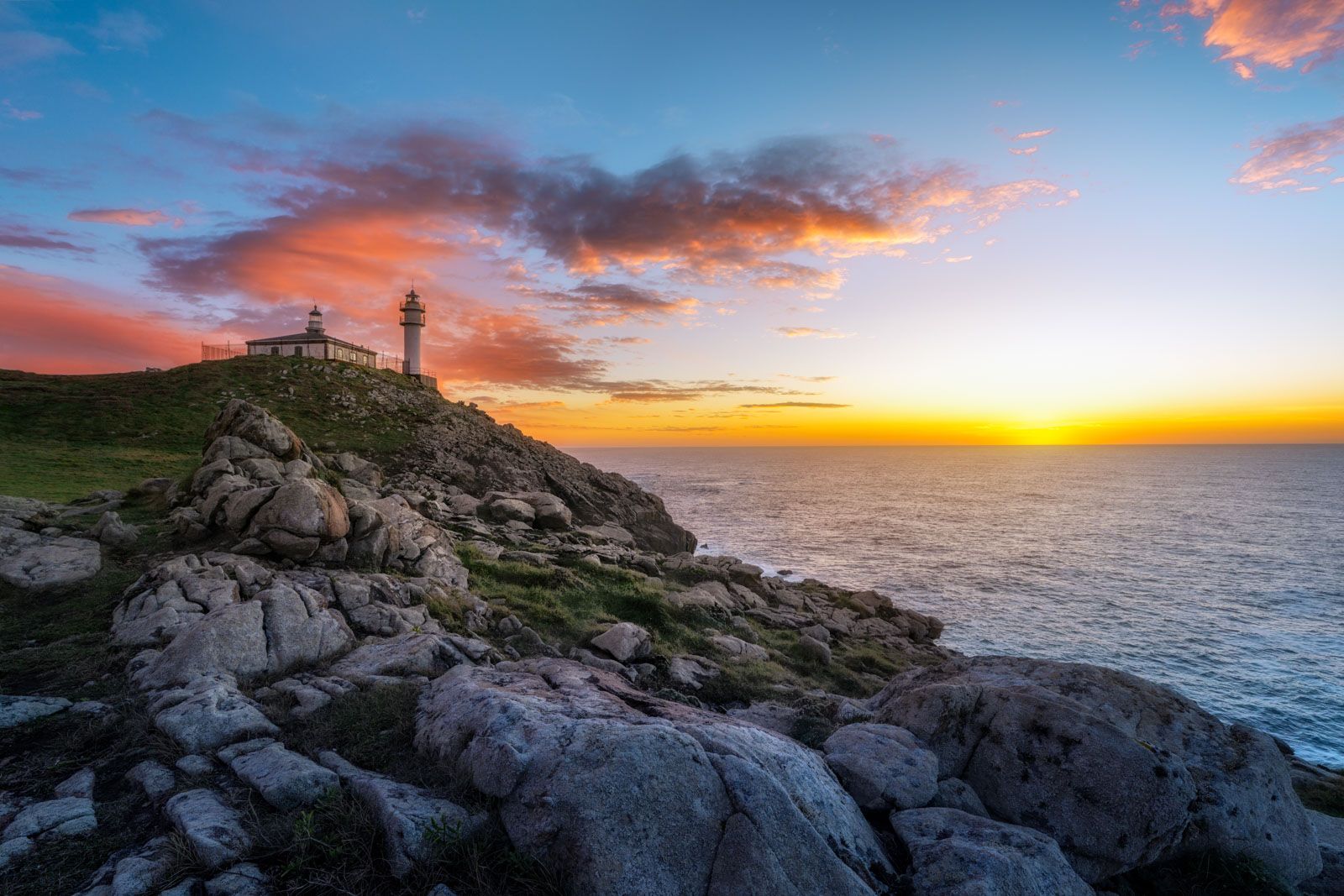
On the western side is the Herboso or Castelo, an islet separated from the land by a cove, which can be accessed at low tide. Its name refers to a possible fortified settlement that could have existed here. Also to the west is the lighthouse, which has two buildings: the old lighthouse and the present-day tower.

The General Maritime Lighting Plan of 1847 contained the idea of erecting a category one lighthouse on Cape Touriñán instead of Cape Fisterra, arguing that there should be two main maritime signalling points between A Coruña and Fisterra, one on the Sisargas islands and one on this point by Muxía, but the original idea was rejected and the category one lighthouse was built in Fisterra and only a category four in Touriñán.

The original plan for the lighthouse was drawn up by Adolfo Pequeño, one of the engineers who designed the new Vilán lighthouse. It shows a simple rectangular building 14 m long with the openings faced in granite and the rest painted white. A small tower sticks up in the centre of the roof, surrounded by a balcony with an iron railing, where a light with flat glass panels and vertical uprights, with an optic taken from the old Vilán lighthouse, would be installed.

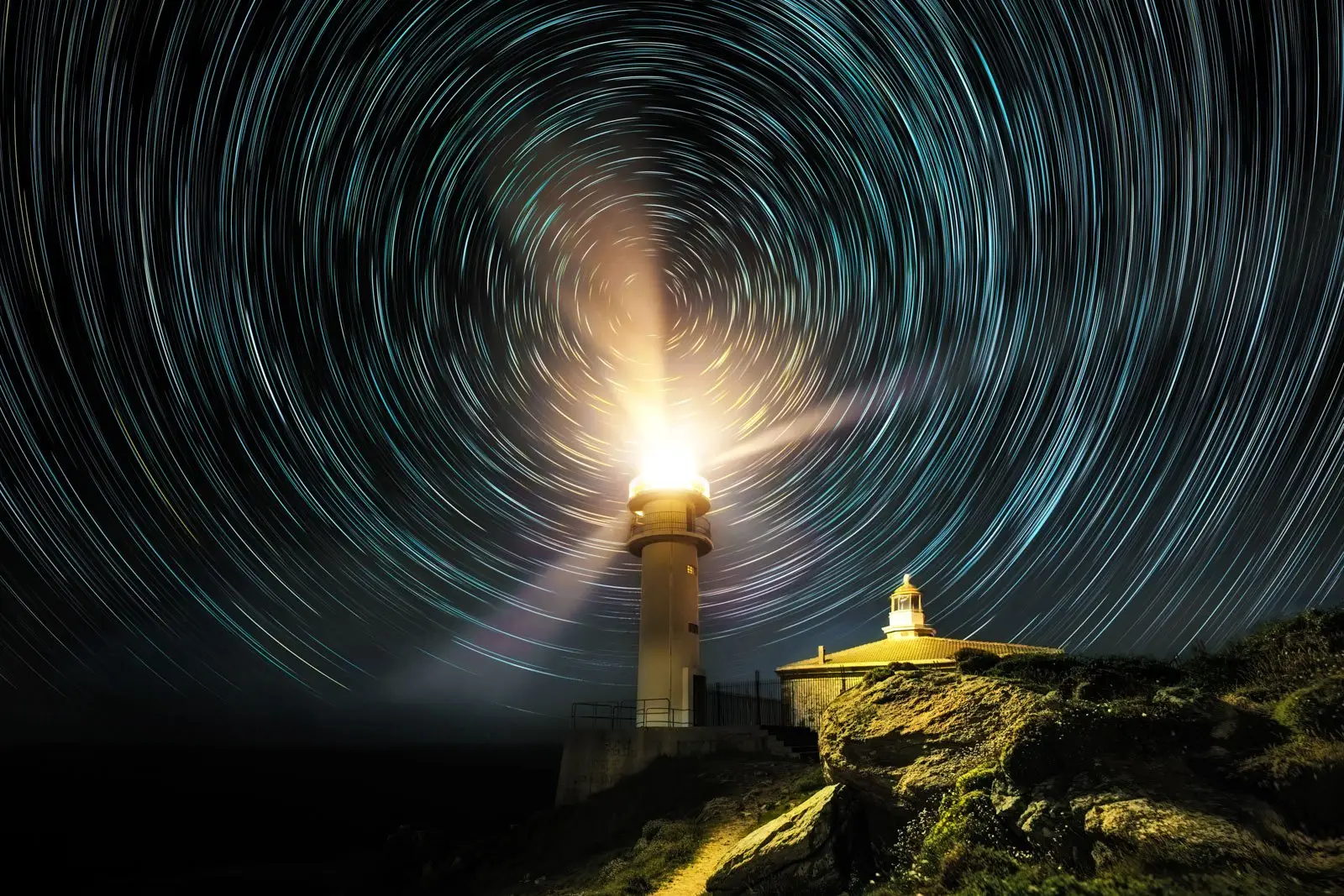
It came into operation at the end of 1898 and was one of the last lighthouses in Galicia built in the 19th century. It emitted a white beam with a range of 10 miles, produced by a Mares paraffin light. In 1918 the optic was changed and a new light installed that operated on pressurised oil vapour and had a range of 20 miles. In 1981 the cylindrical concrete tower of the new lighthouse was built, which operated with an 1500 W electric light and projected its beam to a distance of 24 miles.

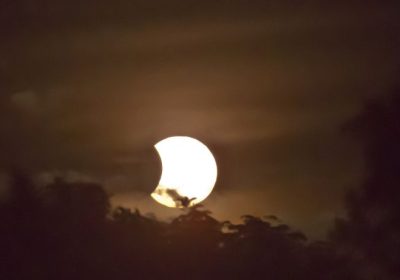
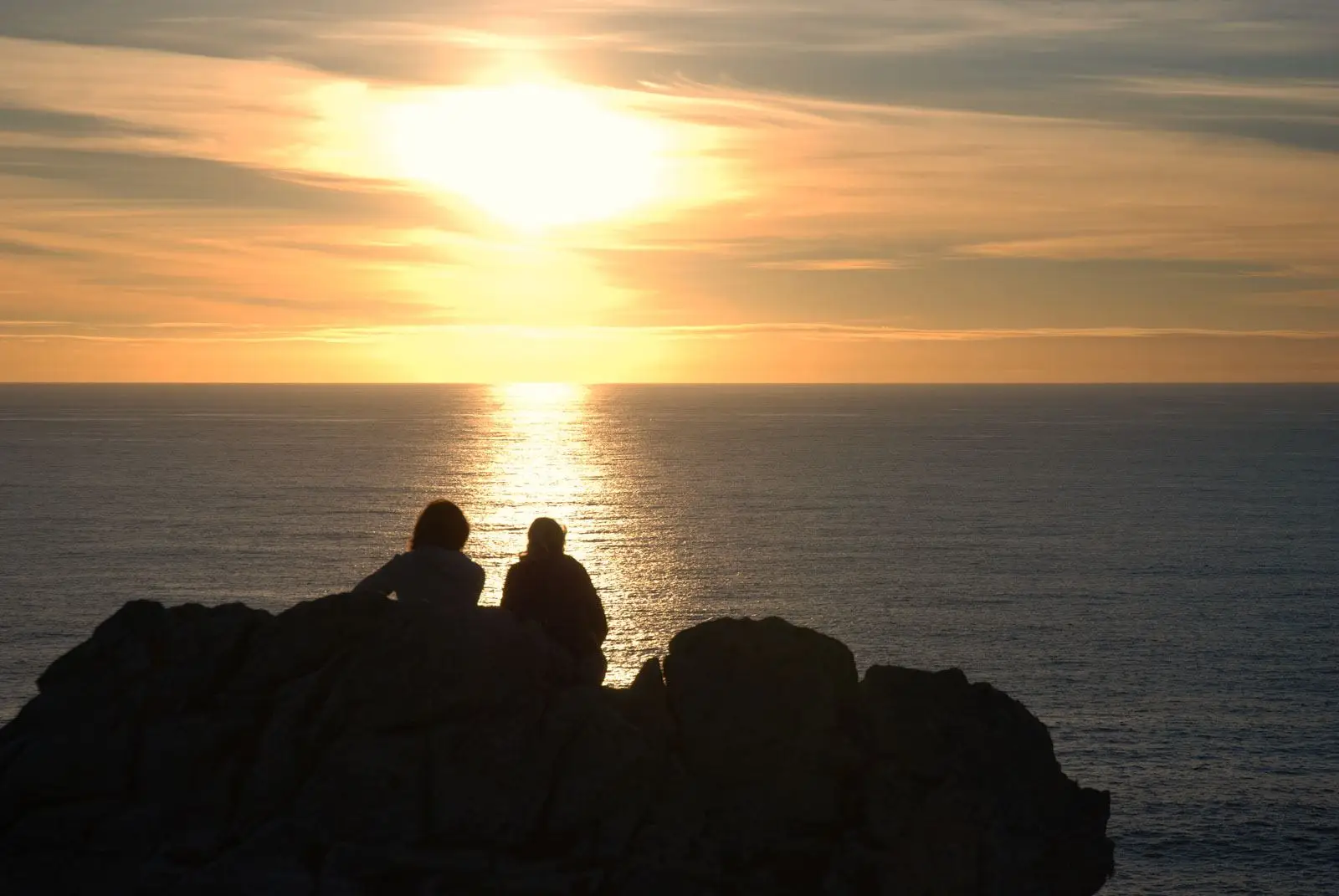
Cape Touriñán is the most westerly point of continental Spain (Coordinates: 43o 03’ 20’’ lat. N and 9º 17’ 54’’ long. W). There are two periods during the year when the last rays of sun in Europe set on this promontory. The first is between 21st March and 23rd April, and the second between 13th August and 22nd September, according to a study made by the Baión physicist Jorge Mira Pérez. Touriñán takes over from Cape Roca, in Portugal, and passes it on to Vardetangen, in Norway. This fact forms another attraction for visitors to the most westerly point of Galicia.
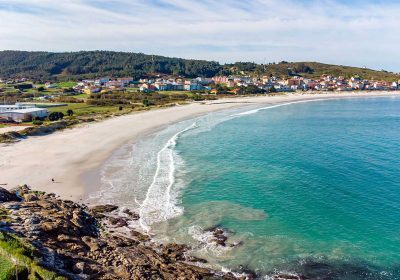
Photo gallery of CAPE TOURIÑÁN, THE LAST SUNSET IN EUROPE

Discover the Costa da Morte on our blog

Blog Costa da Morte

CAMELLE, WHERE MAN IS OMNIPRESENT

Until a few years ago, Camelle, was a small seafaring village on the left-hand side of the bay that bears the same name....

Museums to Visit on the Costa da Morte: 11 Cultural Sto...

Talking about the Costa da Morte means thinking of lighthouses, wild beaches, cliffs, Atlantic gastronomy and villages w...

San Xoán 2026 in the Costa da Morte

Some nights are experienced in a special way in the Costa da Morte, but few preserve as much magic as San Xoán. The glow...

THE LUBIÁN BRIDGE, A REMINDER OF ANCIENT ROADS

The territory of A Costa da Morte, due to its peripheral location, was not crossed in ancient times by any major routes ...

SOANDRES, AN ANCIENT MONASTERY OVERLOOKING THE RIVER AN...

On high ground above the river Anllóns to the north of Coto de Pedrouzo is Soandres, a large parish in the municipality ...

Charming villages in Costa da Morte: routes through Cor...

If you’re looking for charming villages in Costa da Morte, you’ll find many. From Caión in the northernmost point to Car...

CEREIXO, HISTORY AND ART IN FANTASTIC SURROUNDINGS

Those who visit an area sometimes do not stop at certain places because they do not think they will be interesting or be...

Discover the Best Plans for the Saint John

The Costa da Morte is a magical destination all year round, but let’s be honest. The Saint John’s Eve in Gal...

CARNOTA'S HÓRREO, ARTISTIC BEAUTY IN A HUMBLE GRANARY

No other building exists that identifies the landscape of Galicia like the hórreo, the stone granary. As soon as you go ...

LAXE, THE SPLENDOUR OF DAWN

To the south of the ría, in which the Anllons deposits the water it has collected along its path through the Bergantiños...

Upcoming events on the Costa da Morte

Find out instantly what activities await you on the Costa da Morte. Here you will find an up-to-date list of concerts, fairs, guided tours and shows that take place on the Costa da Morte. Don’t miss any event: experience the culture, sport and tradition of our region. And if you want to find out before anyone else, sign up for our newsletter and you will receive all the news in your email.

  • Saturday
    4
    July

    Música nas Torres with...

    Música nas Torres con Boroa se celebra el sábado 4 de julio de 2026, a...

  • Saturday
    4
    July

    16th African Festival ...

    The 16th African Festival 2026 in A Picota will take place on Saturday...

  • Saturday
    4
    July

    Traditional Stool-Maki...

    Camping Lago-Mar in Muxía is organising a traditional stool-making wor...

Logo Cmat Color Fondo Transparente
Privacy Overview

This website uses cookies so that we can provide you with the best user experience possible. Cookie information is stored in your browser and performs functions such as recognising you when you return to our website and helping our team to understand which sections of the website you find most interesting and useful.