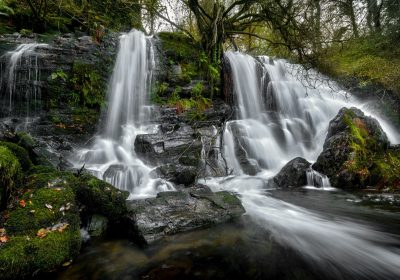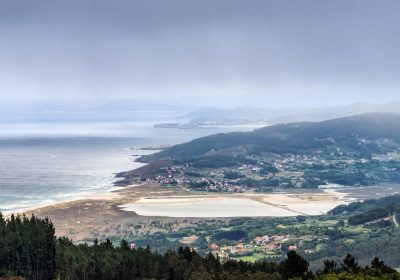


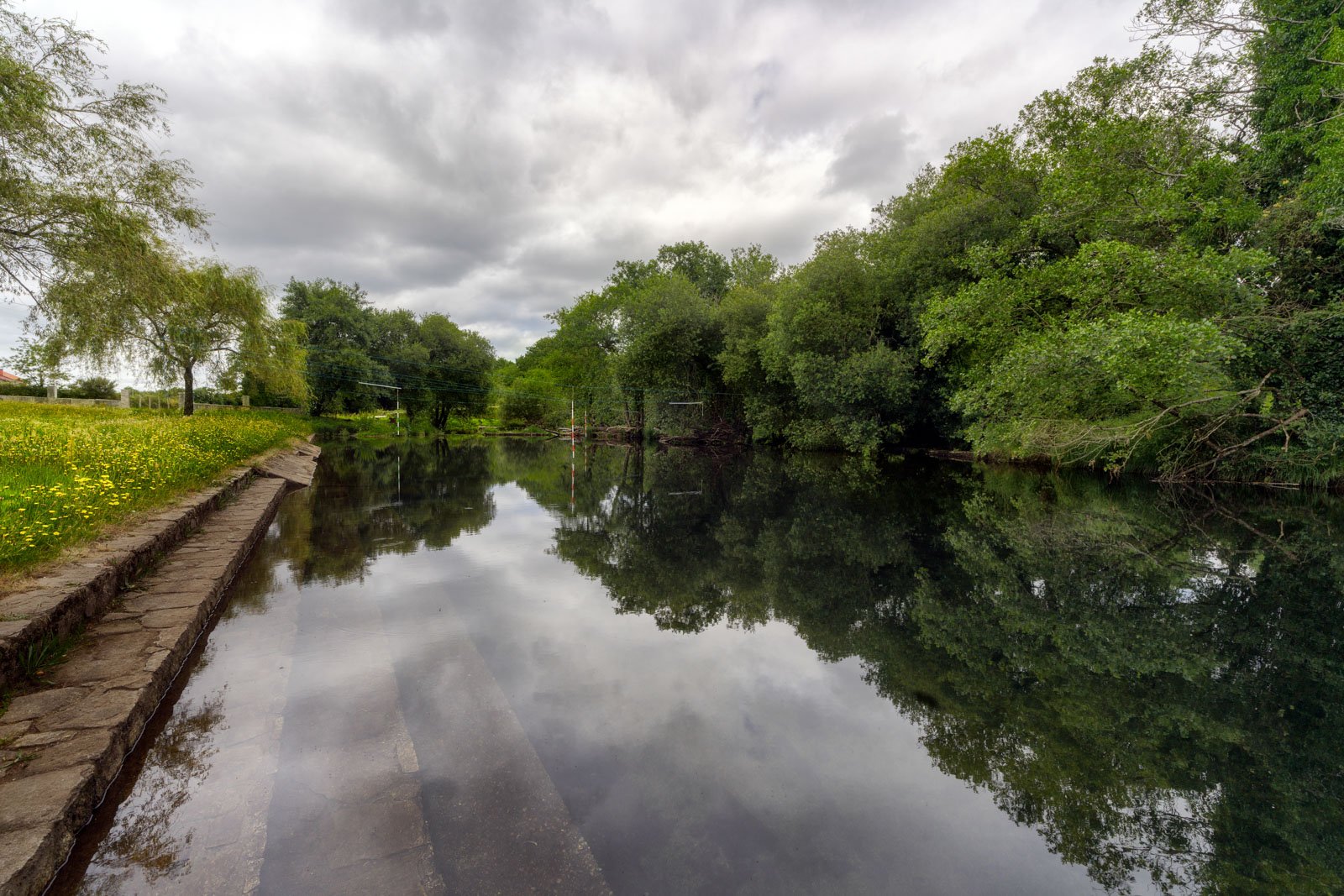
The valley of the river Beba lies between the Ruña hills and a hillock that separates it from the Mazaricos valley. It offers a sample of the landscape of the municipality of Mazaricos in which meadows alternate with man-made forest and native woodland. Distributed throughout this territory are the small population centres of the parishes of San Salvador de Colúns, San Xián de Beba and Santa María de Coiro.
Along its route, from its source near San Cristovo to where it flows into the river Xallas, the river Beba irrigates the land of the entire valley, which widens out from north to south. To get to know this beautiful valley, a suggested route is to follow the river upstream from Colúns to Suevos (Coiro). To get to Colúns, turn right at Ponte Olveira or Zanfoga onto the DP-3404 road from Dumbría to Pino do Val. The first stop is at the Colúns church, to see the unusual cross in its churchyard, which consists of three columns topped by a capital decorated with the heads of angels and volutes. On one face of the cross is Christ embracing St Francis, and on the other an image of the Virgin.
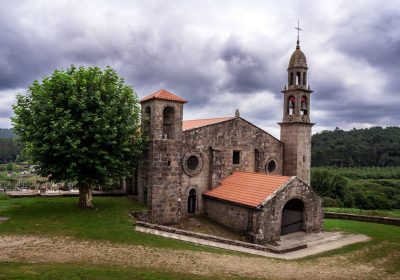
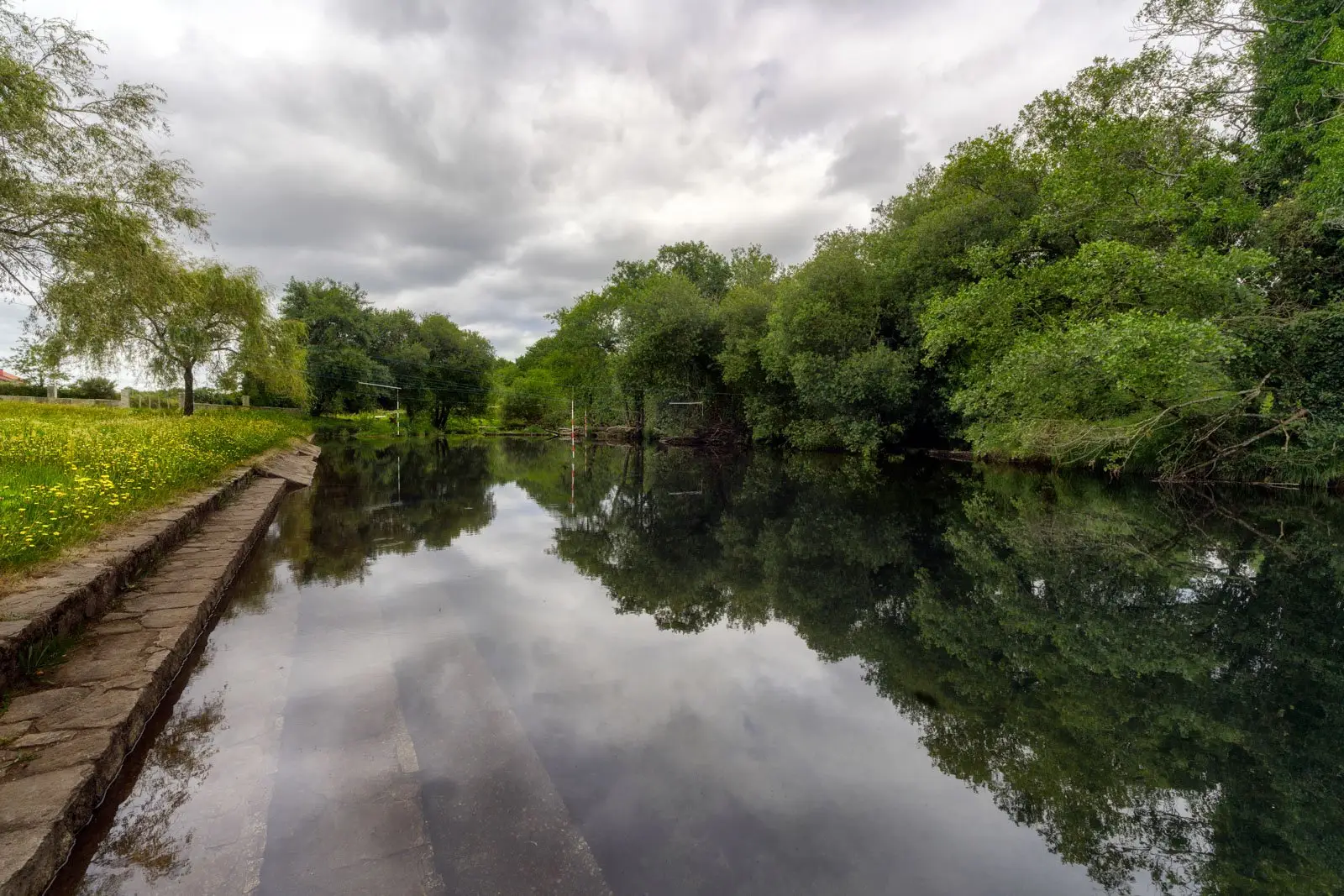
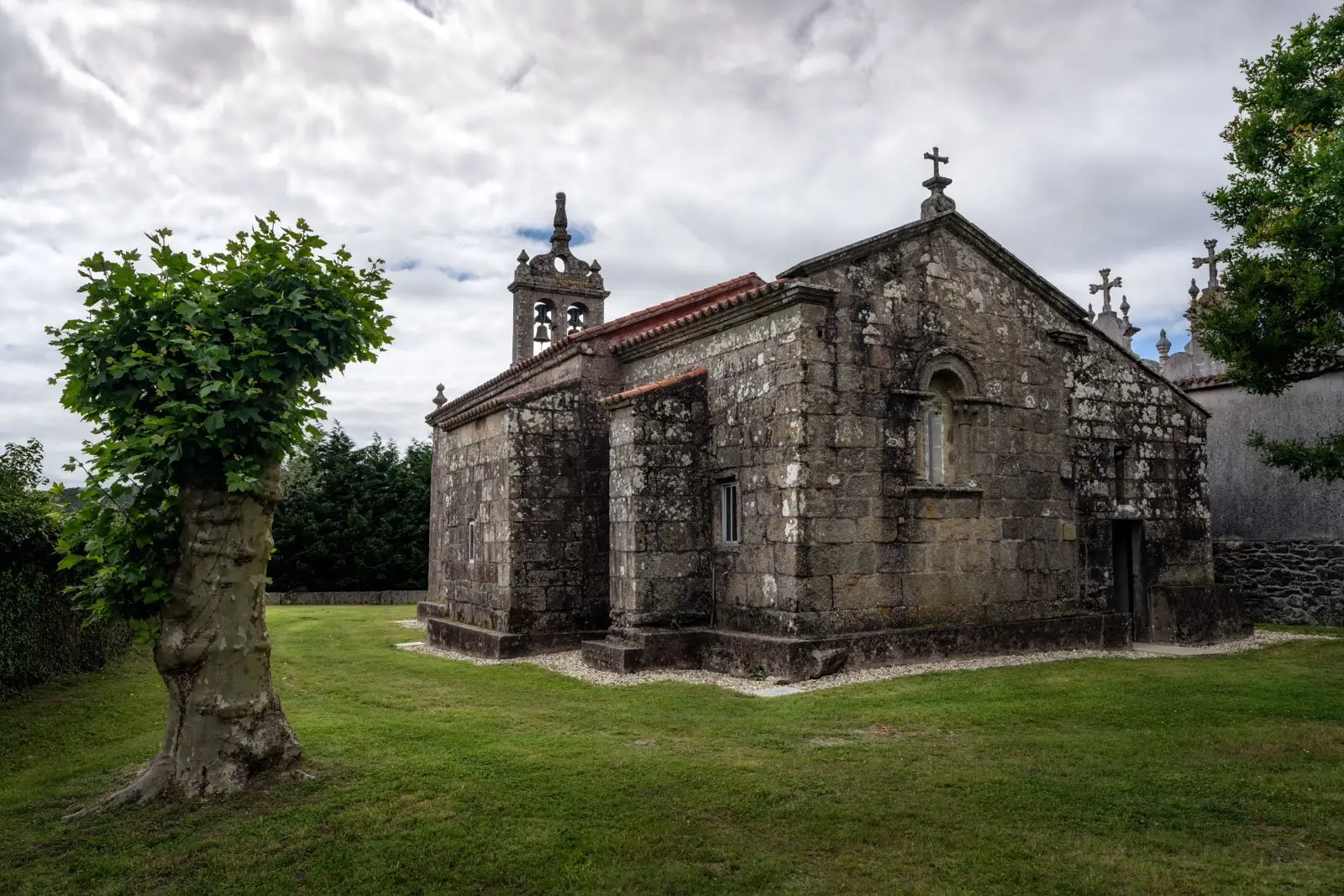
Continue along the road that follows the river to the Pontenova recreational area near an old bridge with just one pointed arch. This bridge, the river beach, the mills and the riverside woods form a charming place in which to enjoy nature. From this lovely spot, go to the parish of Beba, which gives its name to the river and the valley. Stop here to enjoy its church’s Romanesque sanctuary and gaze at the panoramic view of the valley through which you are travelling.
From Beba, you will come to the parish church of Coiro on the road that runs in a straight line down the left-hand side of the valley. The church stands on a hill looking down on the landscape. It is a baroque building with a 16th century main chapel. On the south end of the façade is an imitation baroque bell tower from the beginning of the 20th century.
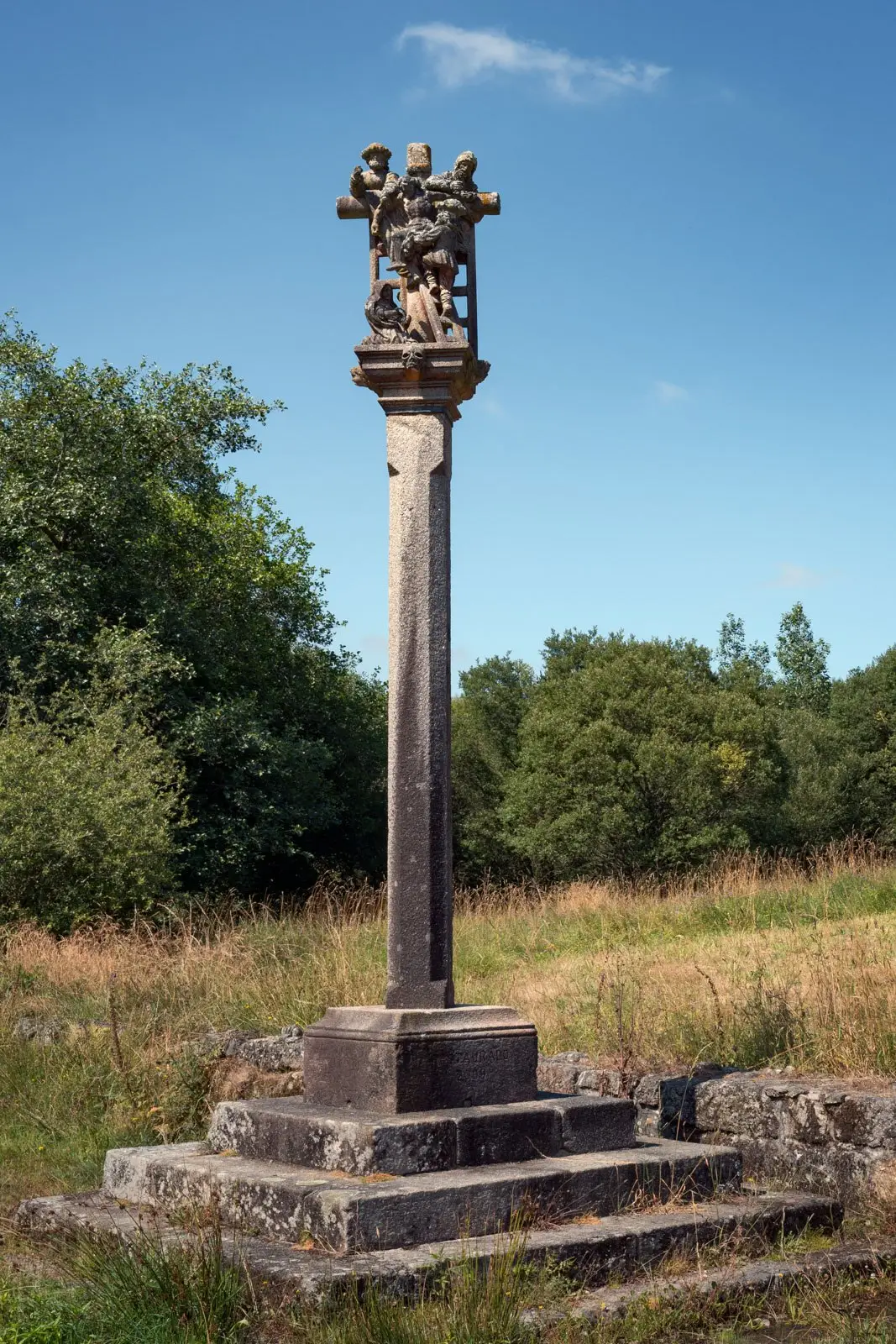
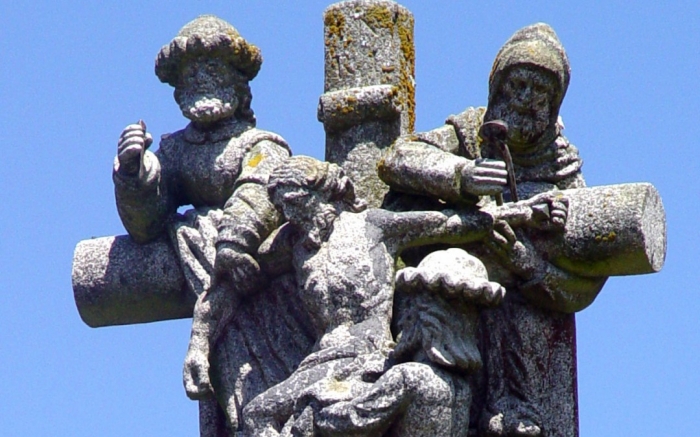
From Coiro continue on to Suevos. In this village you should visit the Cirolán calvary, a sculpted work of great interest, located beside the river. On its pedestal there appears this inscription: “Dedicated by Mr. Ventura Pérez de Lema. 1861”. The cross depicts the unnailing of Christ. On the back, Joseph of Arimathea and Nicodemus, each standing on a ladder, are taking out the nails. Between the ladders is St. Bonaventure holding a book and a quill pen. On the front, a servant is receiving the body of Jesus and Mary is kneeling at the foot of the scene. This magnificent work is attributed to the sculptor of Santiago de Compostela, Francisco María Rodeiro Permuy.