

The parish of Santiago de Mens, some 6 km from Malpica on the DP-4307 road to Ponteceso, has preserved two of the most outstanding mediaeval buildings in the district of Bergantiños: the parish church and the Altamira Towers, a valuable example of historical heritage for visitors to Costa da Morte.
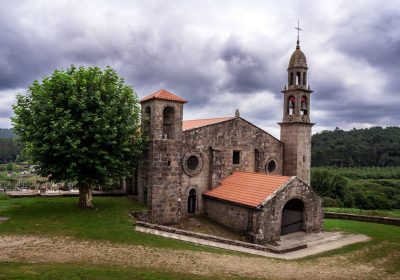
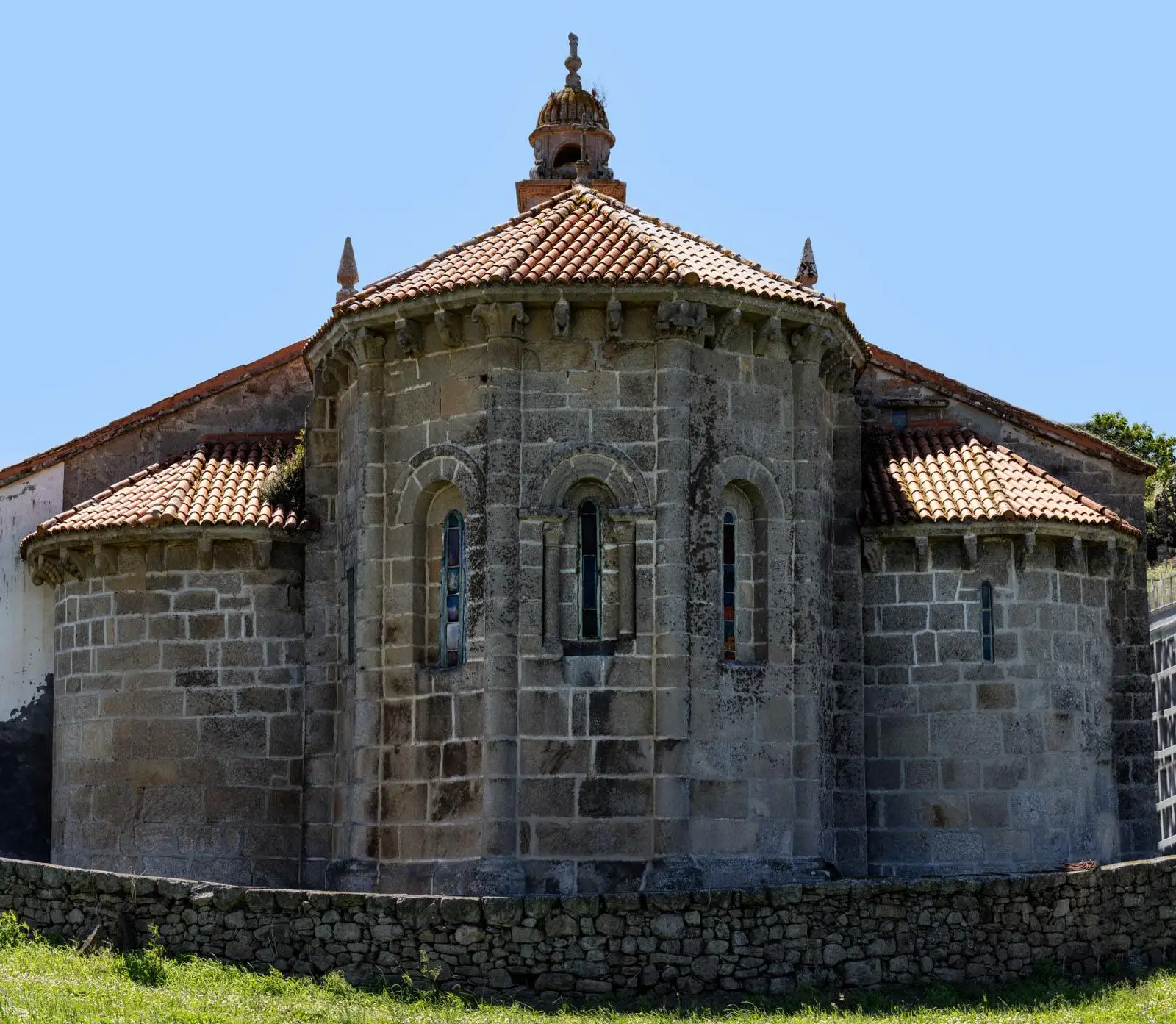
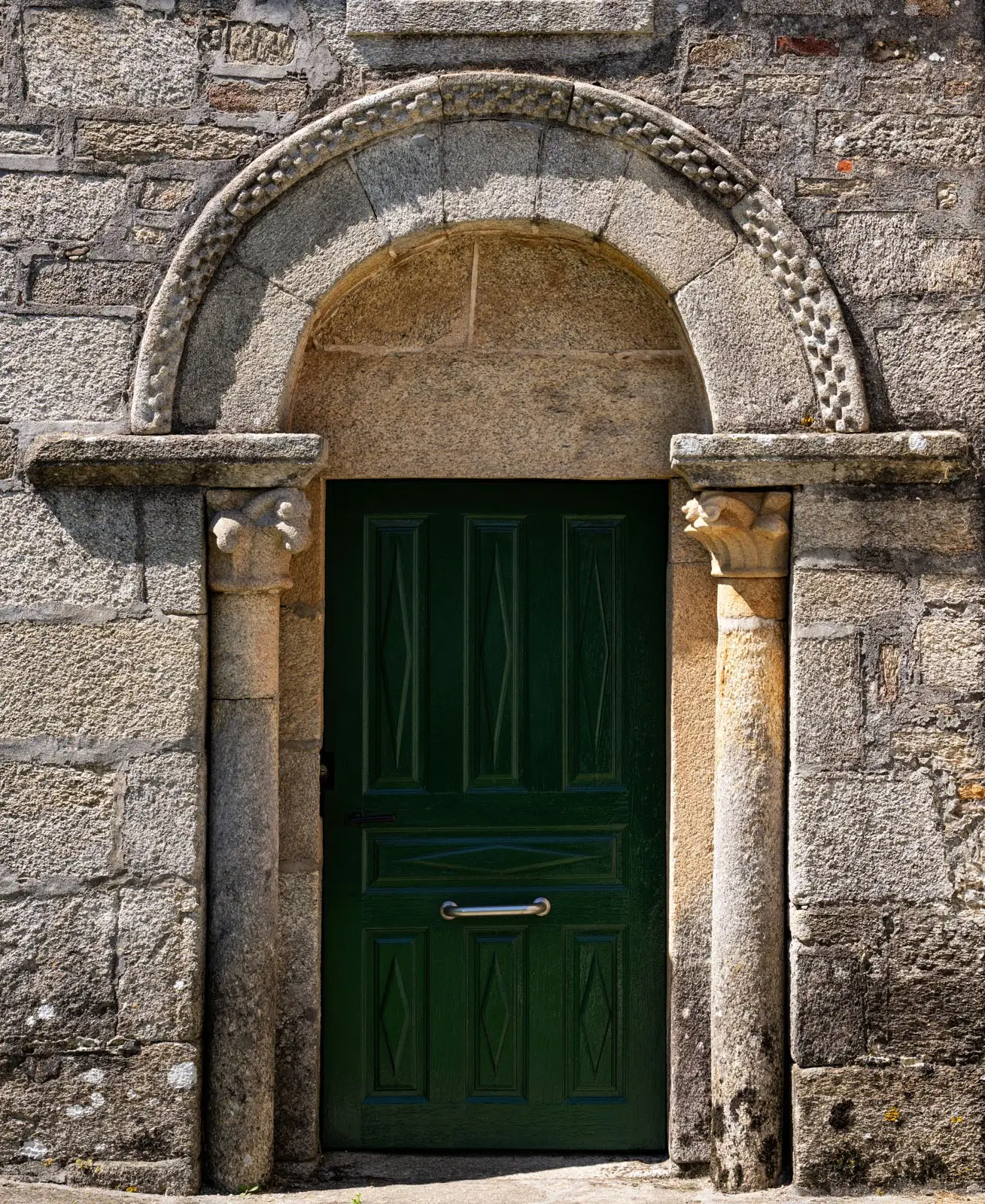
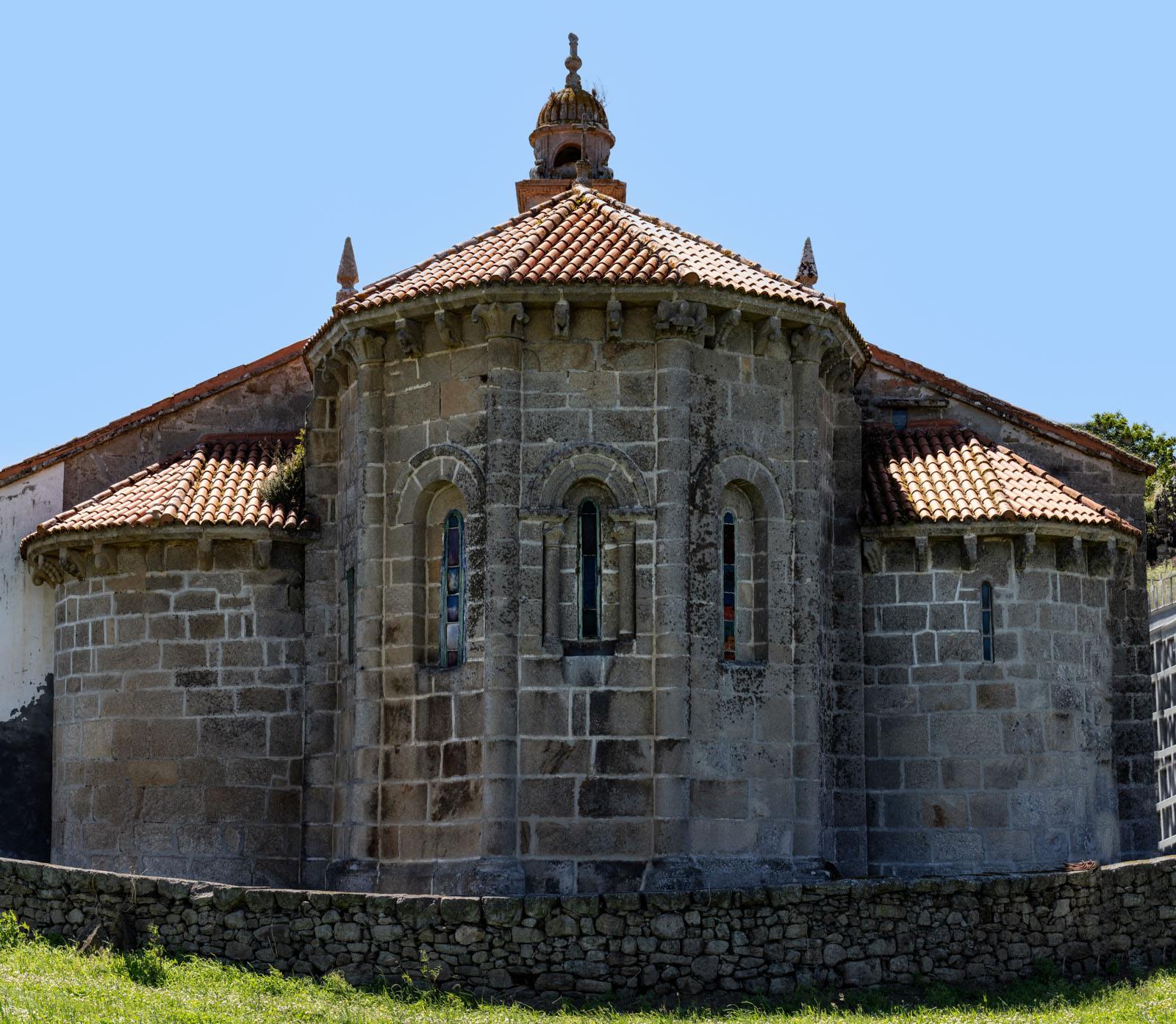
The church of Santiago de Mens (dedicated to Sain James) was part of a former Benedictine monastery, of which there is evidence dating back to the 10th century. The church preserves much of its 12th century Romanesque structure, to be seen in its three apses, south door and north wall. The façade, which replaced the previous one, was built at the end of the 19th century. The most noteworthy feature of this building is the collection of animal and human figures on the corbels in the apses and the north wall, and their expressions and poses.
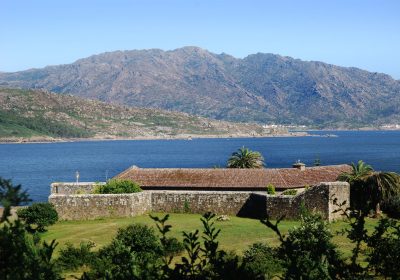
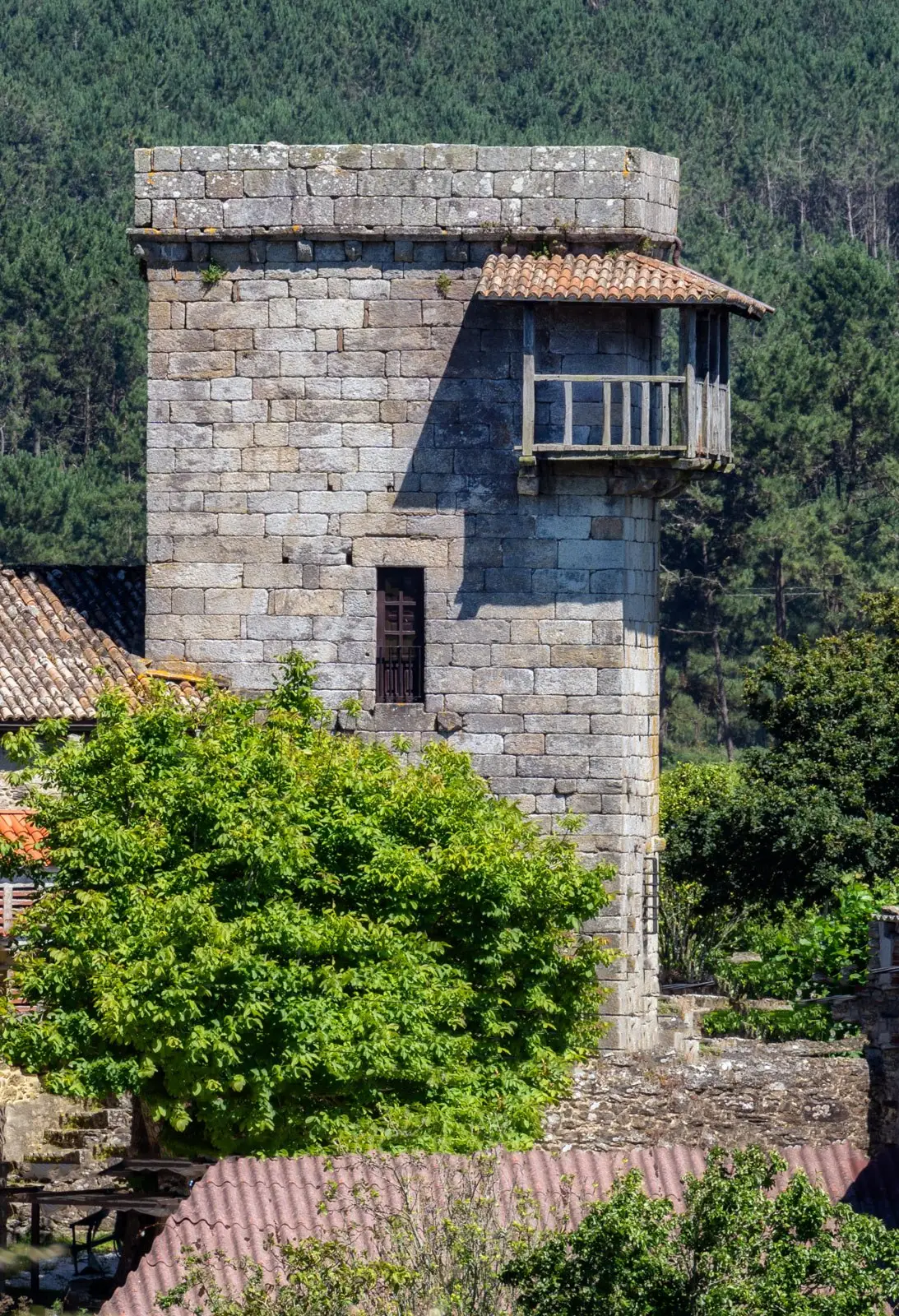
The Mens fort to the east of the church belonged to the powerful family of Moscoso, counts of Altamira, who ruled over a large part of the land on Costa da Morte. In this castle, as well as in the Vimianzo and Ferreira castles, Bernal Eáns de Moscoso imprisoned Alonso de Fonseca II between 1465 and 1466.
After being defeated in the Irmandiño Revolt of 1467, Lopo Sánchez de Moscoso I, count of Altamira, had the fortress rebuilt and it remained in the hands of the family until 1872. It was then purchased by the Abelenda de Buño family, which built the home that stands inside. After remaining in ruins for many years, a descendant of this family acquired the ownership of the entire complex and restored it as a private home.
There had to be a legend that linked two historical buildings that are so close to each other. It is said that a count who lived in the fortress kidnapped a girl from the village and held her prisoner inside the castle. Because of this, the local residents got together and decided to attack the towers to free the girl. When the count saw himself cornered, he tried to escape through a tunnel from the castle to the church, but the locals set fire to both ends and the nobleman died inside. Then they freed the girl. Since then, any wheat that is sown over the tunnel is stunted and wilts faster. For this reason, the place is known as Trigal Maldito, Accursed Wheat Field.
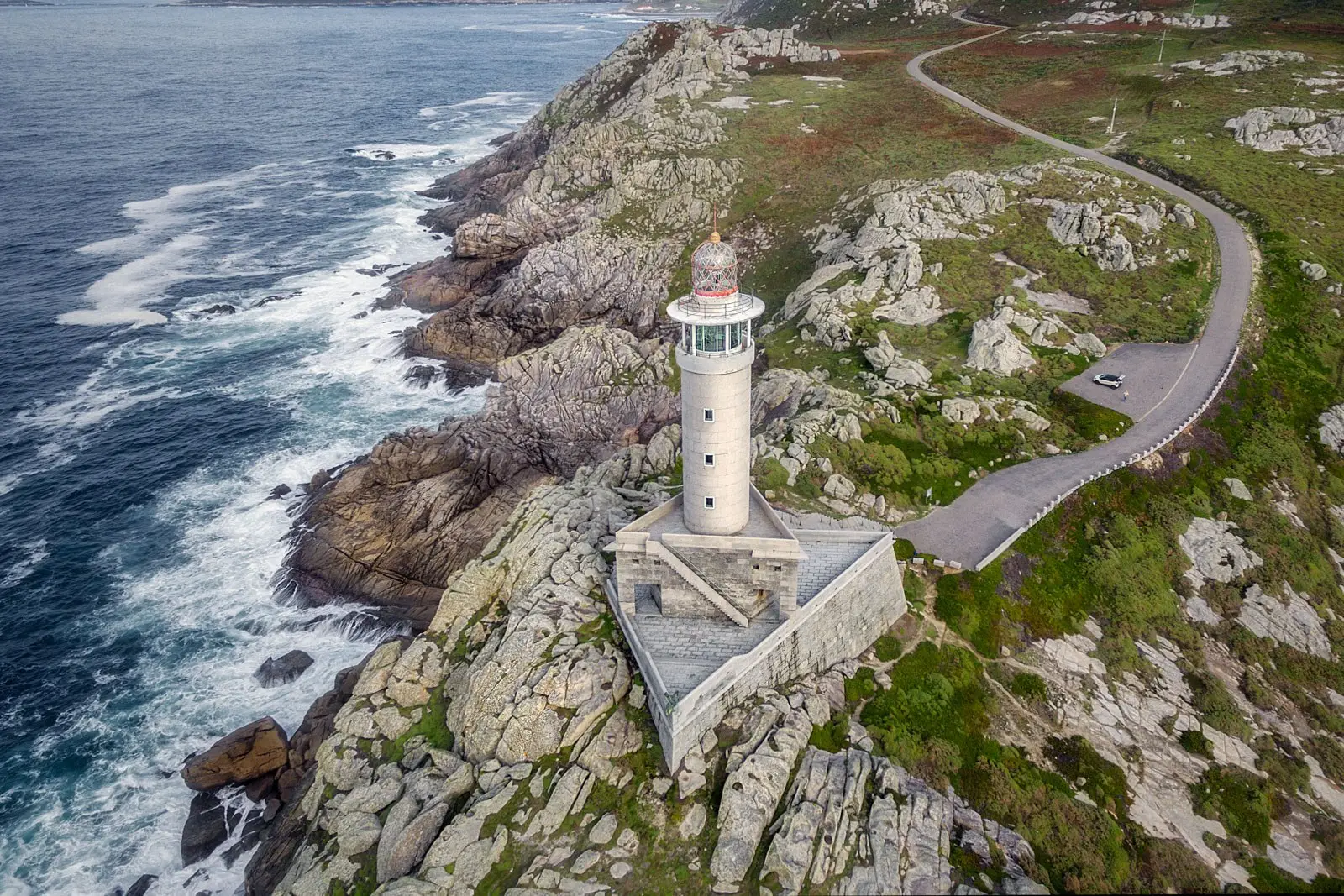
You can visit Punta Nariga through a trail from Mens to this extraordinary site. Here, in 1994, a majestic lighthouse was built, to a design by the architect from Pontevedra, César Portela, who proposed building a solid structure of great beauty, integrated into the granite surroundings of the area. It has three bodies. The first is a triangular platform, symbolising a boat. The second, also triangular, in the shape of a prism, houses the lighthouse’s services and, at the same time, serves as a lookout point. The third is a cylindrical tower with the light.