LIRES, A HAVEN OF PEACE FROM FISTERRA TO MUXÍA

Explore Cee through “LIRES, A HAVEN OF PEACE FROM FISTERRA TO MUXÍA”. A story that connects history and coast—exactly as locals live it. Tip: look out for fisterra.
155. Desembocadura do río Castro, entre a praia de Lires e Nemiña

Between the southern end of the Nemiña beach and Mellón Point, the small Lires ría meets the ocean. In fact, it is the mouths of the estuaries of the rivers Castro and Lires rather than a ría. The river Castro is the most important waterway of the district of Fisterra, formerly Nemancos. It rises at the upper end of the parish of Castrelo (Vimianzo), and after flowing through Berdoias, it waters the lands of Muxía, Dumbría and Cee, forming the boundaries between these municipalities. Its name comes from the Castro, the fortified settlement (Coucieiro, Muxía) where the Caldeiras do Castro falls is, a natural area of great beauty. After a surprising curve to the west, it flows out into the Lires ría.

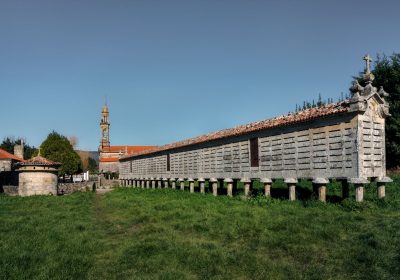
The other branch of this little ría continues on to the estuary of the river Lires and almost to the parish church of Santo Estevo, where a rural parish already existed in the 12th century, even though the current church only dates back to the mid-18th century. Its plain façade has almost no decorative elements. The few that can be seen feature the Baroque style that was in vogue when it was built. In the centre of Lires, interspersed among the modern buildings, which now predominate, are some traditional houses with stone hórreos (traditional Galician granaries).

The parish of Cee is protected by the Monte Mellón mount from the ocean winds, making the town and the land around it a secluded, hospitable place for the crops and the people who live here. The town had a tradition of working the land, and also of using the resources of the sea as a supplement, until the 1960s when, attracted by its lovely, sheltered environment, the first tourists arrived and were given accommodation in the labourers’ cottages, making Lires a pioneer of rural tourism.

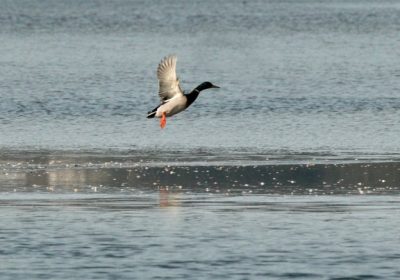
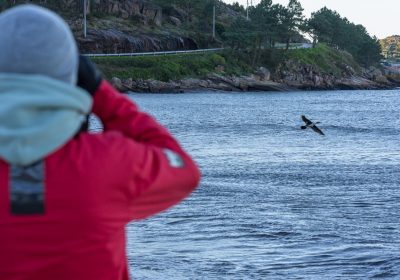
The change in the activities of the population was helped by the route from Santiago to Fisterra-Muxía becoming a Way of St. James. On the stage that links these two coastal towns, Lires is a required stopping place as it stands at the halfway point along the route. In recent years, the town has become a benchmark of tourism in the area. Its small ría is a place much appreciated by nature lovers, who have the opportunity here to spot a large number of different birds. From its coast, one can enjoy excellent views over the Nemiña beach and the mouth of the river Castro, and some beautiful sunsets.
Photo gallery of LIRES, A HAVEN OF PEACE FROM FISTERRA TO MUXÍA

Discover the Costa da Morte on our blog

Blog Costa da Morte

Festivities and traditional events on the Costa da Mort...

If there is one thing that defines the Costa da Morte, apart from its wild landscapes and untamed sea, it is its strong ...

BRAZAL ROCK, NATURE’S BALANCING ACT

Nature has been very generous with Costa da Morte, leaving outstanding natural monuments sculpted with the chisels of wa...

Birdwatching in Costa da Morte

Birdwatching is much more than a pastime; it is a powerful tool for connecting people with nature and promoting bird con...

GABENLLE, A PLACE FOR ENJOYING NATURE

Close to the town of Laracha, on the road to Soandres and Cerceda, on the banks of the river Anllóns, is the Gabenlle Re...

VIMIANZO CASTLE, THE SYMBOL OF THE MOSCOSO FAMILY’S POW...

Few of the mediaeval fortresses of Galicia are still standing. On Costa da Morte, some have managed to challenge the pas...

CARNOTA'S HÓRREO, ARTISTIC BEAUTY IN A HUMBLE GRANARY

No other building exists that identifies the landscape of Galicia like the hórreo, the stone granary. As soon as you go ...

Outdoor activities in Costa da Morte: surf, kayak and p...

Costa da Morte, as expected, is a land of outdoor activities. Especially aquatic. Although it is true that the emergence...

MALPICA, MY LOVE...

The sea builds character, but if that sea is as violent as in Costa da Morte and the piece of land on which one lives is...

MONTE PINDO, GALICIA’S CELTIC OLYMPUS

Monte Pindo, known locally as O Pedregal (the stony ground), is such a striking geographical accident that it cannot be ...

Photography tips for capturing birds in Costa da Morte

Today, we’re going to offer you some photography tips for capturing birds in Costa da Morte. Costa da Morte is a paradis...

Upcoming events on the Costa da Morte

Find out instantly what activities await you on the Costa da Morte. Here you will find an up-to-date list of concerts, fairs, guided tours and shows that take place on the Costa da Morte. Don’t miss any event: experience the culture, sport and tradition of our region. And if you want to find out before anyone else, sign up for our newsletter and you will receive all the news in your email.

  • Thursday
    29
    October

    Registration for Tradi...

    Traditional Galician music and dance bring generations together in Fis...

  • Thursday
    29
    October

    Creando panos: Women's...

    Some stories deserve to be written down — even on a scarf. On 28 and 2...

  • Thursday
    29
    October

    Introduction to Galici...

    Carnota Council is offering an Introduction to Galician Language and C...

Logo Cmat Color Fondo Transparente
Privacy Overview

This website uses cookies so that we can provide you with the best user experience possible. Cookie information is stored in your browser and performs functions such as recognising you when you return to our website and helping our team to understand which sections of the website you find most interesting and useful.