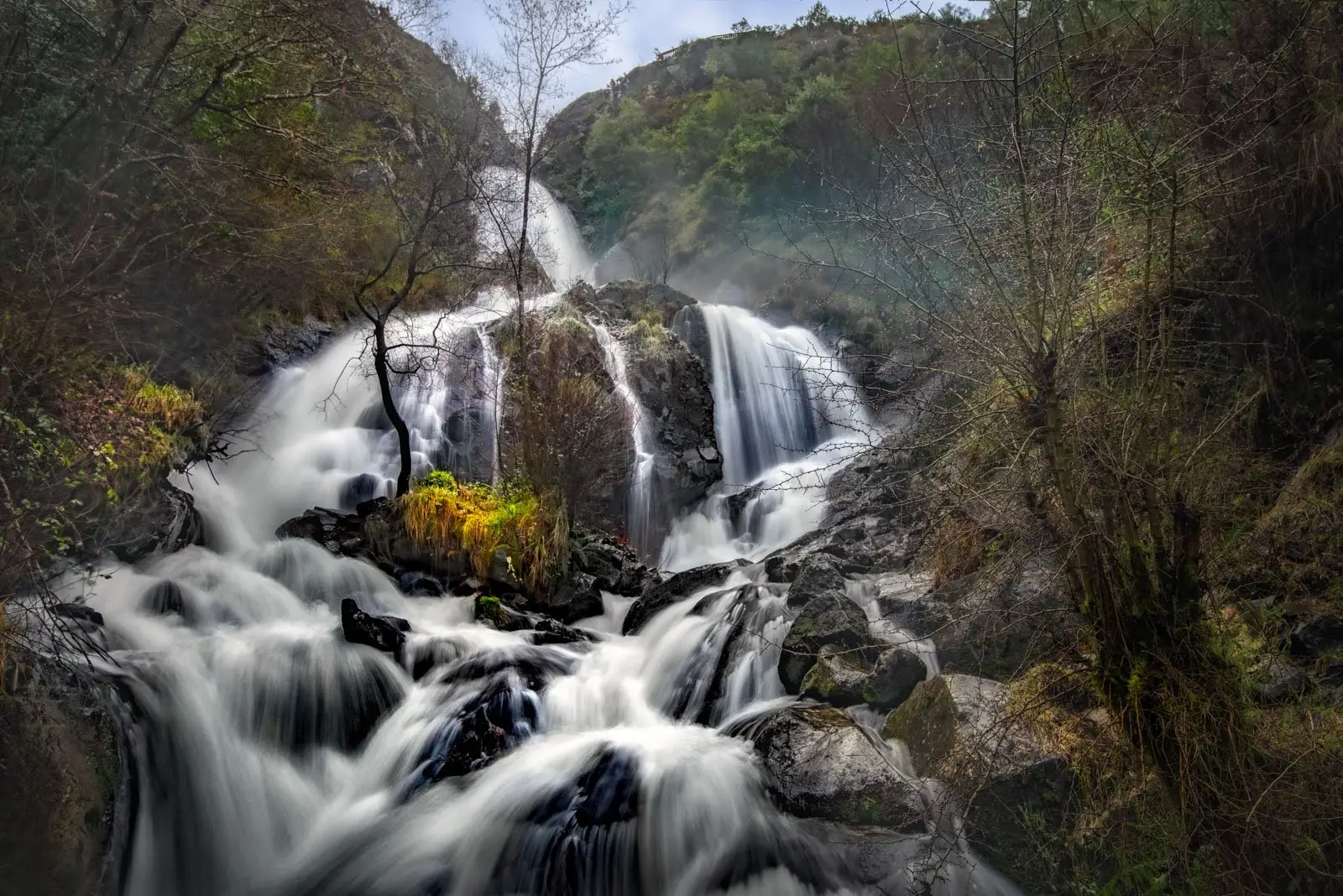


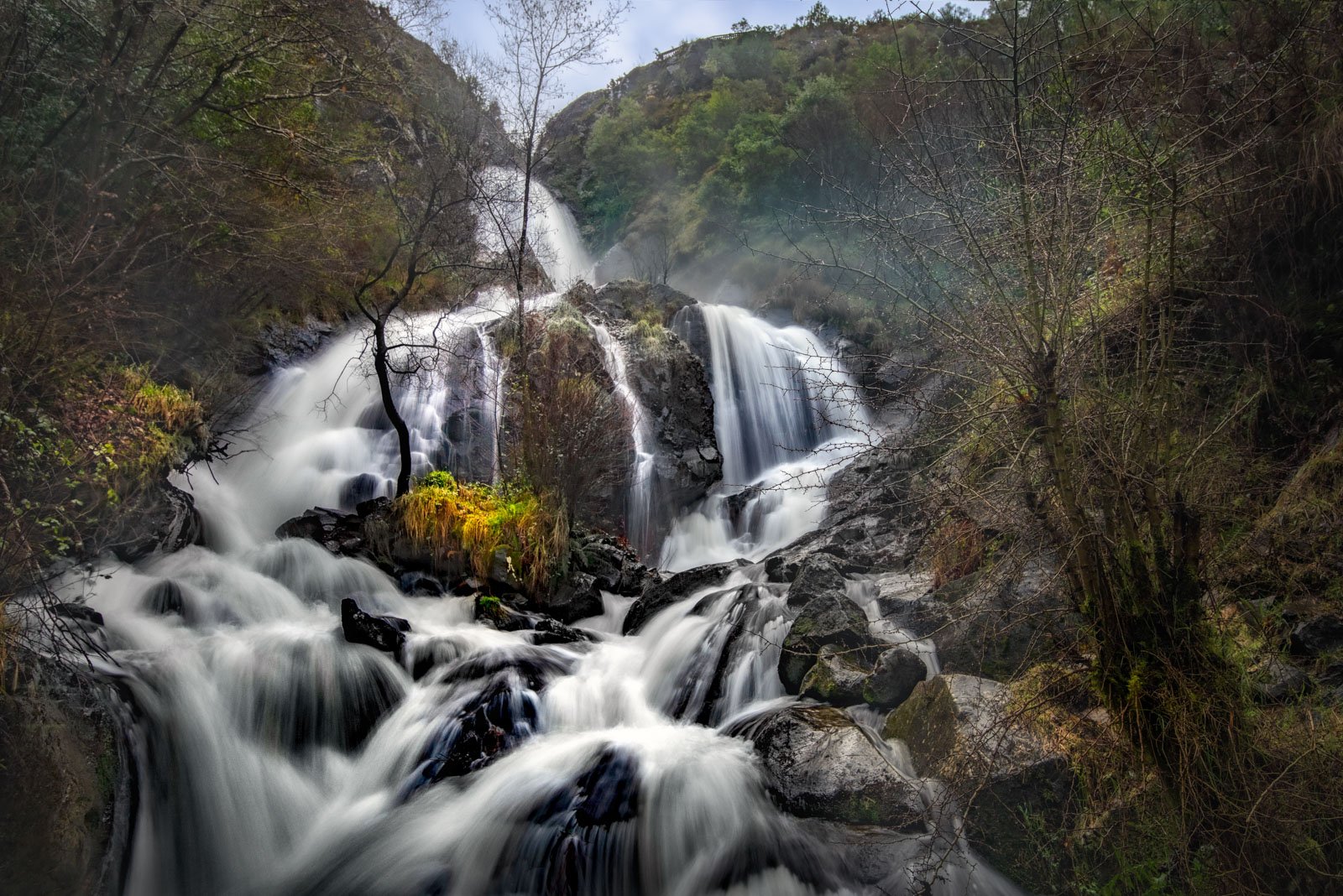
Nature gave San Paio de Entrecruces the gift of a extraordinary work that moves all visitors who go to this magical place—the Férveda. An explosion of colour, sounds and images that enter the senses and cannot fail to move the walkers who see this spectacle.
To get to this sensational place, take the road from Carballo to Santiago. After passing Entrecruces, take a side road left to San Paio, which takes you to the chapel dedicated to this saint. On foot, go straight through the village to a path on the right that follows the river Outón and after 500 metres you will come to the falls.
At the start of the path, the sound of the water in the stream and the woods by the side of the river welcome you into an atmosphere that will prepare you for the emotions that await you at the end.
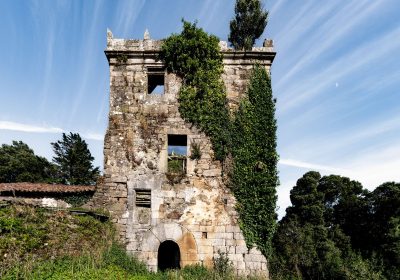
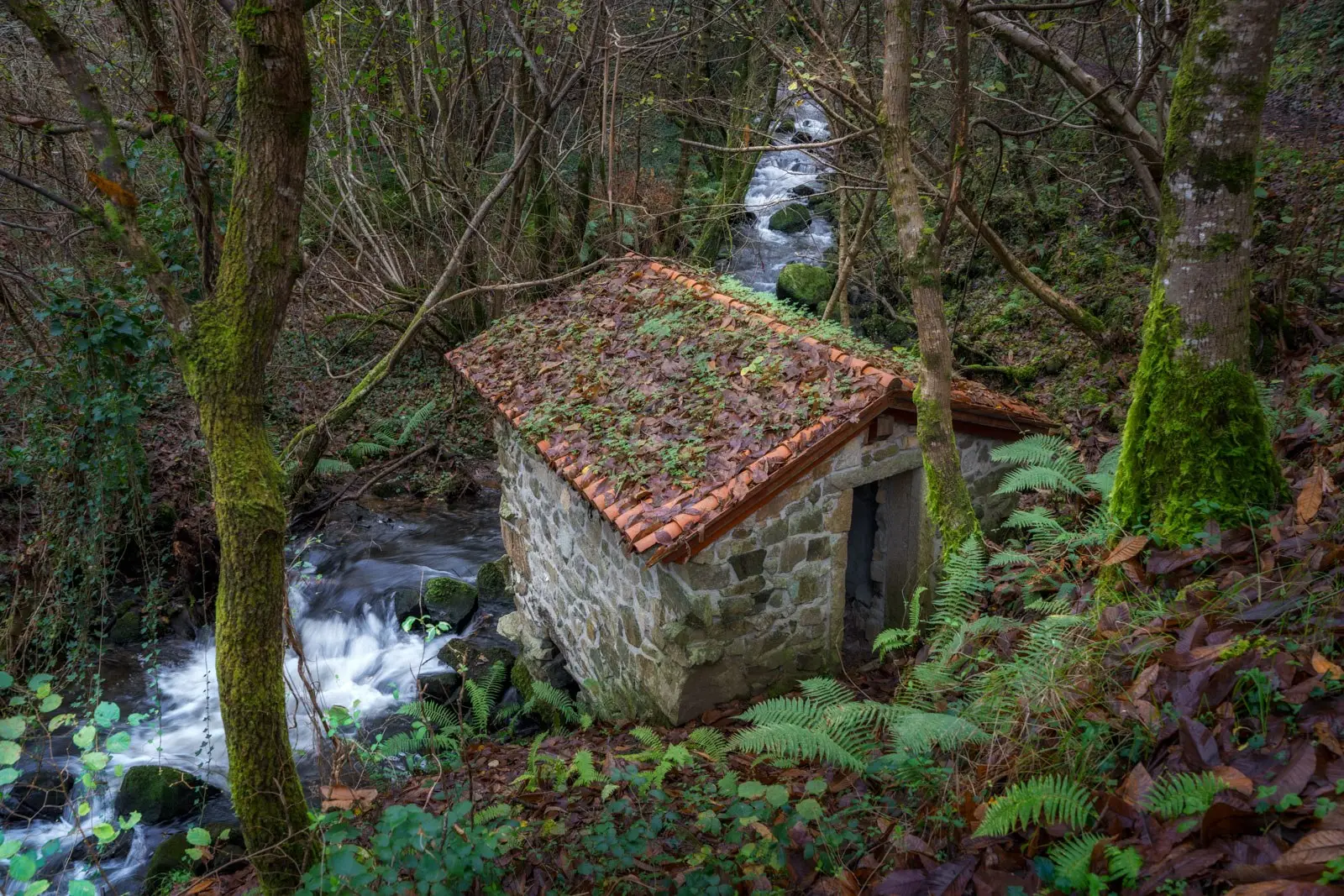
The impact of humans on the landscape is visible in the restored watermills along the way and the ruined buildings on the right, which belonged to a former hydroelectric power plant installed in 1915, which was the first to supply the town of Carballo. In the vicinity, some sections can be seen of the pipe that carried the water from the small dam that was built before the waterfall.
From there, if the level of the river is high, you can start to hear in the background the sound of the water in the Férveda, which increases as you approach the waterfall, but is not visible until you come within a few metres. It seems as if it wants to be heard before it is seen, with the intention of surprising and having a greater effect on the intruders who approach its habitat.
When you are in front of this fascinating natural setting, you become engrossed in the variety of shapes and sounds that you notice and how the force of nature invades you when faced with such beauty, which has been perfectly put in words by the humanist priest Xosé Pumar Gándara: “The Férveda is a constant yet varied spectacle, it has all the tempos and airs (…). It has its minuet when the water is low, its adagio in spring, its forte tutti in winter, when floods and torrents overflow onto the roads and fields.”
The origins of the waterfall are linked to the Meridian Rift, which is formed by a series of faults from Carballo to Tui, giving rise to hot springs, like the sulphurous waters of the Bergantinian capital. In this area, the raised block corresponds to the land that is called locally A Alta, the highlands, and the sunken block to the valley, A Baixa, the lowlands. The Férveda has a drop of some 40 m where the river Outón falls from the uplands into the valley.
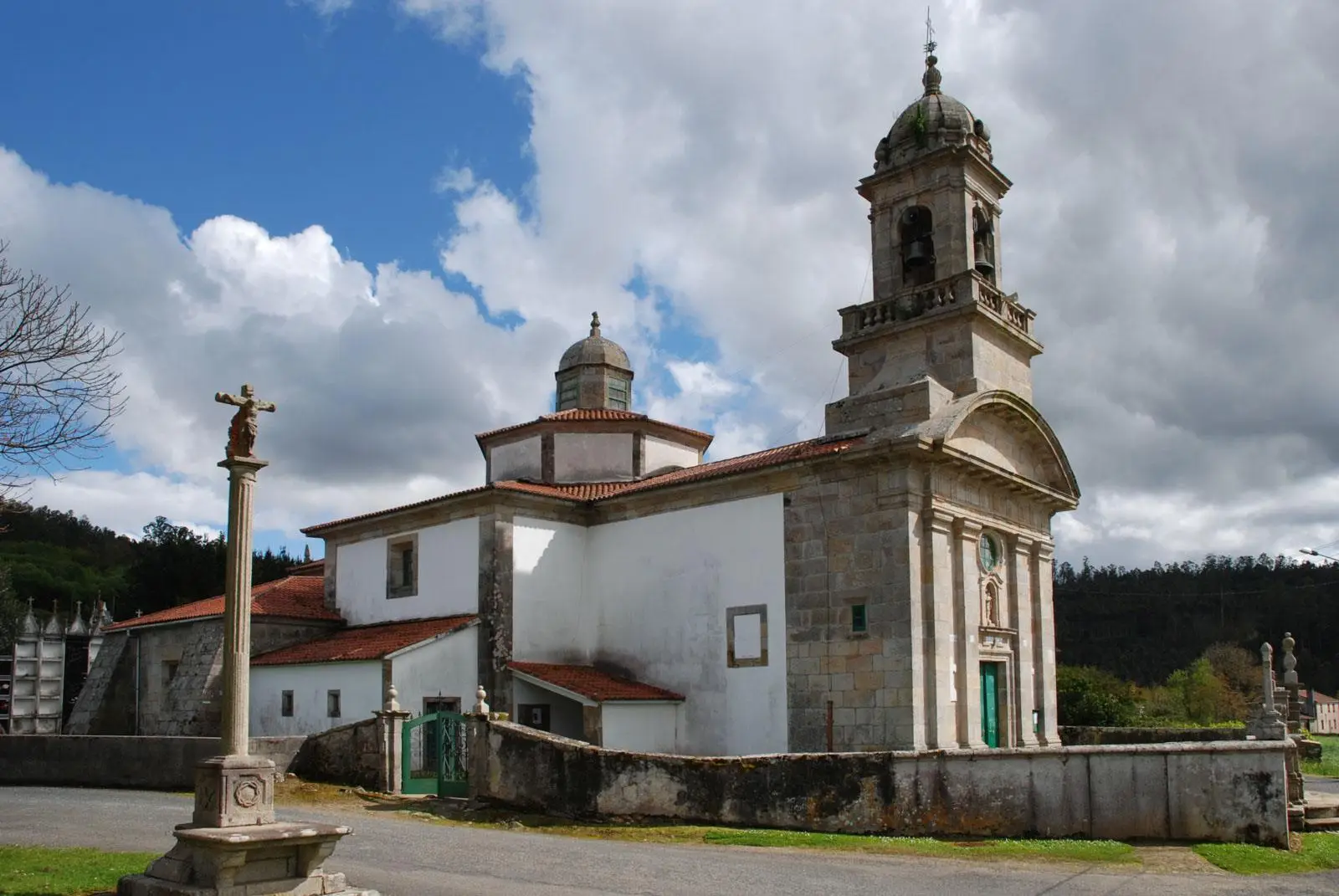
Returning from the falls, you can also take the opportunity to visit the Férveda de Rus, by turning to the right at the Canosa crossroads and following the road some 2 km. This small waterfall is much humbler than the San Paio falls, but very beautiful. A little before getting there, you will pass by the parish church of Santa María de Rus (dedicated to Sain Mary of Rus), a splendid church that is known as the little cathedral of Bergantiños. It was built in several stages from the end of the 17th century into the 19th century.