

Some coastlines are made to be visited; others need to be walked. Costa da Morte belongs to the latter. Here, following the Atlantic means discovering a landscape that is constantly changing: fishing towns and harbours, vast beaches, estuaries, headlands exposed to the ocean, lighthouses, cliffs and natural areas where the sea still sets the rhythm of the land.
The Camiño do Litoral de Galicia, created and promoted by the Xunta de Galicia, turns this way of travelling into a major route along the Galician coast. More than 1,370 kilometres divided into 52 stages make it possible to explore the coastline on foot or by bicycle, bringing together landscape, heritage, nature, seafaring culture and coastal communities along a single route.
In Costa da Morte, the Camiño do Litoral runs from stage 19 to stage 29, both included. These eleven stages cross a large part of the destination from north to south, from A Laracha to Carnota, passing through Malpica de Bergantiños, Ponteceso, Laxe, Camariñas, Muxía, Cee and Fisterra, and bringing walkers closer to some of Galicia’s most recognisable Atlantic landscapes.
If you would like a concise overview of the route and access to the official map, you can also visit our page dedicated to the Camiño do Litoral through Costa da Morte. In this guide, we go a step further: exploring the project, understanding how these eleven stages are organised and discovering why this new route can become one of the great experiences for hiking and active tourism in Costa da Morte.
Camiño do Litoral de Galicia: a major Xunta project for exploring the coast
The idea behind the Camiño do Litoral is as simple as it is ambitious: to create a continuous route along the Galician coastline and allow travellers to discover it at a different pace. The Xunta de Galicia has developed a route that connects existing paths, trails and infrastructure and brings them together within a single, recognisable and signposted itinerary.
The result is a route of more than 1,370 kilometres divided into 52 stages, linking the Galician coast from north to south. After completing the signage work during the summer of 2026, the Xunta officially opened the Camiño do Litoral, adding a major new nature, hiking and active tourism experience to Galicia.
But its importance goes far beyond the number of kilometres. The Camiño do Litoral offers another way to experience the coast: walking, stopping, observing and discovering everything that lies between the best-known places. Small towns, harbours, beaches, traditional paths, rural landscapes, maritime heritage and natural areas all become part of the journey itself.
The Xunta also sees the project as a way to enhance the natural and cultural heritage of the coastline, promote more sustainable and year-round tourism and contribute to the economic vitality of coastal municipalities. It is an approach that finds an especially fitting setting in Costa da Morte.
The 11 stages of the Camiño do Litoral in Costa da Morte
The section crossing the Costa da Morte destination consists of eleven consecutive stages, from stage 19 to stage 29. According to the current organisation of the Camiño do Litoral by the Xunta de Galicia, they are:
- Stage 19: A Laracha – Malpica de Bergantiños
- Stage 20: Malpica de Bergantiños – Malpica de Bergantiños
- Stage 21: Malpica de Bergantiños – Ponteceso
- Stage 22: Ponteceso – Laxe
- Stage 23: Laxe – Camariñas
- Stage 24: Camariñas – Camariñas
- Stage 25: Camariñas – Muxía
- Stage 26: Muxía – Cee
- Stage 27: Cee – Fisterra
- Stage 28: Fisterra – Cee
- Stage 29: Cee – Carnota
The stage names refer to their starting and finishing points, but between them the trail reveals a much broader succession of landscapes, coastal communities and places of interest. This is precisely one of the great attractions of a long-distance route: the destination is not only at the end of each stage, but also in everything discovered along the way.
From A Laracha to Malpica: the journey through Costa da Morte begins
Stage 19, between A Laracha and Malpica de Bergantiños, opens the Camiño do Litoral route through Costa da Morte. The landscape begins to reveal the character that will accompany walkers over the following days: Atlantic horizons, sandy beaches, small communities and a coastline that becomes increasingly distinctive as the route heads west.
It is an excellent introduction to one of the defining features of this trail. The Camiño do Litoral is not simply about connecting two points on a map, but about creating continuity within an experience in which the sea is a constant reference.
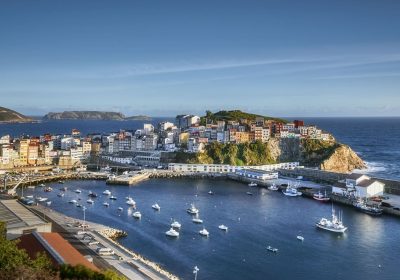
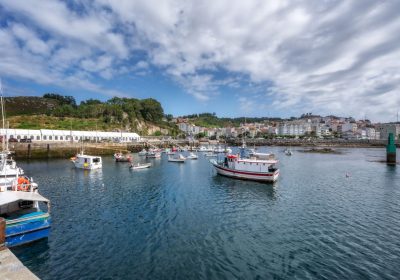
Arriving in Malpica de Bergantiños, one of Costa da Morte’s great fishing towns, also brings walkers into a landscape where harbour life, fishing, scenery and everyday life still maintain a direct relationship with the ocean.
Malpica de Bergantiños: walking a coastline open to the Atlantic
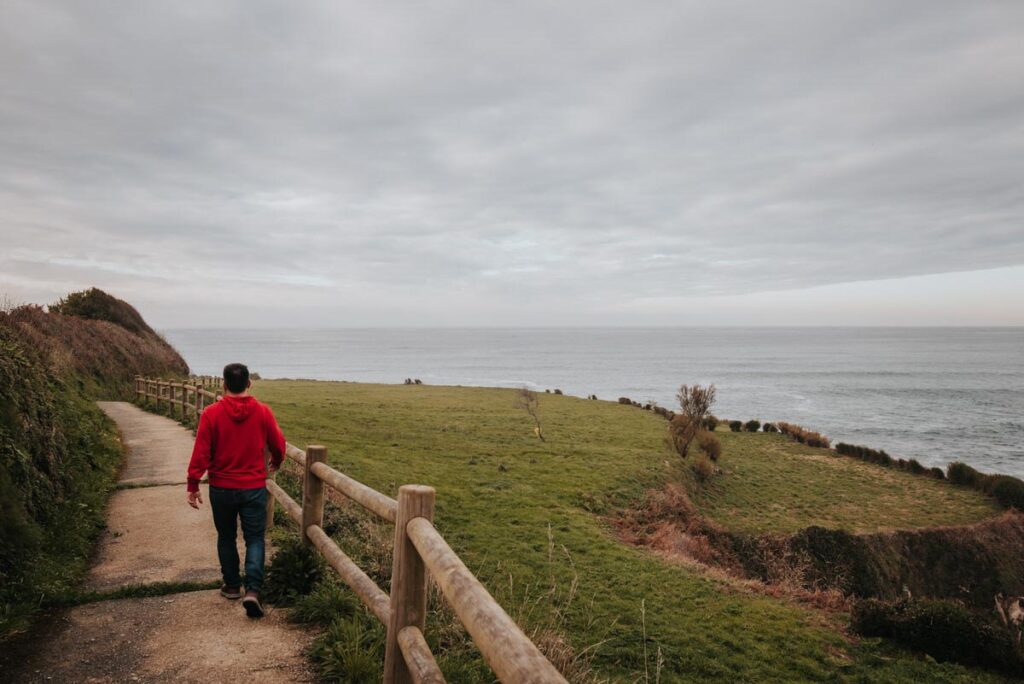
Stage 20 begins and ends in the municipality of Malpica de Bergantiños, allowing walkers to explore one of the most distinctive stretches of coastline in this first part of the route. Stage 21 then continues from Malpica towards Ponteceso.
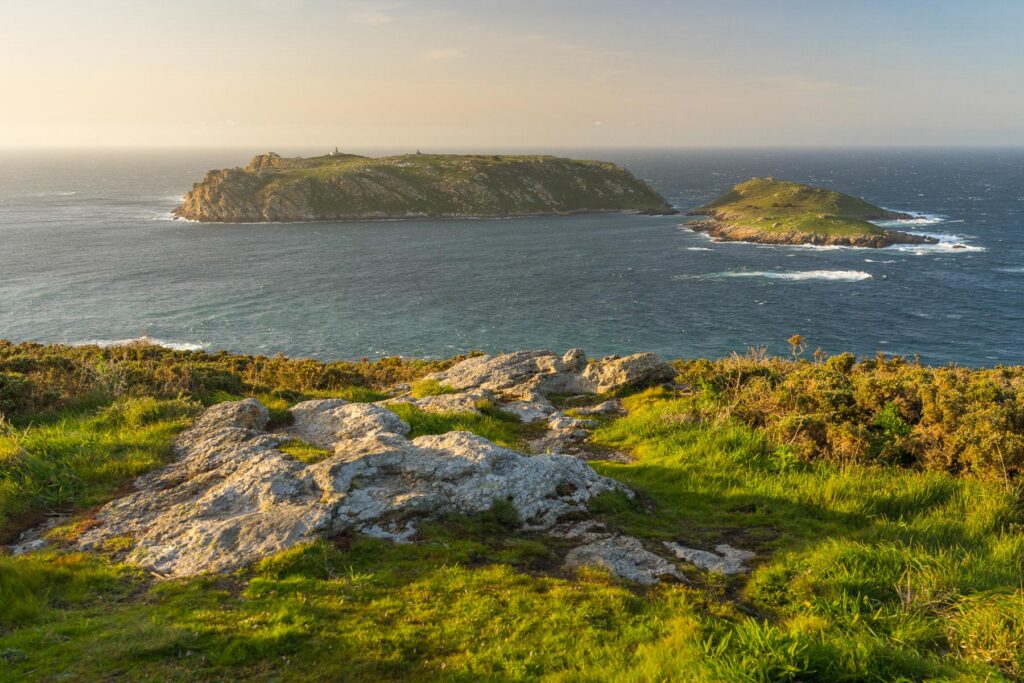
This is a landscape of granite, wind, headlands and sweeping views across the ocean. Places such as Punta Nariga, the Illas Sisargas and Malpica’s open coastline form part of the defining scenery of this area of Costa da Morte.
From a hiker’s perspective, one of the project’s main strengths becomes particularly clear here: instead of seeing these places as isolated points, the trail allows them to be understood as consecutive parts of one great Atlantic landscape.
From Malpica to Ponteceso: seafaring heritage and dramatic coastal landscapes
Stage 21 connects Malpica de Bergantiños with Ponteceso and continues along a coastline where fishing communities sit alongside areas of outstanding natural and scenic value.
The area around Corme and O Roncudo is a particularly powerful expression of the identity of this landscape. Here, the ocean is far more than a backdrop for photographs: for generations it has shaped local trades, gastronomy and ways of life.
For those walking the trail, this connection between landscape and culture adds another dimension to the hiking experience. Walking through Costa da Morte also means travelling through a territory whose history and identity have been built around the sea.
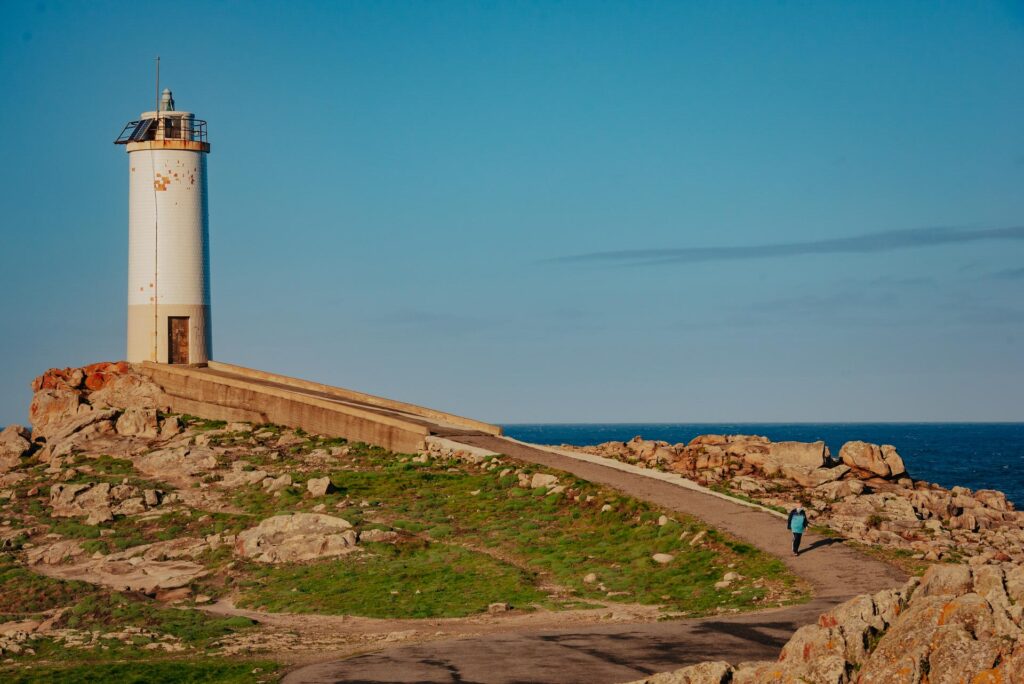
From Ponteceso to Laxe: another way of seeing the landscape
Stage 22 links Ponteceso and Laxe and leads into a different kind of landscape. The coastline changes once again, with estuaries, sandy beaches and natural areas temporarily softening the more rugged character of the Atlantic coast.
This constant variation is essential on a multi-day trek. A good long-distance trail needs to maintain the walker’s curiosity, and the Camiño do Litoral achieves this by giving each section a distinctive character of its own.
Arriving in Laxe, where the beach, harbour and town are closely connected, also provides one of those rewarding stage finishes that invites walkers to put down their backpacks and continue exploring on foot.
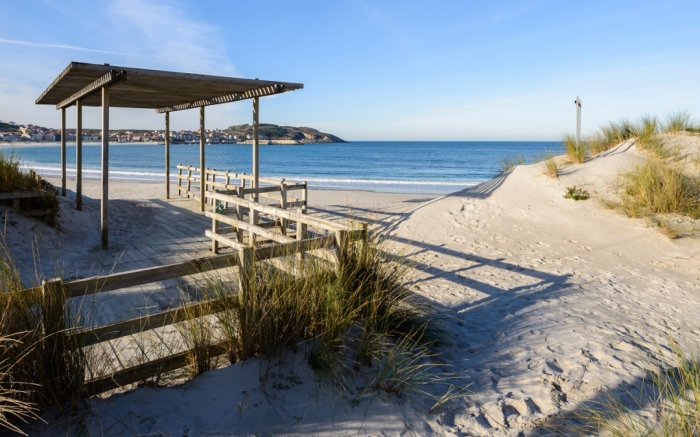
From Laxe to Camariñas: hiking through Costa da Morte at its most Atlantic
With stage 23, between Laxe and Camariñas, the Camiño do Litoral continues into one of the areas where the force of the Atlantic landscape can be felt most clearly. Vast sandy beaches, open coastline, small communities and natural spaces accompany a route where the ocean horizon once again takes centre stage.
It is also an especially interesting area for understanding how quickly the coastline can change. Dune systems and beaches sit alongside rocky sections and communities whose history is deeply connected to the sea.
On a trail like this, these changes are not merely details. They are what turn a succession of stages into a genuine journey.
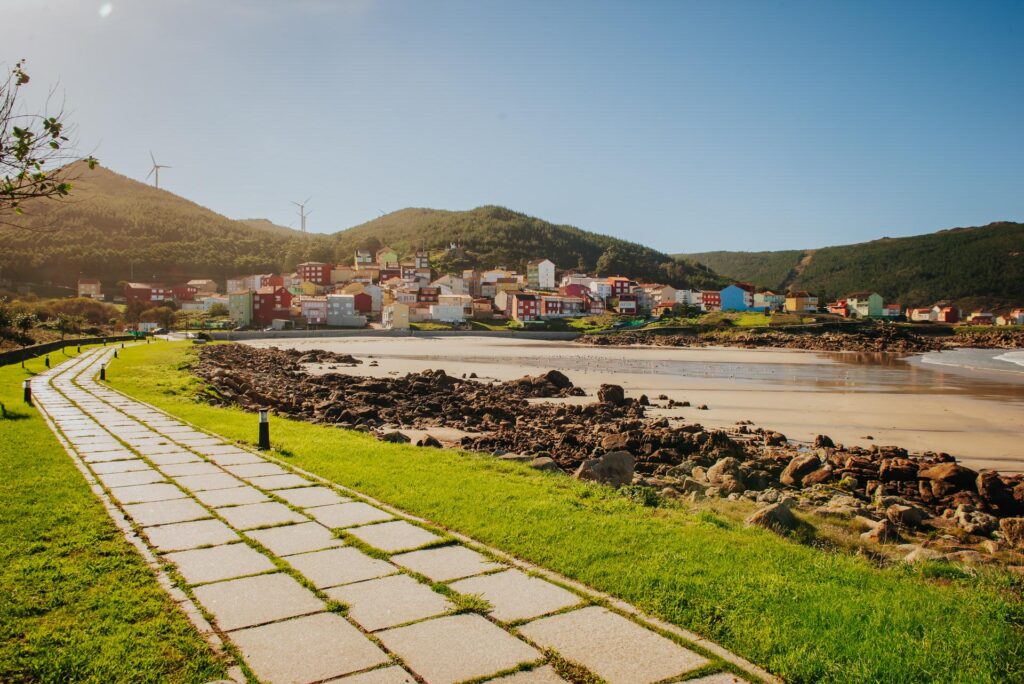
Camariñas: a stage through a land of lighthouses and shipwrecks
Stage 24 takes place within the municipality of Camariñas, one of the areas that best represents the most powerful image of Costa da Morte.
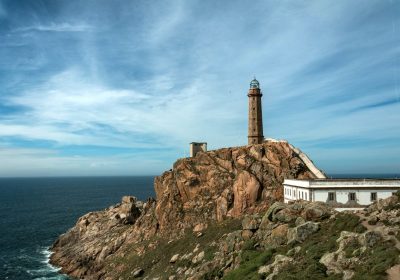
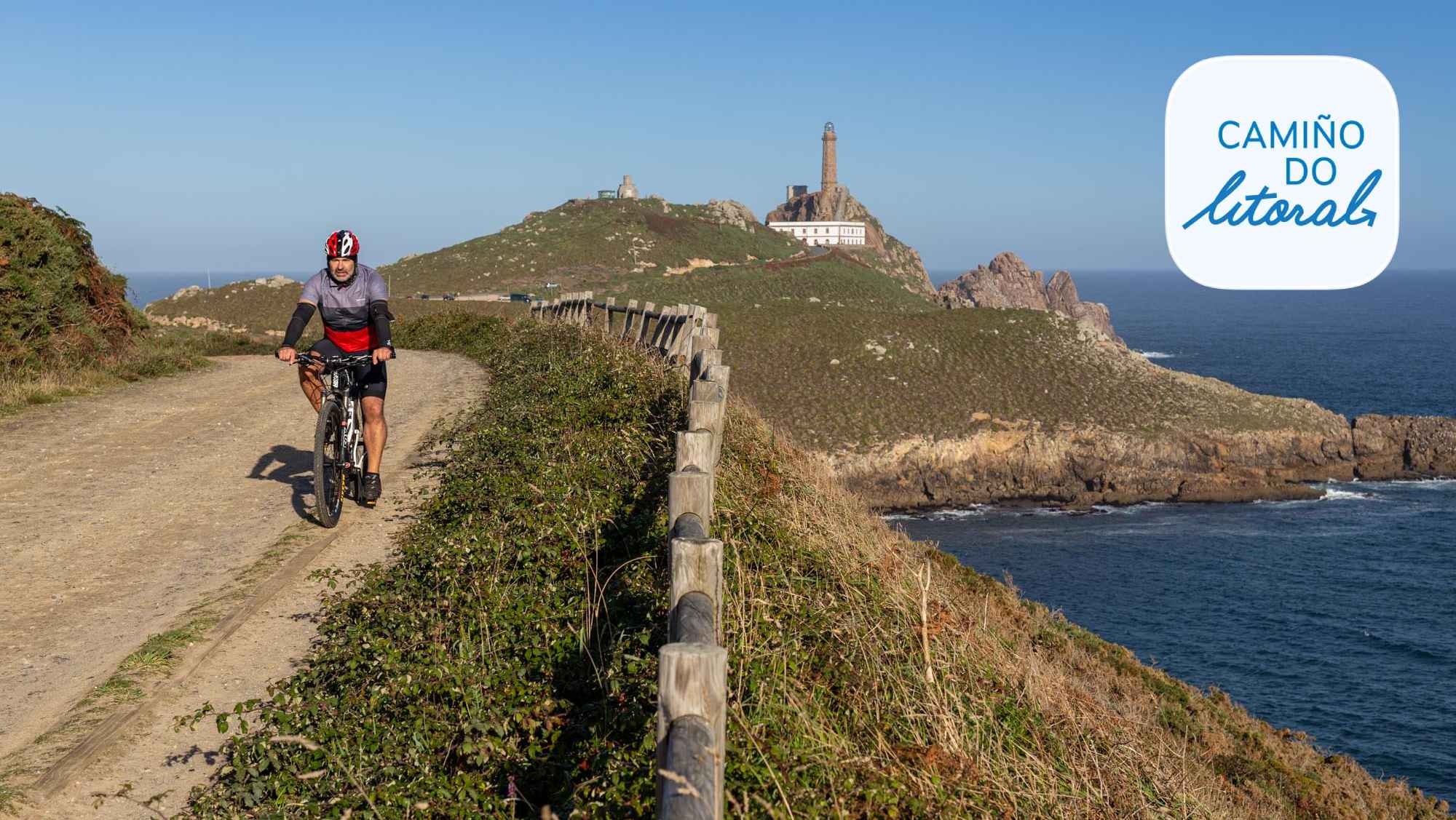
To speak of Camariñas is inevitably to speak of a coastline exposed to the ocean, navigation, maritime memory and lighthouses. Cabo Vilán is one of its great symbols and one of the key places for understanding the historic relationship between this territory and the Atlantic.
But exploring a landscape on foot makes it possible to discover much more than its best-known landmarks. Along the way there are small beaches, paths, granite formations, villages and views of the coastline that often go unnoticed when travelling only by road.
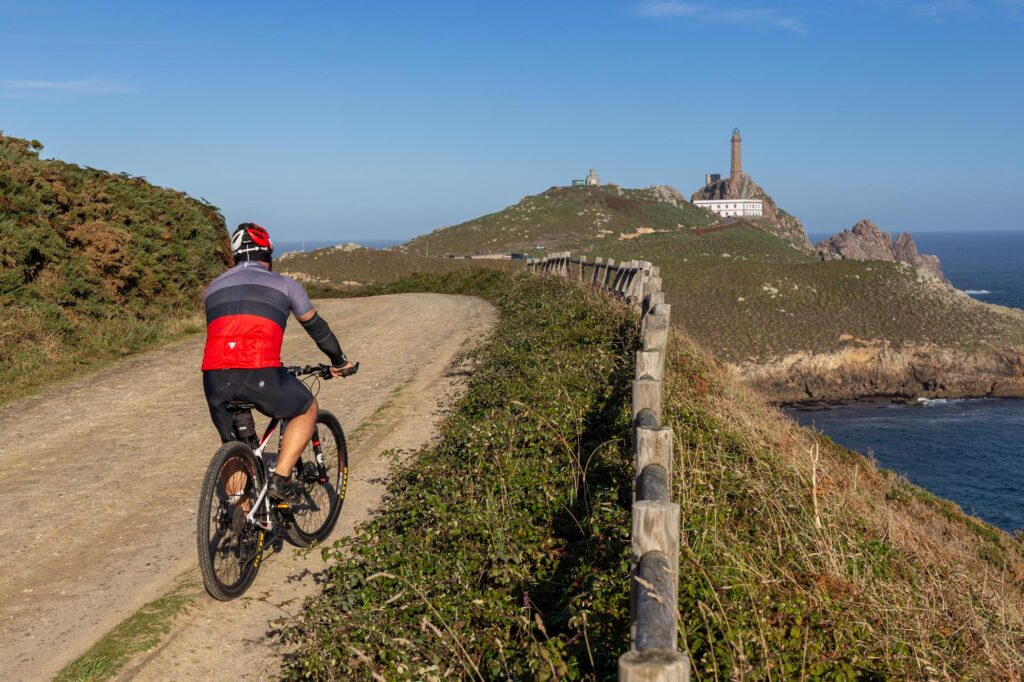
From Camariñas to Muxía: two great seafaring destinations in Costa da Morte
Stage 25 connects Camariñas with Muxía. Two municipalities closely tied to the sea are now linked as part of the same long-distance coastal route.
As the trail progresses, landscape and everyday life once again come together. Harbours, small communities and natural areas remind walkers that this is a living coastline, where the sea continues to play an important role in the local economy, gastronomy and identity.
Arriving in Muxía marks another of the great moments of the journey. Its relationship with the Atlantic, the Jacobean tradition and a landscape rich in symbolism makes this point on the route much more than simply the end of another stage.
From Muxía to Cee: the trail continues south
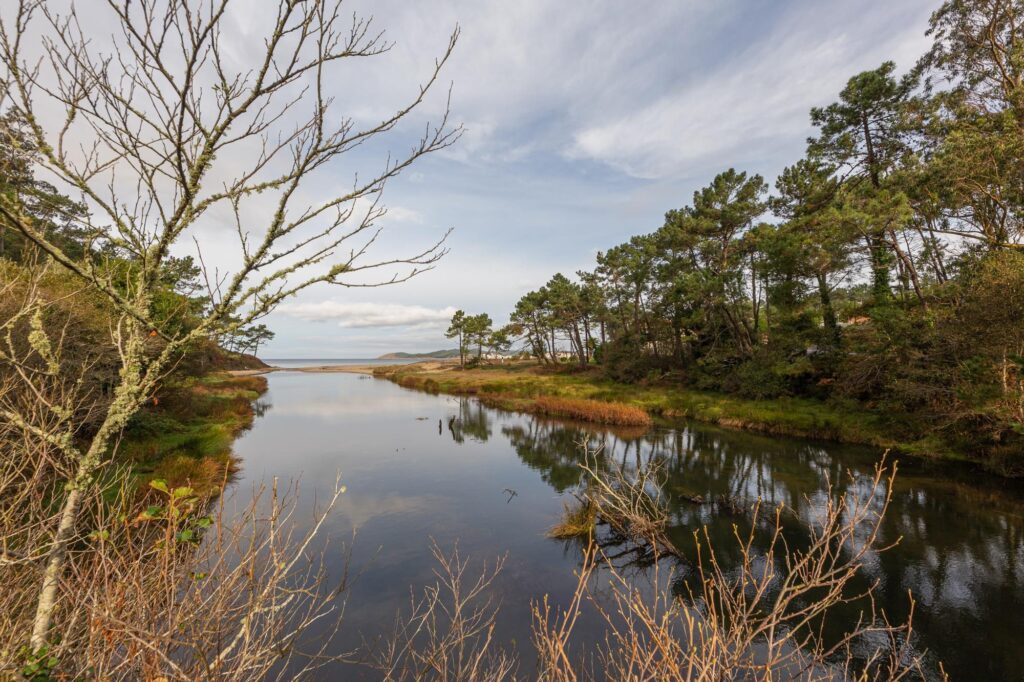
Stage 26 links Muxía with Cee and continues through the western part of Costa da Morte. Walkers move through a landscape of wide horizons, small communities and stretches of coastline where largely undeveloped areas still play a major role.
This part of the route includes places such as Lires and landscapes that help explain the transition between Muxía, the Fisterra area and the coastline further south.
After several stages, one of the great rewards of a long-distance walk becomes increasingly clear: looking back and physically understanding the distance covered. Towns and headlands that were once separate names on a map begin to form part of one continuous experience.
Cee and Fisterra: walking towards one of the great legends of the Atlantic
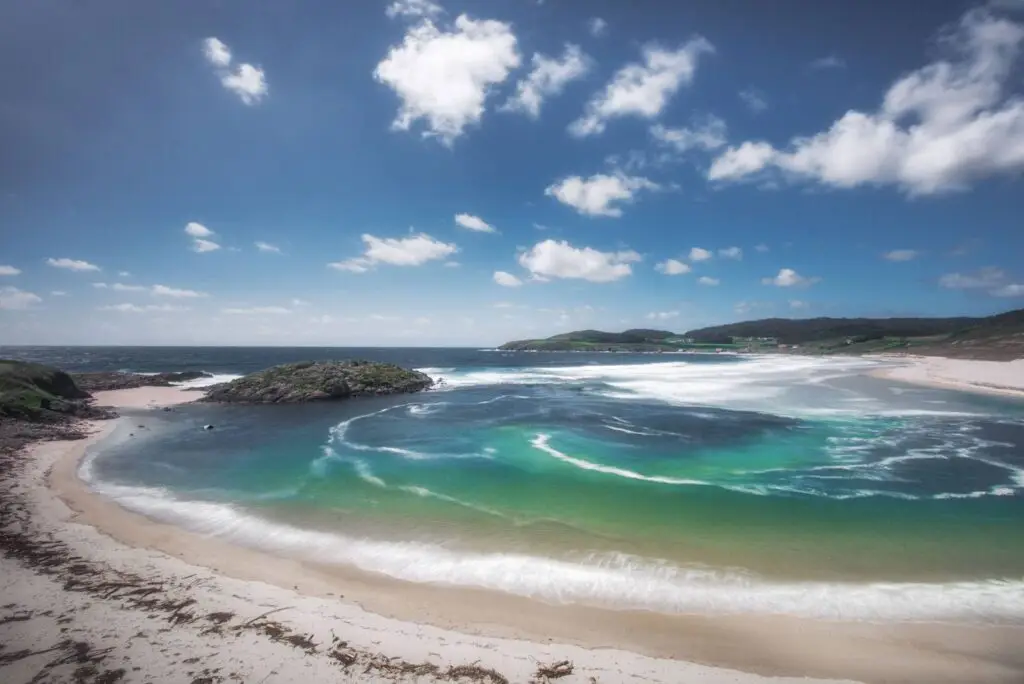
Stages 27 and 28 connect Cee and Fisterra, first heading towards Fisterra and then returning towards Cee so that the main itinerary can continue south along the coast.
For anyone who enjoys long-distance walking, reaching Fisterra on foot has a special significance. For centuries, this place has been associated with the Atlantic horizon and the idea of the western edge of the world, and today it is also deeply connected with the travelling culture surrounding the Camino de Santiago.
The Camiño do Litoral offers a different perspective. Fisterra is not an absolute ending, but one of the great landmarks on a trail that follows the natural logic of the coastline. The trail continues because the coastline continues.
From Cee to Carnota: stage 29 completes the route through Costa da Morte
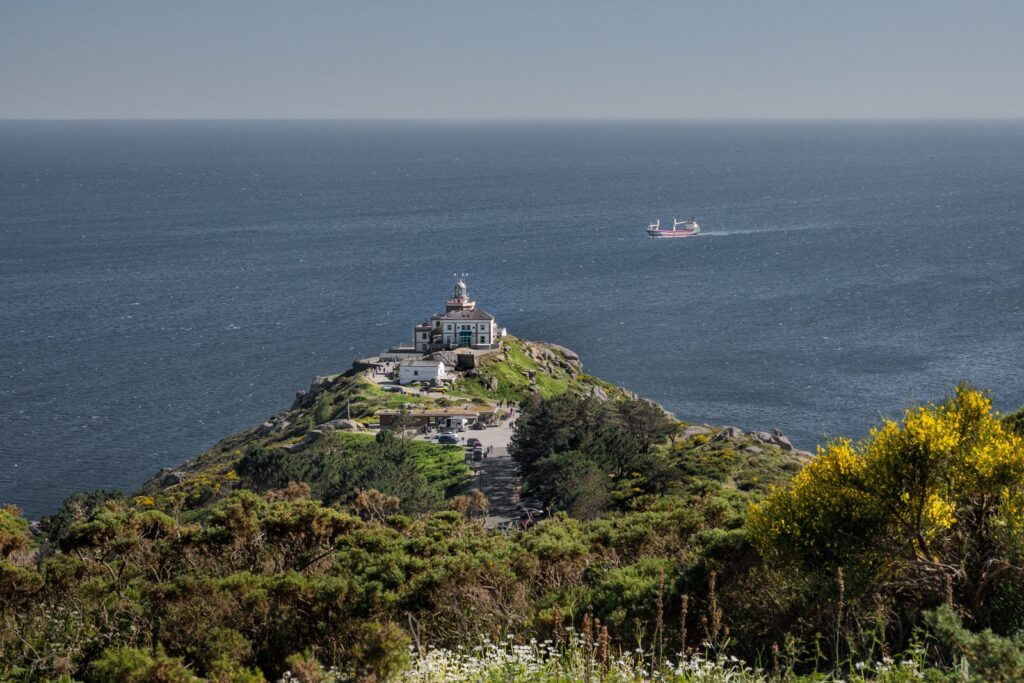
Stage 29, between Cee and Carnota, completes the Camiño do Litoral route through the Costa da Morte destination.
It is a magnificent conclusion to these eleven stages. Further south, the landscape changes once again, revealing some of the great natural profiles of this stretch of coastline, with mountains approaching the ocean and sweeping views opening across the Atlantic.
The area around O Ézaro, O Pindo and Carnota is an extraordinary example of this changing scenery: mountains, sea and vast beaches coexist within just a few kilometres, offering one final demonstration of the landscape diversity that accompanies the Camiño do Litoral through Costa da Morte.
This section through the destination ends in Carnota, but the Camiño do Litoral does not. The great route created by the Xunta continues south along the Galician coastline.
Do you need to walk all 11 stages consecutively?
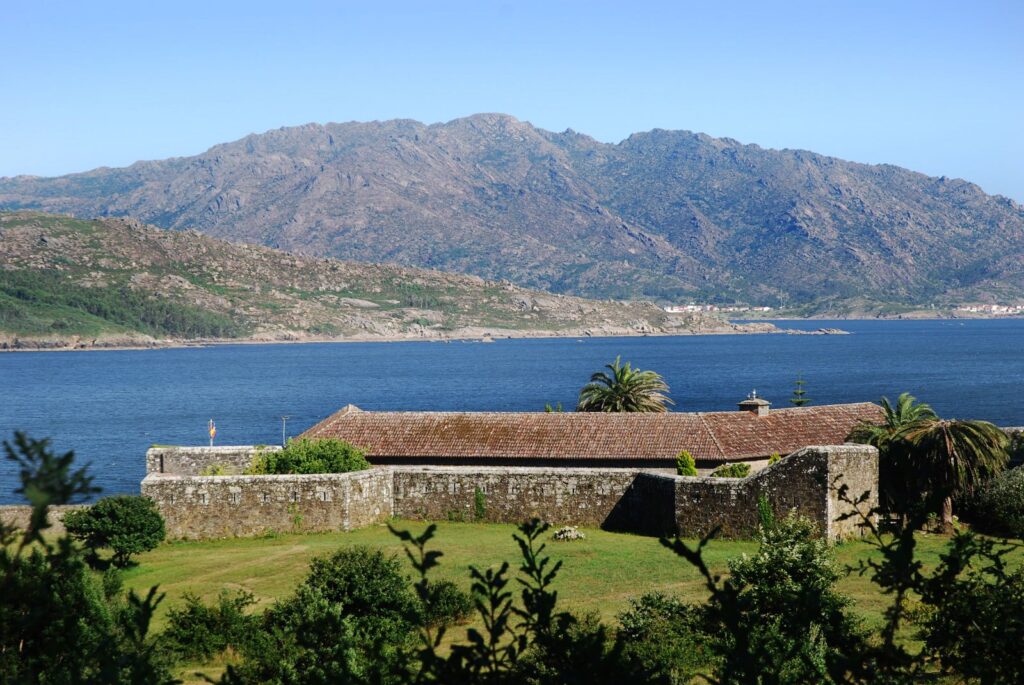
No. And this flexibility is precisely one of the great advantages of the Camiño do Litoral in Costa da Morte.
Those looking for a true long-distance hiking experience can link several stages together and turn the route into a multi-day journey. In this format, each destination becomes a place to rest, and every morning begins with another day beside the Atlantic.
But individual stages can also be enjoyed separately. For visitors spending a few days in Costa da Morte, the Camiño do Litoral provides an excellent opportunity to choose particular sections and combine hiking, heritage, gastronomy, fishing villages and nature.
The trail therefore works equally well for hikers looking for a genuine multi-day trek and for those who simply want to spend a day discovering a new section of the coastline on foot.
How to prepare for a stage of the Camiño do Litoral
In hiking, distance never tells the whole story. Before starting a stage, it is important to check the route, distance, elevation, type of terrain and weather forecast. On an Atlantic coastline, wind, rain and ground conditions can significantly change the difficulty of a day’s walk.
Equipment should be adapted to the time of year, but suitable walking footwear, water, enough food, sun protection and clothing for changing weather conditions should form part of the basic kit. During autumn and winter, good protection from rain and wind becomes even more important.
In areas close to cliffs or coastline exposed to heavy seas, it is essential to follow the signage, remain on safe routes and keep a sensible distance from the water. Costa da Morte offers extraordinary landscapes, but exploring them responsibly is also part of the experience.
Map, signage and official Camiño do Litoral resources
One of the great strengths of the Xunta de Galicia project is that it has brought different coastal paths and trails together into one coherent and recognisable itinerary. A specific visual identity and dedicated signage have been created to help walkers follow the different stages.
The project also includes digital resources for consulting the route and obtaining useful information when planning each day’s walk. Before starting a stage, we recommend checking the official mapping and the latest information on the Camiño do Litoral.
View the official interactive map of the Camiño do Litoral
Discover the Camiño do Litoral on the official Xunta de Galicia website
A commitment to hiking and sustainable tourism in Galicia
The scope of the project goes far beyond creating another trail. The Camiño do Litoral also proposes a different way of travelling and engaging with the coast.
Travelling through a region on foot takes time. Walkers stop, stay overnight in local towns, visit local businesses, discover the area’s gastronomy and encounter places that would rarely form part of a quick visit. The journey itself stops being simply a way of getting from one place to another and becomes part of the experience.
This form of tourism can also spread visitors more evenly across the region, encourage longer stays and generate economic activity in different communities. The Xunta de Galicia has specifically identified sustainable tourism, reducing seasonality and supporting coastal municipalities among the objectives associated with the Camiño do Litoral.
For Costa da Morte, this represents a particularly interesting opportunity. It is a destination capable of offering nature-based experiences throughout the year, and walking makes it possible to discover both its great landmarks and the smaller places that reveal the true character of the region.
Each season also reveals a different Costa da Morte. Summer brings long days; spring transforms the landscape; autumn casts a different light across the Atlantic; and winter reveals the most powerful side of a coastline where the sea is never merely a backdrop.
More walking routes and trails to discover Costa da Morte
The Camiño do Litoral is one of the great ways to discover Costa da Morte on foot, but it is far from the only one. The region has an extensive network of walking routes, hiking trails and paths that reveal its landscapes, mountains, rivers, beaches, lighthouses and natural areas from many different perspectives.
If you would like to continue exploring the destination on foot, take a look at our selection of walking routes and trails in Costa da Morte, where you will find many other ways to discover the region step by step.
Costa da Morte was made to be walked
Perhaps this is the best way to understand the Camiño do Litoral through Costa da Morte: the project does not create a new landscape, but rather a new way of travelling through it and connecting places that were often previously discovered separately.
From A Laracha to Carnota, stages 19 to 29 cross very different landscapes united by one constant presence: the Atlantic. Malpica de Bergantiños, Ponteceso, Laxe, Camariñas, Muxía, Cee and Fisterra are some of the great names along the route, but the real journey can also be found in everything that lies between them.
That is one of the great achievements of the project promoted by the Xunta de Galicia: turning the coastline into one great trail and offering a new way to discover it — slower, closer and more deeply connected with the landscape.
Because some places are understood far better when we stop simply passing through them and begin to truly walk through them.
And Costa da Morte is one of those places.