MUXÍA, THE SHIP THAT SAILS FOR THE NORTH

Understand Muxía through “MUXÍA, THE SHIP THAT SAILS FOR THE NORTH”. A short read with substance: it puts you on the map and in its time. Tip: look out for muxía.
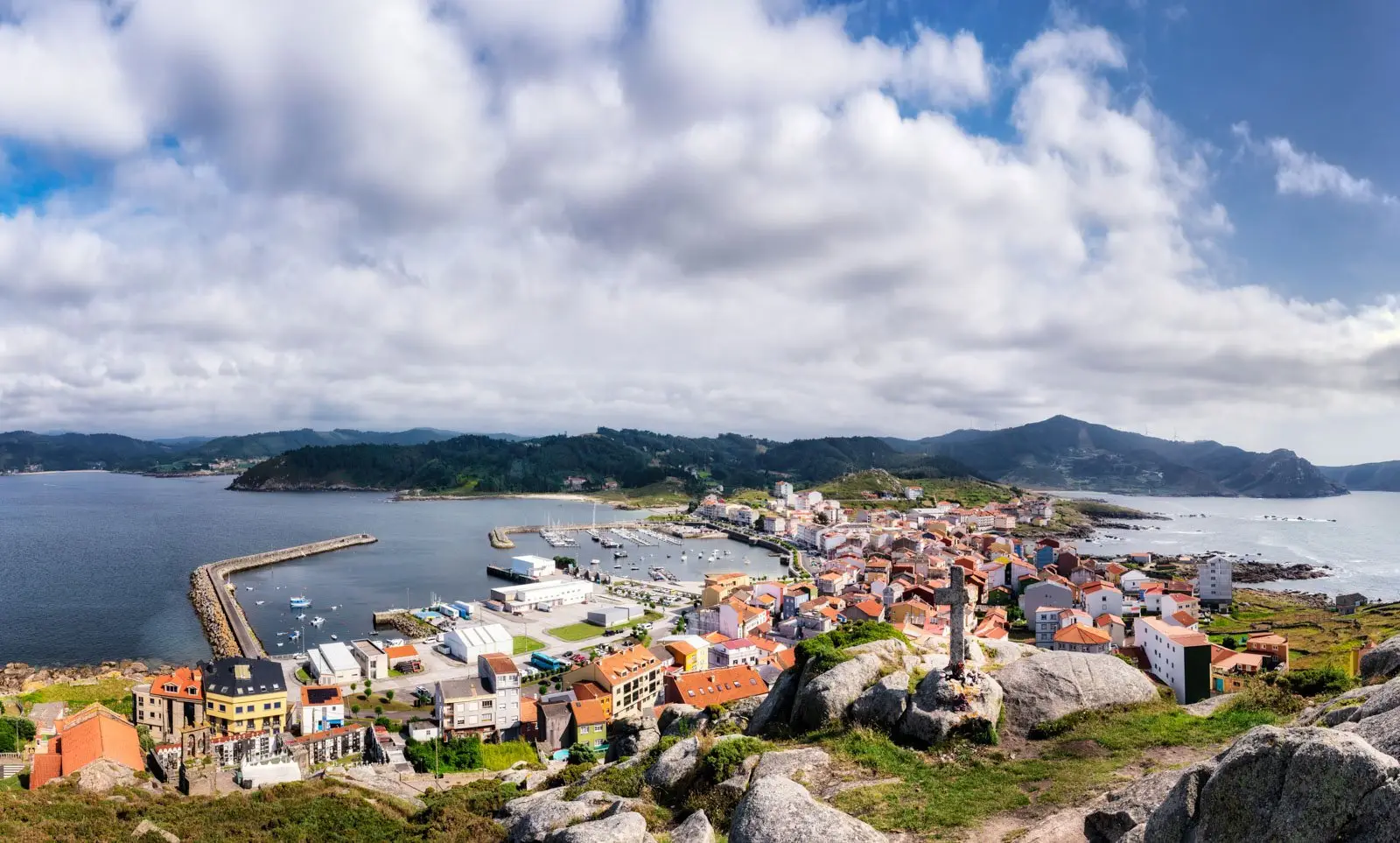
127. A vila de Muxia desde o monte Corpino 1.jpg

The poet Gonzalo López Abente (1878-1963) considered his native Muxía to be static, “lying” on the river bank, silent and melancholy, looking up at the sky. But he could also have imagined it in movement, sailing on a majestic ship with its prow on the Barca Point, its stern on Monte do Enfesto and Monte Corpiño as its wheelhouse.

In reality, Muxía is a town with a long history linked to the monastery of San Xulián de Moraime (dedicated to Saint Julian), which ruled over the peninsula on which it stands. The very name of the town comes from this religious community, which was founded in the Middle Ages.

King Alphonso XI granted the port of Muxía the charter of A Coruña, which permitted its neighbours to enjoy certain rights on the condition of respecting the privileges that the monks of Moraime had over the town. It should be noted that the territory of the people of Muxía was very small, with no possibility of agriculture or of supplying themselves with water or firewood, so that they depended on Moraime to obtain such basic elements. Fishing was the only recourse for the first settlers who dared to build the first houses at the foot of Monte Corpiño.

In later centuries, the life of the people of Muxia continued to be linked to the sea, especially sardine and conger eel fishing. From the 18th century on, lace making had some importance for the number of women who made it and for the families that sold it.

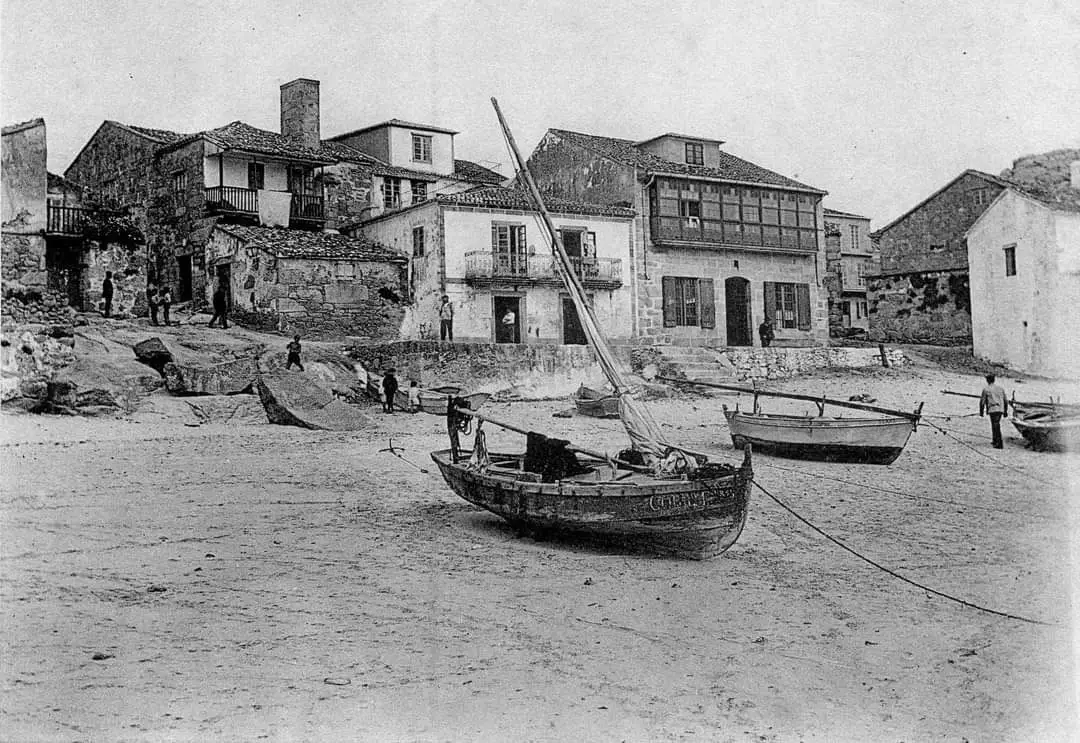
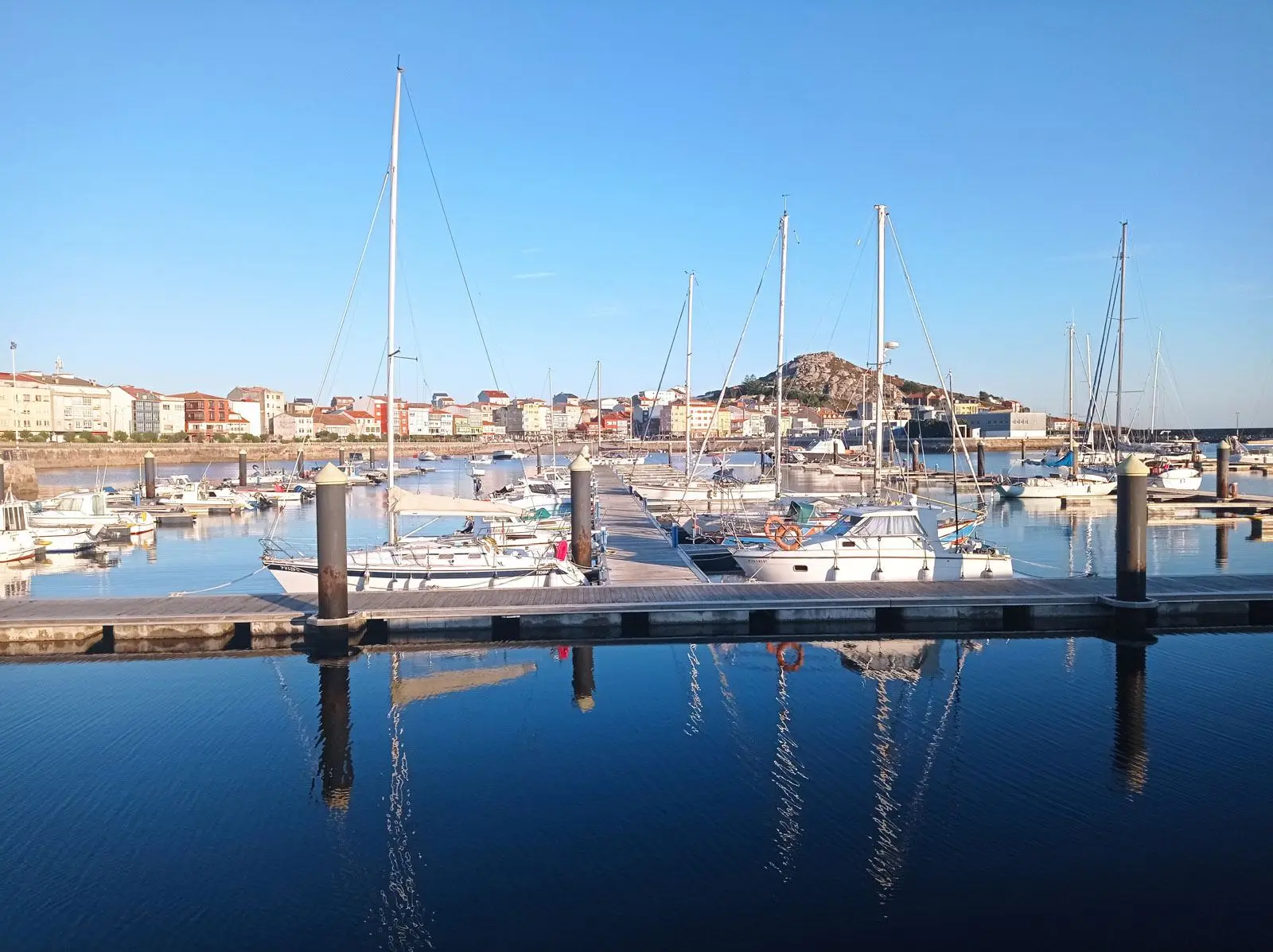
In the first few decades of the 20th century, Muxía was a small town with around a thousand inhabitants, with a centre that extended from the parish church south to Cabo da Vila square. The sea continued to be its way of life, supplemented by exporting lace to Latin American countries. The discovery of the Canto fishing grounds at the end of the 1970s led to a very noticeable improvement in the finances of the fishermen’s families and permitted the renovation of the fishing fleet and the urban development of the town. The seafront also changed, with the construction of a sea wall, a promenade and a marina. All these changes altered present-day Muxía. The fishing industry has lost its importance and tourism is becoming the main economic activity, attracted by the Way of St James and the landscape and historical resources offered by this fishing town.

The Barca cape is the main attraction for visitors. Here are concentrated the most interesting heritage assets, such as the sanctuary of the Virxe da Barca (dedicated to Saint Mary), an 18th-century baroque building, and the Abalar and Cadrís rocks, associated with the legend of the arrival of the Virgin, who appeared to the Apostle James in this place. For this reason, Muxía represents, together with Fisterra, the end of the Way of St James that runs from Santiago de Compostela to the most westerly part of Galicia.

The town of Muxía also offers visitors other places of interest, such as the parish church of Santa María, a magnificent Gothic building with attractive altarpieces; Monte Corpiño, the best vantage point for looking out over the town and surrounding area; and the town centre, which still has some streets and squares with houses from Muxía’s past.

Photo gallery of MUXÍA, THE SHIP THAT SAILS FOR THE NORTH

Discover the Costa da Morte on our blog

Blog Costa da Morte

Discover the Best Plans for the Saint John

The Costa da Morte is a magical destination all year round, but let’s be honest. The Saint John’s Eve in Gal...

THE VALLEY OF THE RIVER BEBA, AN INTENSELY GREEN LANDSC...

The valley of the river Beba lies between the Ruña hills and a hillock that separates it from the Mazaricos valley. It o...

VIMIANZO CASTLE, THE SYMBOL OF THE MOSCOSO FAMILY’S POW...

Few of the mediaeval fortresses of Galicia are still standing. On Costa da Morte, some have managed to challenge the pas...

MENS, A LAND OF MONKS AND NOBLEMEN

The parish of Santiago de Mens, some 6 km from Malpica on the DP-4307 road to Ponteceso, has preserved two of the m...

CORISTANCO, THE LAND OF POTATOES

When someone mentions the name of Coristanco, the word “potato” immediately comes to mind, that edible tuber whose culti...

FÉRVEDA DE ENTRECRUCES WATERFALL, A SYMPHONY FOR THE SE...

Nature gave San Paio de Entrecruces the gift of a extraordinary work that moves all visitors who go to this magical plac...

Tourist Information Points in Costa da Morte 2025: your...

Planning your holiday on the Costa da Morte? With the 2025 Guide to Tourist Information Points in Costa da Morte, you’ll...

Surf beaches in Galicia: 14 Costa da Morte beaches

If you are looking for surf beaches in Galicia, the Costa da Morte deserves a place on the map from the start. Here, wel...

“A CIDÁ” HILLFORT, LIFE IN A PREHISTORIC FORTIFIED VILL...

The “A Cidá” fortified settlement in Borneiro (Cabana de Bergantiños), close to the Dombate dolmen, is an excellent exam...

TRABA LAGOON AND BEACH, PURE NATURE

Along the coast of Costa da Morte you will come upon places with great environmental wealth and landscapes, true natural...

Upcoming events on the Costa da Morte

Find out instantly what activities await you on the Costa da Morte. Here you will find an up-to-date list of concerts, fairs, guided tours and shows that take place on the Costa da Morte. Don’t miss any event: experience the culture, sport and tradition of our region. And if you want to find out before anyone else, sign up for our newsletter and you will receive all the news in your email.

  • Thursday
    29
    October

    Creando panos Workshop...

    Two creative afternoons with Noelia DarribaCreando panos is a workshop...

  • Thursday
    29
    October

    Registration for Tradi...

    Traditional Galician music and dance bring generations together in Fis...

  • Thursday
    29
    October

    Creando panos: Women's...

    Some stories deserve to be written down — even on a scarf. On 28 and 2...

Logo Cmat Color Fondo Transparente
Privacy Overview

This website uses cookies so that we can provide you with the best user experience possible. Cookie information is stored in your browser and performs functions such as recognising you when you return to our website and helping our team to understand which sections of the website you find most interesting and useful.