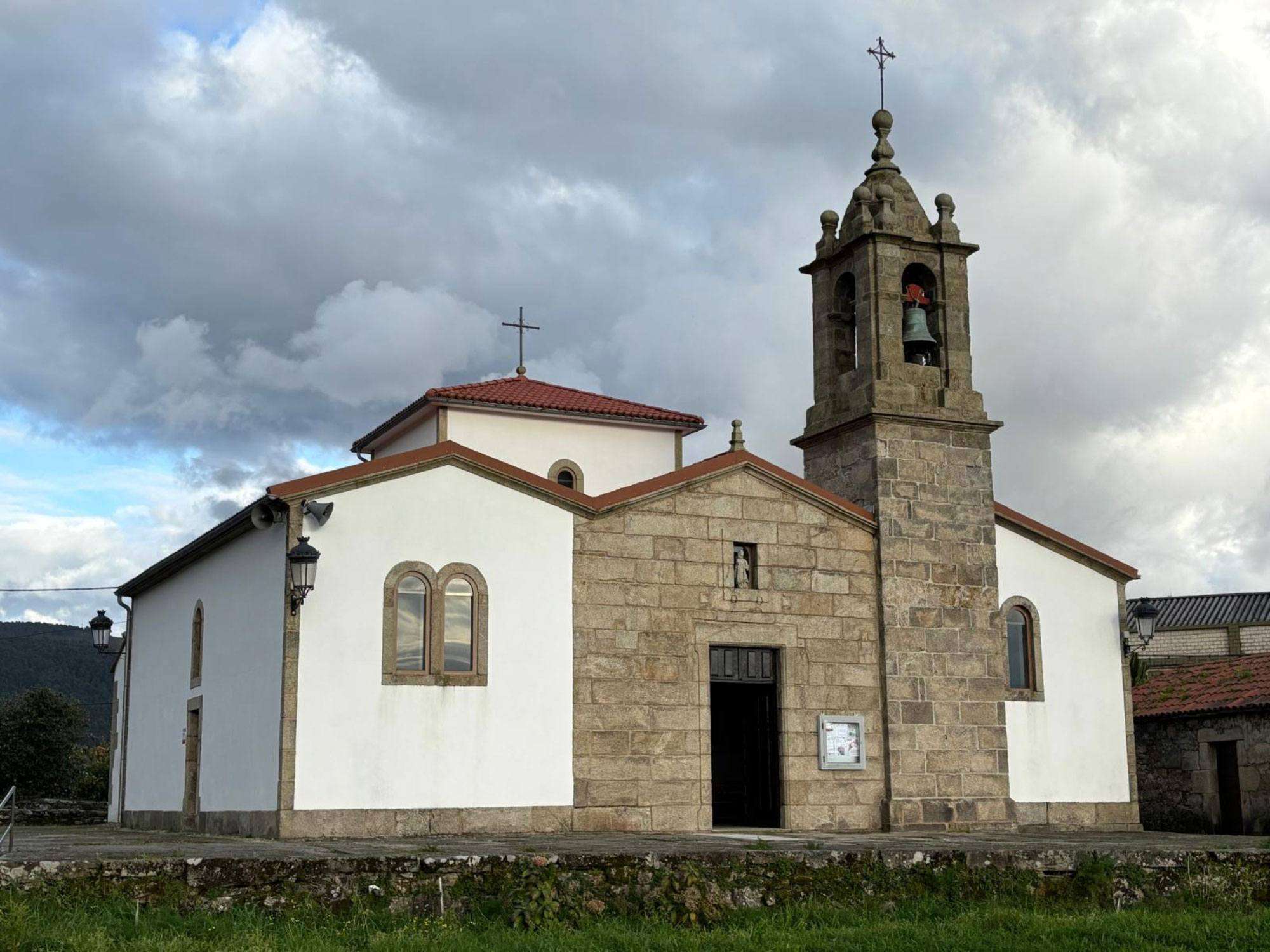
Church of Santa Baia de Brens

Find out more about Church of Santa Baia de Brens

The Church of Santa Baia de Brens, located in the parish of Brens (Cee), is a remarkable example of Galician rural religious architecture. Originally built in the 18th century, the church has undergone several renovations and expansions, including a major one in 1956, which added a three-nave basilica layout.

Its main structure features a rectangular chancel covered with a stone barrel vault. Inside, the main altarpiece stands out, showcasing decorative elements linked to the Baroque style of Simón Rodríguez and Casas e Novoa, two renowned Compostela artists.

At the center of the altarpiece is the sculpture of Saint Eulalia (Santa Baia), crowned in silver and holding the palm of martyrdom and a book — one of the most valuable Baroque religious artworks preserved in the municipality of Cee.
Lighthouses, rivers, beaches and much more on the Costa da Morte

Fisterra Lighthouse
One of the most emblematic and well-known elements. Built in 1853, it is a world...
Chapel of San Pedro Mártir and Its Miraculous Fountain – Cee
The Chapel of San Pedro Mártir, located in the parish of Pereiriña (Cee), is a s...
O Trece Beach (Camariñas)
The pebbles characteristic of this coast divide this unique virgin beach into sm...
Cabo Roncudo
Main Cape of Bergantiños next to Cape Santo Hadrián and Cape Nariga. Punta Ronc...
Curso Bajo, Cascadas y Desembocadura del Ría Xallas (Dumbría)
A Site of Spanish Geological Interest of International Relevance (also defined a...
Seaia (Malpica)
Seaia beach is the ideal combination of cliffs, vegetation, sea and tranquillity...
José Luís Rabuñal Bird Viewpoint
In October 2006, during the celebration of the 1st Congress of Ornithology of th...
Assault on Castelo de Vimianzo
In 1468, what is popularly known as the Irmandian revolt took place in Galicia. ...
PR-G 114 Laxe – Lock
Route: Linear Start/finish point: Laxe – Mórdomo (Traba) Length: 8.7 km. Approxi...
Carballeira de Zas folk festival
Folk music is a fundamental part of Galician culture and its Celtic counterparts...